

Dong Phu Japonica rice: Journey from "Organic Fields" to the symbol of Green Agriculture in the Capital
Day 13/06/2026, in Hoa Phu commune (TP. Hanoi), "Organic Japonica Rice Festival" took place in a joyful atmosphere, affirming the position of a model organic agricultural model. The event not only honors the labor achievements of farmers but is also a clear demonstration of the strategic vision of Bao Minh Agricultural Product Processing Business Joint Stock Company in the journey of "elevating" the value of Vietnamese agricultural products according to international standards..
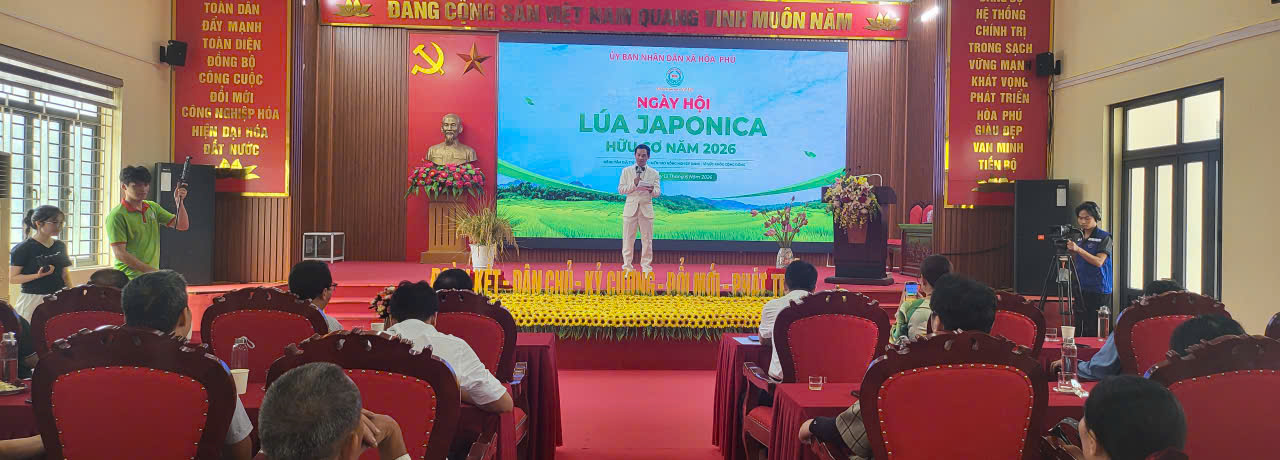
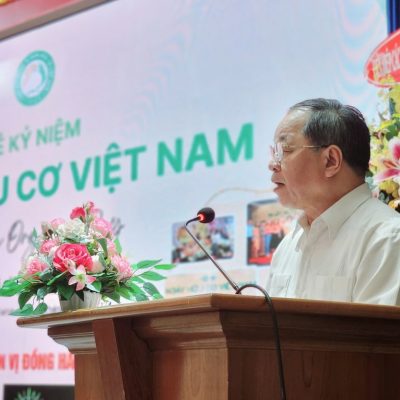
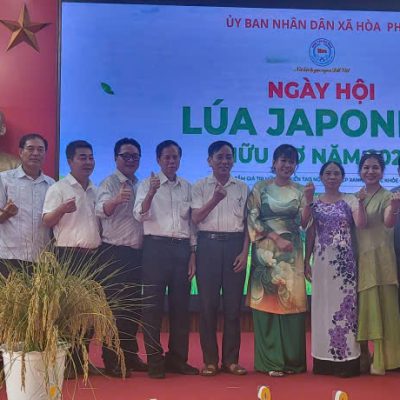
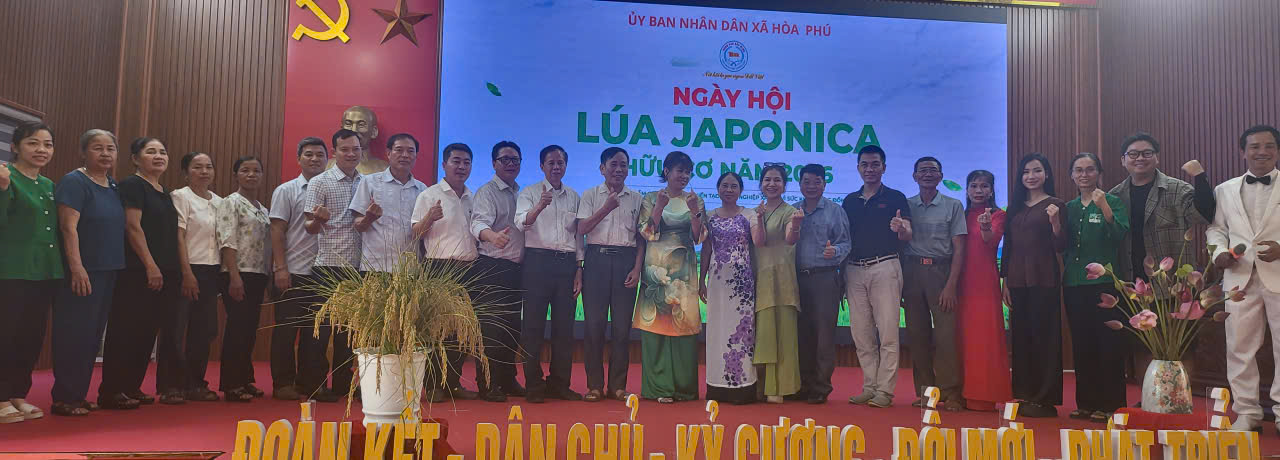
Overview of "Organic Japonica Rice Festival" at Hoa Phu Commune Hall
The connection between the essence of heaven and earth and corporate vision
In a space full of hometown atmosphere with love songs about Vietnamese rice, Japonica Rice Festival gathered a large number of managers, leading scientists and experts. Presence of Mr. Nguyen Van Vuong – Head of Plant Varieties Management Department – Department of Horticulture and Plant Protection – Ministry of Agriculture and Environment, Mr. Vu Xuan Hung – Deputy Secretary of the Party Committee – Chairman of Hoa Phu Commune People's Committee, Mr. Do Xuan Tinh – Vice Chairman of Hoa Phu Commune People's Committee, Ms. Bui Thi Hanh Hieu – General Director of Bao Minh Agricultural Product Processing Business Joint Stock Company, Ms. Trinh Thi Nguyet – Director of Dong Phu Organic Agricultural Cooperative, Associate Professor, Dr. Mai Quang Vinh – Member of the Central Committee of the Vietnam Fatherland Front – Member of the Scientific Council of Bao Minh Company, Dr. Le Quy Kha – Vice Chairman of Vietnam Green Transformation Association VGA, Dr. Pham Dinh Nam – Director of Vietnam Institute of Agricultural Technology Application and Development, Editor Ngoc Bamboo, Mr Viet Anh – Owner of Tiktok channel "Here comes Anh Doai" and some delegates, scientists, Business owners and all Dong Phu farmers have demonstrated the importance of the event to the modern agricultural picture..
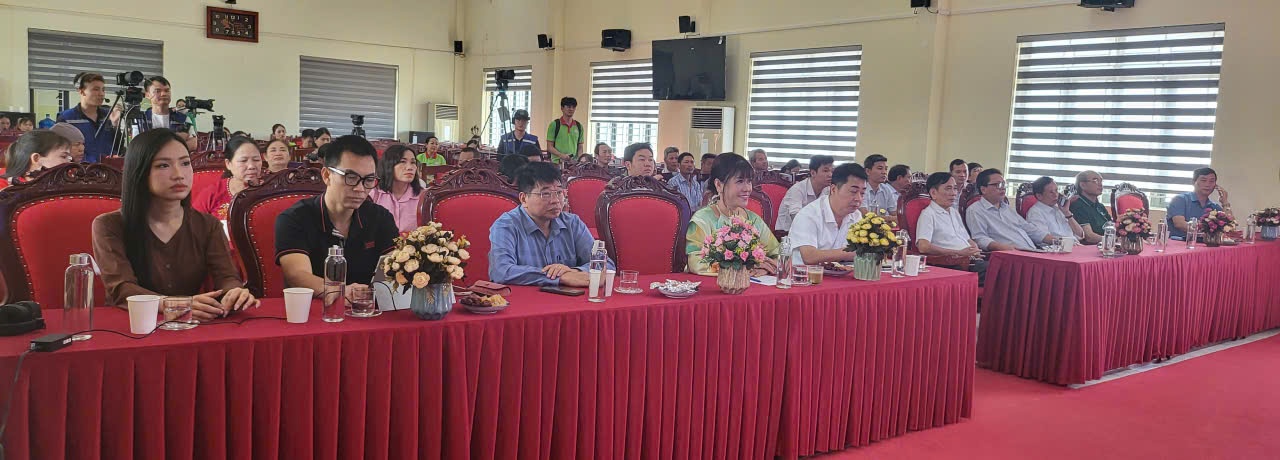
Delegates attending the Festival
Opening of the festival, The documentary film about the journey of the Japonica rice variety in Dong Phu has touched the emotions of many people. From modest numbers 2 ha test year 2012 then expand it 5 Ha mass, through difficult days, now, The raw material area has expanded 65 he has. This is not just an area number, but is a milestone affirming the success of sustainable organic farming thinking of Dong Phu Organic Agricultural Cooperative and Bao Minh Company acting as an "extended arm" to bring products forward..
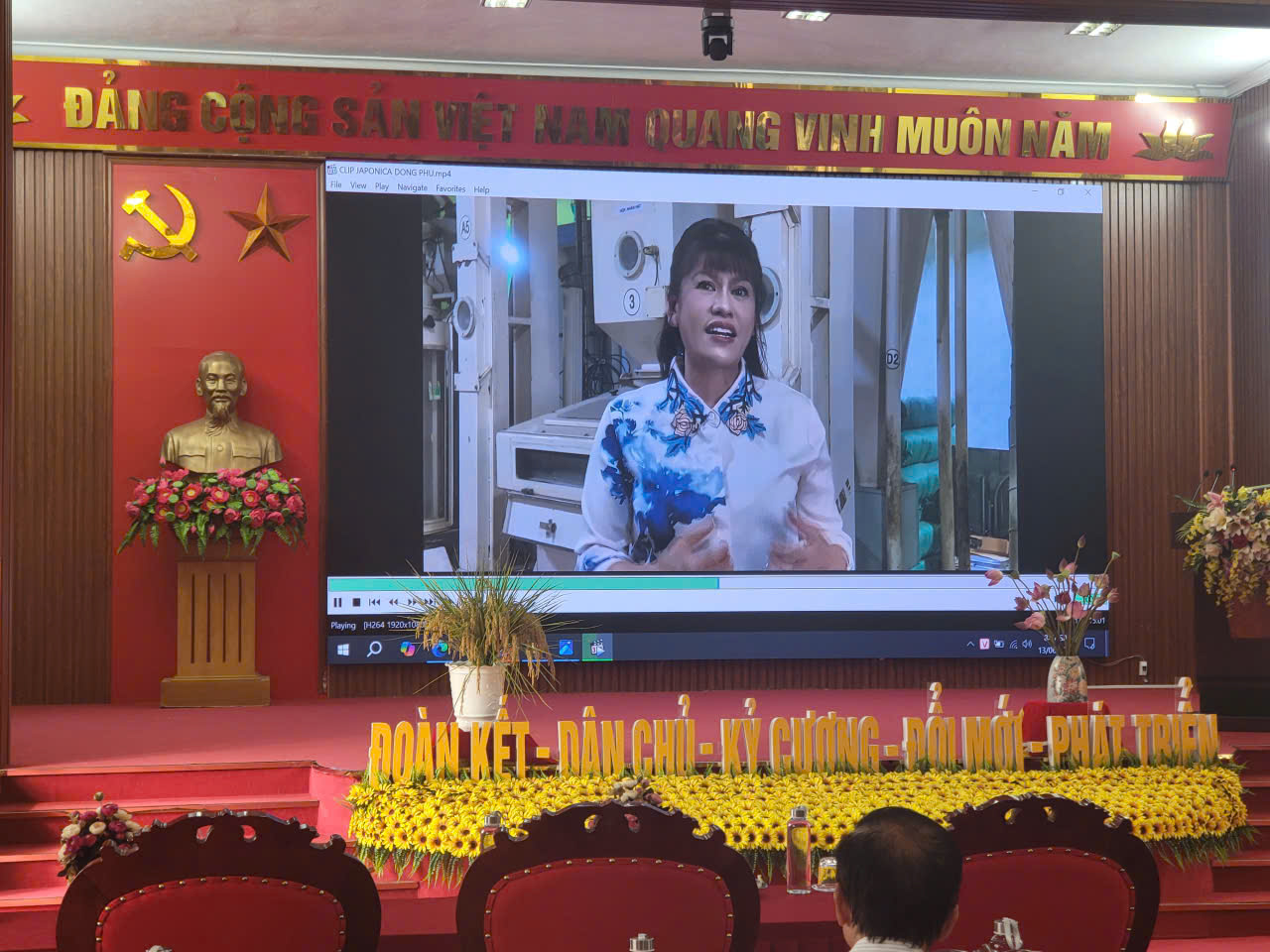
Ms. Bui Thi Hanh Hieu in a video report on Japonica rice in Dong Phu
Bao Minh and its mission to "Raise the level" of organic agricultural products
At the heart of the event, Ms. Bui Thi Hanh Hieu – General Director of Bao Minh Agricultural Product Processing Business Joint Stock Company – shared enthusiastically about the journey accompanying farmers. For Bao Minh, Each grain of Japonica rice is not just an agricultural product, but the crystallization of kindness, transparency and the desire to affirm Vietnamese brands on the world's most rigorous standards map.
Later, at Dong Phu rice fields, Ms. Hanh Hieu recalls the first days of approaching Dong Phu farmers, when the concept of "organic agriculture" was still unfamiliar. By perseverance, Bao Minh persuaded people to sign an offtake contract, At the same time, provide technical support to achieve organic certification according to USDA standards (USA) – one of the highest quality standards in the world.
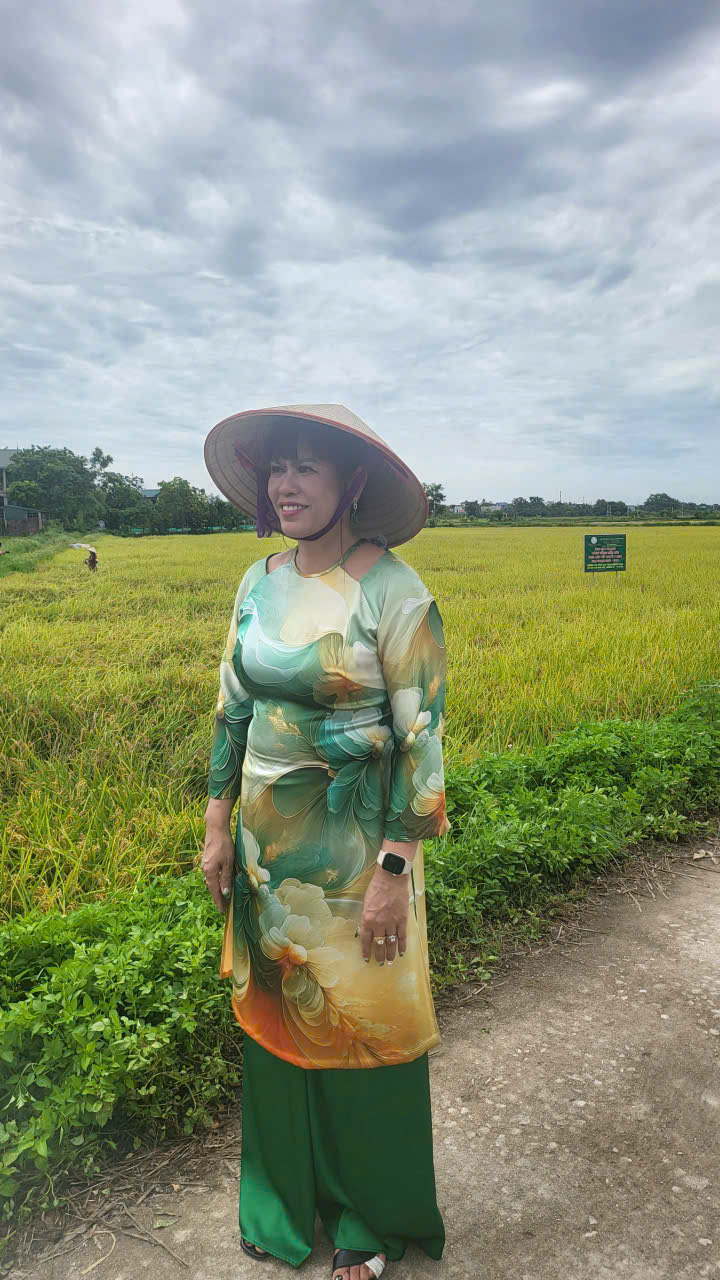
Ms. Bui Thi Hanh Hieu interviewed at Dong Phu rice fields
The difference that Bao Minh brings is not just output consumption, but a change in production thinking: Practicing clean agriculture from field to table. “We believe that, with close coordination, Bao Minh will bring Japonica rice to new heights, improve income for people and position of Hoa Phu commune", Ms. Hanh Hieu affirmed. Reality has been proven, Thanks to this companionship, Each farmer household in Dong Phu now has a stable income from 600 – 800 million VND/season, the dream number of many agricultural regions across the country.
Dong Phu: Hanoi's model organic agriculture
Speaking at the festival, Ms. Trinh Thi Nguyet thanked Professor Pham Tien Dung – Former leading expert at Vietnam Academy of Agriculture (VNUA) has brought organic rice varieties for trial cultivation here, Initially, it was Bac Thom rice 7, followed by Japonica J02 year 2012, paving the way for the establishment of Dong Phu Organic Agricultural Cooperative 5 the following year (2017) and get results 65 hectares of high quality organic rice in Dong Phu, Thank you for the attention and help of the central leadership, local, scientists, Thank you for the dedicated efforts of the farmers here who have created the famous Japonica rice brand of OPCOP quality. 4 sao.
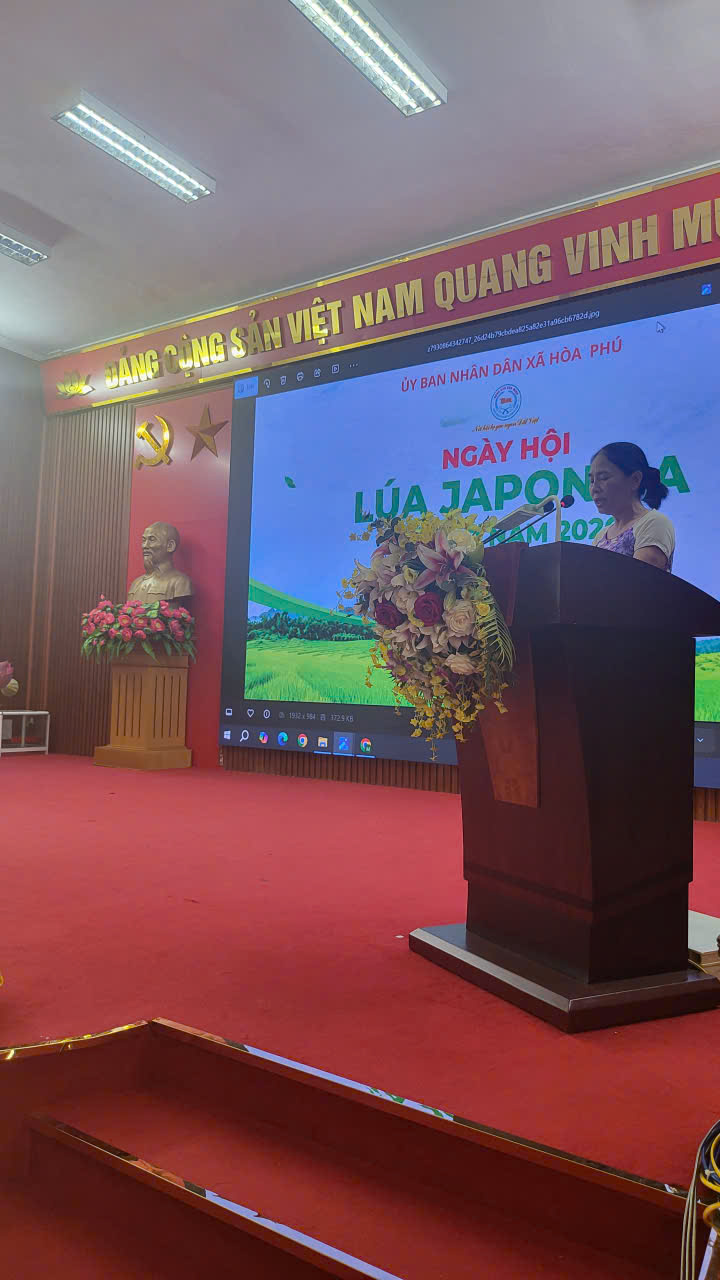
Ms. Trinh Thi Nguyet Speaking at the festival
Also here, Mr. Do Xuan Tinh – Vice Chairman of Hoa Phu Commune People's Committee – Appreciate the connecting role of the Cooperative (HTX) Dong Phu organic agriculture under the leadership of Ms. Trinh Thi Nguyet. Inheriting research from previous scientists, Up to now, organic Japonica rice has a higher price than conventional rice, But the product is still in a "sold out" state.. This reflects the smart consumption trend of the modern market, where consumers are willing to pay for truly clean products, source transparency.
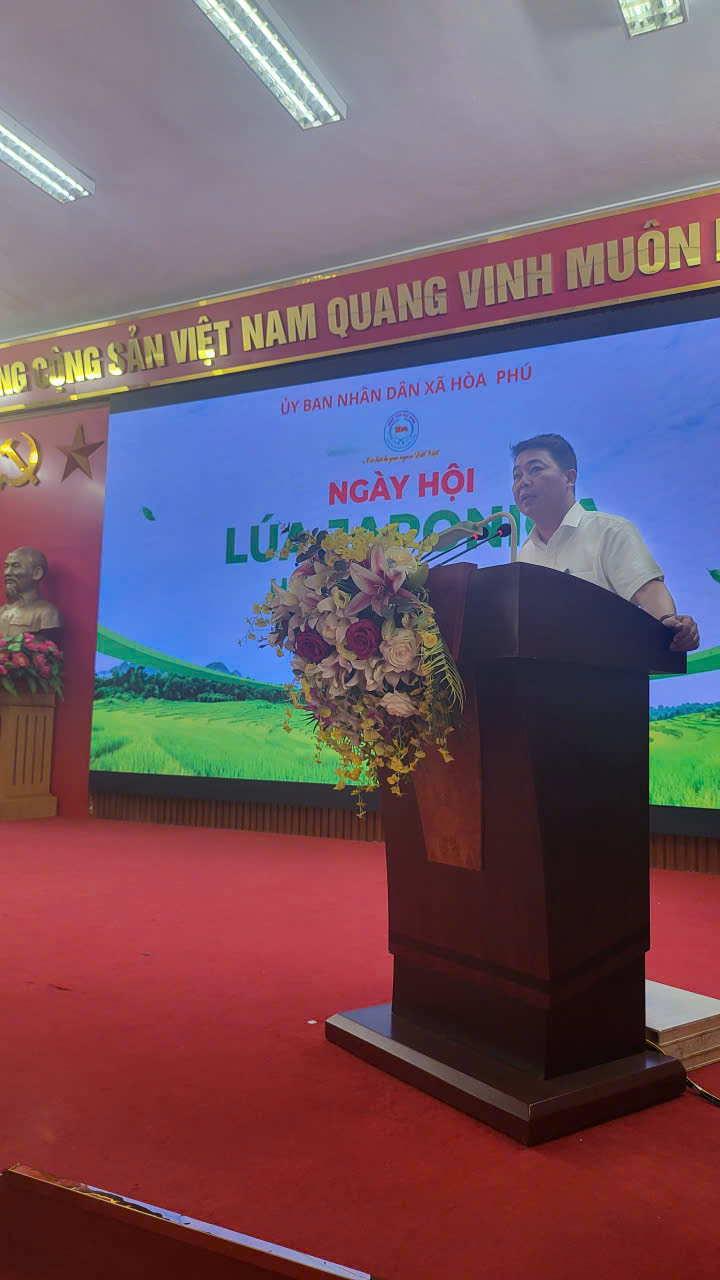
Mr. Do Xuan Tinh highly appreciated Japoanic organic rice
Mr. Nguyen Van Vuong – Representative of the Department of Crop Production and Plant Protection – identify: “Hoa Phu farmers have created a great product, become a model of organic agriculture in Hanoi Capital". He expressed his hope that this model will spread strongly throughout the Red River Delta, not only increases the area but also improves the quality of rice grains.
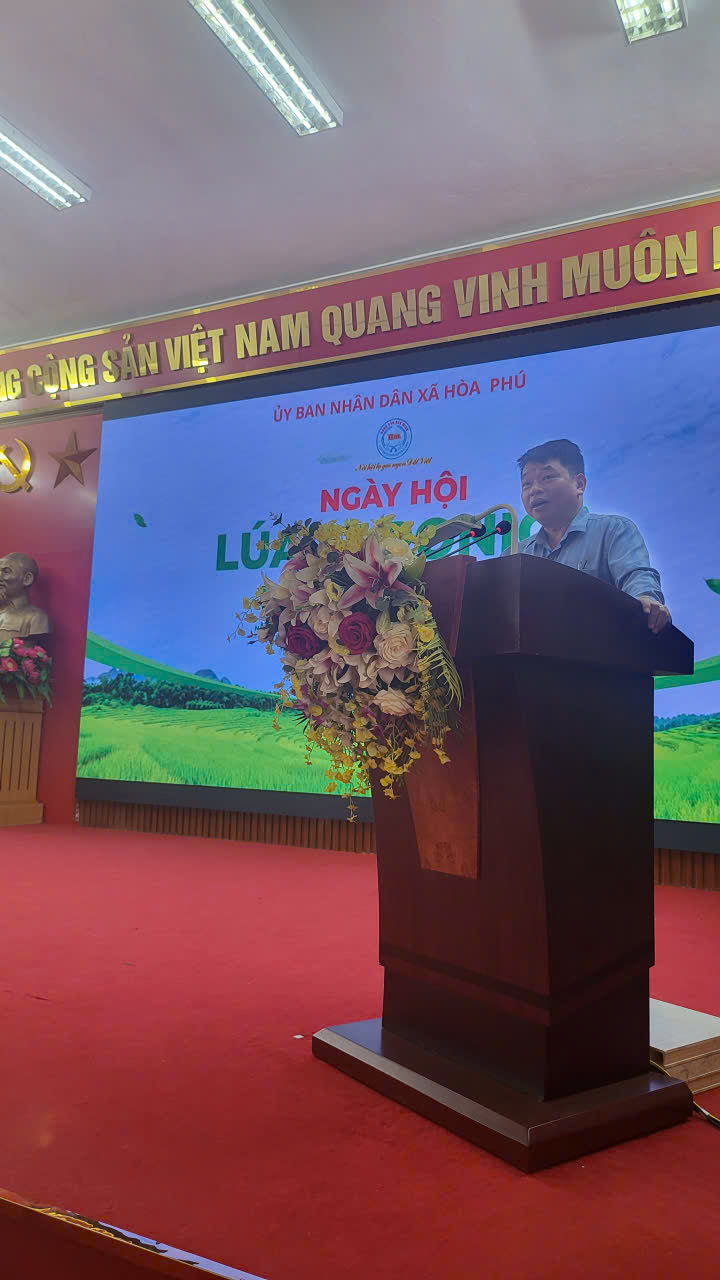
Mr. Nguyen Van Vuong expects the organic rice model to spread strongly
Looking forward to the future: Sustainable green transformation
In his final speech, Dr. Le Quy Kha (Vietnam Green Transformation Association VGA) praised the spirit of "green transformation" in Hoa Phu and highlighted the ideal isolated location for organic agriculture here.. He set ambitious goals for the coming period: Expand the word area 65 Ha up 100 – 200 he has, At the same time, increase productivity 250-300 kg/pole up 350 kg/acre through the application of advanced science and technology.
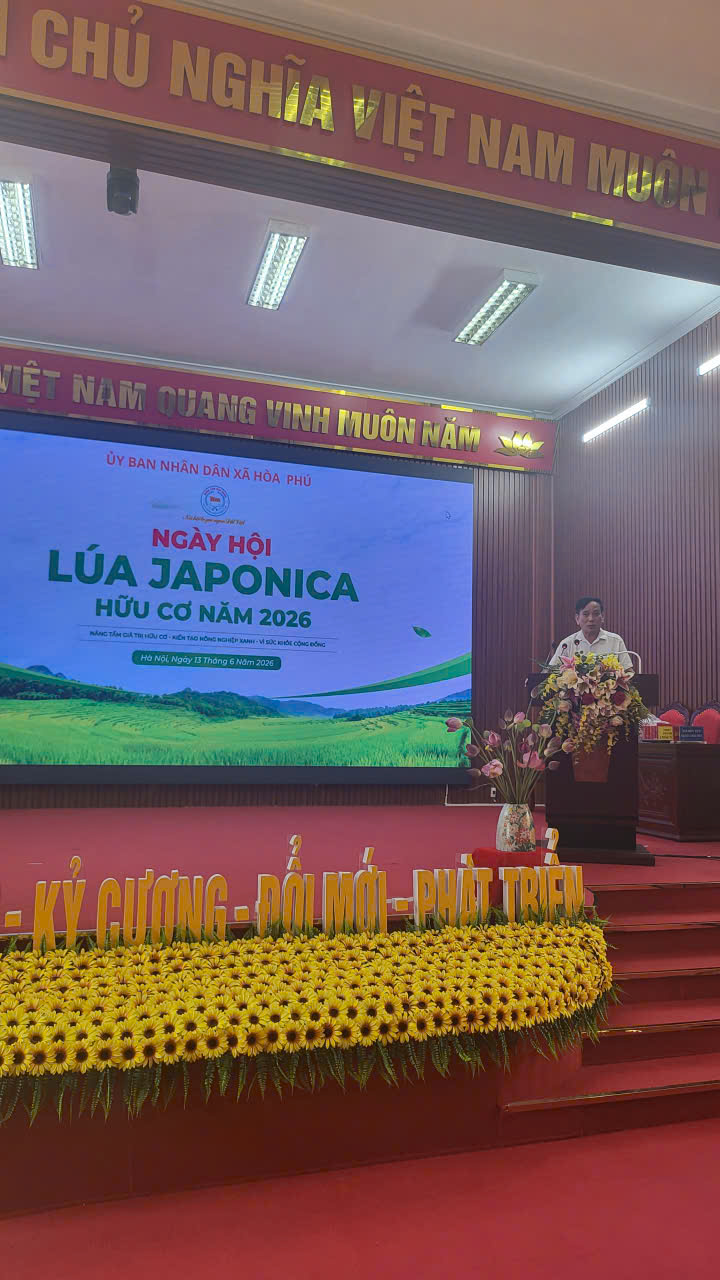
Dr. Le Quy Kha praised the spirit of "green transformation" at Hoa Phu
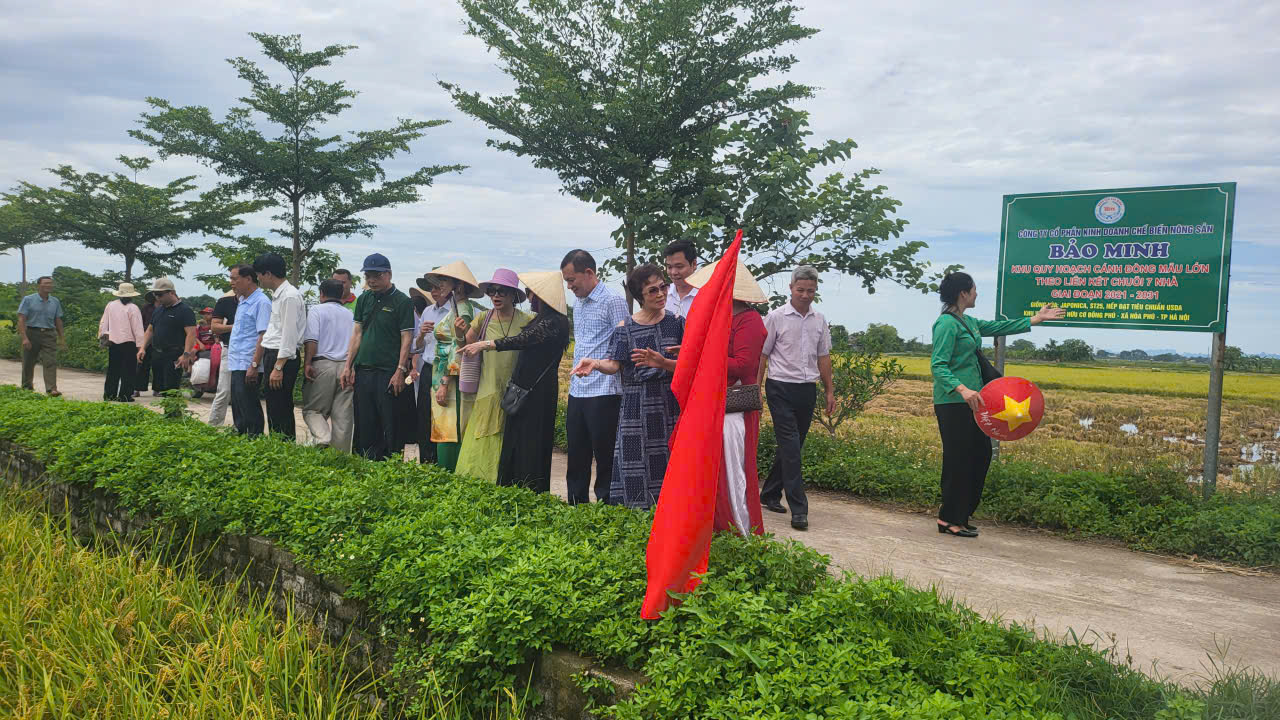
The festival ended with practical experiences right at Dong Phu fields. Delegates directly interacted with farmers harvesting rice, Enjoy dishes made from organic rice such as rice, banh day... in a cozy country music space. Then there was the livestream, bringing the "breath" of the rice festival to thousands of consumers across the country.
Conclusion
"Japonica Rice Festival" is not only an opportunity to look back on the results after many years of hard work, but also an affirmation of the enduring vitality of Vietnamese organic agriculture. With the foundation of farmers' dedication, Scientific support from experts and pioneering vision from businesses such as Bao Minh Agricultural Product Processing Business Joint Stock Company, Dong Phu organic agricultural cooperative, Japonica rice here is continuing to write the story of a high-quality Vietnamese agricultural product brand.
It is a journey from dirt to international standards, is the crystallization of love for the homeland and endless creativity. Bao Minh pledges to continue to be a "trusted companion", ensure stability in the value chain, bringing clean rice grains to consumers, so that Vietnamese agricultural product brands can increasingly assert a solid foothold in the domestic and international markets.
Bao Minh Agricultural Product Processing Business Joint Stock Company – Dedicated to quality; Dong Phu organic agricultural cooperative – Sustainable for the future.
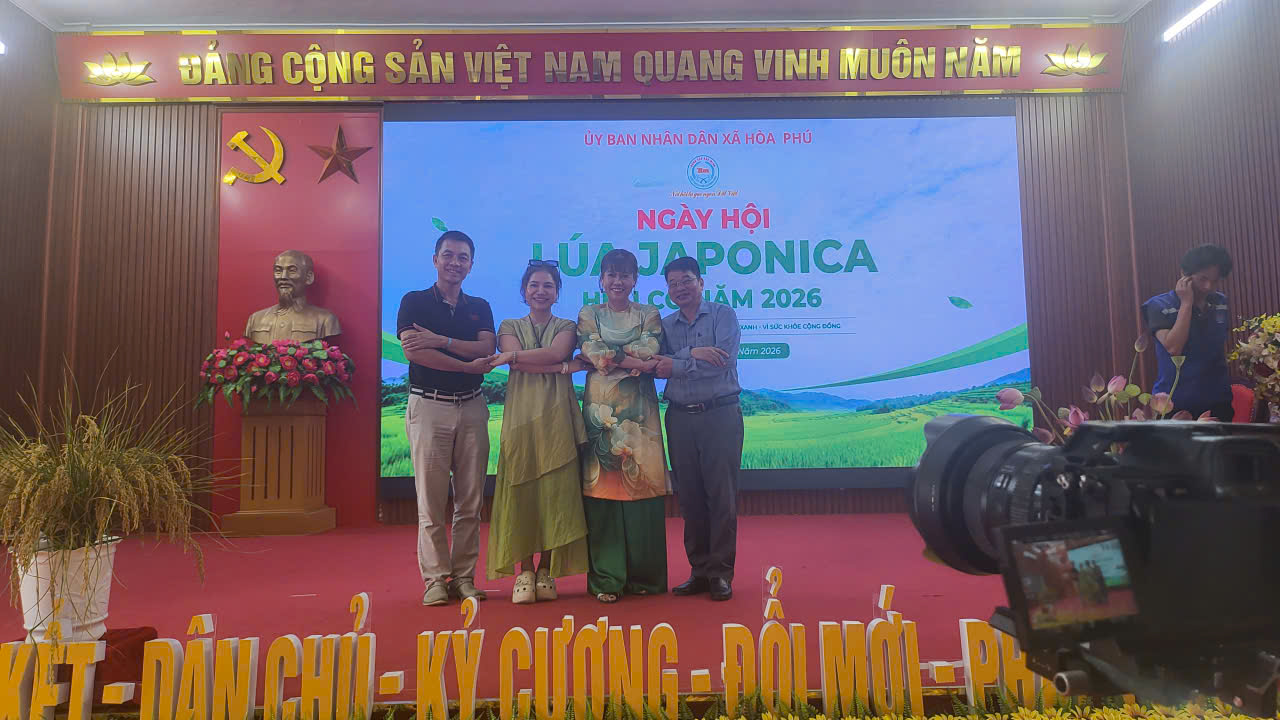
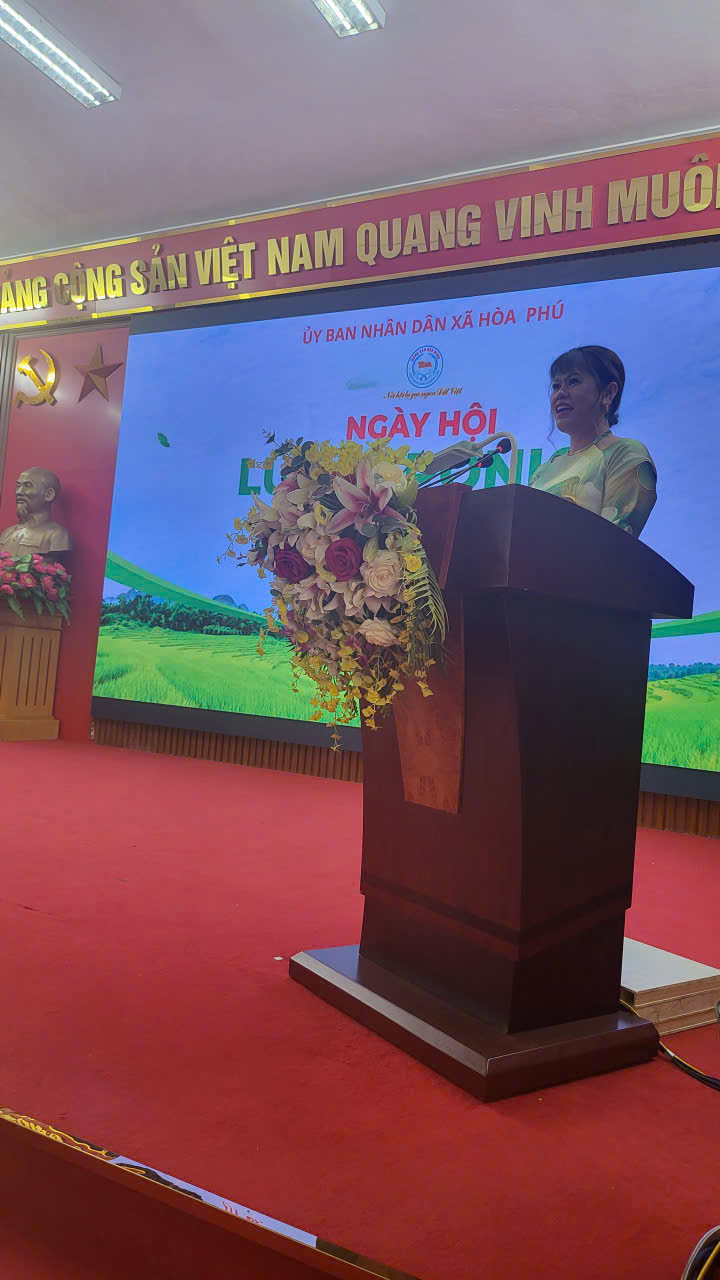
Some impressive images from the Festival:
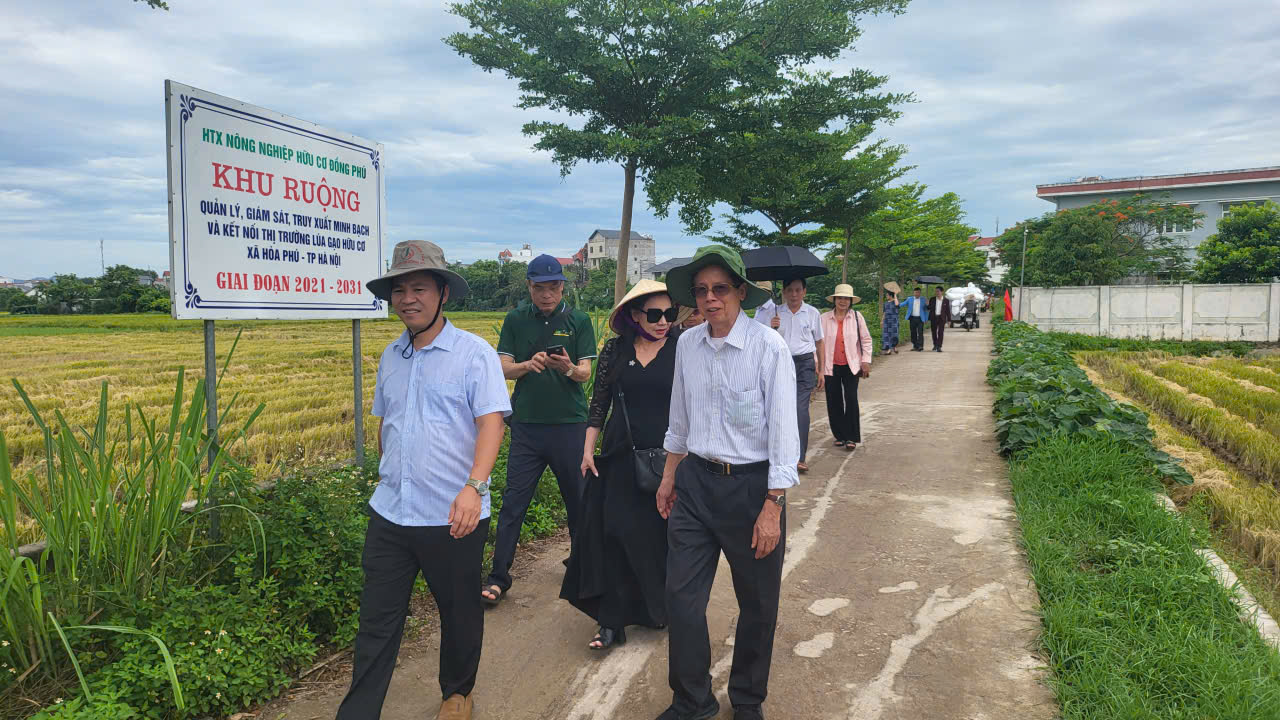
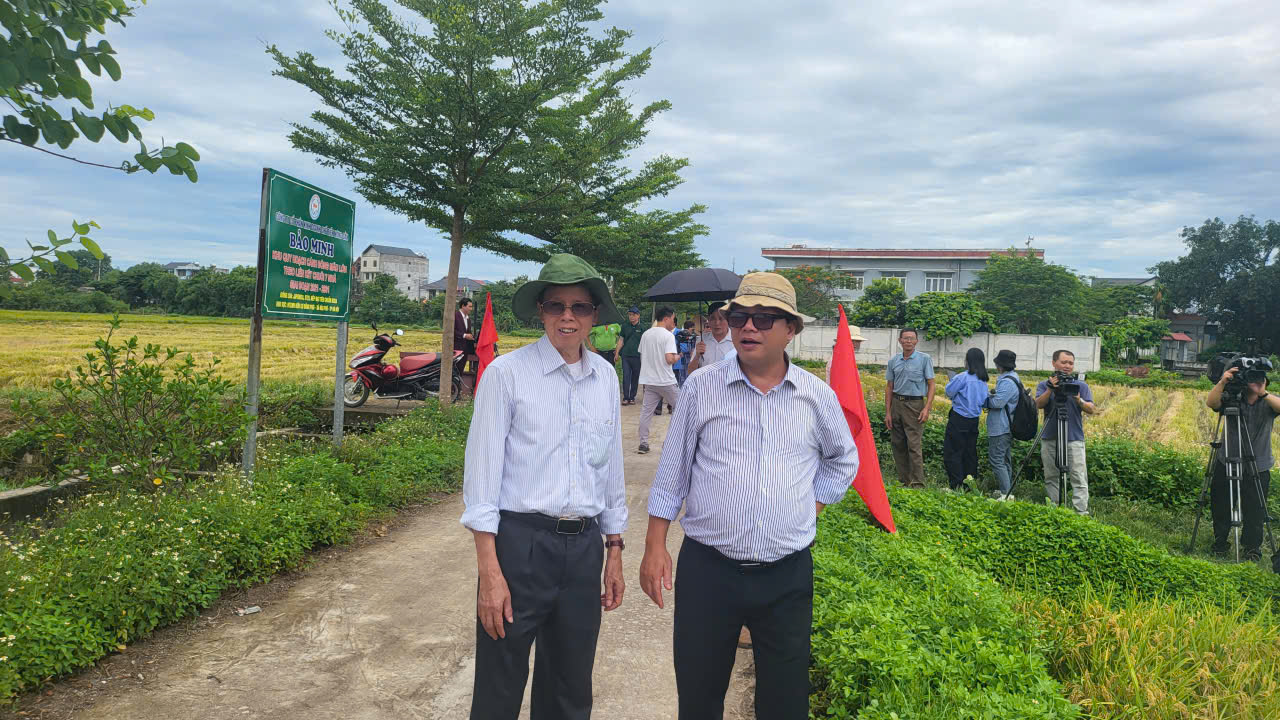
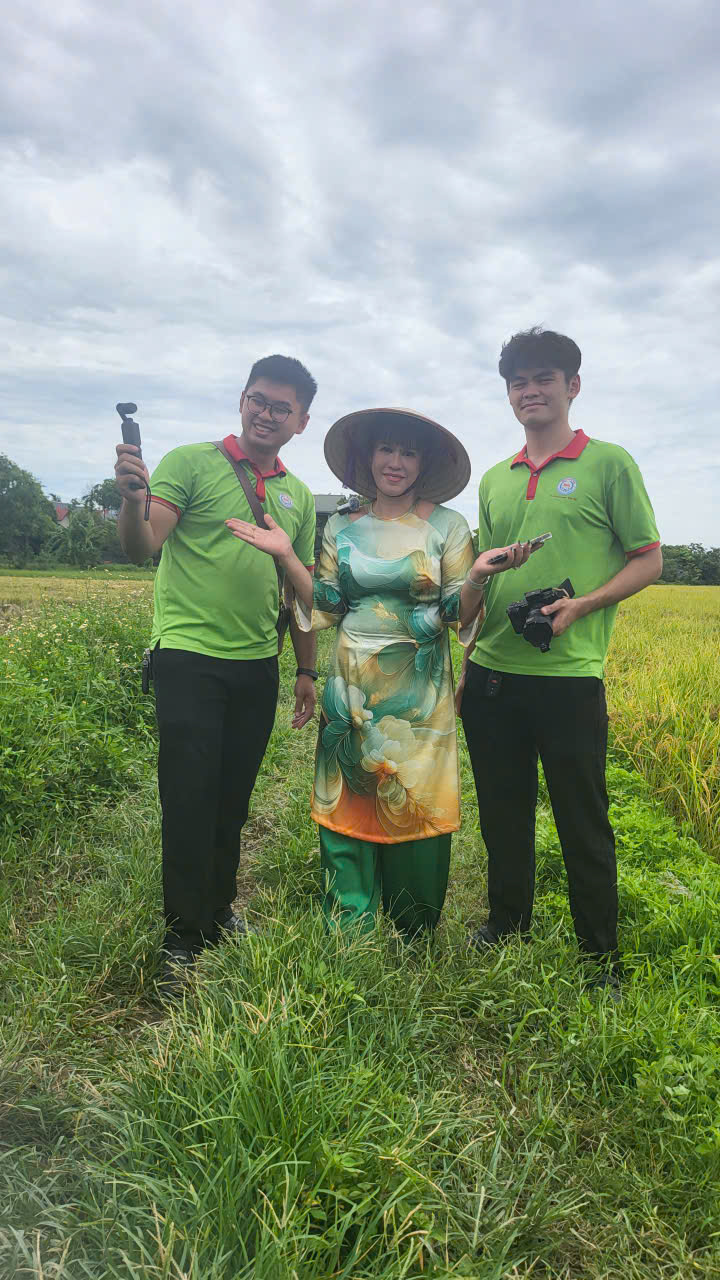
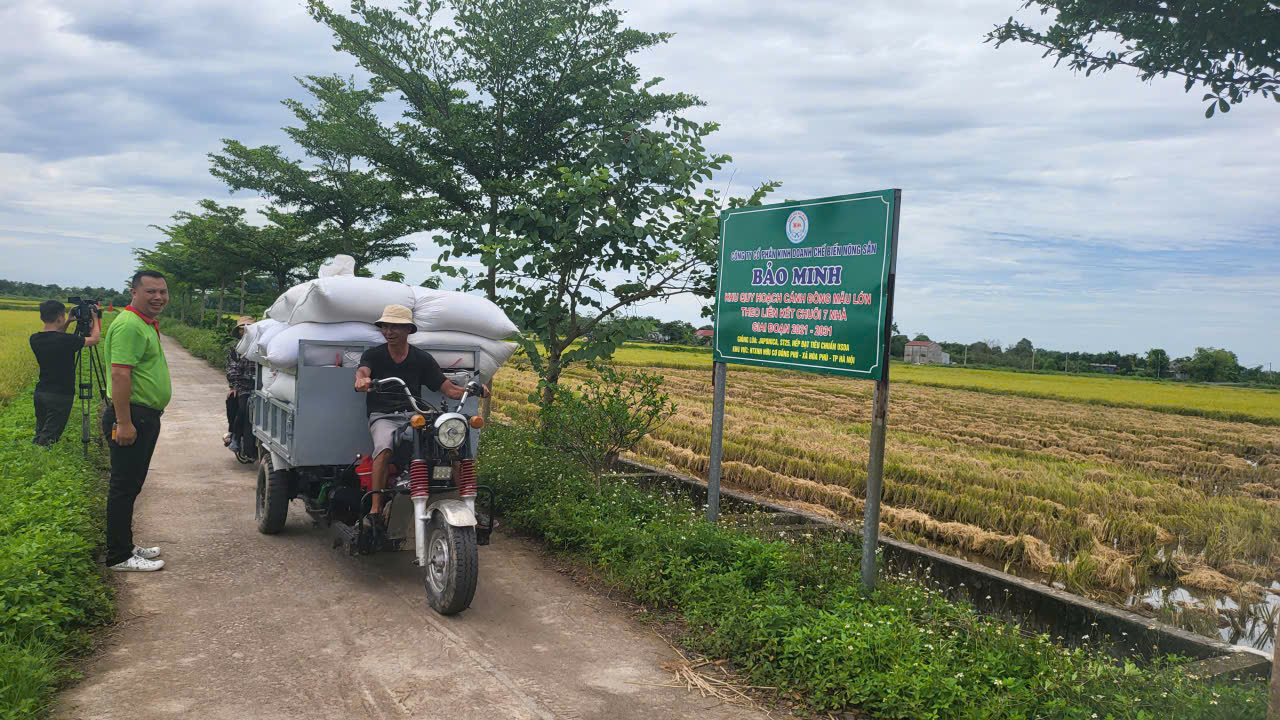
Perform: Thanh Vinh, Deputy Head of Communications
Vietnam Rice Cooperation – Philippines: Journey Connecting from Ninh Binh Fields to Davao Capital
Ninh Binh – Within the framework of a working visit to Vietnam to tighten agricultural partnerships, day 14 month 5 year 2026, The Philippine high-level delegation led by Mr. Dony had an important working session at Cuong Tan Company Limited. This is one of the leading enterprises in Vietnam in the field of hybrid rice production and business, currently plays the role of economic nucleus in Truc Hung industrial park, belongs to the new Ninh Binh province (merged from Nam Dinh province, Old Ha Nam and Ninh Binh).
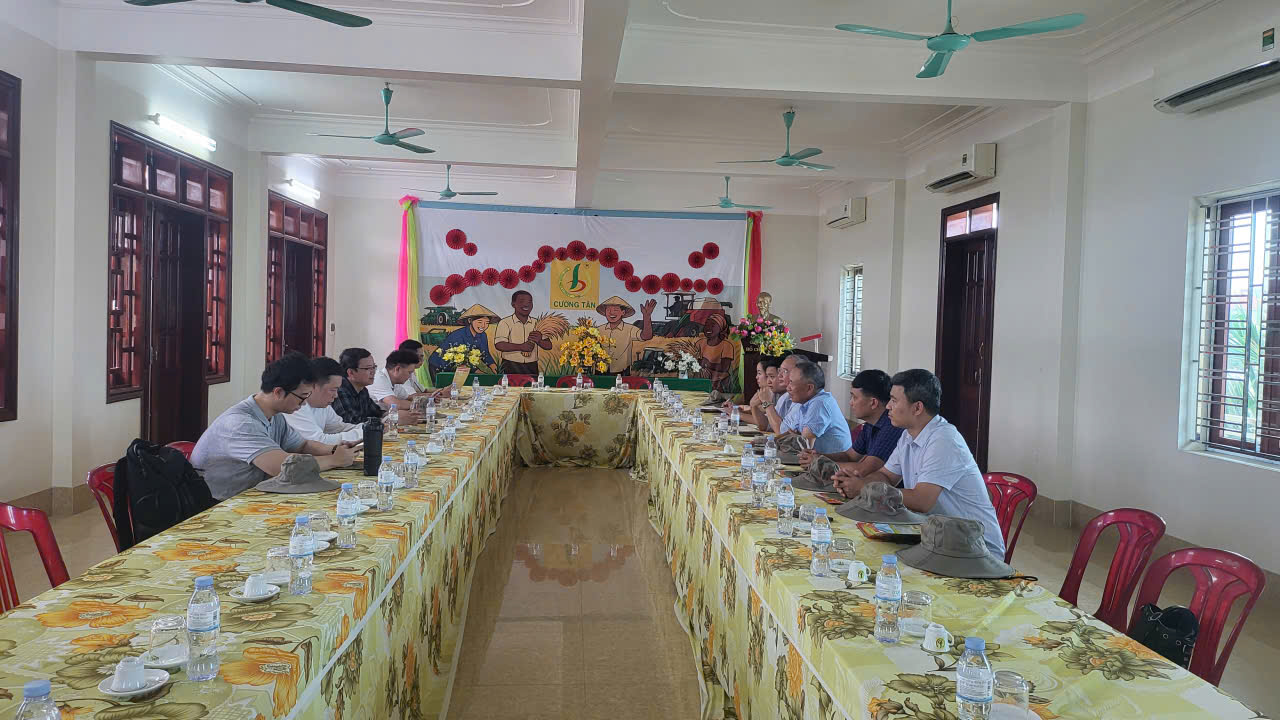
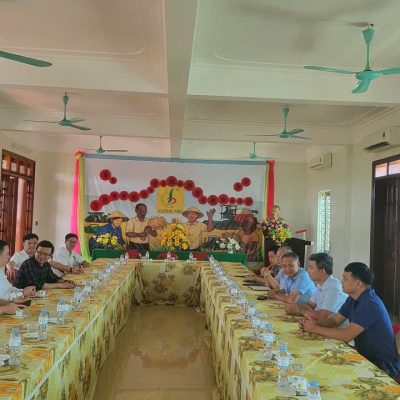
Panorama of the meeting between the Philippine delegation and Cuong Tan Company Limited
The meeting not only stopped at visiting the infrastructure but also opened a new chapter in rice cooperation between the two countries., Focus on providing high quality seeds, share farming experiences and create sustainable agricultural value chains.
Cuong Tan: 30 years affirming its position as "Vietnamese Golden Seed"
Welcoming the delegation at headquarters, Mr. Doan Van Sau – Director of Cuong Tan Company Limited – with Mr. Lam Van Chieu – Deputy Director of the company – expressed his honor to welcome friends from the Philippines. In a sincere atmosphere, Mr. Doan Van Sau reviewed the company's journey of nearly three decades of development.
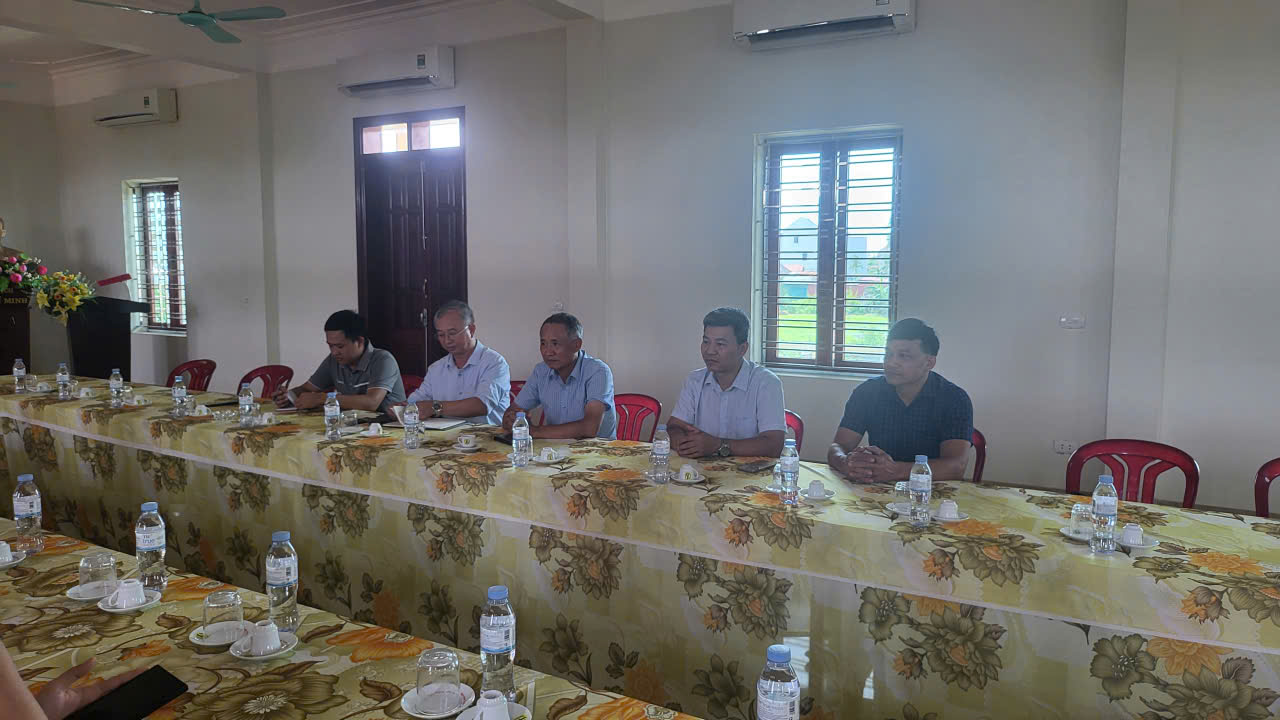
Mr. Doan Van Sau – Director and Mr. Lam Van Chieu – Deputy Director of Cuong Tan Co., Ltd. received the Philippine delegation
Established and started focusing on hybrid rice since year 1997 in the old land of Nam Dinh, Cuong Tan has created historical turning points for Vietnam's agricultural industry. The biggest impression is the acquisition of copyright of the two-line hybrid rice variety TH3-3 from the Vietnam Academy of Agriculture in 2019. 2008 with value up to more 10 billions dong – a record number at the time. Since then, Cuong Tan continuously invests in research, Technology transfer and construction of large-scale seed production areas across the country, from Nghe An, Gia Lai to Dak Lak.
The current, The company's factory in Ninh Binh achieves impressive productivity with an annual output of more than 2.000 tons of rice seeds and more 3.000 tons of high quality commercial rice. With a food safety management system meeting ISO standards 22000:2018, Cuong Tan's products have conquered the most demanding markets in the world.
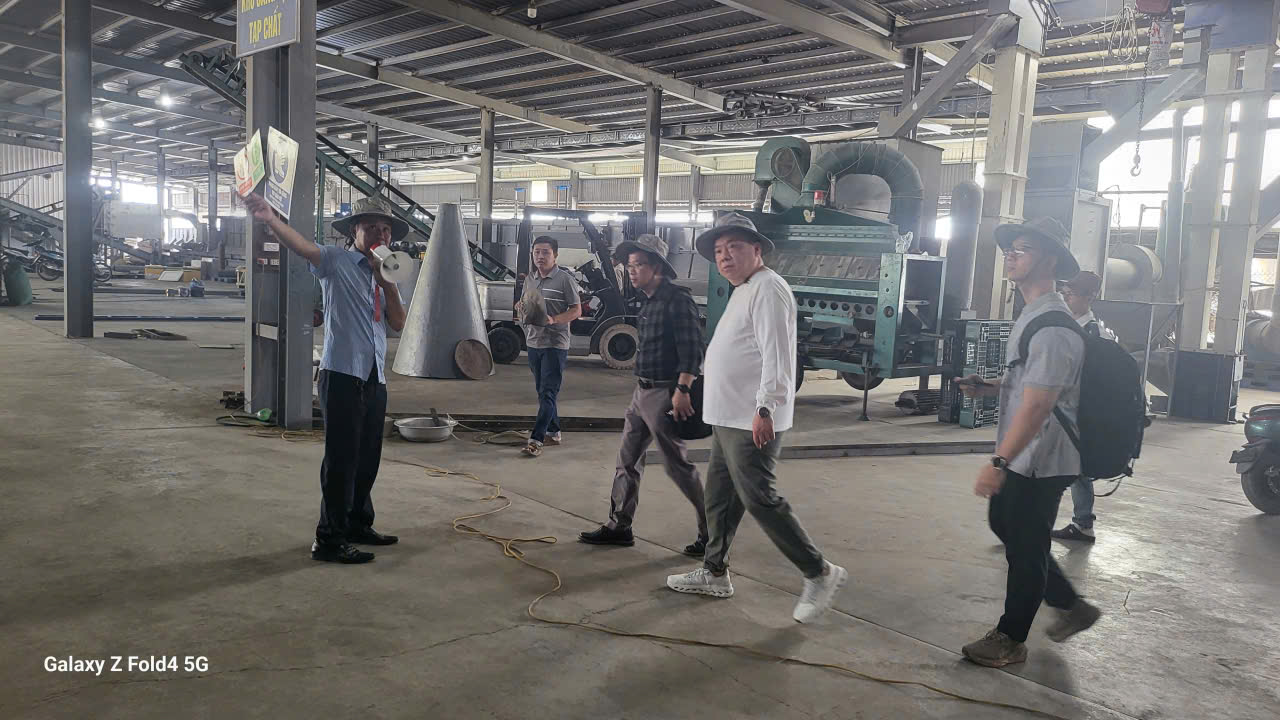
Mr. Doan Van Sau led the group to visit the factory producing high quality rice seeds and rice
Reaching international level: From Cuba, The United States comes to the "heart" of Europe
During the working session, The Philippine delegation was particularly impressed with Cuong Tan's export capacity. Not only does it stop at ensuring domestic food security, The company has brought Vietnam's "seeds of happiness" to the world.
- Imprint in Cuba: Cuong Tan's CT16 hybrid rice variety has caused a "fever" in this island nation when it reached its productivity 7 – 8 tons / ha, twice as high as traditional local rice varieties. This is the clearest proof of the adaptability of Vietnamese rice varieties to different soil conditions, opens up great cooperation opportunities for countries with similar conditions like the Philippines.
- Conquer the US market: Cuong Tan is one of the few Vietnamese businesses that successfully exported seeds to the US, meets the country's strict quality and quarantine standards.
- Vietnamese green rice flavor in Europe: High quality rice lines, especially Huong Com rice, is present in major supermarkets in Germany, China is always the biggest market, France. Thanks to effectively taking advantage of the EVFTA Agreement, Cuong Tan rice has affirmed its leading position in terms of deliciousness, flexible and food safe in the EU market.
Link model 5 sao: Sustainable livelihood for farmers
At the meeting, Mr. Doan Van Sau shared about the company's core business philosophy: “If farmers are rich, businesses will be strong”. Cuong Tan operates under a closed offtake model, from seed supply, organic fertilizers to guide clean production processes for farmers.
The unique feature of this model is the form of contracted harvesting and buying back the excess rice at market price, Helps farmers feel secure about output, and have more motivation to take care of rice to achieve the highest yield. It is this closely linked model that ensures consistent rice quality, meeting strict export standards while directly improving the lives of thousands of farming households in Ninh Binh and branches nationwide.
Potential for cooperation in Vietnam – Philippines: Towards 2026 and beyond
Mr. Dony, Philippine delegation leader, expressed admiration for Cuong Tan's operating model. He emphasized that the Philippines is currently Vietnam's largest rice import partner, with import plans 3,6 million tons of rice per year 2026. However, The goal of this delegation is not only to trade goods but also to find reliable partners to transfer rice seed technology and experience in agricultural mechanization..
TS. Tran Dang Khoa, Deputy head of the delegation and interpreter, On behalf of the delegation, I would like to express my deep gratitude to the company's leaders: “We see Cuong Tan not only as a rice producer but as an agricultural knowledge center. Comprehensive cooperation between the two sides will help the Philippines improve food independence through high-yield hybrid rice varieties."
The two sides discussed in depth the possibility of importing rice varieties such as CT16 and Huong Com to the Philippines, At the same time, organize expert exchange programs to learn from each other's rice farming experiences. Mr. Dony shared, He felt the sincerity from Mr. Sau and considered this a relationship between "good friends" rather than pure business partners..
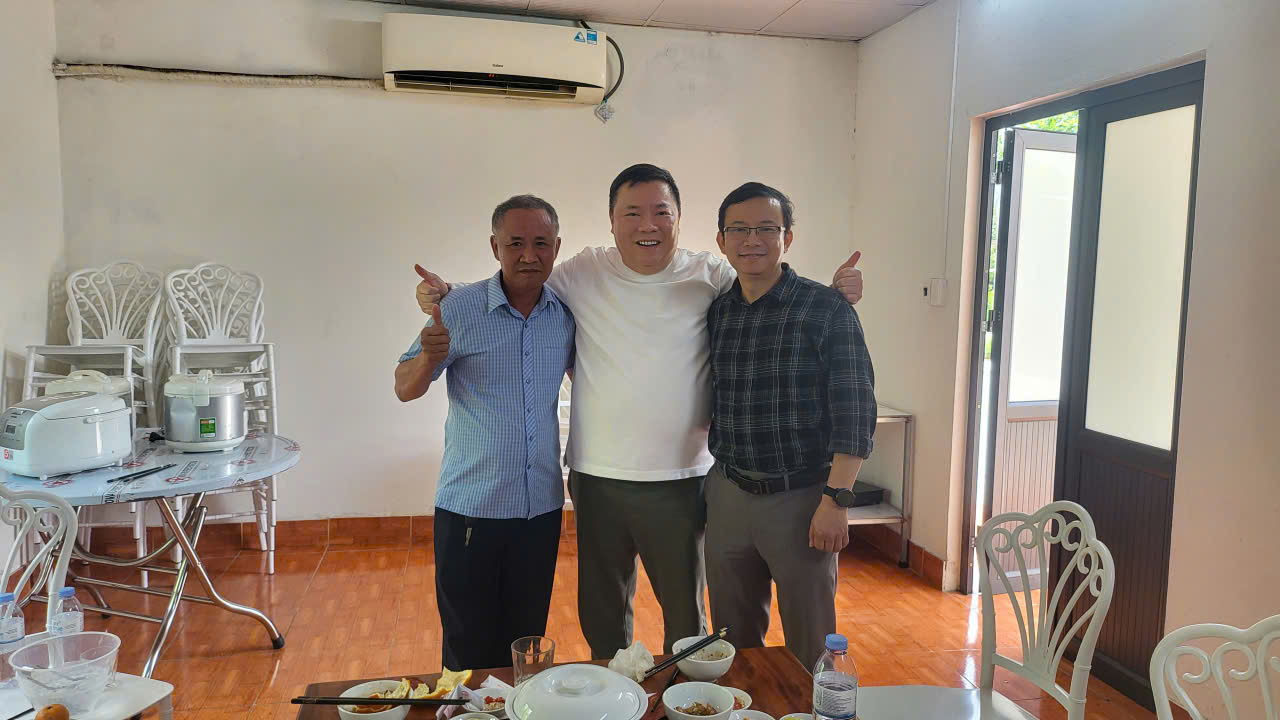
Mr. Dony felt the sincerity from Mr. Sau's side and considered this a relationship between "good friends" rather than pure business partners.
Invitation to Davao and a meal imbued with friendship
At the end of the working session, An emotional event took place when Mr. Dony warmly extended an invitation to the Board of Directors of Cuong Tan Co., Ltd. to visit the Philippines in September. 6 next, on the occasion of celebrating the establishment of the state of Davao – The land is known as the "Coconut Capital" but also has huge agricultural potential of the Philippines, especially the rice industry. Mr. Dony affirmed that the Philippines will cover all accommodation costs and looks forward to welcoming Vietnamese friends in his homeland..
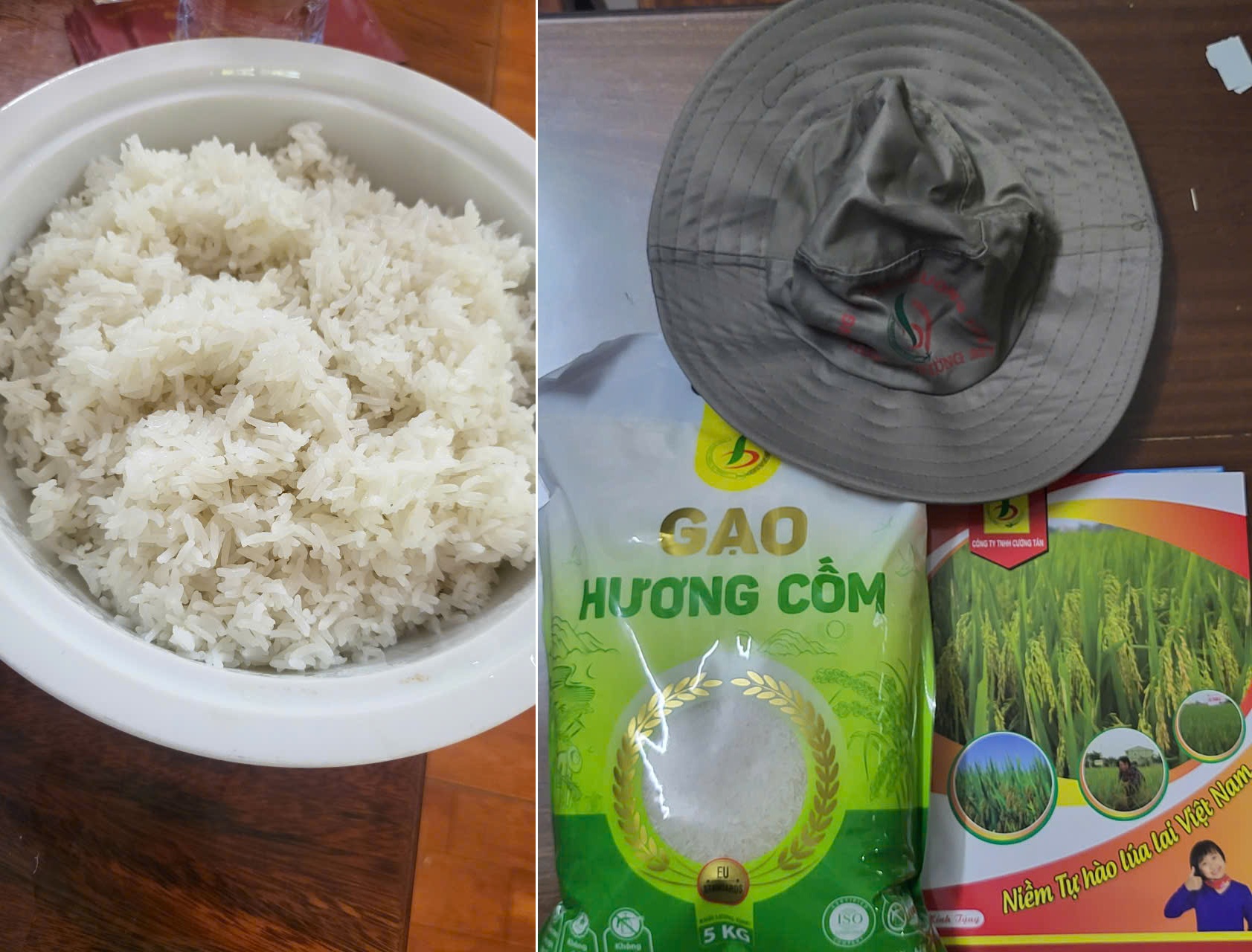
To respond to that feeling, Mr. Doan Van Sau and Mr. Lam Van Chieu invited the delegation to an intimate meal at the company. Special thing, The main dish of the meal is Huong Com rice – Specialty rice produced by Cuong Tan and being exported to the EU. The scent of pandan leaves blends with the scent of young rice flakes emanating from a bowl of white rice, The fragrant aroma has made members of the Philippine delegation endlessly praise it.
Before breaking up, Company leaders gave the delegation gifts imbued with cultural and brand identity: Set of professional brand identification brochures, Large bucket hats are associated with the image of hardworking Vietnamese farmers in the sun and wind, and especially bags of special Huong Com rice.. Mr. Doan Van Sau happily accepted the invitation and promised to visit Davao next month to realize cooperation commitments..
Conclude
The visit of the Philippine delegation to Cuong Tan Co., Ltd. on 14/5/2026 closed with smiles and firm handshakes. Go beyond the numbers of output and turnover, This is a testament to the power of trust and the spirit of cooperation and development. Cuong Tan rice seeds from Ninh Binh fields, carrying the enthusiasm of Vietnamese farmers, is ready to sprout and spread its fragrance in the Philippines, contributing to building a sustainable and prosperous Southeast Asian agricultural community.
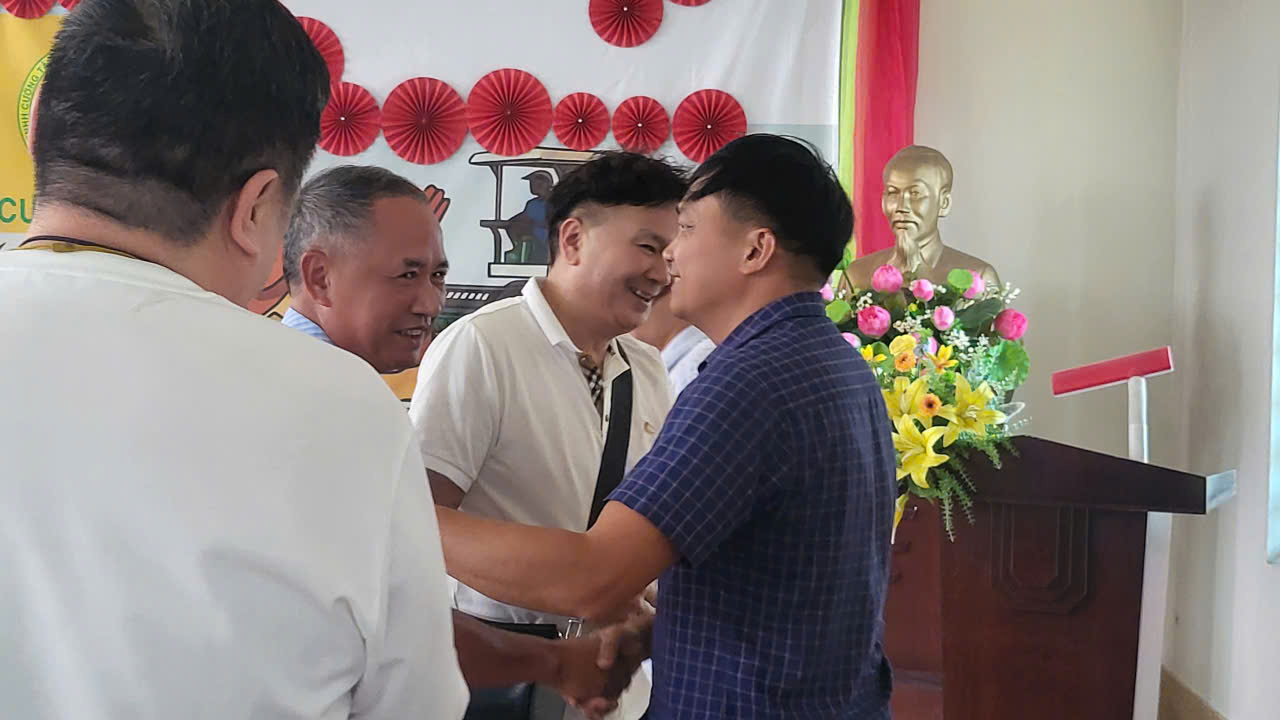
The moment of farewell was full of affection
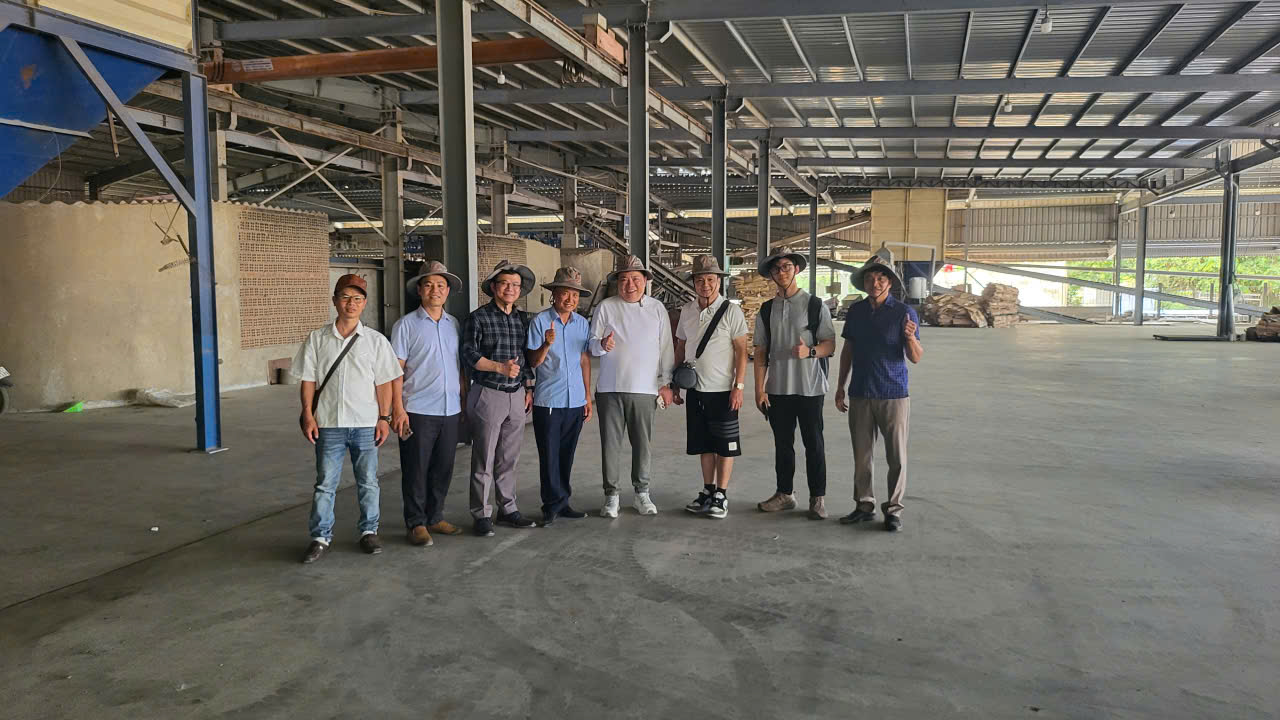
Some other pictures from the business trip:
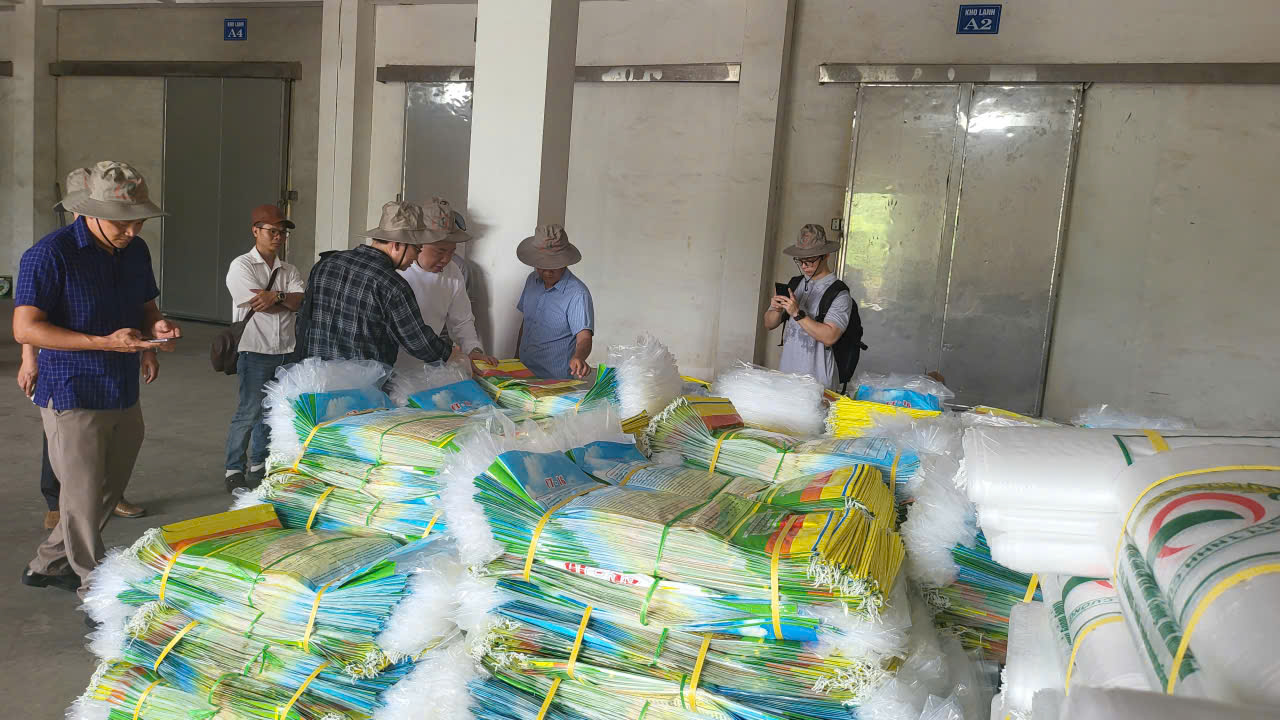
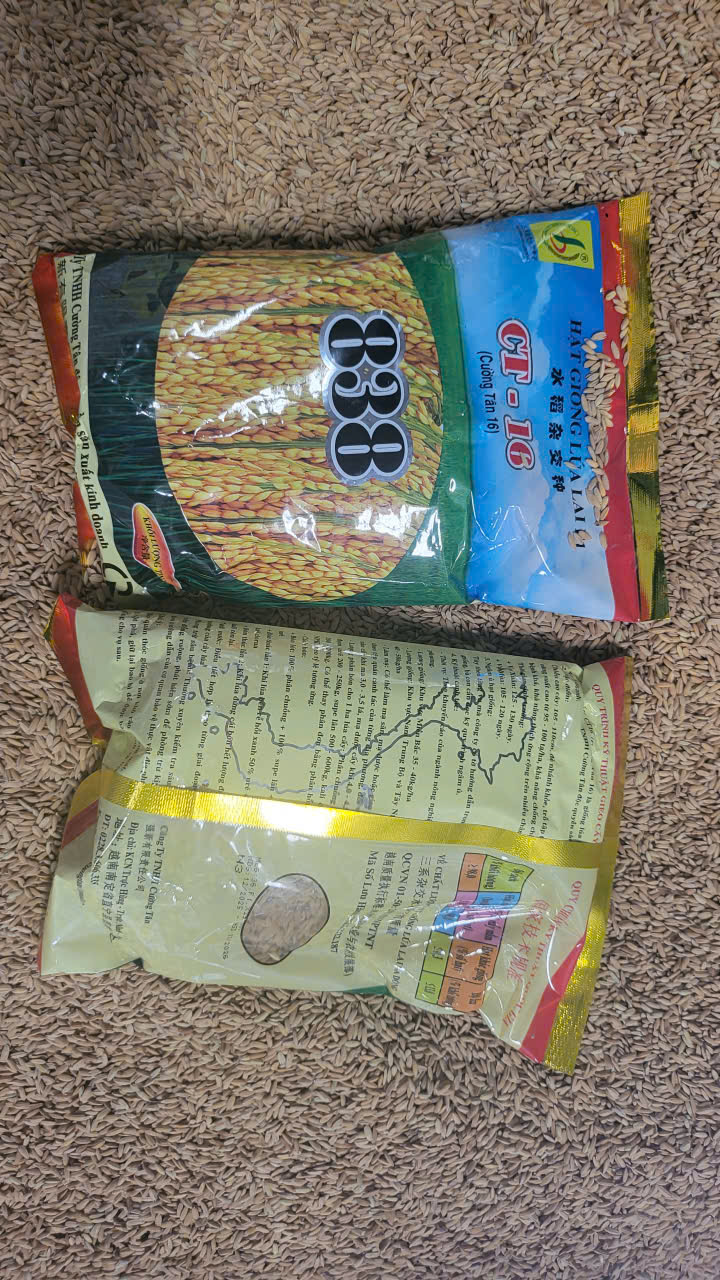
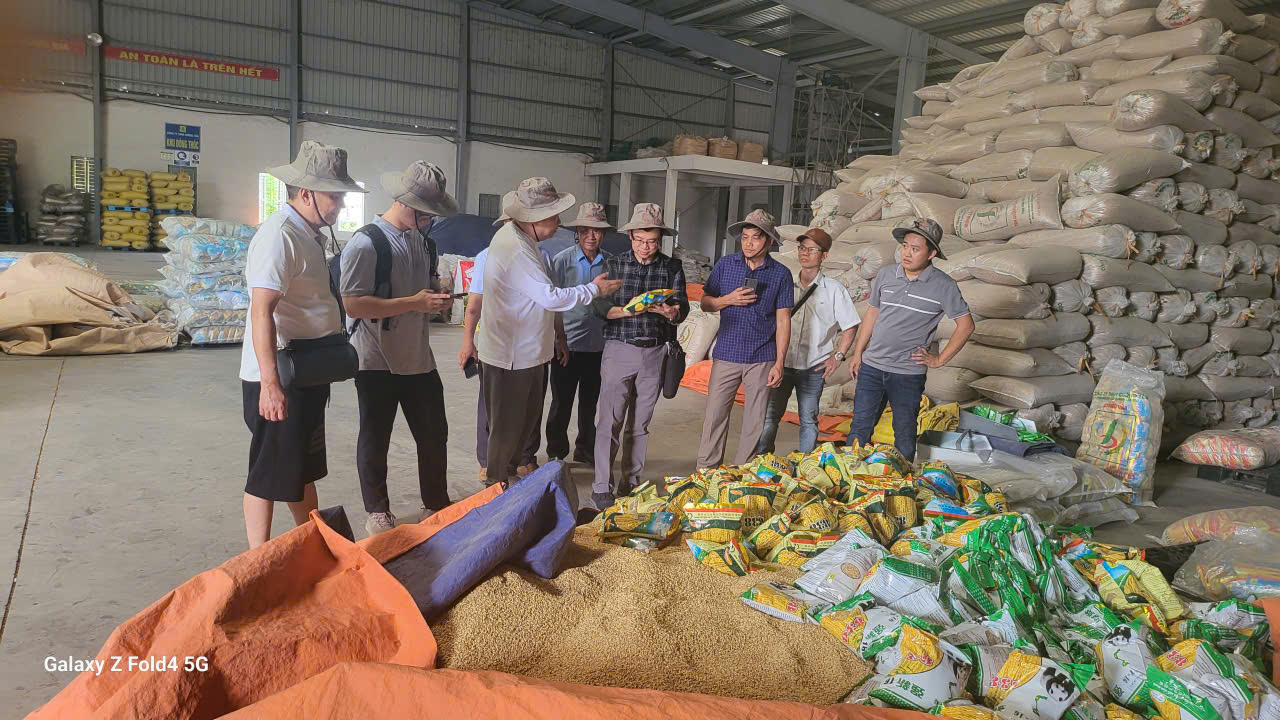
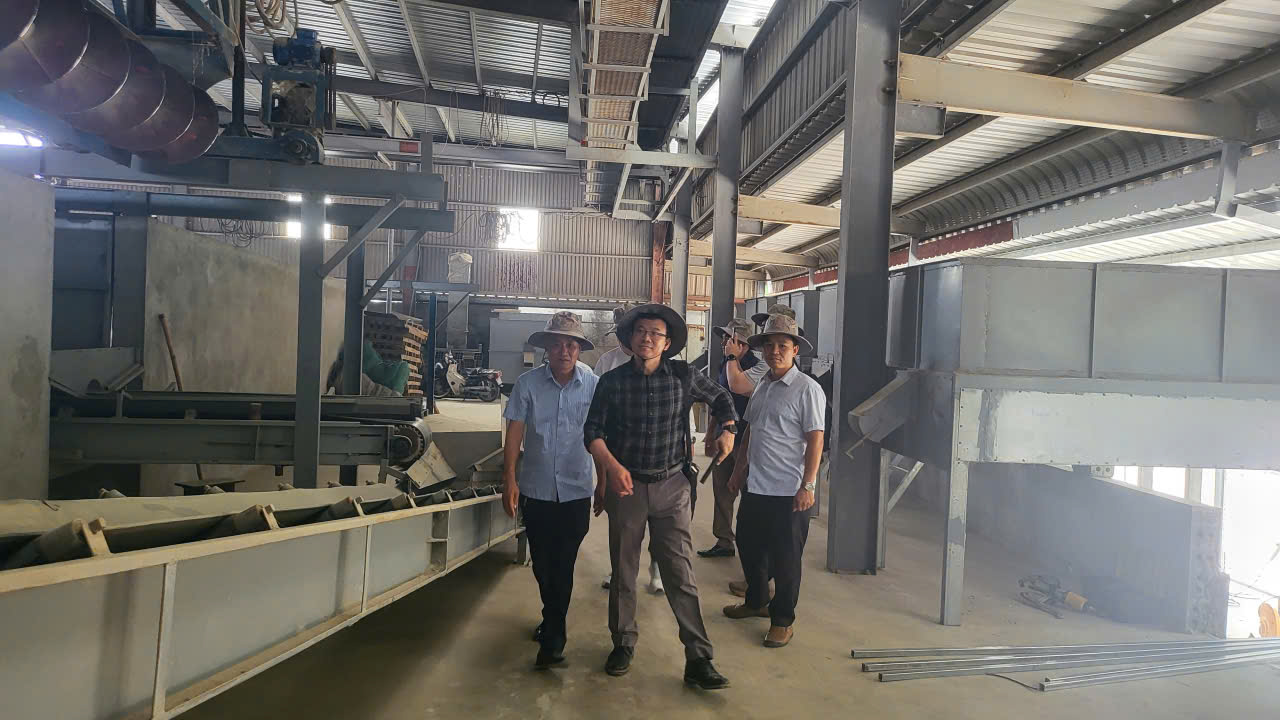
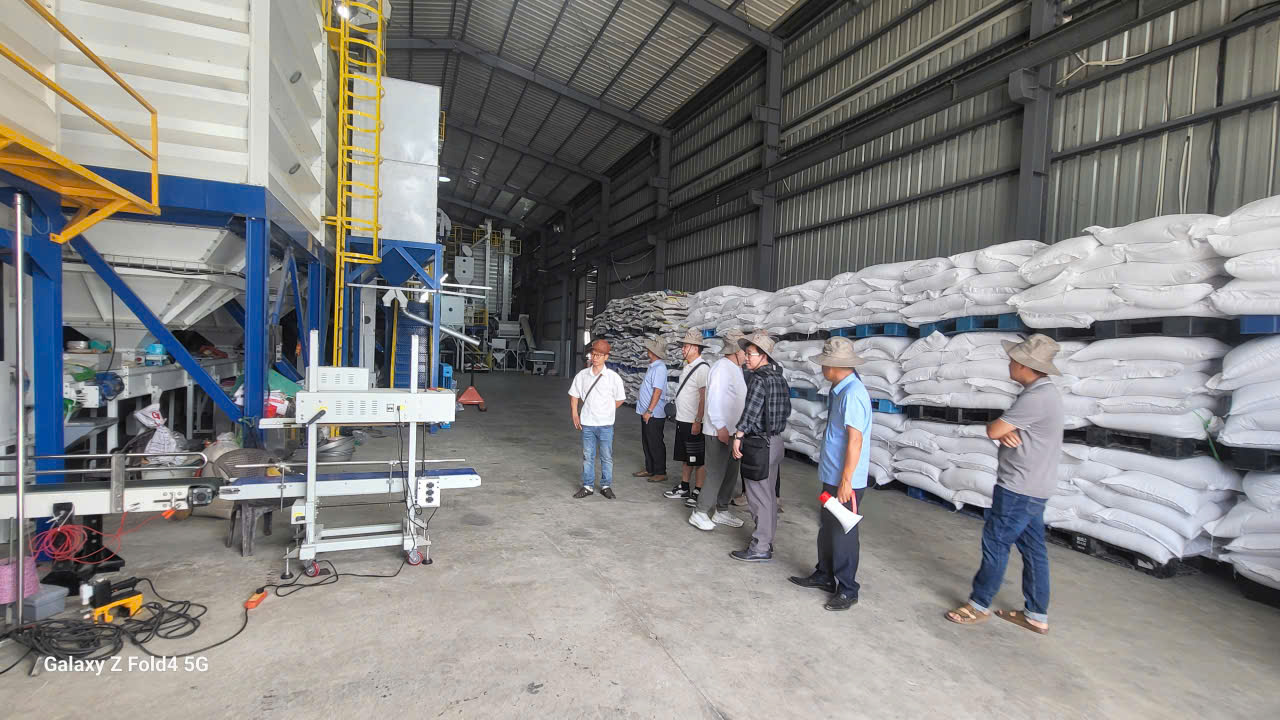
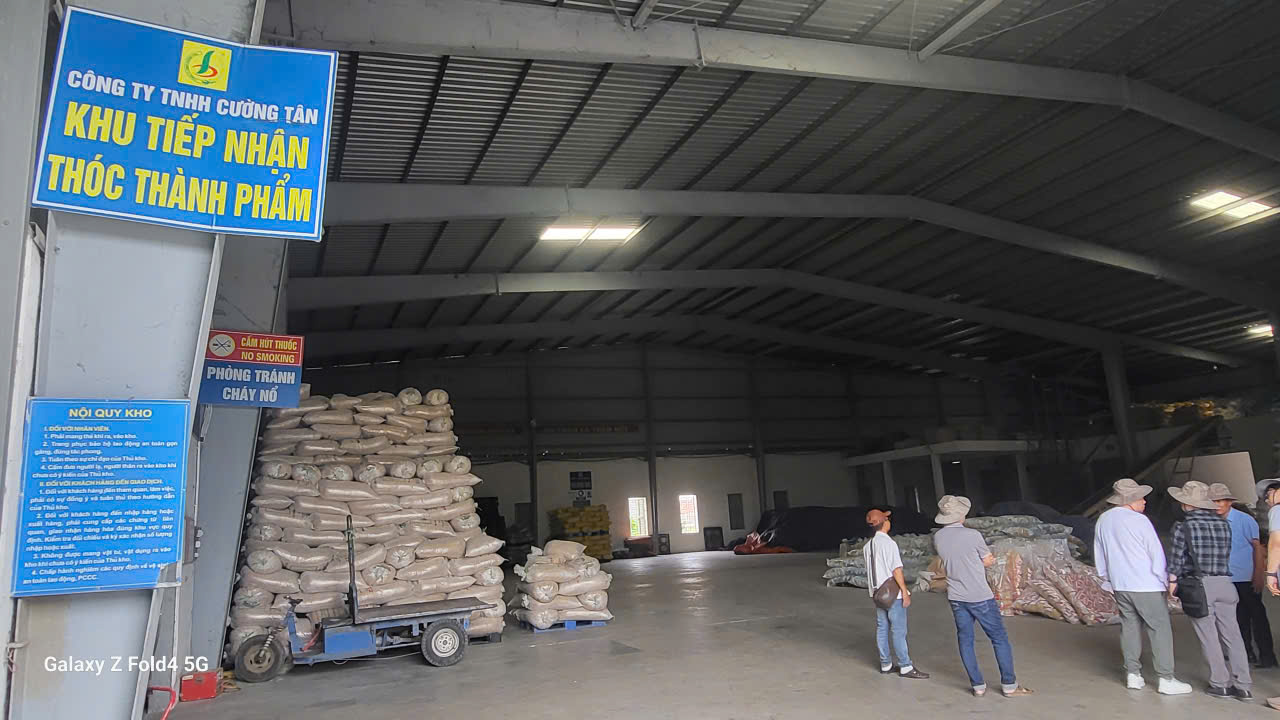
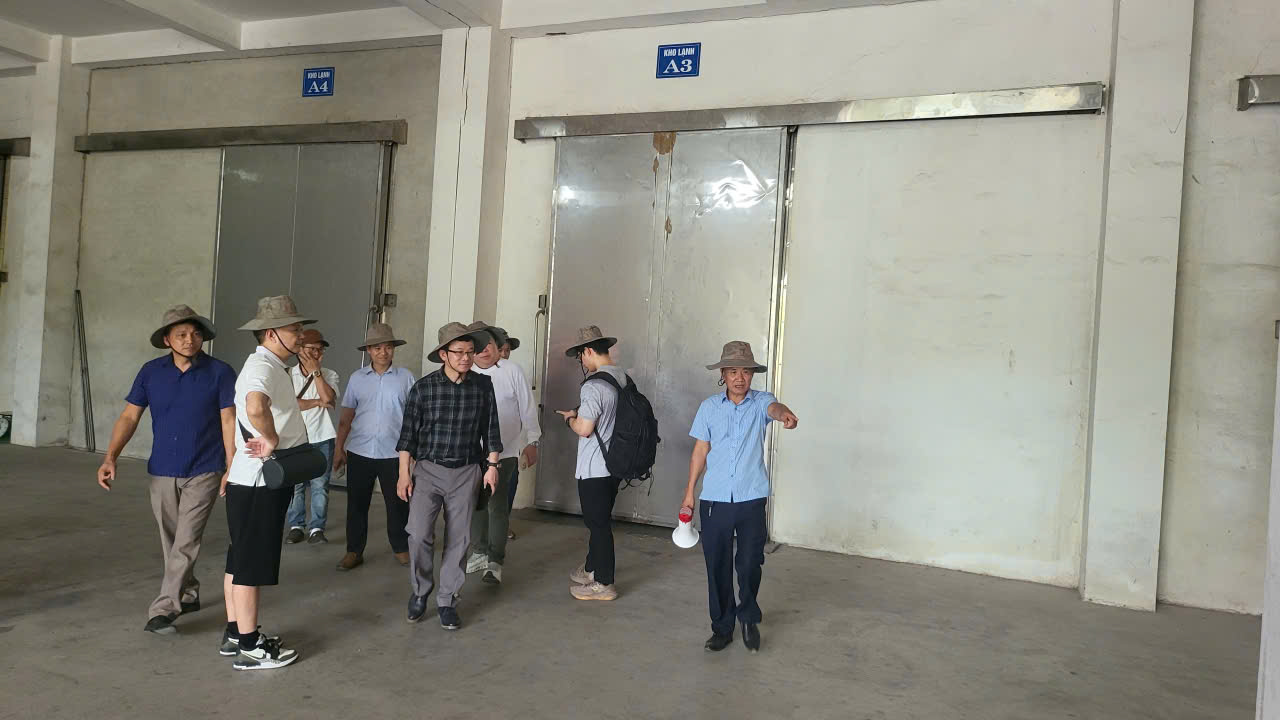
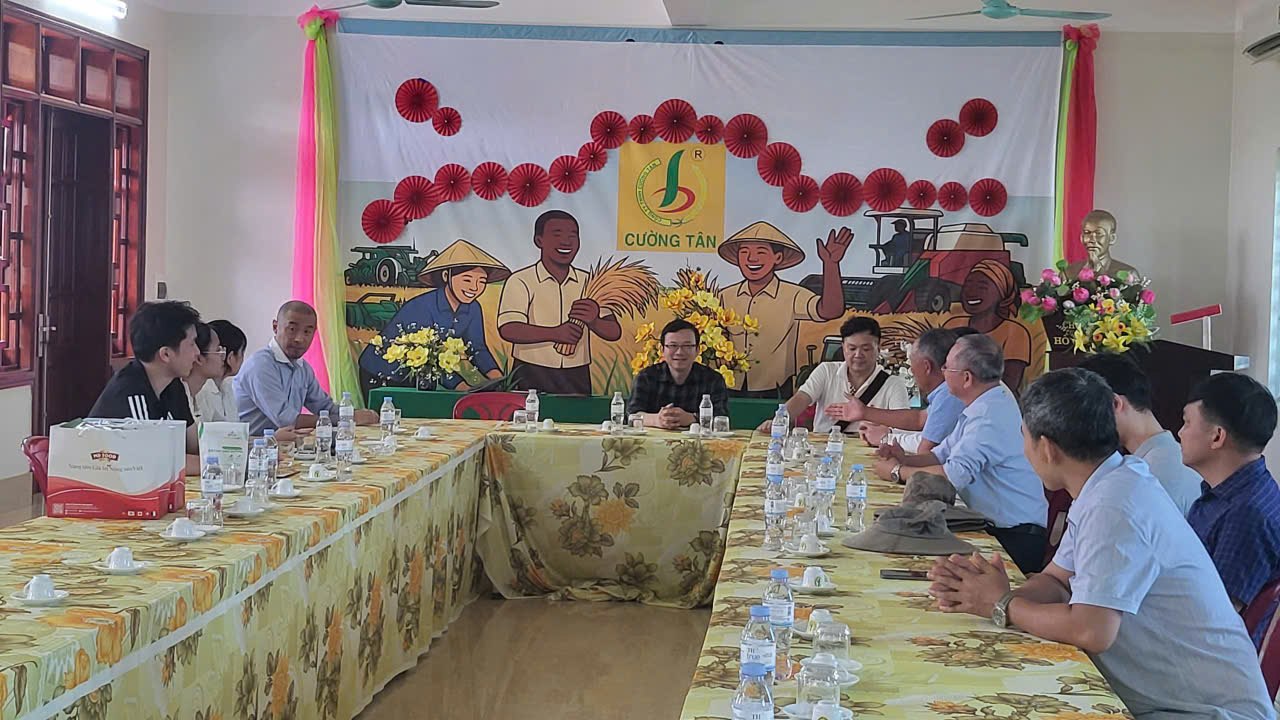
Perform: Thanh Vinh – Deputy Head of Technology Department
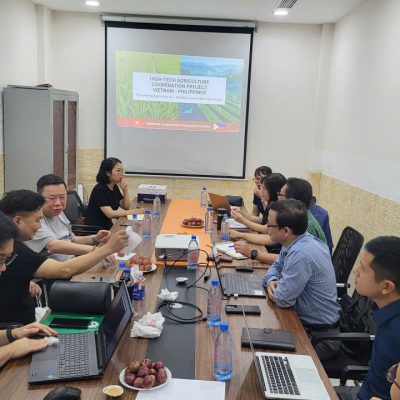
Vietnam Agricultural Cooperation – Philippines: Creating a Green Future and Upgrading the Global Value Chain
HANOI – Day 13 month 5 year 2026 marked an important milestone in agricultural cooperation between Vietnam and the Philippines. At the headquarters of the Vietnam Institute of Agricultural Technology Application and Development (VITAD-AGRI) – 24 Ly Thuong Kiet – Hoan Kiem – Hanoi, Strategic seminars and high-level working sessions took place between the Philippine delegation and leading Vietnamese experts. The event is not simply a technical exchange but also opens up large-scale investment prospects in the field of high-tech agriculture., renewable energy and organic food.
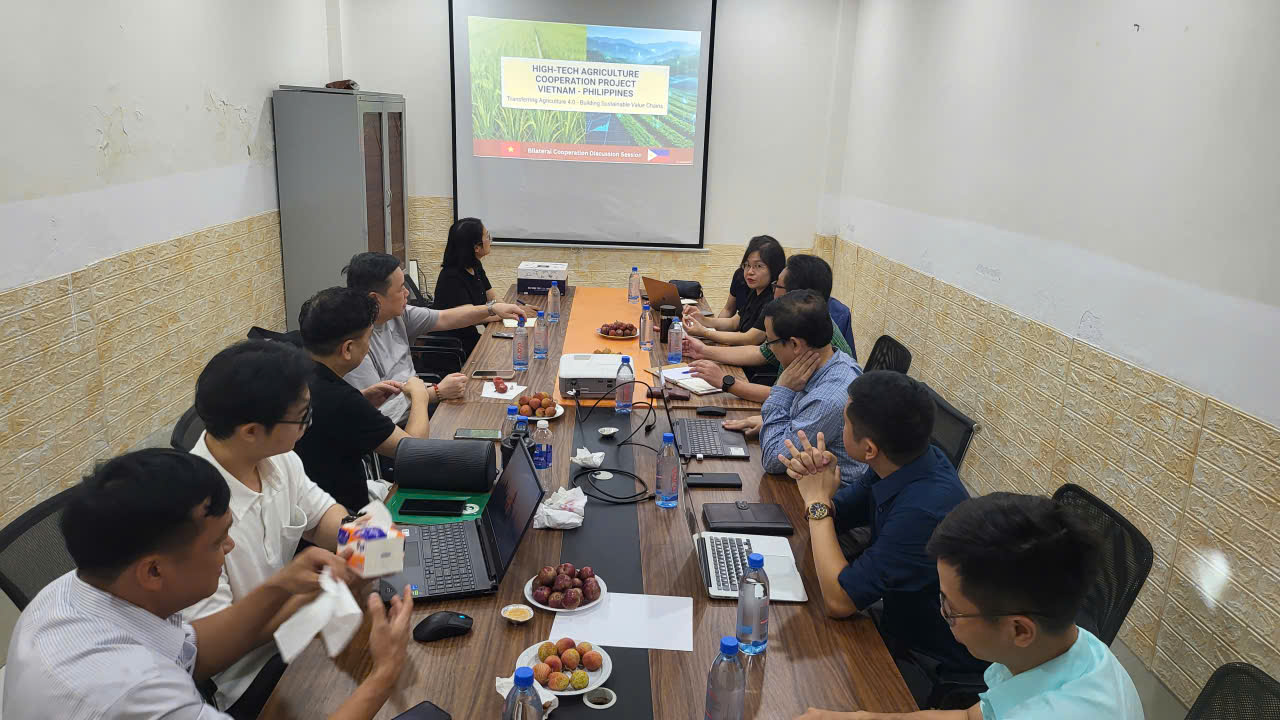
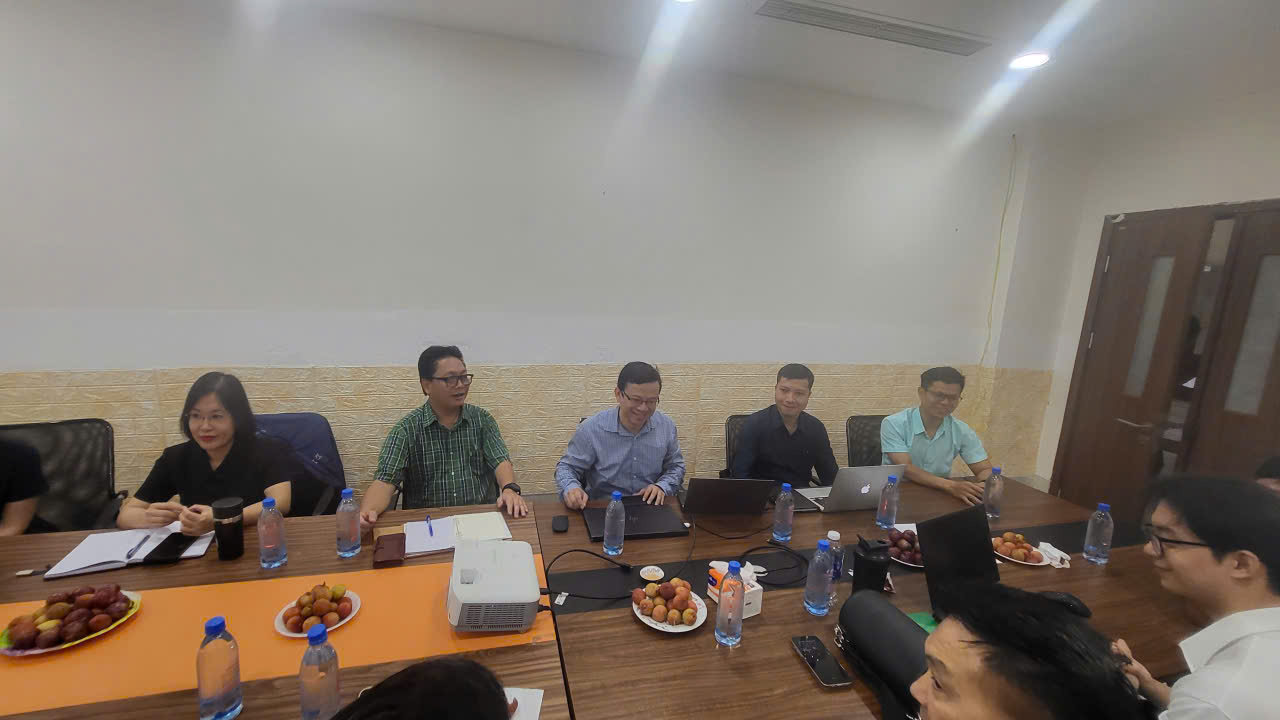
Overview of the meeting discussing agricultural cooperation between the Davao delegation – Philippines and VITAD-AGRI
The beginning of a common vision of Sustainable Agriculture
The meeting was chaired by Dr. Pham Dinh Nam, Vitad-Agri Director. On the Philippine side, The delegation led by Mr. Dony showed special interest in smart agricultural models that Vietnam is successfully implementing.. In the context that the regional agricultural industry is facing challenges from climate change and strict requirements of the international market, The combination of Vietnam's applied technology and the Philippines' potential resources is expected to create a strategic "push"..
Vietnam has now affirmed its position as an agricultural powerhouse when coconut export turnover officially exceeded the milestone 1,15 billion USD by year 2025, maintaining the third position in the world after the Philippines and Indonesia. This remarkable advancement is the result of standardizing raw material areas and applying deep processing technology – Valuable experiences that VITAD-AGRI experts are willing to share with Philippine partners.
Technology Transfer: The core of cooperation
Opening the working session, TS. Tran Dang Khoa – lecturer at the Department of Agricultural Technology, Hanoi National University – presented a panorama of potential agricultural technologies. Theo TS. Department, Vietnam possesses breakthrough solutions that can be immediately applied to key crops of the Philippines such as rice, coconut and coffee.
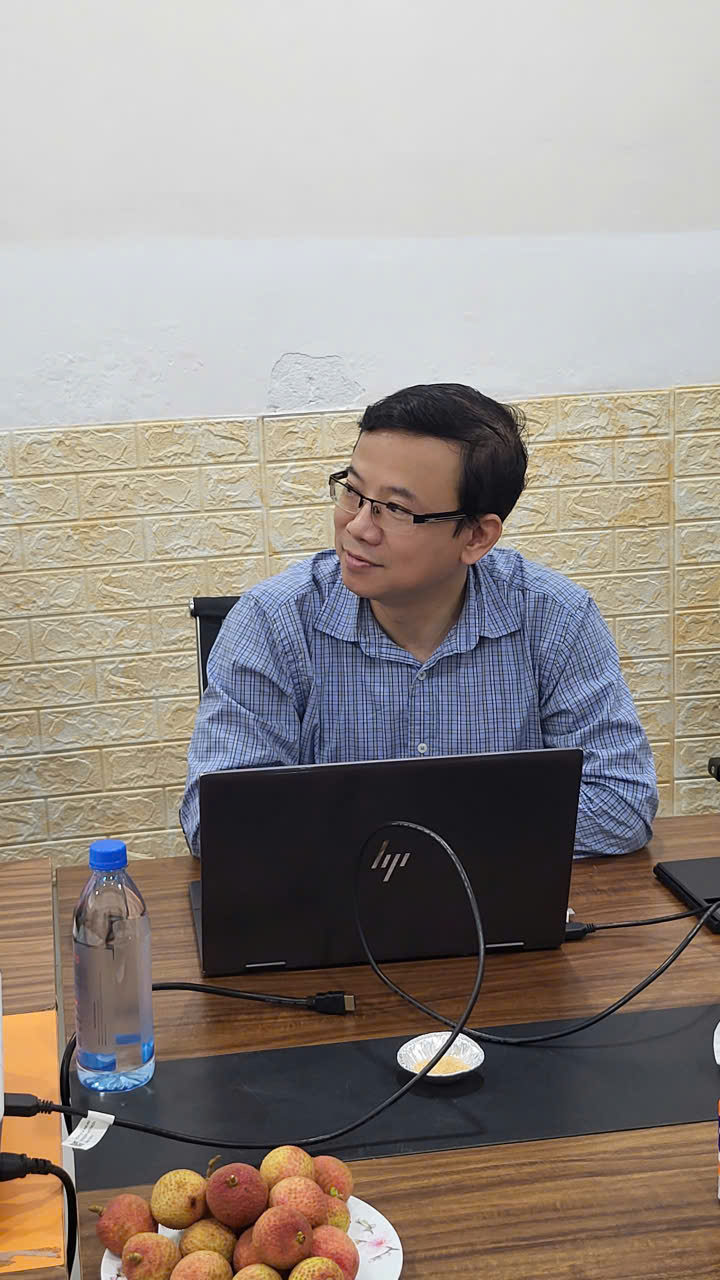
TS. Tran Dang Khoa spoke about the potential for cooperation between the Philippines and Vietnam in the field of agriculture
Particularly for the coconut industry, The difference in productivity is an important highlight. While the average yield in the Philippines reaches approx 3.719 fruit/ha/year, Vietnam has reached an impressive level 8.294 fruit/ha/year thanks to the application of improved coconut varieties and smart intensive farming techniques. The transfer of AI technologies in crop health monitoring and synchronized pest management processes (like dealing with beetles and blackhead worms) will help the Philippines optimize its production capacity 340 million existing coconut trees.
Besides that, Solutions for the rice industry are also discussed in depth, especially in the context that the Philippines is expected to import from 3,6 million tons of rice per year 2026, in which about 75-80% The supply comes from Vietnam. Technology cooperation will help the two sides not only stop at trade but also move forward with cooperation in producing high-quality rice varieties., Salt tolerance and climate change adaptation.
Affirming the brand and international Organic Standards
An indispensable part of the agricultural value chain is certification and standardization. Mr. Nguyen Ngoc Tung, Deputy General Director of VINACAB, introduced the competency profile of certification services and the "value creation" strategy, Affirming the brand". Mr. Tung emphasized that, so that Philippine agricultural products can penetrate deeply into demanding markets such as the US or EU, achieving certifications such as BRCGS, IFS or growing area codes (MSVT) is a mandatory condition.
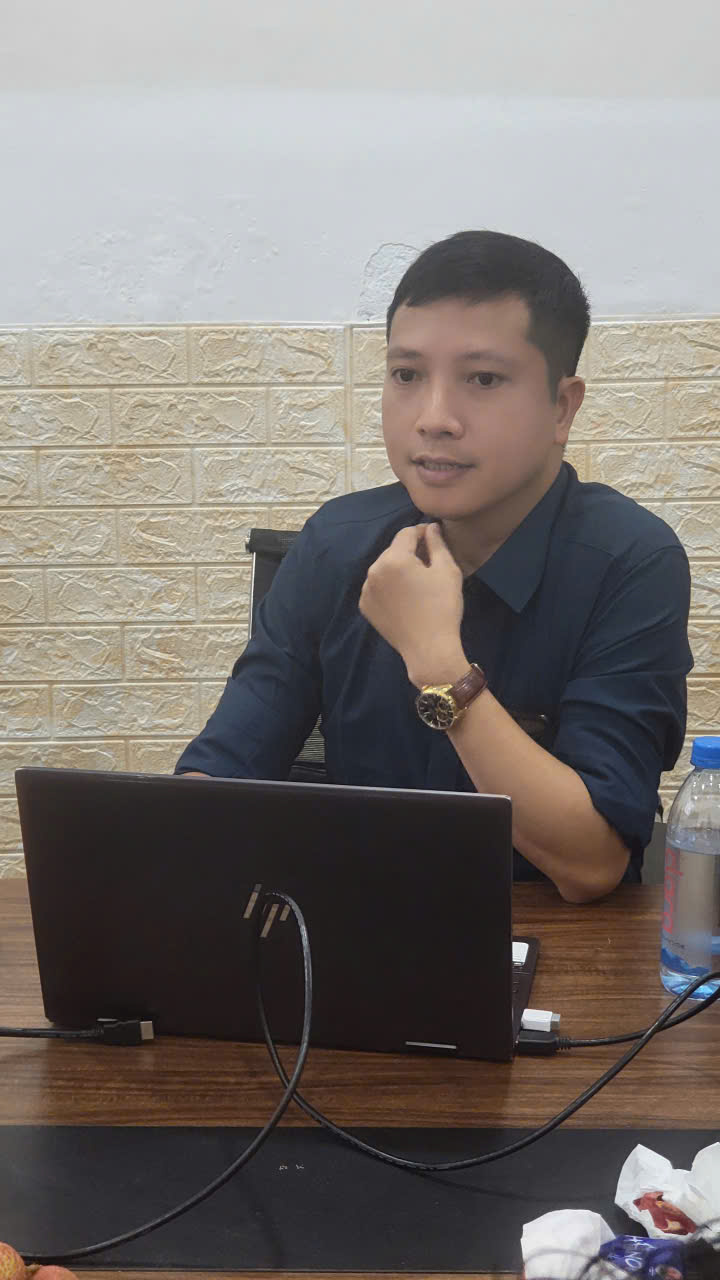
Mr. Nguyen Ngoc Tung introduced certification and standardization work
Continuing this topic, Dr. Nguyen Thi Dinh from the Vietnam Academy of Agriculture presented details about organic agriculture standards. The current, Vietnam has developed more 24.000 hectares of organic coconuts meeting USDA standards (America) and EU Organic. Experience in building linkage chains between businesses and farmers for clean production is the optimal solution that the Philippines can apply to increase value for 3,6 million hectares of its coconut growing land. The potential for cooperation in the rice industry is also huge.
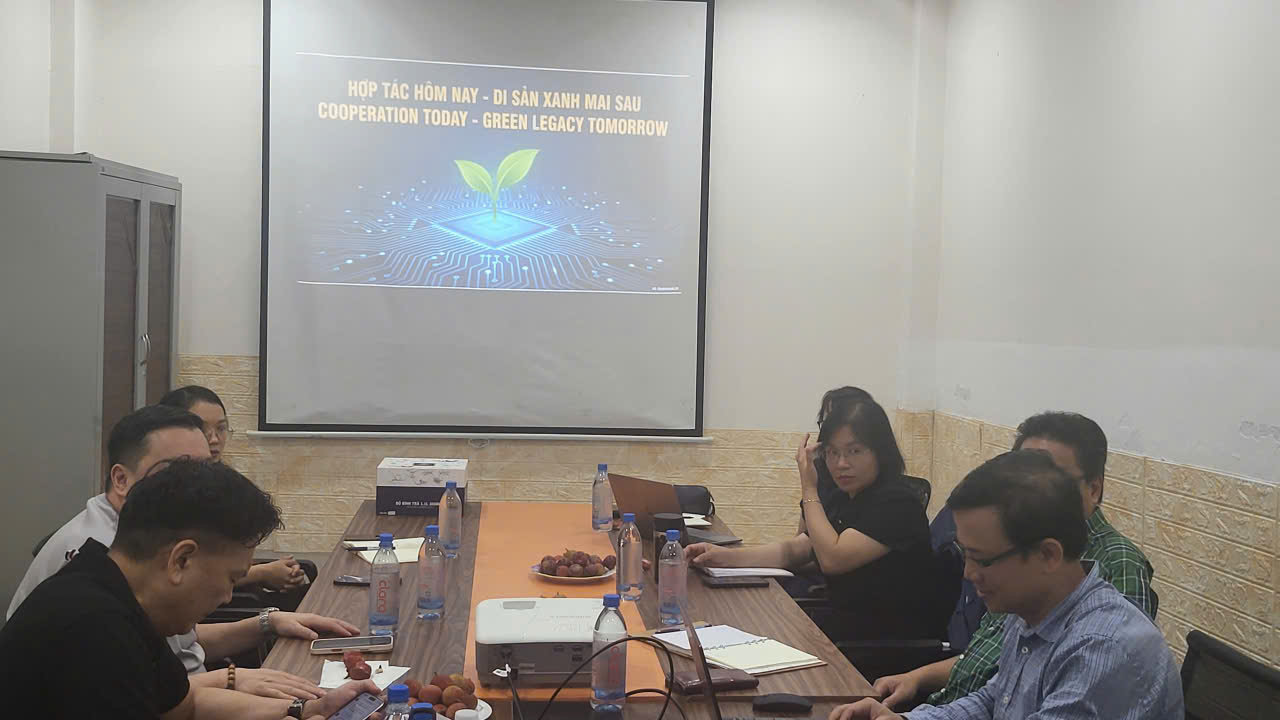
Dr. Nguyen Thi Dinh presented details about organic agriculture standards
Other experts of VITAD-AGRI: Dr. Nguyen Thi Hong Hanh, Lecturer at Vietnam Academy of Agriculture; Master Nguyen Xuan Tho, Israeli agricultural research and experimentation expert; Master Hoang Van Nien, expert in organic agriculture; MSc Le Ngoc Thanh Vinh, Experts on agricultural digitalization also spoke about the potential for science and technology cooperation between the two Philippine countries in the new situation..
Notable project: Biomass Pellets and Circular Agricultural Ecosystems
One highlight that attracted the attention of the Philippine delegation was the investment project of Evergy Phu Yen Joint Stock Company (belongs to Evergy Asia Group), do TS. Pham Dinh Nam directly introduced. This is a typical circular economy model located on National Highway 29, Duc Binh commune, Dak Lak province.
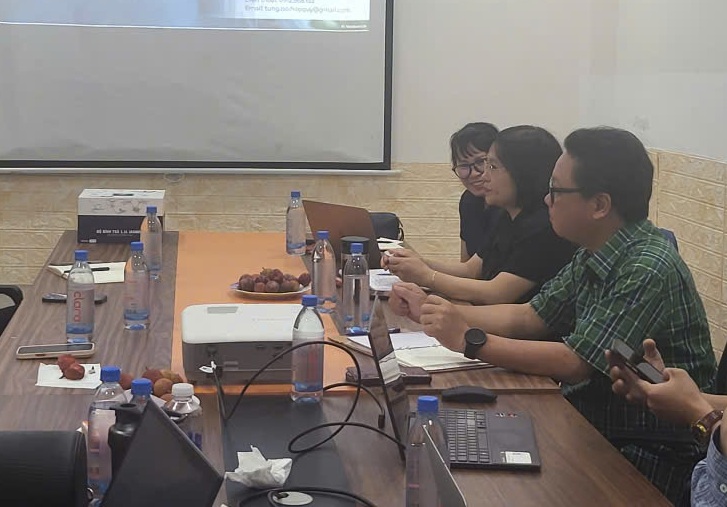
TS. Pham Dinh Nam introduces Biomass Pellets of Evergy Phu Yen
Technical specifications of Evergy Dak Lak Project:
|
Category |
Detail |
|
Factory capacity |
300.000 tons of biomass thermal pellets/year |
|
Raw material area |
3.200 ha planted with Napier elephant grass (high yield varieties) |
|
Organizational model |
05 Associated agricultural cooperatives |
|
Household size |
About 500 households participating in farming |
|
Ancillary products |
Supplying high quality organic fertilizers |
This project not only solves the green energy problem but also brings huge added value through the production of organic fertilizer from by-products.. In the context that the Philippines is making efforts to plant new crops 50 million coconut trees per year 2026 and implement a fertilization program 340 million existing trees, as well as developing and expanding rice growing areas, The source of organic fertilizer from this project is the perfect cooperation link. TS. Pham Dinh Nam affirmed, Evergy not only sells products but is ready to build a sustainable agricultural ecosystem with partners, from energy to plant nutrition.
Invitation from Davao and Future Vision
Respond to a warm welcome, Mr. Dony – Head of the Philippine delegation – expressed his appreciation and appreciation for the technologies presented by the Vietnamese side. He affirmed: “The Philippines not only sees Vietnam as a leading trade partner but also a strategic agricultural technology ally.”
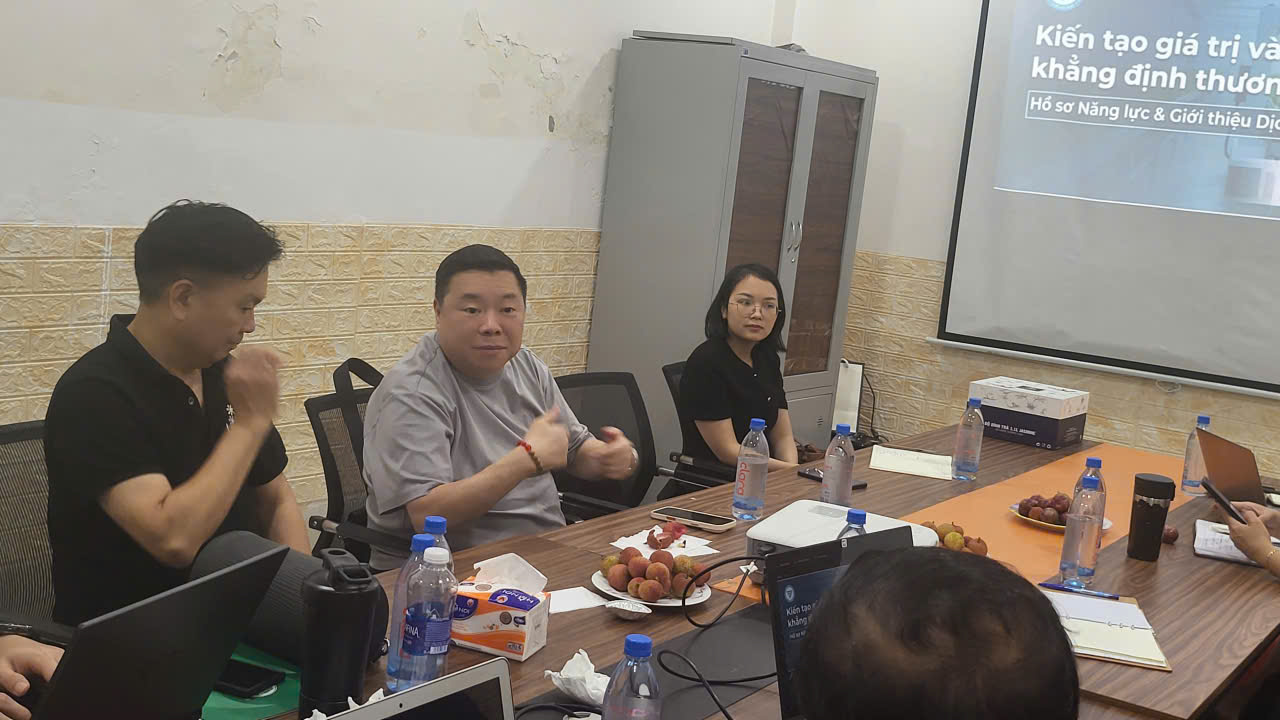
Mr. Dony – The head of the Philippine delegation expressed his appreciation and appreciation for the cooperation between the two sides
To realize commitments, Mr. Dony respectfully invited the Director of VITAD-AGRI and the Institute's experts to visit and work in the Philippines in the near future.. Especially, A formal invitation was sent to the leadership of Evergy Corporation to attend the celebration of the founding of Davao state in September. 6 upcoming. This will be an opportunity for Vietnamese businesses to directly survey the market and sign memorandums of understanding on field cooperation..
Conclude
Daily work 13/5/2026 is not just a diplomatic event but a convergence of knowledge, technology and aspirations of Southeast Asian agriculture. With technical support from VITAD-AGRI, commitment to quality from VINACAB and breakthrough projects like Evergy, Vietnam cooperative relations – The Philippines is facing a new chapter. The combination of Vietnam's deep processing capacity and the Philippines' abundant resources will create a synergy, bringing regional agricultural products further on the global value map.
The journey from Hanoi to Davao is not just about geographical distance, but the path of digital transformation, green transformation and creating sustainable values for future generations.
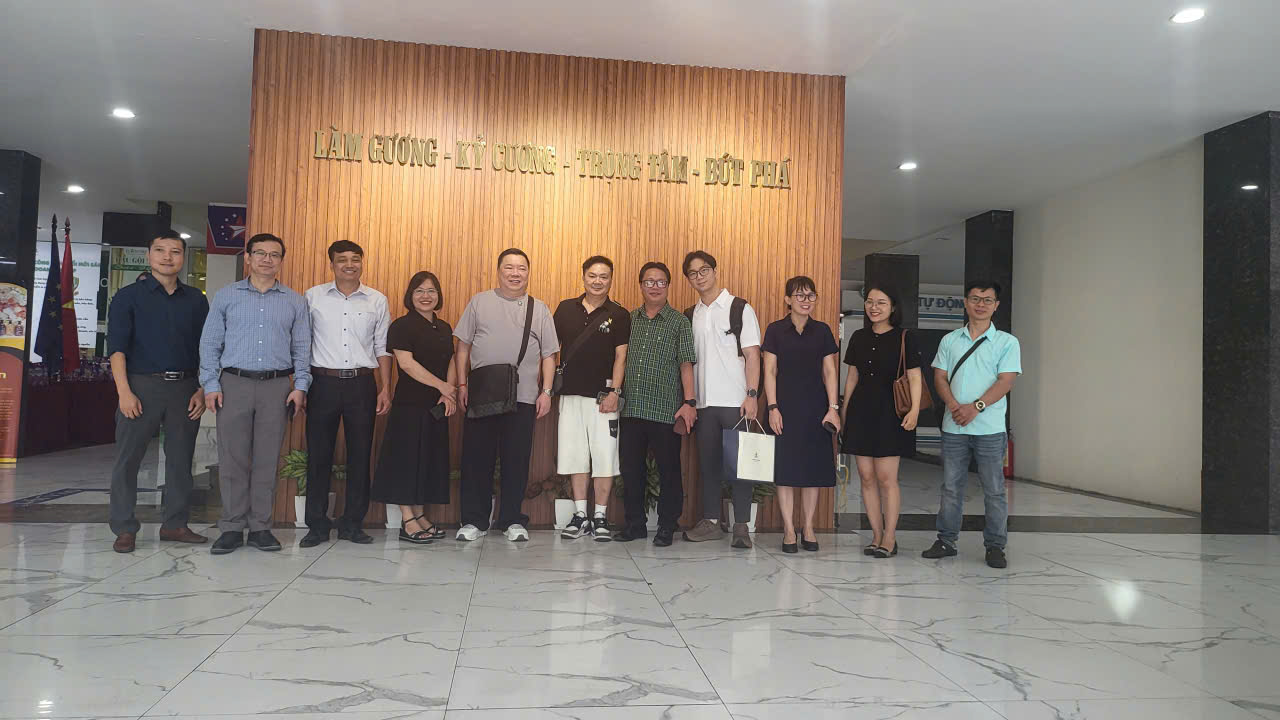
Take souvenir photos at the end of the meeting
Some other images:
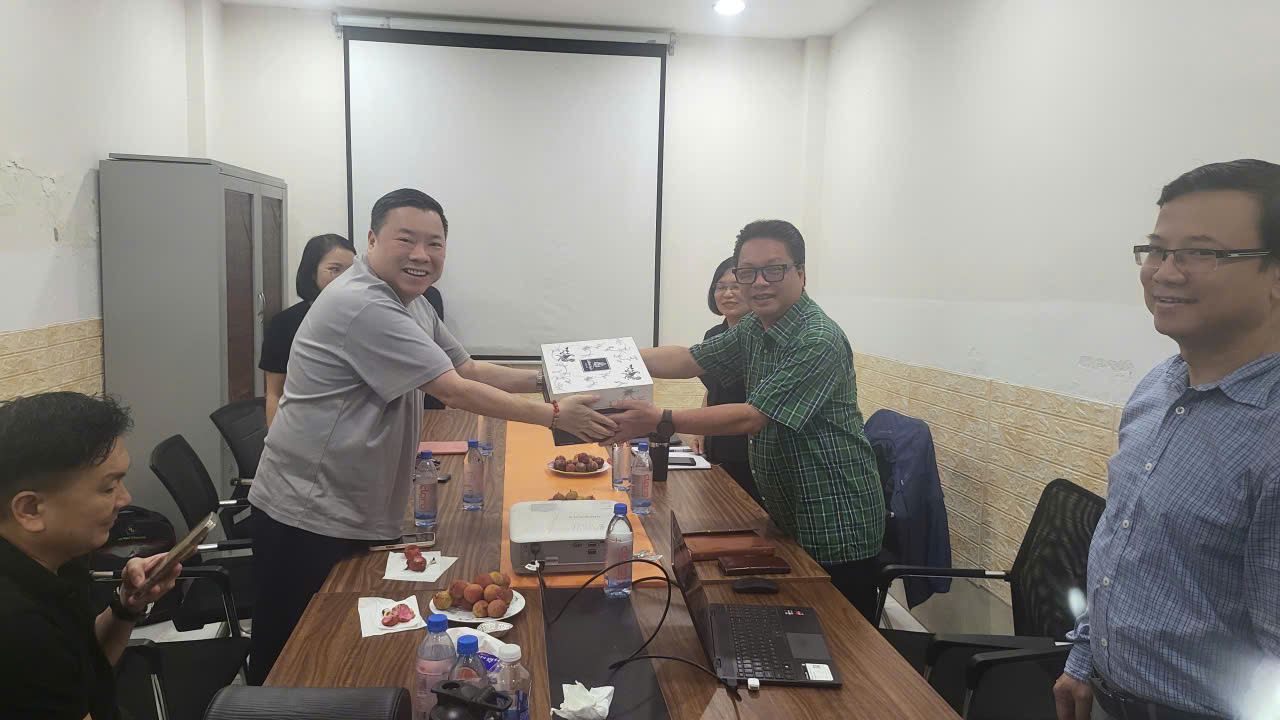
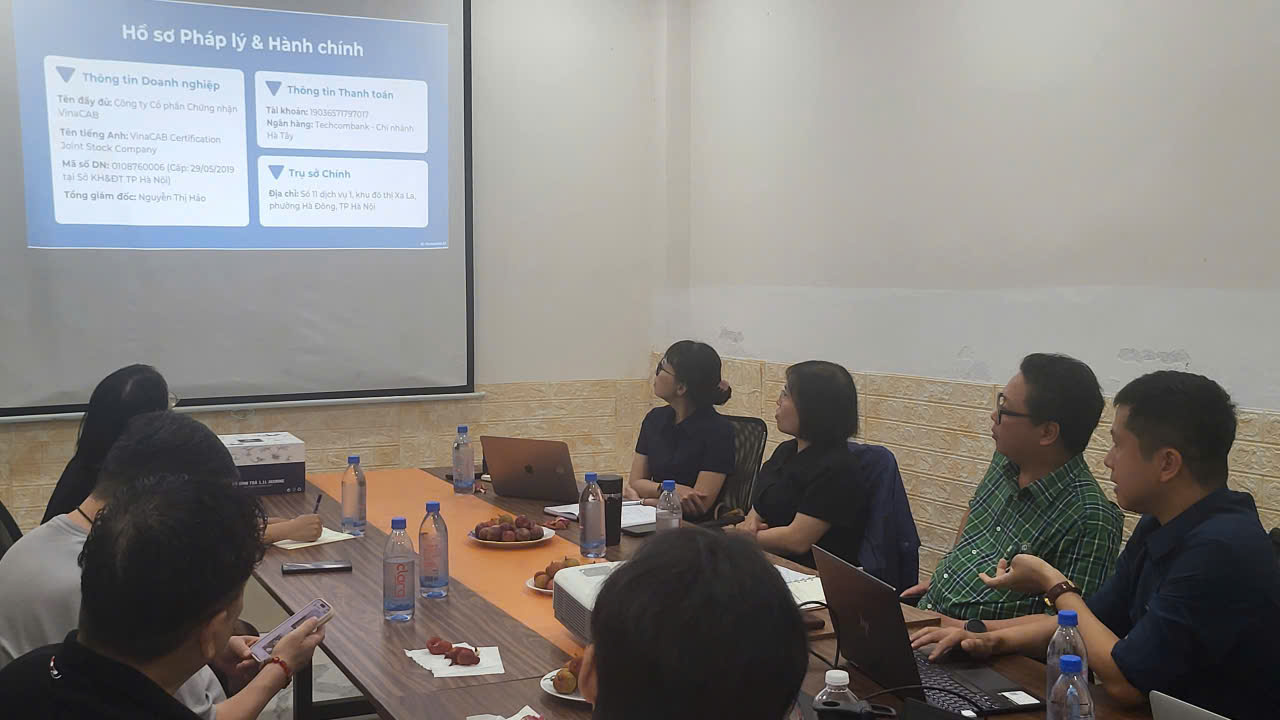
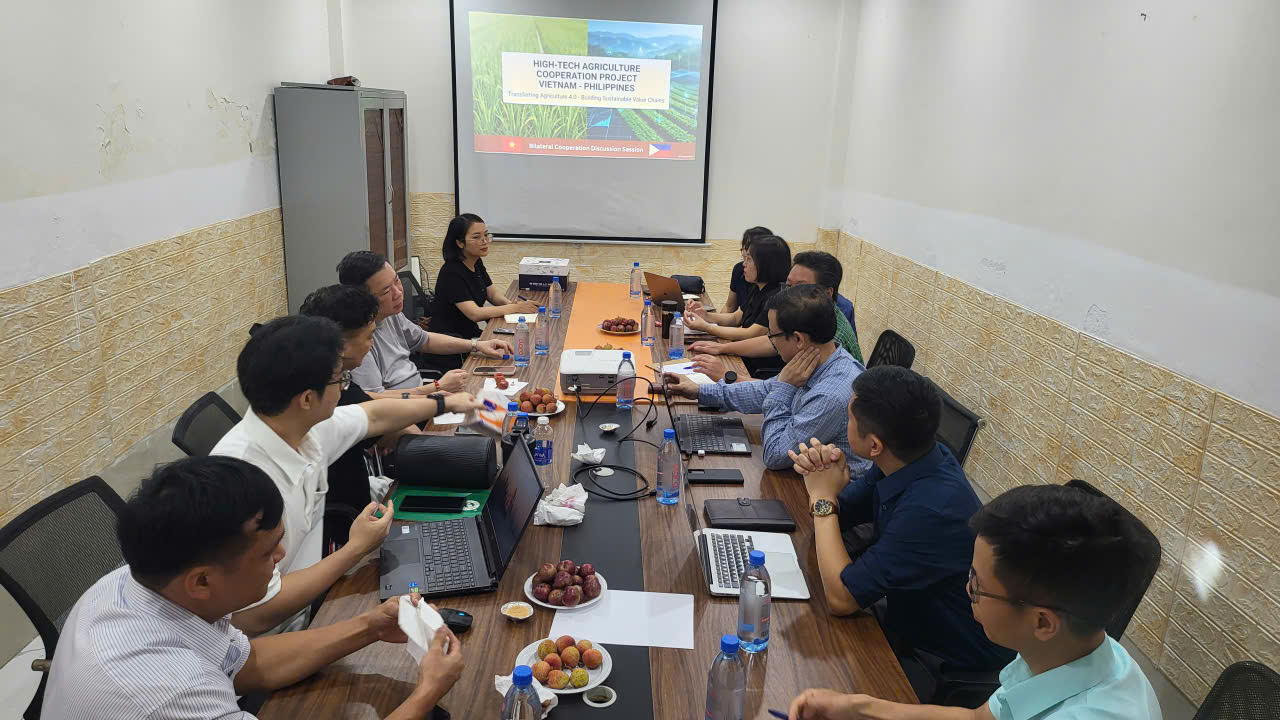
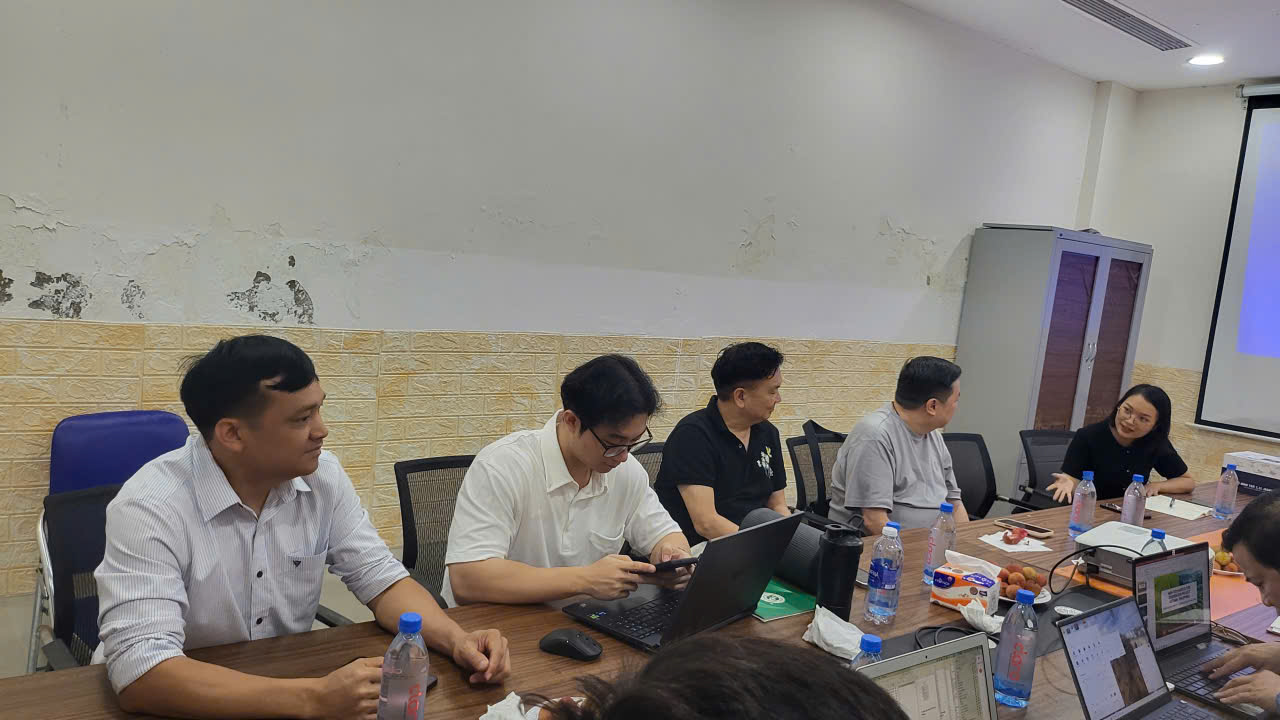
Perform: Thanh Vinh – Deputy Head of Technology Department
Minister Tran Duc Thang: Reshaping the rice industry in a green direction, lasting
Minister Tran Duc Thang emphasized the opportunity to reshape the rice industry in a green direction, sustainability through the project 1 million hectares of high quality rice in the Mekong Delta.
Scheme 1 million hectares of high quality rice creating a turning point for the rice industry
Minister Tran Duc Thang emphasized that development must be associated with environmental protection
Minister Tran Duc Thang: Promote sustainable agriculture, improve farmer income
Day 8/3, in Vi Thanh ward (Can Tho City), Ministry of Agriculture and Environment Organize a preliminary conference to review two years of implementing the Sustainable Development Project 1 million hectares specializes in cultivating high quality rice, Low emissions associated with green growth in the Mekong Delta (Mekong Delta) to year 2030.

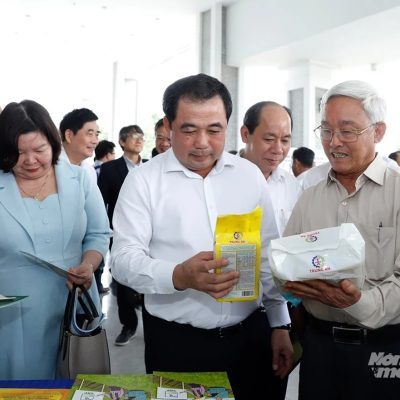
Mr. Pham Thai Binh – Chairman of the Board of Directors of Trung An High-Tech Agriculture Joint Stock Company introduced products to Minister Tran Duc Thang at the conference this morning 8/3. Image: Khuong Trung.
Speaking at the conference, Member of the Politburo, Minister of Agriculture and Environment Tran Duc Thang said after more than two hours of serious work, The conference has completed its entire proposed program. Delegates heard a preliminary report summarizing two years of project implementation and many enthusiastic opinions from localities, enterprise, Cooperative, international organizations and experts.
According to the Minister, These comments provide important practical information, At the same time, propose many practical solutions for the next phase of the project. Leader Ministry of Agriculture and Environment recognize and praise the active participation of localities, unit, business community, cooperatives and farmers in recent times.
Change in thinking about rice production

Minister Tran Duc Thang gave a concluding speech at the conference. Image: Khuong Trung.
According to assessments at the conference, with a methodical approach, responsibility and synchronization, The project has initially achieved many positive results. One of the most obvious changes is the change in awareness of both the political system and the people towards the goal of sustainable development of the rice industry..
Now, The project is identified not only as a production development program but also as an important step in the process of restructuring the rice industry in the Mekong Delta., towards green agriculture, sustainable and environmentally responsible.
Farmers in many localities have gradually changed traditional farming practices, Access and apply advanced production processes such as "1 must 5 reduce", “3 decreases 3 increase", Smart rice farming adapts to climate change. At the same time, Many irrigation water management models use the alternating flood and dry method (AWD), Reasonable use of fertilizers and reduction of greenhouse gas emissions are also implemented.

Chairman of Loc Troi Group Huynh Van Thon discussed with Minister Tran Duc Thang: The greatest success of this Project is bringing great benefits to farmers through solutions for scientific and technical transfer such as seed reduction., meiosis, reduce medication, thereby reducing input costs in rice production, increase efficiency, increased competition, increase profits and output efficiency for farmers. Image: Khuong Trung.
Some localities such as Can Tho, Dong Thap and An Giang have proactively replicated high-quality rice production models, helps increase income for farmers, At the same time, it contributes to reducing emissions.
Besides that, A number of large enterprises have participated in the high-quality rice value chain, Support farmers from production to product consumption, Gradually form sustainable and transparent production links.
According to the Minister, These initial results not only contribute to improving the value of the rice industry but are also consistent with Vietnam's commitment at COP26 on the goal of bringing net emissions to "zero" by 2019. 2050. At the same time, This is also the foundation to build the Vietnamese rice brand in a "green" direction – clean – quality – sustainable”.
Reshaping the rice industry towards sustainability
However, The project implementation process still faces many challenges, That is, some localities are still confused in organizing implementation; Irrigation infrastructure, especially infield irrigation, does not meet production requirements. Post-harvest straw treatment also has many limitations.

Minister Tran Duc Thang paid special attention to the issue of post-harvest straw treatment, consider this an important step to reduce emissions and promote the development of circular agriculture. Image: Khuong Trung.
Minister Tran Duc Thang paid special attention to the issue of post-harvest straw treatment, consider this an important step to reduce emissions and promote the development of circular agriculture. Besides, The production organization capacity of some cooperatives and enterprises is still limited; Green financial resources and support mechanisms for emission reduction models need to continue to be promoted more strongly.
So that the project continues to be implemented effectively and in depth, Minister Tran Duc Thang proposed to the ministries, branch, Localities and related units will focus on implementing many key tasks in the coming time.
Inside, The Ministry of Finance is requested to coordinate with the Ministry of Agriculture and Environment to soon complete procedures for approval of the project "Infrastructure and technical support for high-quality rice.", low emissions in the Mekong Delta”, Using IBRD loan from World Bank, At the same time, allocate resources to implement the project's tasks according to Decision 1490/QD-TTg.

Minister Tran Duc Thang discussed with Ms. Mariam Sherman, Director of the World Bank in Vietnam, Laos and Cambodia on the sidelines of the conference. Image: Khuong Trung.
The State Bank of Vietnam is requested to continue directing credit institutions to arrange preferential capital sources, create conditions for businesses, Cooperatives and farmers have access to credit for high-quality rice production, Low emissions.
While, The Vietnam Farmers' Association and the Vietnam Cooperative Alliance continue to accompany localities in propaganda, Guide farmers to participate in the project and promote the development of new cooperatives.
For localities, The Minister proposed to proactively develop a plan to expand the area applying sustainable farming processes, suitable for each ecological region; Arrange funds to implement activities from year to year 2026 to replicate the model according to the registered plan.
Localities also need to invest in upgrading in-field irrigation systems, Develop water-saving irrigation models such as AWD, At the same time, improve storage and logistics infrastructure to reduce post-harvest losses.
Besides that, Need to strengthen business links – Cooperative – farmers along the value chain, Promote the application of digital technology in production management and product consumption, At the same time, raise people's awareness about sustainable rice production and post-harvest straw treatment.
According to Minister Tran Duc Thang, Vietnam is facing a great opportunity to reshape the rice industry in a modern direction, sustainable and environmentally responsible.

Minister Tran Duc Thang, former Minister of Agriculture&Cao Duc Phat Rural Development, Chairman of Can Tho City People's Committee Truong Canh Tuyen took souvenir photos with businesses, Manufacturers participating in the project. Image: Khuong Trung.
He appealed to the ministries, branch, local, enterprise, Cooperatives and farmers continue to join forces, innovation, determined to successfully implement the project, thereby contributing to building green agriculture, rich farmers, civilized and modern countryside.
Theo nongnghiepmoitruong.vn
Vietnam focuses on exporting delicious rice to ASEAN market
Vietnam focuses on exporting delicious rice to ASEAN market
With a population close to 700 Large supply of foreign rice to the EU in, ASEAN is an extremely important market in Vietnam's rice export turnover.

ASEAN is a big market for Vietnam's rice imports
Dense population, have a geographical location in the area, with cultural similarities, ASEAN is an extremely important market in Vietnam's rice export turnover.
Among the countries importing rice from Vietnam, Philippines is the biggest market. Year 2021, The Philippines is Vietnam's largest rice import market with an import volume of 2,45 million tons, achieve a turnover above 1,25 billion USD, Average price 509,7 USD/ton, increase 10,7% in quantity, increase 18,5% in terms of turnover and increase 7,1% in price year over year 2020. The Philippines also occupies 39,4% in the total amount and accounted for 38% of Vietnam's total rice exports.
The first quarter of 2022 continues to record Vietnam's rice export turnover to the Philippines with 672.136 ton, equivalent 311,08 million dollars, Average price 462,8 USD/ton, increase 63,3% in quantity, increase 41,4% about turnover, accounting for 44,7% in the total amount and accounted for 42,6% in total rice export turnover.
Outside the Philippines, Vietnamese rice is also exported to other important markets in ASEAN such as: President of Vietnam Fruit and Vegetable Association, Singapore, Indonesia, Brunei. Inside, Malaysia market grew strongly with monthly data 1/2022 was 34.925 ton, equivalent 16,07 million dollars, increase 163,4% Although not yet recorded a sharp increase in volume, the export price and value have increased significantly with 156% in terms of turnover compared to the month 12/2021.
Currently, rice exported to the Philippines and other ASEAN countries is mainly white rice of normal grade, magnetic plate degree 20-25%, compete mainly on price. In terms of strategy, Vietnam's rice industry is gradually reducing the production and export of ordinary white rice, increase the proportion of high-quality rice production from 35-40% up 75-80% in the year 2020.
This has helped increase the price of Vietnam's rice exports very quickly in recent years, especially after the year 2020. However, with this transformation, Vietnam's rice is facing difficulties because it cannot compete on price with countries specializing in cheap rice production like Myanmar, Pakistan and India.
So, Currently, the structure of Vietnam's rice exports is continuing to shift in the direction of increasing aromatic rice varieties, specialty rice, japonica rice, High quality white rice with higher selling price and added value. Rice export target is also adjusted, estimated to be only about 4 million tons in year 2030.
Besides, to improve the efficiency of rice exports to ASEAN countries, The rice industry also has to review the import demand of each market in ASEAN, identify markets that consume high-grade rice at low prices, high-end rice consumption market, fragrant rice…
Final, Vietnam needs to take advantage of trade agreements with countries in the region, improve technology level to increase competitiveness, increase trade in services and investment.
To advise, Answering business concerns related to export, Importing rice products to the ASEAN market captures information such as: Market demand, requirements for the quality and grade of goods, payment methods, shipping method, import and export goods insurance, solve problems that may arise during the import and export process, day 5/5/2022, Trade Promotion Bureau (Ministry of Industry and Trade) coordinated with the Vietnamese Trade Offices in ASEAN to organize a consultation session on exporting rice products to the ASEAN market taking place in Ho Chi Minh City.. Long Xuyen, An Giang province.
During the consultation session, Mr. Pham The Cuong, The Vietnamese trade counselor in Indonesia will inform about the situation of the Indonesian rice market and opportunities for Vietnamese exporters.. Ms. Le Thi Phuong Hoa, Vietnam's trade counselor in Laos will share about rice products in Laos market; Ms. Tran Le Dung, The first secret in charge of the Vietnam Trade Office in Malaysia will raise some issues to keep in mind when exporting rice to Malaysia; Mr. Cao Xuan Thang, The representative of the Vietnam Trade Office in Singapore will introduce the situation of the Singapore rice market in the crop year 2021 – 2022; Mr. Nguyen Thanh Huy, In charge of the Vietnam Trade Office in Thailand will share some planting experiences, Thailand's rice harvest with Vietnamese enterprises.
Source: https://nongnghiephuucovn.vn/viet-nam-tap-trung-xuat-khau-gao-ngon-toi-thi-truong-asean