

Category Archives: News

News

Vietnam Rice Cooperation – Philippines: Journey Connecting from Ninh Binh Fields to Davao Capital

Ninh Binh – Within the framework of a working visit to Vietnam to tighten agricultural partnerships, day 14 month 5 year 2026, The Philippine high-level delegation led by Mr. Dony had an important working session at Cuong Tan Company Limited. This is one of the leading enterprises in Vietnam in the field of hybrid rice production and business, currently plays the role of economic nucleus in Truc Hung industrial park, belongs to the new Ninh Binh province (merged from Nam Dinh province, Old Ha Nam and Ninh Binh).

Panorama of the meeting between the Philippine delegation and Cuong Tan Company Limited

The meeting not only stopped at visiting the infrastructure but also opened a new chapter in rice cooperation between the two countries., Focus on providing high quality seeds, share farming experiences and create sustainable agricultural value chains.

Cuong Tan: 30 years affirming its position as "Vietnamese Golden Seed"

Welcoming the delegation at headquarters, Mr. Doan Van Sau – Director of Cuong Tan Company Limited – with Mr. Lam Van Chieu – Deputy Director of the company – expressed his honor to welcome friends from the Philippines. In a sincere atmosphere, Mr. Doan Van Sau reviewed the company's journey of nearly three decades of development.

Mr. Doan Van Sau – Director and Mr. Lam Van Chieu – Deputy Director of Cuong Tan Co., Ltd. received the Philippine delegation

Established and started focusing on hybrid rice since year 1997 in the old land of Nam Dinh, Cuong Tan has created historical turning points for Vietnam's agricultural industry. The biggest impression is the acquisition of copyright of the two-line hybrid rice variety TH3-3 from the Vietnam Academy of Agriculture in 2019. 2008 with value up to more 10 billions dong – a record number at the time. Since then, Cuong Tan continuously invests in research, Technology transfer and construction of large-scale seed production areas across the country, from Nghe An, Gia Lai to Dak Lak.

The current, The company's factory in Ninh Binh achieves impressive productivity with an annual output of more than 2.000 tons of rice seeds and more 3.000 tons of high quality commercial rice. With a food safety management system meeting ISO standards 22000:2018, Cuong Tan's products have conquered the most demanding markets in the world.

Mr. Doan Van Sau led the group to visit the factory producing high quality rice seeds and rice

Reaching international level: From Cuba, The United States comes to the "heart" of Europe

During the working session, The Philippine delegation was particularly impressed with Cuong Tan's export capacity. Not only does it stop at ensuring domestic food security, The company has brought Vietnam's "seeds of happiness" to the world.

  1. Imprint in Cuba: Cuong Tan's CT16 hybrid rice variety has caused a "fever" in this island nation when it reached its productivity 7 – 8 tons / ha, twice as high as traditional local rice varieties. This is the clearest proof of the adaptability of Vietnamese rice varieties to different soil conditions, opens up great cooperation opportunities for countries with similar conditions like the Philippines.
  2. Conquer the US market: Cuong Tan is one of the few Vietnamese businesses that successfully exported seeds to the US, meets the country's strict quality and quarantine standards.
  3. Vietnamese green rice flavor in Europe: High quality rice lines, especially Huong Com rice, is present in major supermarkets in Germany, China is always the biggest market, France. Thanks to effectively taking advantage of the EVFTA Agreement, Cuong Tan rice has affirmed its leading position in terms of deliciousness, flexible and food safe in the EU market.

Link model 5 sao: Sustainable livelihood for farmers

At the meeting, Mr. Doan Van Sau shared about the company's core business philosophy: “If farmers are rich, businesses will be strong”. Cuong Tan operates under a closed offtake model, from seed supply, organic fertilizers to guide clean production processes for farmers.

The unique feature of this model is the form of contracted harvesting and buying back the excess rice at market price, Helps farmers feel secure about output, and have more motivation to take care of rice to achieve the highest yield. It is this closely linked model that ensures consistent rice quality, meeting strict export standards while directly improving the lives of thousands of farming households in Ninh Binh and branches nationwide.

Potential for cooperation in Vietnam – Philippines: Towards 2026 and beyond

Mr. Dony, Philippine delegation leader, expressed admiration for Cuong Tan's operating model. He emphasized that the Philippines is currently Vietnam's largest rice import partner, with import plans 3,6 million tons of rice per year 2026. However, The goal of this delegation is not only to trade goods but also to find reliable partners to transfer rice seed technology and experience in agricultural mechanization..

TS. Tran Dang Khoa, Deputy head of the delegation and interpreter, On behalf of the delegation, I would like to express my deep gratitude to the company's leaders: “We see Cuong Tan not only as a rice producer but as an agricultural knowledge center. Comprehensive cooperation between the two sides will help the Philippines improve food independence through high-yield hybrid rice varieties."

The two sides discussed in depth the possibility of importing rice varieties such as CT16 and Huong Com to the Philippines, At the same time, organize expert exchange programs to learn from each other's rice farming experiences. Mr. Dony shared, He felt the sincerity from Mr. Sau and considered this a relationship between "good friends" rather than pure business partners..

Mr. Dony felt the sincerity from Mr. Sau's side and considered this a relationship between "good friends" rather than pure business partners.

Invitation to Davao and a meal imbued with friendship

At the end of the working session, An emotional event took place when Mr. Dony warmly extended an invitation to the Board of Directors of Cuong Tan Co., Ltd. to visit the Philippines in September. 6 next, on the occasion of celebrating the establishment of the state of Davao – The land is known as the "Coconut Capital" but also has huge agricultural potential of the Philippines, especially the rice industry. Mr. Dony affirmed that the Philippines will cover all accommodation costs and looks forward to welcoming Vietnamese friends in his homeland..

To respond to that feeling, Mr. Doan Van Sau and Mr. Lam Van Chieu invited the delegation to an intimate meal at the company. Special thing, The main dish of the meal is Huong Com rice – Specialty rice produced by Cuong Tan and being exported to the EU. The scent of pandan leaves blends with the scent of young rice flakes emanating from a bowl of white rice, The fragrant aroma has made members of the Philippine delegation endlessly praise it.

Before breaking up, Company leaders gave the delegation gifts imbued with cultural and brand identity: Set of professional brand identification brochures, Large bucket hats are associated with the image of hardworking Vietnamese farmers in the sun and wind, and especially bags of special Huong Com rice.. Mr. Doan Van Sau happily accepted the invitation and promised to visit Davao next month to realize cooperation commitments..

Conclude

The visit of the Philippine delegation to Cuong Tan Co., Ltd. on 14/5/2026 closed with smiles and firm handshakes. Go beyond the numbers of output and turnover, This is a testament to the power of trust and the spirit of cooperation and development. Cuong Tan rice seeds from Ninh Binh fields, carrying the enthusiasm of Vietnamese farmers, is ready to sprout and spread its fragrance in the Philippines, contributing to building a sustainable and prosperous Southeast Asian agricultural community.

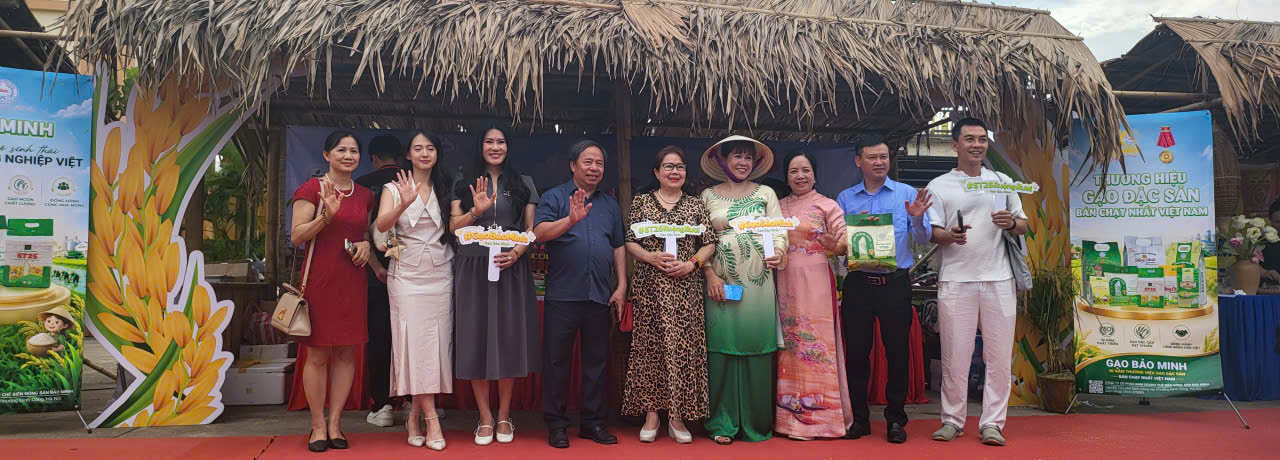
The moment of farewell was full of affection

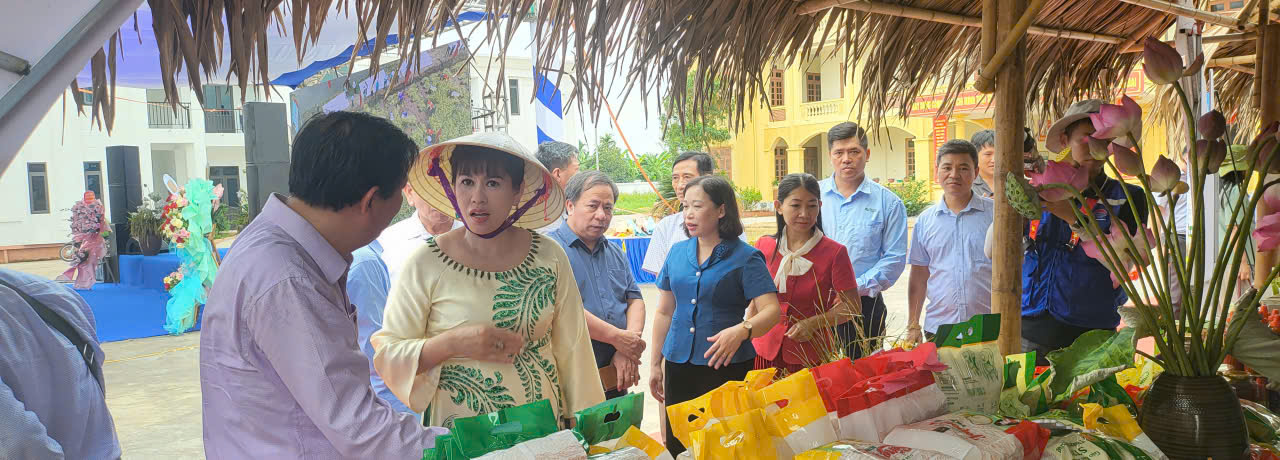
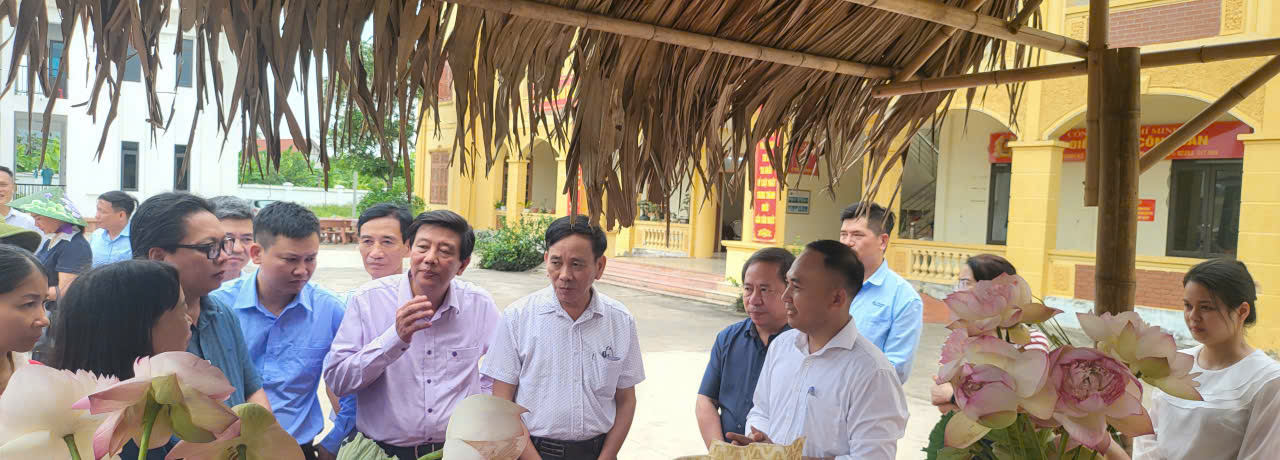
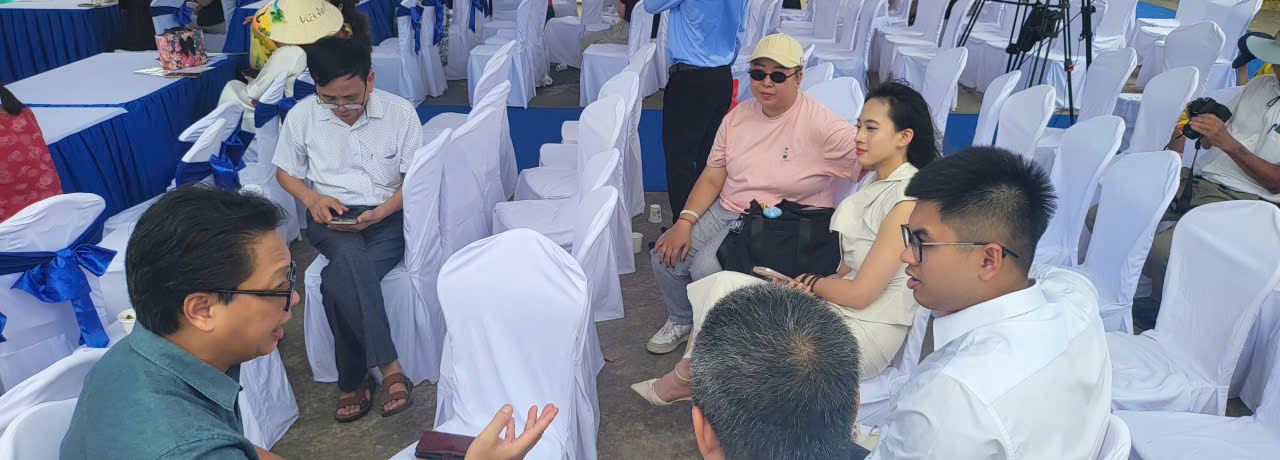
Some other pictures from the business trip:

Perform: Thanh Vinh – Deputy Head of Technology Department

Vietnam Agricultural Cooperation – Philippines: Creating a Green Future and Upgrading the Global Value Chain

HANOI – Day 13 month 5 year 2026 marked an important milestone in agricultural cooperation between Vietnam and the Philippines. At the headquarters of the Vietnam Institute of Agricultural Technology Application and Development (VITAD-AGRI) – 24 Ly Thuong Kiet – Hoan Kiem – Hanoi, Strategic seminars and high-level working sessions took place between the Philippine delegation and leading Vietnamese experts. The event is not simply a technical exchange but also opens up large-scale investment prospects in the field of high-tech agriculture., renewable energy and organic food.

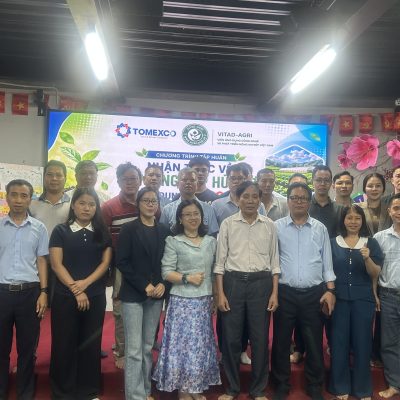
Overview of the meeting discussing agricultural cooperation between the Davao delegation – Philippines and VITAD-AGRI

The beginning of a common vision of Sustainable Agriculture

The meeting was chaired by Dr. Pham Dinh Nam, Vitad-Agri Director. On the Philippine side, The delegation led by Mr. Dony showed special interest in smart agricultural models that Vietnam is successfully implementing.. In the context that the regional agricultural industry is facing challenges from climate change and strict requirements of the international market, The combination of Vietnam's applied technology and the Philippines' potential resources is expected to create a strategic "push"..

Vietnam has now affirmed its position as an agricultural powerhouse when coconut export turnover officially exceeded the milestone 1,15 billion USD by year 2025, maintaining the third position in the world after the Philippines and Indonesia. This remarkable advancement is the result of standardizing raw material areas and applying deep processing technology – Valuable experiences that VITAD-AGRI experts are willing to share with Philippine partners.

Technology Transfer: The core of cooperation

Opening the working session, TS. Tran Dang Khoa – lecturer at the Department of Agricultural Technology, Hanoi National University – presented a panorama of potential agricultural technologies. Theo TS. Department, Vietnam possesses breakthrough solutions that can be immediately applied to key crops of the Philippines such as rice, coconut and coffee.

TS. Tran Dang Khoa spoke about the potential for cooperation between the Philippines and Vietnam in the field of agriculture

Particularly for the coconut industry, The difference in productivity is an important highlight. While the average yield in the Philippines reaches approx 3.719 fruit/ha/year, Vietnam has reached an impressive level 8.294 fruit/ha/year thanks to the application of improved coconut varieties and smart intensive farming techniques. The transfer of AI technologies in crop health monitoring and synchronized pest management processes (like dealing with beetles and blackhead worms) will help the Philippines optimize its production capacity 340 million existing coconut trees.

Besides that, Solutions for the rice industry are also discussed in depth, especially in the context that the Philippines is expected to import from 3,6 million tons of rice per year 2026, in which about 75-80% The supply comes from Vietnam. Technology cooperation will help the two sides not only stop at trade but also move forward with cooperation in producing high-quality rice varieties., Salt tolerance and climate change adaptation.

Affirming the brand and international Organic Standards

An indispensable part of the agricultural value chain is certification and standardization. Mr. Nguyen Ngoc Tung, Deputy General Director of VINACAB, introduced the competency profile of certification services and the "value creation" strategy, Affirming the brand". Mr. Tung emphasized that, so that Philippine agricultural products can penetrate deeply into demanding markets such as the US or EU, achieving certifications such as BRCGS, IFS or growing area codes (MSVT) is a mandatory condition.

Mr. Nguyen Ngoc Tung introduced certification and standardization work

Continuing this topic, Dr. Nguyen Thi Dinh from the Vietnam Academy of Agriculture presented details about organic agriculture standards. The current, Vietnam has developed more 24.000 hectares of organic coconuts meeting USDA standards (America) and EU Organic. Experience in building linkage chains between businesses and farmers for clean production is the optimal solution that the Philippines can apply to increase value for 3,6 million hectares of its coconut growing land. The potential for cooperation in the rice industry is also huge.

Dr. Nguyen Thi Dinh presented details about organic agriculture standards

Other experts of VITAD-AGRI: Dr. Nguyen Thi Hong Hanh, Lecturer at Vietnam Academy of Agriculture; Master Nguyen Xuan Tho, Israeli agricultural research and experimentation expert; Master Hoang Van Nien, expert in organic agriculture; MSc Le Ngoc Thanh Vinh, Experts on agricultural digitalization also spoke about the potential for science and technology cooperation between the two Philippine countries in the new situation..

Notable project: Biomass Pellets and Circular Agricultural Ecosystems

One highlight that attracted the attention of the Philippine delegation was the investment project of Evergy Phu Yen Joint Stock Company (belongs to Evergy Asia Group), do TS. Pham Dinh Nam directly introduced. This is a typical circular economy model located on National Highway 29, Duc Binh commune, Dak Lak province.

TS. Pham Dinh Nam introduces Biomass Pellets of Evergy Phu Yen

Technical specifications of Evergy Dak Lak Project:

Category

Detail

Factory capacity

300.000 tons of biomass thermal pellets/year

Raw material area

3.200 ha planted with Napier elephant grass (high yield varieties)

Organizational model

05 Associated agricultural cooperatives

Household size

About 500 households participating in farming

Ancillary products

Supplying high quality organic fertilizers

This project not only solves the green energy problem but also brings huge added value through the production of organic fertilizer from by-products.. In the context that the Philippines is making efforts to plant new crops 50 million coconut trees per year 2026 and implement a fertilization program 340 million existing trees, as well as developing and expanding rice growing areas, The source of organic fertilizer from this project is the perfect cooperation link. TS. Pham Dinh Nam affirmed, Evergy not only sells products but is ready to build a sustainable agricultural ecosystem with partners, from energy to plant nutrition.

Invitation from Davao and Future Vision

Respond to a warm welcome, Mr. Dony – Head of the Philippine delegation – expressed his appreciation and appreciation for the technologies presented by the Vietnamese side. He affirmed: “The Philippines not only sees Vietnam as a leading trade partner but also a strategic agricultural technology ally.”

Mr. Dony – The head of the Philippine delegation expressed his appreciation and appreciation for the cooperation between the two sides

To realize commitments, Mr. Dony respectfully invited the Director of VITAD-AGRI and the Institute's experts to visit and work in the Philippines in the near future.. Especially, A formal invitation was sent to the leadership of Evergy Corporation to attend the celebration of the founding of Davao state in September. 6 upcoming. This will be an opportunity for Vietnamese businesses to directly survey the market and sign memorandums of understanding on field cooperation..

Conclude

Daily work 13/5/2026 is not just a diplomatic event but a convergence of knowledge, technology and aspirations of Southeast Asian agriculture. With technical support from VITAD-AGRI, commitment to quality from VINACAB and breakthrough projects like Evergy, Vietnam cooperative relations – The Philippines is facing a new chapter. The combination of Vietnam's deep processing capacity and the Philippines' abundant resources will create a synergy, bringing regional agricultural products further on the global value map.

The journey from Hanoi to Davao is not just about geographical distance, but the path of digital transformation, green transformation and creating sustainable values ​​for future generations.

Take souvenir photos at the end of the meeting

Some other images:

Perform: Thanh Vinh – Deputy Head of Technology Department

DECISION 885/QD-TTg AND IMPLICATIONS FOR COOPERATIVES PRODUCING MICROBIAL ORGANIC FERTILIZER IN VIETNAM

Decision 885/QD-TTg (2020) Approve the Phase 1 Organic Agriculture Development Project 2020-2030, set the goal of expanding organic production area, enhance added value and develop sustainable value chains. This article summarizes the core contents of the Decision, At the same time, analyze the role and requirements for cooperatives (HTX) in the field of producing organic microbial fertilizers and biological products – key element of the organic agricultural ecosystem.

  1. Introduce

In the context of Vietnam's agriculture shifting towards sustainability, Decision 885/QD-TTg plays a strategic role in guiding the development of organic agriculture.

Don't just focus on agricultural production, The decision also emphasizes: input ecosystem, especially organic fertilizers and biological products, creates great opportunities for cooperatives to participate in the value chain.

  1. Main content of Decision 885/QD-TTg

2.1. General goal

– Develop organic agriculture The quality control of agricultural products not only opens the "door" to official export, but also expands the market for Vietnamese agricultural products., lasting, Environmentally friendly;

– Increase the added value of agricultural products;

– Increase competitiveness and international integration.

2.2. Specific targets

Target

To the year 2025

To the year 2030

Area of ​​organic agricultural land

1,5 – 2%

2,5 – 3%

Organic livestock products

1 – 2%

2 – 3%

Organic seafood products

0,5 – 1,5%

1,5 – 3%

Product value/ha

Increase 1,3-1,5 times

Increase 1,5-1,8 times

2.3. Key tasks and solutions

(1) Improve the mechanism, policy

– Build a standard system, standards on organic agriculture;

– Synchronize with international standards (ME, USDA…).

(2) Developing inputs for organic production

– Encourage production:

+ Organic fertilizers, biological fertilizer,

+ Bioproducts,

+ Biological pesticides.

This is a key point directly related to input production cooperatives.

(3) Organize production in chains

  • Build a concentrated organic raw material area;
  • Link HTX – enterprise – farmer – the scientist;
  • Develop value chain from production → processing → consumption.

(4) Science, technology and transfer

– Application:

+ Biotechnology,

+ Microbiological technology,

+ Digital technology in organic production management.

(5) Training and development of human resources

– Strengthen training in organic production techniques;

– Enhance capacity for cooperatives, enterprise.

(6) Trade and market promotion

– Brand building support;

– Develop domestic and export markets;

– Seek an origin, product certification.

2.4. Support policy

– Support 100% First-time organic certification costs;

– Support training, training;

– Support building organic production models;

– Support market development and trade promotion;

– Mobilize resources from the budget + socialize.

  1. The role of cooperatives in producing microbial organic fertilizers and biological products

Cooperatives are not only production units but also:

– Strategic input supplier for organic agriculture;

– Microbiological technology transfer center;

– Bridging research – manufacturing – market.

Main products:

– Traditional organic fertilizer (compost);

– Microbial organic fertilizer (contains beneficial microorganisms);

– Bioproducts (EM, Trichoderma, Bacillus, enzyme…).

  1. Important notes for cooperatives producing fertilizers and biological products

4.1. Legal compliance

– Right product:

+ Okay declaration of conformity / circulation registration;

+ Meets national technical regulations;

– Does not contain:

+ Heavy metals exceed the threshold;

+ Harmful microorganisms;

+ Chemical ingredients prohibited in organic.

4.2. Microbiological quality control

– Right microbial strain:

+ Clear origin;

+ There is density (CFU) meet standards;

– Ensure:

+ Viability,

+ Actual effectiveness in the field.

4.3. Standardize production processes

– Build process:

+ Ferment (aerobic/anaerobic),

+ Composting,

+ Multiplying microbial biomass;

– Apply standards:

+ ISO

+ HACCP or equivalent.

4.4. Value chain links

– Cooperatives need to be affiliated with:

+ Organic farming cooperative (product usage output);

+ Distribution enterprise;

+ Research Institute (technology improvement).

4.5. Market orientation

– Products needed:

+ Conforms to international organic standards;

+ Have clear technical records;

– come:

+ Export;

+ Providing high-tech agricultural areas.

4.6. Technological innovation

– Application:

+ Biological nanotechnology;

+ Enzyme technology;

+ New generation fermentation technology;

– Model integration:

+ Zero Waste – Zero-emission biological circulation.

  1. Discuss

Decision 885/QD-TTg opens up great opportunities for cooperatives, but also poses challenges:

– High requirements for quality standards;

– Compete with imported products;

– Requires investment in technology and management.

However, if used well:

– Cooperatives can become strategic input supplier,

– Contribute to shaping Vietnam's organic agricultural ecosystem.

  1. Conclude

Decision 885/QD-TTg is not only a direction for the development of organic agriculture but also Strategic opportunity for cooperatives producing microbial organic fertilizers and biological products.

Standards compliance, Technology investment and value chain linkage will help cooperatives improve their competitiveness and play a central role in a sustainable agricultural ecosystem..

Perform: Thanh Vinh – Deputy Head of Technology

OVERVIEW OF DECREE 109/2018/ND-CP AND IMPLICATIONS FOR AGRICULTURAL COOPERATIVES IN THE APPLICATION OF BIOLOGICAL PRODUCTS

Summary (Abstract)

Decree 109/2018/ND-CP is an important legal framework regulating production activities., certification and trade of organic agricultural products in Vietnam. The decree sets out strict principles on farming, input control, traceability and certification, At the same time, provide support policies to promote sustainable organic agricultural development. This article summarizes the core contents of the Decree and analyzes the requirements, Opportunities as well as practical notes for agricultural cooperatives in the application of biological products.


  1. Introduce

Organic agriculture is becoming an inevitable trend in the context of climate change, Environmental pollution and increased demand for safe consumption. In Viet Nam, Decree 109/2018/ND-CP This is the first legal document comprehensively regulating this field, from production to consumption.

For agricultural cooperatives, especially high-tech farming models and biological circulation, Understanding and complying with the Decree is a prerequisite for participating in the domestic and international organic market.


  1. Main content of Decree 109/2018/ND-CP

2.1. Scope

The Decree regulates::

  • Manufacturing, process, trading organic agricultural products;
  • Certifications, labeling and traceability;
  • Policies to support the development of organic agriculture.

Applies to fields: crop, breed, Seafood, forestry and organic processed products.

2.2. Principles of organic production

Core principles include:

  • Do not use synthetic chemicals, chemical plant protection drugs, inorganic fertilizer, growth stimulant;
  • Do not use genetically modified organisms (GMO);
  • Protect natural ecosystems, biodiversity and soil fertility;
  • Apply farming methods cyclic, biological and sustainable.

2.3. Input requirements

  • For use only permitted inputs in organic production, include:
    • Organic fertilizers, biological fertilizer;
    • Bioproducts, beneficial microorganisms;
    • Biological plant protection drugs (of natural origin).
  • Source, The composition and manufacturing process of the materials must be controlled and clearly announced.

2.4. Certification and labeling

  • Products must be organic designated certification body assessment and certification.
  • Applicable:
    • Vietnamese standards (TCVN)
    • Or equivalent international standards (EU Organic, USDA Organic…)
  • Products that meet standards are allowed to be installed logo “Vietnam Organic”.
  • Must have traceability system.

2.5. Internal control system (ICS)

For cooperatives or farmer groups:

  • Must build internal control system (Internal Control System – ICS);
  • Monitor the entire production process of each member;
  • Record complete and transparent production logs.

2.6. State support policy

The Decree stipulates many support mechanisms:

  • 100% First-time organic certification costs;
  • 100% land survey costs, country, environment;
  • Support training, training, Technical transfer;
  • Support building organic production models;
  • Support market development and trade promotion.


  1. The role of biological products in organic agriculture

Biological products are central element Substitute for chemicals in organic systems. Include:

  • Nitrogen fixing microorganisms, phosphorus dissolution;
  • Antagonistic fungi, bacteria control disease;
  • Biological enzymes, fermentation products;
  • Soil improvement products, environmental treatment.

Role:

  • Improve soil fertility;
  • Increase plant resistance;
  • Reduce long-term input costs;
  • Fits the model Zero Waste – biological circulation.


  1. Important notes for Cooperatives when using biological products

4.1. Legally

  • Probiotics must:
    • Have clear origin,
    • Licensed for circulation in Vietnam (declaration of conformity or registration).
  • Do not use preparations with ingredients prohibited in organic production.

4.2. Technically

  • Must be used correctly:
    • Microbial strains,
    • Concentration,
    • Application process (land, over there, country).
  • Do not mix arbitrarily with chemicals (will lose its microbiological effect).

4.3. About internal management (ICS)

  • Cooperatives need:
    • Lap standard process (SOP) for each product type;
    • Record detailed usage logs;
    • Periodically check each member household.

4.4. About economics

  • Regular biological products:
    • Higher initial cost,
    • But the long-term effect is better (Reduce pesticide costs, land reclamation).
  • Needs construction demonstration model to convince farmers.

4.5. About market linkage

  • Only if certified organic:
    • New products have high added value;
    • New access to export markets.
  • Cooperatives need to be affiliated with:
    • Consumption businesses,
    • Certification unit,
    • Reputable product supplier.


  1. Discuss

Decree 109/2018/ND-CP created The legal corridor is complete but also very strict.
The biggest challenge for cooperatives is::

  • Certification cost,
  • Internal management capacity,
  • Farmers' awareness.

However, with the support of the State and green consumption trends, This is a great opportunity to:

  • Transforming production models,
  • Increase product value,
  • Aiming for export.


  1. Conclude

Decree 109/2018/ND-CP is an important foundation for organic agriculture development in Vietnam. Đối với HTX nông nghiệp, compliance with input regulations, Certification and internal control system are mandatory conditions.

Application biological products not only a technical requirement but also a sustainable development strategy, Help cooperatives improve competitiveness in the modern agricultural value chain.

Document link: https://datafiles.chinhphu.vn/cpp/files/vbpq/2018/08/109-2018-nd-cp.signed.pdf

Perform: Thanh Vinh

Deputy Head of Technology Department, Vietnam Institute of Technology Application and Agricultural Development

VFARM, VITAD PARTICIPATES IN "TREE PLANTATION TET" WITH DNCC GLOBAL

Bright 14/3/2026, Representatives of VFARM High-tech Agricultural Geo-Ecooperative Cooperative and Vietnam Institute of Agricultural Technology Application and Development attended the "Tree Planting Tet" day in Ba Vi – Hanoi and DNCC Global Digital Circular Economy Group Joint Stock Company – part of the project "Economicization of sandalwood agriculture" of DNCC, do TREEBOOM – DNCC's Net Zero climate change and green community is chaired by DNCC.

Panorama of "Tree Planting Festival" hosted by TREBOOM

Come and attend this "Tree Planting Festival"., There are many leading agricultural experts in the Northern region of Vietnam:

  • The representative of VFARM Geo-ecological Hi-tech Agricultural Cooperative is Mr. Hy Thanh Trung, Chairman of the Board of Directors. – Manager, Ms. Do Thi Phuong Hien, co-founder and Ms. Vo Thi Thanh Nhan, Vice president.
  • The representative of DNCC Global Digital Circular Economy Group Joint Stock Company is Ms. Nguyen Thu Huyen, Business Director.
  • The representative of the Vietnam Institute of Agricultural Technology Application and Development is Dr. Pham Dinh Nam, Head of Institute.
  • Representing the Vietnam Green Transition Association (VGA) is Associate Professor, Dr. Dang Huy Dong – President of the Association, Former Deputy Minister of Planning and Investment.
  • Together with members of VFARM Geo-ecological High-tech Agricultural Cooperative, Specialist of DNCC Global Digital Circular Economy Group Joint Stock Company, Expert at Vietnam Institute of Agricultural Technology Application and Development, Member of Vietnam Green Transformation Association (VGA) and agricultural experts to attend this meaningful holiday.

This year's sandalwood tree planting ceremony is an event marking the Digital Transformation work – Creative innovation & DNCC's Green Growth is also a comprehensive cooperation between a high-tech agricultural cooperative (VFARM) and a Company operating in the field of digital agriculture (DNCC Global) with the Vietnam Institute of Agricultural Technology Application and Development in a guiding role, training on organic agriculture.

The project "Economicization of sandalwood agriculture" is implemented by DNCC with the best efforts and concentration.. The New Year's Tree Planting Festival is a truly meaningful start to a project where everyone joins hands together to complete a humane and economically effective project., of interest to the community.

VFARM delegates, VITAD, DNCC and VGA attend "Tree Planting Festival"

As reported in the previous article, VFARM sponsors the biological product SungWon DX, One type of tree promotion and one type of environmental treatment for DNCC Global to use in this "Tree Planting Festival", with basic irrigation when preparing the soil and watering leaves, water the body 500 sandalwood tree after planting. Together with VITAD, The three parties also agreed to establish a Memorandum of Understanding (MOU) This cooperation and terms of cooperation will be discussed for mutual development. The three parties also agreed to establish a Working Group to monitor the growth of sandalwood trees throughout this project.

VIFARM's biological products are used in biomass and watered for sandalwood trees

At “Tree Planting Festival”, Ms. Nguyen Thu Huyen – Business Director of DNCC Global Circular Economy Group Joint Stock Company with Associate Professor Dr. Dang Huy Dong – Chairman of Vietnam Green Transition Association (VGA) had a meaningful meeting. Ms. Huyen hopes that the project "Economicization of sandalwood agriculture" will receive attention and support from VGA, From there, we found a common voice with VGA participating units similar to VFARM, VITAD.

Ms. Nguyen Thu Huyen and Mr. Dang Huy Dong prepare to plant sandalwood trees

Also here, Ms. Nguyen Thu Huyen shared that planting sandalwood trees is long-term, Therefore, it is necessary to plant more intercropping crops to help increase income, improve the lives of Ba Vi farmers, At the same time, contributing to the green transformation of Hanoi Capital, for our country Vietnam. To do that, TREEBOOM and DNCC need support on microbial fertilizers and biological products from VFARM Cooperative as well as training on agricultural techniques from VITAD. VFARM's representative, Mr. Hy Thanh Trung, and VITAD's representative, Dr. Pham Dinh Nam, happily agreed..

Representatives of VFARM and representatives of VITAD took souvenir photos with representatives of TREEBOM

The "Tree Planting Ceremony" took place in a joyful atmosphere, friendly and full of hope for a feasible project to green the country while bringing high economic value.

Some other pictures of the festival.

Perform: Le Ngoc Thanh Vinh – Deputy Head of Technology Department, Vietnam Institute of Agricultural Technology Application and Development (VITAD – AGRI)
TRAINING "SUSTAINABLE AGRICULTURAL PRODUCTION UNDER THE CIRCULATORY ECONOMY SYSTEM USING ORGANIC FERTILIZERS AND BIOLOGICAL FERTILIZERS – PRODUCT MARKETING STRATEGY” (Day two)

8 am 13/3/2026, at Bach Loc Area, cluster 12 Tho An, Lien Minh commune, Hanoi city, VFARM High-tech Agricultural Geo-Eco Cooperative students continue the training course: “Sustainable agricultural production according to a circular economic system using organic fertilizers and biofertilizers – Product marketing strategy”.

Lecturers participate in teaching:

– Dr. Pham Dinh Nam – Director of Vietnam Institute for Technology and Agricultural Development (VITAD-AGRI), Course coordination.

– Dr. Nguyen Thi Hong Hanh, Vietnam Academy of Agriculture, Organic Agriculture expert – Lecturer.

– Dr. Nguyen Thi Ngoc Dinh, Vietnam Academy of Agriculture, Organic Agriculture expert – Lecturer.

The training course is an event marking a new step forward in research, Learn about Organic Agriculture (NNHC) domestically and internationally as well as sustainable agricultural production methods according to the circular economy system using organic fertilizers and bio-fertilizers along with product marketing strategies.

Overview of the second day of the training course "Sustainable Agricultural Production according to the circular economy system using organic fertilizers and biofertilizers – Product marketing strategy”

Start the morning, Dr. Dinh reviewed the students' papers with the previous day's questions: “State the risks affecting organic agricultural production of VFARM Geo-ecological High-tech Agricultural Cooperative” and receive accurate answers, Possible solutions to ensure the safety of organic agricultural production here

A student answers the question correctly

Next, Dr. Hanh presented an Overview of biofertilizers and biological products including the following contents:

  1. Concept of biofertilizer.
  2. Objective practice on biological products.
  3. Applications and prospects when developing agriculture with biofertilizers and bioproducts.
  4. Meaning and future directions.

Dr. Nguyen Thi Hong Hanh presented an Overview of biofertilizers and biological products

The lesson ends at 12:00, Students attend lunch and chat in the dining room next to the training class.

After lunch break, Dr. Dinh lectured on Product marketing, Includes content:

  1. Positioning product value
  2. Identify target customers
  3. Brand building and product traceability
  4. Communication and promotion

Dr. Nguyen Thi Ngoc Dinh, Vietnam Academy of Agriculture, Organic Agriculture expert – Training course instructor

Interspersed between lectures, Dr. Dinh Dr. Dinh and Dr. Hanh posed some interactive questions to the students about product marketing and received many unique ideas., highly feasible.

A student proposed a unique Marketing idea

After the lecture on Product Marketing, Dr. Pham Dinh Nam instructs students how to compost organic compost from microorganisms 60-70% natural ingredients, molasses and VFARM biological product. According to him, with an average temperature of approx 25-30 degree C, Humidity is not too high, Just turn the pile twice, with time from 10-15 day, We will have high quality microbial organic fertilizer that can be used to fertilize plants, bag and store or sell.

Dr. Pham Dinh Nam instructs on composting microorganisms

At the end of the class, Professor Dr. Nguyen Thi Thu Hien appeared, who has more than thirty years of experience in organic agricultural production. Here, Professor Hien and Dr. Nam, Dr. Hanh and Dr. Dinh in turn awarded certificates of participation in the training course to the students and took souvenir photos of the entire course.

The entire Organizing Committee, Instructors and students took photos to commemorate the training course

Some other pictures of the second training day.

Perform: Le Ngoc Thanh Vinh – Deputy Head of Technology Department, Vietnam Institute of Agricultural Technology Application and Development (VITAD – AGRI)
TRAINING "SUSTAINABLE AGRICULTURAL PRODUCTION UNDER THE CIRCULATORY ECONOMY SYSTEM USING ORGANIC FERTILIZERS AND BIOLOGICAL FERTILIZERS – PRODUCT MARKETING STRATEGY” (Day one)

8 am 12/3/2026, at Bach Loc Area, cluster 12 Tho An, Lien Minh commune, Hanoi city, VFARM Geo-ecological High-tech Agricultural Cooperative and Vietnam Institute of Agricultural Technology Application and Development (VITAD-AGRI) Coordinate to organize training courses: “Sustainable agricultural production according to a circular economic system using organic fertilizers and biofertilizers – Product marketing strategy”.

Delegates and students attended:

– The representative of VFARM Geo-ecological High-tech Agricultural Cooperative is Mr. Hy Thanh Trung – Chairman of the Board of Directors – Director and Ms. Do Thi Phuong Hien, co-founder, The unit organizes the training course.

– Dr. Pham Dinh Nam – Director of Vietnam Institute for Technology and Agricultural Development (VITAD-AGRI), Course coordination.

– Dr. Nguyen Thi Hong Hanh, Vietnam Academy of Agriculture, Organic Agriculture expert – Lecturer.

– Dr. Nguyen Thi Ngoc Dinh, Vietnam Academy of Agriculture, Organic Agriculture expert – Lecturer.

– Along with nearly fifty students, they are members of the VFARM geo-ecological high-tech agricultural cooperative, Richvalley Agricultural and Medicinal Cooperative, Truong Duong Pharmaceutical Joint Stock Company, TH Global Alliance, DNCC Global Digital Circular Economy Group Joint Stock Company, ARBOR VITAE CO., LTD, Lego Group Brick Joint Stock Company, Ban Sen Tea Company Limited, APG Paint Company and a number of businesses (DN), Cooperative (HTX) Agriculture, Small businesses participate in direct training.

The training course is an event marking a new step forward in research, Learn about Organic Agriculture (NNHC) domestically and internationally as well as sustainable agricultural production methods according to the circular economy system using organic fertilizers and bio-fertilizers along with product marketing strategies.

Overview of the first day of the training course "Sustainable Agricultural Production according to the circular economy system using organic fertilizers and biofertilizers – Product marketing strategy”

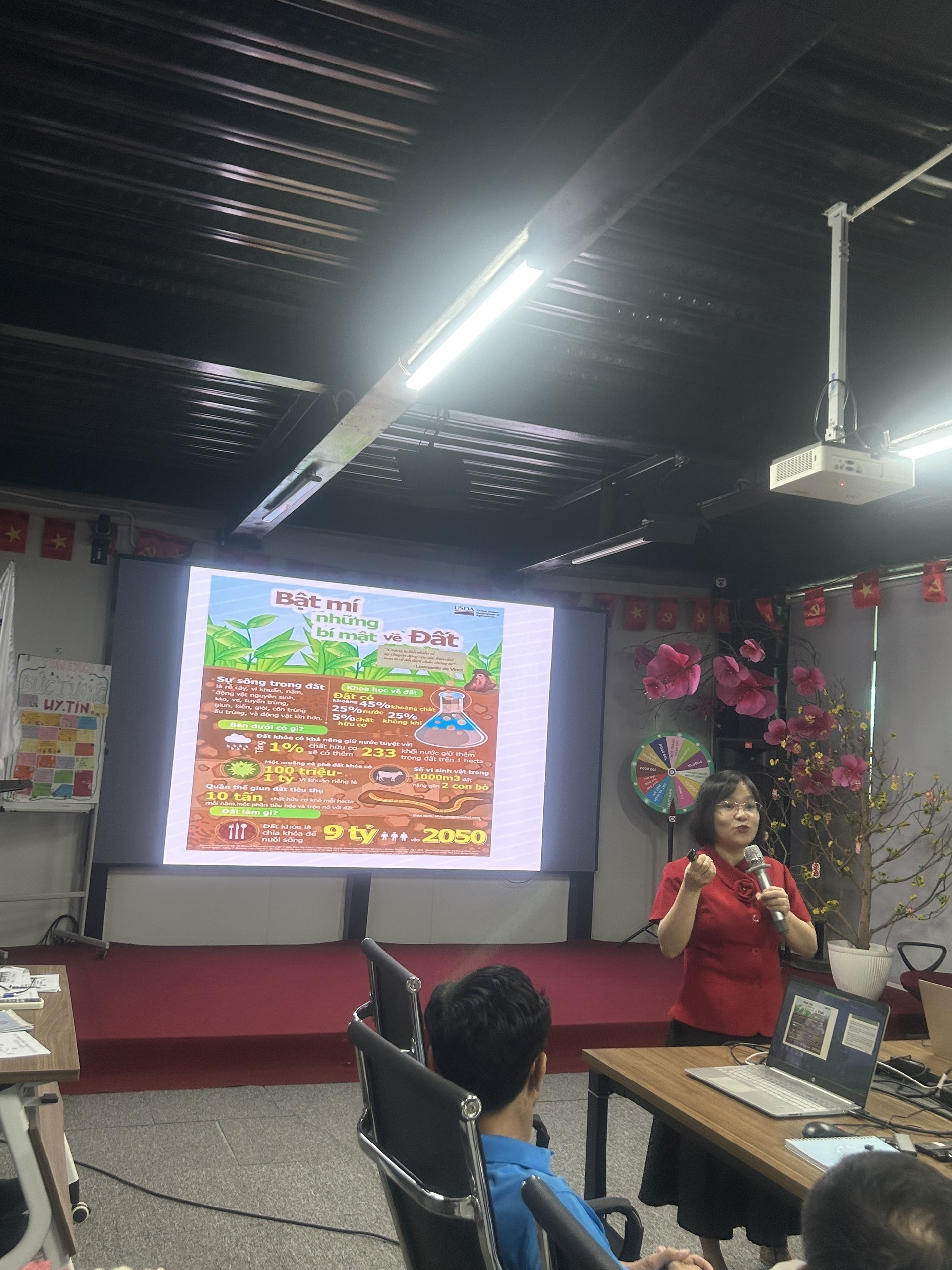
Opening speech of the course, Dr. Pham Dinh Nam – Director of Vietnam Institute for Technology and Agricultural Development (VITAD-AGRI) pose a question: “Why do organic farming”, From there he cited the "Green Revolution" that began in the decade 50 and 60 of the twentieth century in many countries around the world, includes comprehensive techniques used to increase productivity per unit of cultivated area. However, “Green Revolution” – Is it green?, when the consequences have appeared after many years of using chemical fertilizers: Land degradation, Reduced biodiversity, Chemical abuse, Food poisoning and especially environmental pollution. So, Organic farming is extremely urgent, The work of "returning green" to the country is not only our right but also our responsibility. He hopes that the training course "Sustainable Agricultural Production according to the circular economy system using organic fertilizers and biofertilizers will – Product Marketing Strategy" will help students gain the necessary knowledge for standard and effective organic agricultural work., besides, Students who fully participate in the course will receive a certificate of participation – This certificate ensures you are recognized as knowledgeable about organic agriculture, Favorable for applying for funding for "green agriculture" and related certifications such as copyright protection, brand, logo... Dr. Nam also wished the students to study hard and achieve the best results.

Dr. Pham Dinh Nam – Director of Vietnam Institute for Technology and Agricultural Development (VITAD-AGRI) Opening speech and course coordination

Next, Dr. Nguyen Thi Ngoc Dinh – Organic Agriculture expert – Training course instructor – presented Overview of organic agriculture:

  1. Concept.
  2. Principles of organic agriculture.
  3. Meaning and benefits.
  4. Opportunities and challenges in organic agricultural production, Circular agriculture in Vietnam
  5. Soil management measures, water, Nutrition and crops in organic farming.
  6. Principles of pest and disease prevention in organic farming.
  7. Processing waste into input for organic production.

Dr. Nguyen Thi Ngoc Dinh, Vietnam Academy of Agriculture, Organic Agriculture expert – Training course instructor

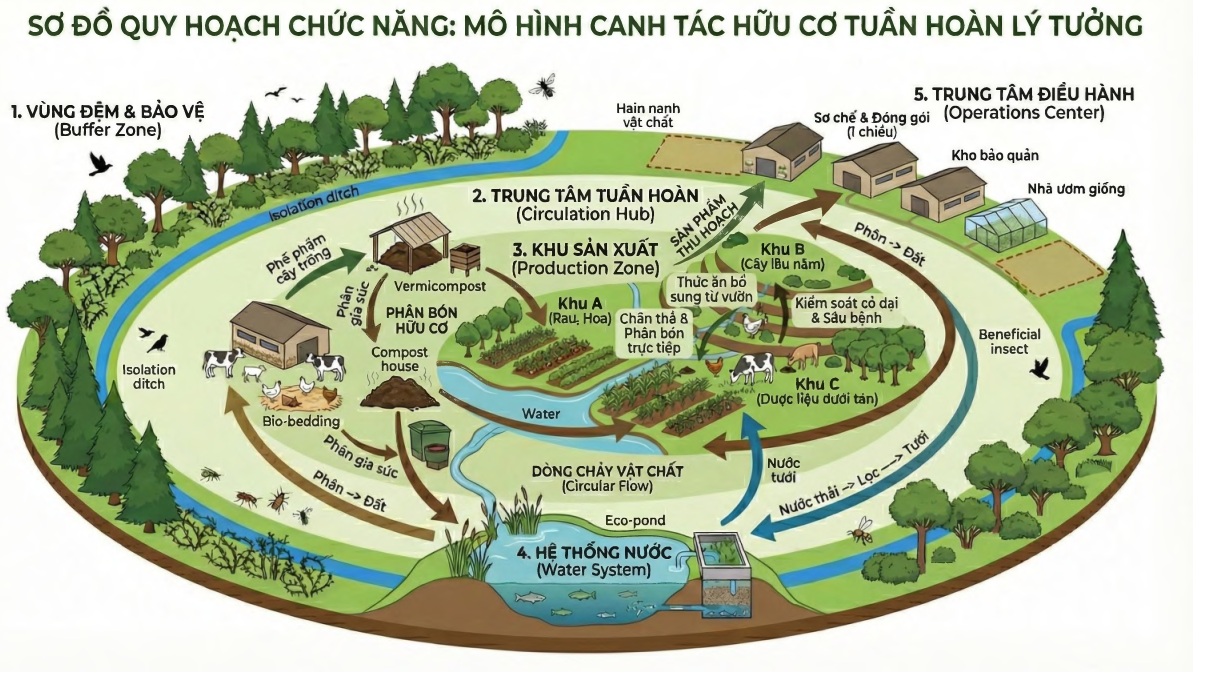
Besides, Dr. Dinh also introduced "Function planning diagram: "Ideal circular organic farming model", From there, we point out the basic principles in administrative agriculture according to the criteria: Target, Input, Pests, Energy and waste; Analyze organic production steps in sequence: Select production area; Selection, Input management and use; Control of organic production; Preliminary processing – Processing – Packaging – Preservation; Labeling.

Functional planning diagram of the ideal circular organic farming model

The first training session ends at 12:00, Students attend lunch and chat in the dining room next to the training class.

After lunch break, Dr. Nguyen Thi Hong Hanh – Organic Agriculture expert – Training course instructor – explained Standard, organic product certification process, Includes content:

  1. Some organic standards in the world (JAS, USDA, ME).
  2. Standards and conditions for organic production in Vietnam.
  3. Organic certification process in Vietnam.

Dr. Nguyen Thi Hong Hanh explains the Standards, organic product certification process

Also in this lesson, Dr. Dinh gave the students a tour of the VFARM High-tech Agricultural Geo-Ecological Cooperative., At the same time, give homework to students: “You comment on the risks affecting VFARM's organic farming from surrounding farms”.

Two lecturers and students visited the VFARM High-tech Agricultural Geo-ecological Cooperative

On the first day of training, Dr. Dinh and Dr. Hanh asked some interactive questions with the students and received many interesting answers.

The second training session ends at 5:00 p.m. Many students stayed to ask the lecturers more questions related to the lesson, promises that the next training day will be very interesting.

Some other pictures of the first training day.


Perform: Le Ngoc Thanh Vinh – Deputy Head of Technology Department, Vietnam Institute of Agricultural Technology Application and Development (VITAD – AGRI)
Minister Tran Duc Thang: Reshaping the rice industry in a green direction, lasting

Minister Tran Duc Thang emphasized the opportunity to reshape the rice industry in a green direction, sustainability through the project 1 million hectares of high quality rice in the Mekong Delta.

Day 8/3, in Vi Thanh ward (Can Tho City), Ministry of Agriculture and Environment Organize a preliminary conference to review two years of implementing the Sustainable Development Project 1 million hectares specializes in cultivating high quality rice, Low emissions associated with green growth in the Mekong Delta (Mekong Delta) to year 2030.

Ông Phạm Thái Bình - Chủ tịch HĐQT Công ty Cổ phần Nông nghiệp Công nghệ cao Trung An giới thiệu các sản phẩm tới Bộ trưởng Trần Đức Thắng tại hội nghị sáng ngày 8/3. Ảnh: Khương Trung.

Mr. Pham Thai Binh – Chairman of the Board of Directors of Trung An High-Tech Agriculture Joint Stock Company introduced products to Minister Tran Duc Thang at the conference this morning 8/3. Image: Khuong Trung.

Speaking at the conference, Member of the Politburo, Minister of Agriculture and Environment Tran Duc Thang said after more than two hours of serious work, The conference has completed its entire proposed program. Delegates heard a preliminary report summarizing two years of project implementation and many enthusiastic opinions from localities, enterprise, Cooperative, international organizations and experts.

According to the Minister, These comments provide important practical information, At the same time, propose many practical solutions for the next phase of the project. Leader Ministry of Agriculture and Environment recognize and praise the active participation of localities, unit, business community, cooperatives and farmers in recent times.

Change in thinking about rice production

Bộ trưởng Trần Đức Thắng phát biểu kết luận tại hội nghị. Ảnh: Khương Trung.

Minister Tran Duc Thang gave a concluding speech at the conference. Image: Khuong Trung.

According to assessments at the conference, with a methodical approach, responsibility and synchronization, The project has initially achieved many positive results. One of the most obvious changes is the change in awareness of both the political system and the people towards the goal of sustainable development of the rice industry..

Now, The project is identified not only as a production development program but also as an important step in the process of restructuring the rice industry in the Mekong Delta., towards green agriculture, sustainable and environmentally responsible.

Farmers in many localities have gradually changed traditional farming practices, Access and apply advanced production processes such as "1 must 5 reduce", “3 decreases 3 increase", Smart rice farming adapts to climate change. At the same time, Many irrigation water management models use the alternating flood and dry method (AWD), Reasonable use of fertilizers and reduction of greenhouse gas emissions are also implemented.

Chủ tịch Tập đoàn Lộc Trời Huỳnh Văn Thòn trao đổi với Bộ trưởng Trần Đức Thắng: Thành công lớn nhất của Đề án này là đem lại lợi ích to lớn cho nông dân thông qua các giải pháp về chuyển giao khoa học kỹ thuật như giảm giống, giảm phân, giảm thuốc, qua đó giảm chi phí đầu vào trong sản xuất lúa, tăng hiệu quả, tăng cạnh tranh, tăng lợi nhuận và hiệu quả đầu ra cho nông dân. Ảnh: Khương Trung.

Chairman of Loc Troi Group Huynh Van Thon discussed with Minister Tran Duc Thang: The greatest success of this Project is bringing great benefits to farmers through solutions for scientific and technical transfer such as seed reduction., meiosis, reduce medication, thereby reducing input costs in rice production, increase efficiency, increased competition, increase profits and output efficiency for farmers. Image: Khuong Trung.

Some localities such as Can Tho, Dong Thap and An Giang have proactively replicated high-quality rice production models, helps increase income for farmers, At the same time, it contributes to reducing emissions.

Besides that, A number of large enterprises have participated in the high-quality rice value chain, Support farmers from production to product consumption, Gradually form sustainable and transparent production links.

According to the Minister, These initial results not only contribute to improving the value of the rice industry but are also consistent with Vietnam's commitment at COP26 on the goal of bringing net emissions to "zero" by 2019. 2050. At the same time, This is also the foundation to build the Vietnamese rice brand in a "green" direction – clean – quality – sustainable”.

Reshaping the rice industry towards sustainability

However, The project implementation process still faces many challenges, That is, some localities are still confused in organizing implementation; Irrigation infrastructure, especially infield irrigation, does not meet production requirements. Post-harvest straw treatment also has many limitations.

Bộ trưởng Trần Đức Thắng đặc biệt lưu ý vấn đề xử lý rơm rạ sau thu hoạch, coi đây là khâu quan trọng để giảm phát thải và thúc đẩy phát triển nông nghiệp tuần hoàn. Ảnh: Khương Trung.

Minister Tran Duc Thang paid special attention to the issue of post-harvest straw treatment, consider this an important step to reduce emissions and promote the development of circular agriculture. Image: Khuong Trung.

Minister Tran Duc Thang paid special attention to the issue of post-harvest straw treatment, consider this an important step to reduce emissions and promote the development of circular agriculture. Besides, The production organization capacity of some cooperatives and enterprises is still limited; Green financial resources and support mechanisms for emission reduction models need to continue to be promoted more strongly.

So that the project continues to be implemented effectively and in depth, Minister Tran Duc Thang proposed to the ministries, branch, Localities and related units will focus on implementing many key tasks in the coming time.

Inside, The Ministry of Finance is requested to coordinate with the Ministry of Agriculture and Environment to soon complete procedures for approval of the project "Infrastructure and technical support for high-quality rice.", low emissions in the Mekong Delta”, Using IBRD loan from World Bank, At the same time, allocate resources to implement the project's tasks according to Decision 1490/QD-TTg.

Bộ trưởng Trần Đức Thắng trao đổi với bà Mariam Sherman, Giám đốc Ngân hàng Thế giới tại Việt Nam, Lào và Campuchia bên lề hội nghị. Ảnh: Khương Trung.

Minister Tran Duc Thang discussed with Ms. Mariam Sherman, Director of the World Bank in Vietnam, Laos and Cambodia on the sidelines of the conference. Image: Khuong Trung.

The State Bank of Vietnam is requested to continue directing credit institutions to arrange preferential capital sources, create conditions for businesses, Cooperatives and farmers have access to credit for high-quality rice production, Low emissions.

While, The Vietnam Farmers' Association and the Vietnam Cooperative Alliance continue to accompany localities in propaganda, Guide farmers to participate in the project and promote the development of new cooperatives.

For localities, The Minister proposed to proactively develop a plan to expand the area applying sustainable farming processes, suitable for each ecological region; Arrange funds to implement activities from year to year 2026 to replicate the model according to the registered plan.

Localities also need to invest in upgrading in-field irrigation systems, Develop water-saving irrigation models such as AWD, At the same time, improve storage and logistics infrastructure to reduce post-harvest losses.

Besides that, Need to strengthen business links – Cooperative – farmers along the value chain, Promote the application of digital technology in production management and product consumption, At the same time, raise people's awareness about sustainable rice production and post-harvest straw treatment.

According to Minister Tran Duc Thang, Vietnam is facing a great opportunity to reshape the rice industry in a modern direction, sustainable and environmentally responsible.

Bộ trưởng Trần Đức Thắng, nguyên Bộ trưởng Bộ NN&PTNT Cao Đức Phát, Chủ tịch UBND thành phố Cần Thơ Trương Cảnh Tuyên chụp ảnh lưu niệm với các doanh nghiệp, nhà sản xuất tham gia đề án. Ảnh: Khương Trung.

Minister Tran Duc Thang, former Minister of Agriculture&Cao Duc Phat Rural Development, Chairman of Can Tho City People's Committee Truong Canh Tuyen took souvenir photos with businesses, Manufacturers participating in the project. Image: Khuong Trung.

He appealed to the ministries, branch, local, enterprise, Cooperatives and farmers continue to join forces, innovation, determined to successfully implement the project, thereby contributing to building green agriculture, rich farmers, civilized and modern countryside.

Theo nongnghiepmoitruong.vn

SANDALWOOD – ORGANIC AGRICULTURAL PRODUCTS OF THE FUTURE

Bright 6/3/2026, Vietnam Institute of Technology Application and Agricultural Development combined with DNCC Global Digital Circular Economy Group Joint Stock Company and VFARM Geo-ecological High-tech Agricultural Cooperative to organize a meeting to deploy the sandalwood tree planting project in Ba Vi area – Hanoi.

Overview of the tripartite meeting on biological products for sandalwood

Delegates attended:

– Representative of Vietnam Institute of Agricultural Technology Application and Development (VITAD – AGRI) is Dr. Pham Dinh Nam, Head of Institute.
– The representative of DNCC Global Digital Circular Economy Group Joint Stock Company is Ms. Nguyen Thu Huyen, Business Director.

– The representative of VFARM Geo-ecological Hi-tech Agricultural Cooperative is Ms. Vo Thi Thanh Nhan, Vice president.

– With Doctors, Master's degree in biochemical technology and informatics from Vietnam Institute of Agricultural Technology Application and Development, Experts from DNCC Global Digital Circular Economy Group Joint Stock Company and members of VFARM Geo-ecological Hi-tech Agricultural Cooperative attended the meeting..

The meeting is an event that marks the first step in research cooperation, production and development of organic agriculture among a high-tech agricultural cooperative (VFARM) and a Company operating in the field of digital agriculture (DNCC Global) with the Vietnam Institute of Agricultural Technology Application and Development in a guiding role, training on organic agriculture.

Dr. Pham Dinh Nam – Director of the Vietnam Institute of Agricultural Technology Application and Development spoke at the opening of the meeting

Opening remarks at the Meeting. Dr. Nam said, currently biotechnology, In particular, research into the production of microbial products is of great interest, because this is a source of nutrition, take care of, protect plants, Environmentally friendly, besides organic fertilizer... Thus, the application of microbial products of the VFARM Geo-ecological Hi-tech Agricultural Cooperative for cultivating sandalwood trees is not only useful for farmers but also helps improve the living environment., especially minimizing water pollution, land and air, consistent with the organic agriculture orientation of DNCC Global Digital Circular Economy Group Joint Stock Company. Dr. Nam introduced that VFARM will be the sponsor of organic fertilizer for DNCC Global to use for the sandalwood tree planting project in DNCC Global's upcoming Tree Planting Festival program on September 11, 2019. 14/3/2026.

He also shared the Institute's and his personal experiences in organic agriculture over the past thirty years, Point out incentives for businesses, Cooperatives and business households operating in the field of organic agriculture according to Decree No. 109/2018/ND-CP dated 29/8/2018; Decision No. 885/QD-TTg dated 23/6/2020 of the Prime Minister approving the Phase 1 Organic Agriculture Development Project 2020-2030; Ways to register trademarks, copyright, GlobalGAP certification, domestic and international organic certification...

Ms. Nguyen Thu Huyen looks forward to long-term cooperation with VITAD and VFARM

Respond, Ms. Nguyen Thu Huyen was very happy to meet and cooperate with the Vietnam Institute of Agricultural Technology Application and Development. She said, “When dedicated people meet each other, Great seeds begin to be sown.”. Although DNCC GLOBAL has just entered the agricultural field not long ago, but always confident in the vision, strategy and aspiration to create a sustainable agriculture. So, DNCC Global always receives support and companionship from many leaders, leading industry experts. She also expressed her desire to be a long-term partner with the Vietnam Institute of Agricultural Technology Application and Development as well as the VFARM Geo-ecological High-tech Agricultural Cooperative.. Also here, Mrs. Phuong, DNCC GLOBAL's chief of staff expressed his hope that planting sandalwood and other intercropping trees will contribute to increasing income., improve the lives of Ba Vi farmers, At the same time, contributing to the green transformation of Hanoi Capital, for our country Vietnam.

SungWon biological products were displayed at the Meeting

Next, Ms. Vo Thi Thanh Nhan, Deputy Director of VFARM Geo-ecological Hi-tech Agricultural Cooperative presented in detail the functions and techniques of fertilizing biological products for sandalwood trees. Whereby, The Cooperative's biological products are produced based on the exclusive technology of SungWon Korea, which is not only effective in growing fruit trees., vegetables but also significantly improves the environment, renovation, detoxify the soil; detoxify gas, clean lakes and ponds, rivers and streams; waste decomposition; improve soil biota, promotes decomposition of organic matter, making biological cushions or environmental treatment, eliminates odors... This biological product increases biomass 50 Apply fertilizer once before planting (5 liter of mixture 250 liter), When watering plants and leaves, it is diluted more, that is, biomass increases 100 times (5 liter of mixture 500 liter). Based on the process of cultivating sandalwood trees by the Vietnam Institute of Agricultural Technology Application and Development, Ms. Nhan affirmed the suitability of SungWon biological product for this plant, At the same time, we invite DNCC GLOBAL employees to join the course on Organic Agriculture at VFARM in 02 day 12 and 13/3/2026 come here. Ms. Nguyen Thu Huyen happily accepted the invitation.

Ms. Vo Thi Thanh Nhan presented the gift 02 can of SungWon DX biological product for Ms. Nguyen Thu Huyen

After the discussion, Ms. Vo Thi Thanh Nhan presented the gift 02 SungWon DX biological product can, one type of promotion for trees and one type of environmental treatment for Ms. Nguyen Thu Huyen. The three parties also agreed to establish a Memorandum of Understanding (MOU) This cooperation and the terms of cooperation will be discussed, unite to develop together.

At the end of the meeting, The three parties took souvenir photos together in the building's lobby 24 Ly Thuong Kiet, Hanoi.

Perform: Le Ngoc Thanh Vinh – Deputy Head of Technology Department, Vietnam Institute of Agricultural Technology Application and Development (VITAD – AGRI)
V Standard – Effective software records the history of the production process to serve the certification of Organic Agriculture

Bright 13/12/2025, at floor 6 – number 555 Lac Long Quan – Tay Ho – Hanoi, Institute of Applied Research and Environmental Remediation (IET) and Vietnam Institute of Agricultural Technology Application and Development (VITAD-AGRI) and Conformity Certification Center (QUACERT) Coordinated to organize the course "Introduction to TCVN standards, JAS, EU on Organic Agriculture and instructions for using software to record production history for third-party certification 3 for products that comply with the above standards and VietGAP standards”.

Overview of the course "Introduction to TCVN standards, JAS, EU on organic agriculture and instructions for using V-Standard recording software"

Delegates attended:

– Dr. Le Van Hung – Representative of the Institute of Applied Environmental Remediation Research (IET), host the course.

– Dr. Pham Dinh Nam – Director of Vietnam Institute for Technology and Agricultural Development (VITAD-AGRI), co-chair.

– MSc Nguyen Thi Hai Xuan, Manage JAS certification program and TCVN Conformity Certification Center (QUACERT) – Course coordination.

– MSc Doan Trung Dung, Management of EU certification program specialist Conformity Certification Center (QUACERT) – Lecturer.

– Along with nearly a hundred students who are agricultural experts from the Vietnam Organic Agriculture Association (VOAA), VITAD-AGRI, Representative of VFARM Geo-ecological High-Tech Agricultural Cooperative, Tien Dong Investment Joint Stock Company and a number of businesses (DN), Cooperative (HTX) agricultural engagement in person and online.

The course is an event marking a new step forward in research, Learn about Organic Agriculture standards (NNHC) domestically and internationally as well as applying software to record the history of the production process of products meeting organic standards.

PGS. Dr. Le Van Hung – Representative of the Institute of Applied Environmental Remediation Research (IET), The course chairperson gives the opening speech of the course

Opening speech of the course. Associate Professor, Dr. Le Van Hung said: To serve the certification of organic and safe agricultural products, Need to clearly understand domestic organic standards as well as some of Vietnam's major export markets such as the EU or Japan. Want to do this, It is urgent to have software that records the history of the production process. So, Institute of Applied Environmental Treatment Research (IET) agreed to coordinate with the Conformity Certification Center (QUACERT) under the Ministry of Science and Technology and the Vietnam Institute of Technology Application and Agricultural Development (VITAD-AGRI) on organizing training courses and introducing TCVN Standards, JAS, EU on organic agriculture, Safe production according to VietGAP and V software instructions- Standard serves for product certification according to the above standards. This is a project to digitize agricultural standards management, support farmers, Cooperatives and stakeholders comply with standards, transparent traceability and enhance the value of agricultural products through the website & mobile app. This course will provide practical guidance on using the V-Standard platform (keep a diary, production operations management, …) and traceability processes.

MSc Nguyen Thi Hai Xuan, Conformity Certification Center specialist (QUACERT) – Course coordination

Next, MSc Nguyen Thi Hai Xuan, Conformity Certification Center specialist (QUACERT) – Course coordination – presented a brief overview of organic certification according to JAS standards, TCVN and introduction The lecturer of the course is MSc Doan Trung Dung, Conformity Certification Center specialist (QUACERT) Start training program.

MSc Doan Trung Dung – Conformity Certification Center specialist (QUACERT) – Course instructor.

In the first part of the program, MSc Dung introduced Vietnamese standards (TCVN 11041), Japanese standards (JAS) and EU regulations (Reg.2018/848) about organic agriculture. The presentation is quite detailed, from the principles of production to the main steps in organic agricultural production. He introduced "Functional planning diagram: "Ideal circular organic farming model", From there, we point out the basic principles in administrative agriculture according to the criteria: Target, Input, Pests, Energy and waste; Analyze organic production steps in sequence: Select production area; Selection, Input management and use; Control of organic production; Preliminary processing – Processing – Packaging – Preservation; Labeling.

Functional planning diagram of the ideal circular organic farming model

Next part, MSc Dung explains the differences between organic standards/regulations. This is a particularly important point because it helps businesses, Agricultural cooperatives understand the requirements for their products depending on the needs of domestic distribution or export to which country/region.. Difference about: Management mechanism; Certificate validity; Certified subject; Input materials; Production process; Conversion time; Labeling and Sales are thoroughly analyzed and taught by him. The most prominent points of difference between the standards are: There is no equivalent mechanism, only bilateral recognition and certificate validity (TCVN 11041: Max 02 year; JAS: There is no deadline; ME: Max 03 year).

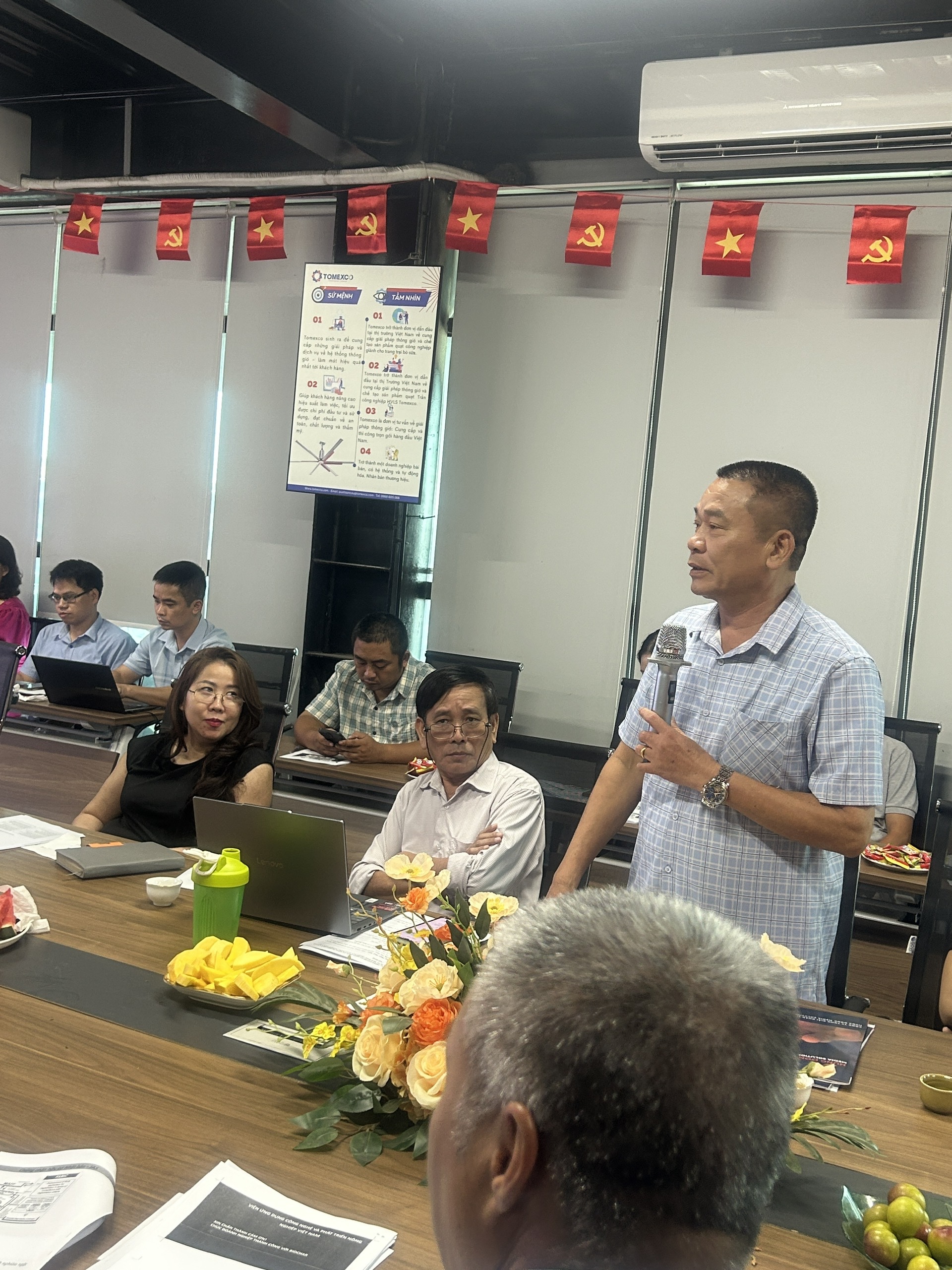
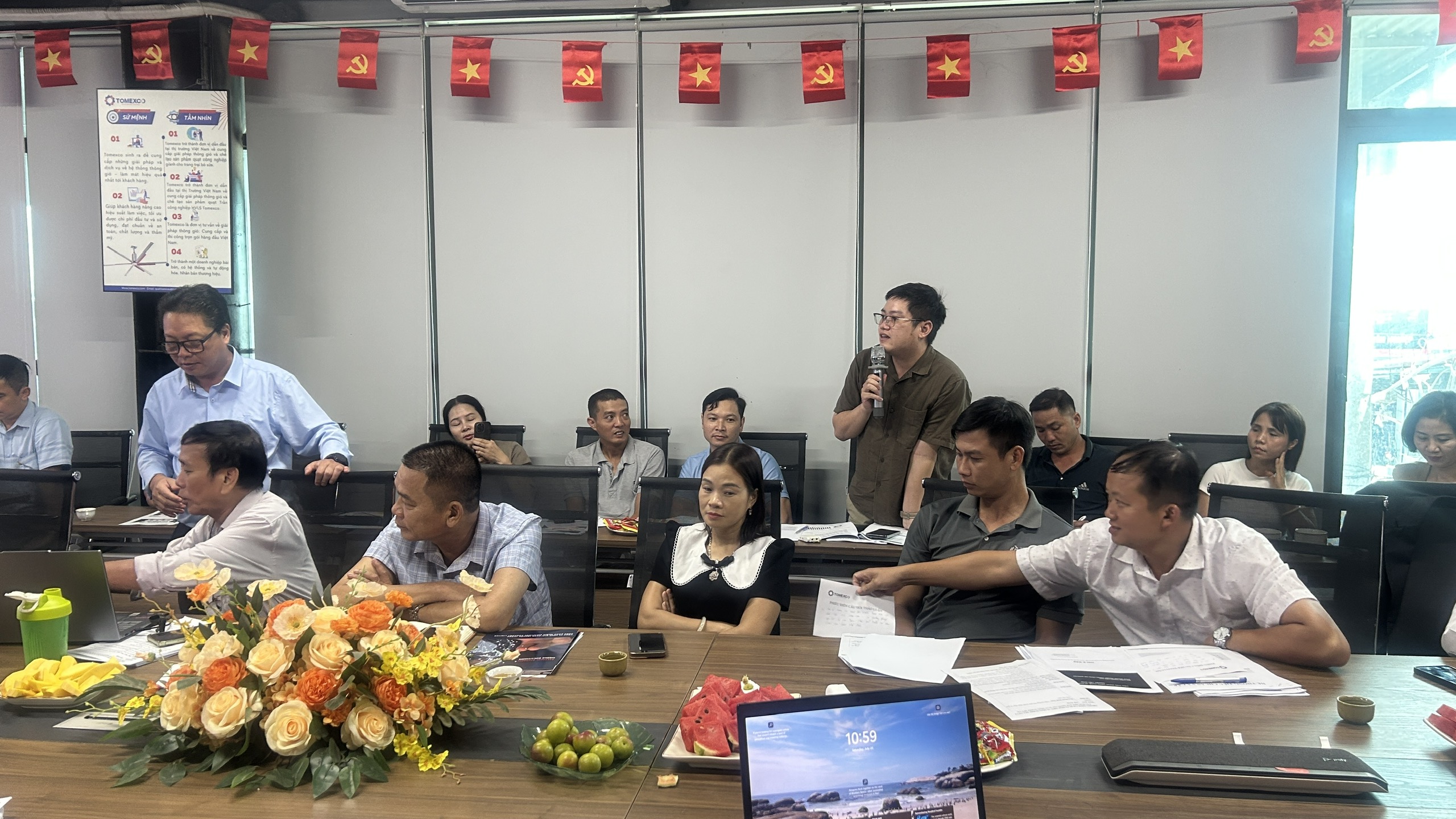
After finishing the lecture on organic standards, Course instructor – Master Doan Trung Dung received some comments and questions from the students, Among them are two "outstanding" issues today. Doctor of organic chemistry Nguyen Van Ngoc – Representative of Tien Dong Investment Joint Stock Company (specializes in producing and trading organic fertilizers) I believe that finding an organic certification organization is quite time-consuming, while the validity of the certificate is only two years, After two years, it must be reissued. Ms. Vo Thi Thanh Nhan – Representative of VFARM Geo-ecological High-Tech Agricultural Cooperative (specializes in manufacturing and trading biological products and clean agricultural products) reflects the situation of mixing unclean products with organic products, causing risks affecting human health and the income of businesses., The organic agricultural cooperative is genuine but currently there is no force to inspect and punish promptly.

MSc Dung replied, Although the certificate validity period is different in each country, but also the EU (Italy 03 year, France and Germany 01 year), JAS (indefinitely) or TCVN (02 year) But they all have in common the requirement for annual compliance inspection by a certification organization/competent organization.. In case of violation, The certificate will be revoked or suspended immediately, no matter how long the deadline is on the paper. The real value lies in maintaining an organic management system on a daily basis to pass unscheduled or annual inspections. Particularly with Japanese JAS standards, Discipline in maintaining records is a vital factor for businesses/cooperatives because they do not use the expiration and re-issuance mechanism like Vietnam or the EU..

Regarding the situation of mixing unclean products with organic products, MSc Dung explained that the State and authorities are currently looking for mitigation solutions, prevent this situation and will gradually put it into law. One of the solutions is to create Vi-Standard software to record the history of the production process for third-party certification. 3 for products that comply with the above standards and VietGAP standards that we will install and instruct on use after the break.

Dr. Pham Dinh Nam introduced the Hikari Da Lat high-tech agriculture model

After recess, Dr. Pham Dinh Nam spent a few minutes introducing the Hikari Da Lat high-tech agriculture model with the third largest export processing factory in Southeast Asia and a growing area of ​​up to 250 hectares., including fruit and vegetable jelly products, which are snacks that students enjoy during break time. According to him, Large agricultural corporations like Hikari will need agricultural standards management software, support farmers, Cooperatives and stakeholders comply with standards, transparent traceability and enhance the value of agricultural products like V-Standard.

Completely agree with Dr. Nam's opinion, Course instructor – Master Dung leads the lesson to part two: Instructions for using V-Standard – Software to record the history of the production process for third-party certification 3 for products that comply with the above standards and VietGAP standards:

– Step 1, Install V-Standard software via QR code or link https://onelink.to/zhwysm .

– Step 2, Register an account, Users need to register information according to the table, in which the information is marked * cannot be left blank.

– Step 3, Log in to your registered account.

– The next steps are performed through an interface that is relatively easy to input: See standard, Keep a diary; Manage; Personal profile. These sections are branched for ease of use, update.

MSc Dung just explained, Instructions for both in-person and online students to install and try out this software.

Main page interface of the software

Due to limited time, Class ends at 11:45 a.m., After all students have downloaded the V-Standard software, setting, Register an account, Successfully logged in and used some main items of the software, Take a survey about your experience with this software.

The attending members took souvenir photos at the end of the class

After class, The members who directly attended the lesson sat down together to discuss more about the lesson. There are some opinions that V-Standard software is easy to use and especially useful in the standards library., Convenient for searching, especially foreign standards/regulations such as the EU, JAS have all been translated into Vietnamese; However, the interface is not eye-catching and there are a lot of steps, may cause omissions or errors. MSc Dung and MSc Xuan are very happy and look forward to receiving suggestions to help QUACERT soon complete this software.. The course organizers propose to organize seminars related to organic farming and modern application software suitable for this profession in the future., At the same time, we also hope that there will be more similar training sessions in the near future to disseminate knowledge related to organic farming and soon put V-Standard software into effective application after completion at the host units of participating students as well as businesses., Other agricultural cooperatives nationwide.

Below are some other pictures of the lesson.

Perform: Le Ngoc Thanh Vinh – Deputy Head of Technology Department, Vietnam Institute of Agricultural Technology Application and Development (VITAD – AGRI)
Copyrights © 2019 VITAD-AGRI All Rights Reserved.

X