


4 November, 2026
BUILDING COMPREHENSIVE CAPACITY IN GREENHOUSE GAS INVENTORY AND CARBON MARKET ACCESS FOR SPECIALIZED STAFF
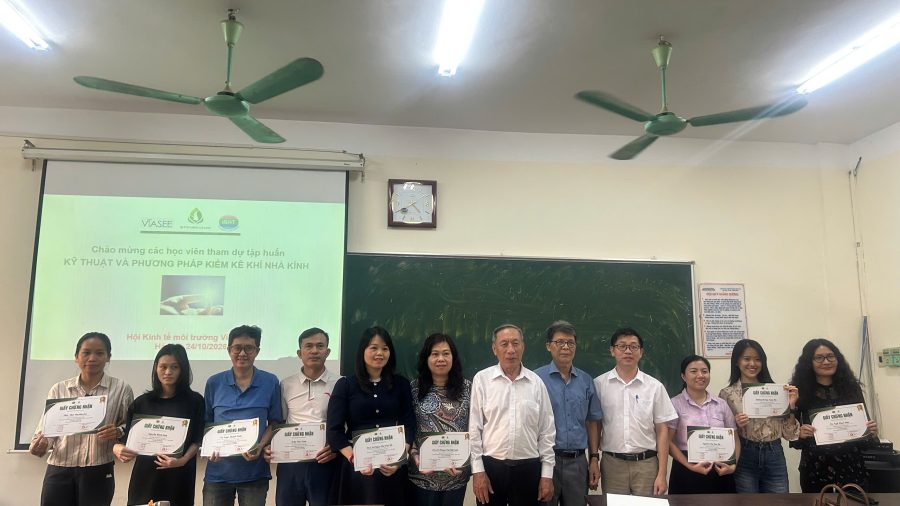
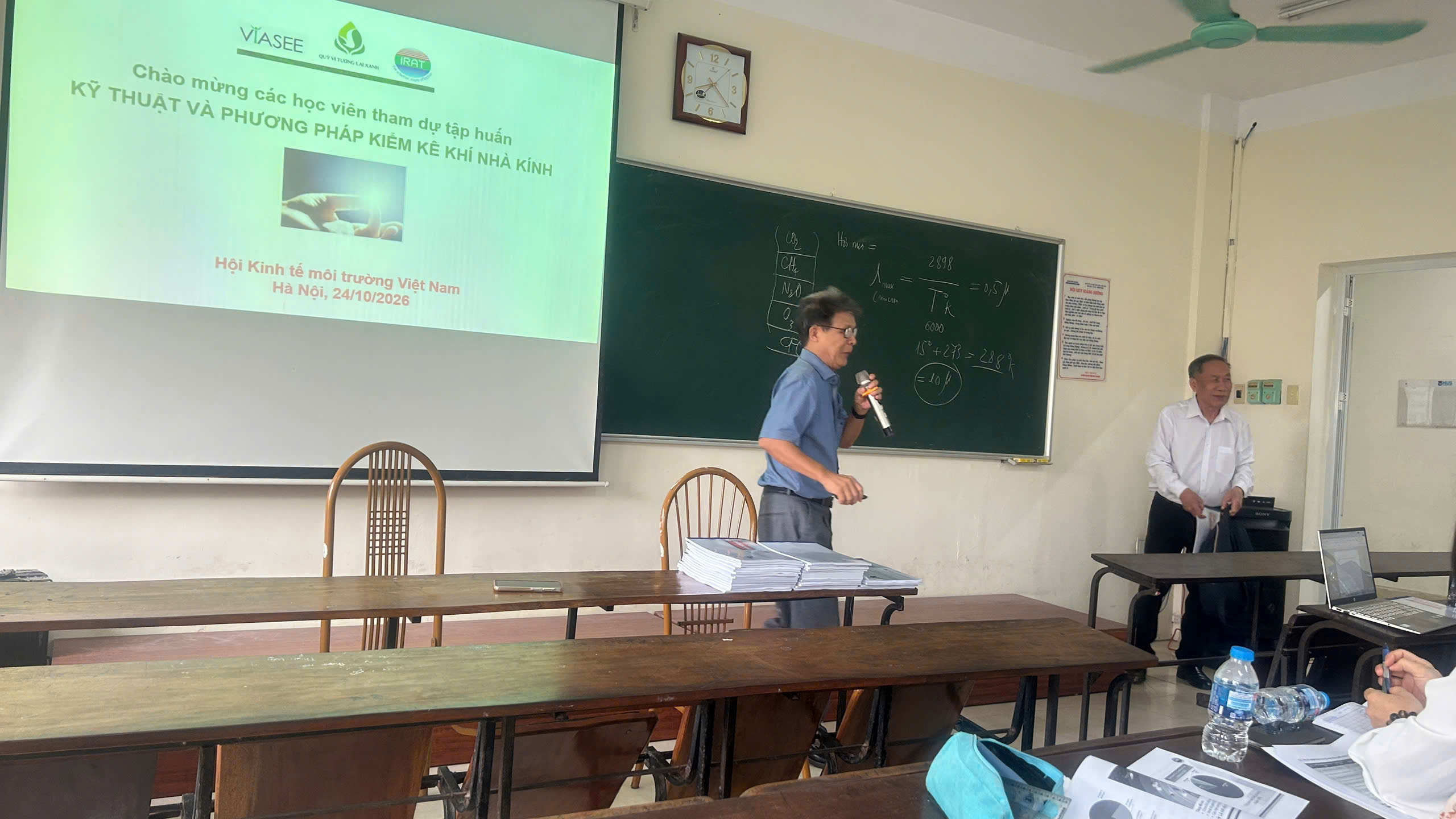
Hanoi, day 24/10 – Facing global pressure to respond to climate change and commit to bringing net emissions to "zero" (Net-Zero) in the year 2050 of Vietnam, High-level specialized training program with topic "Technique, Greenhouse Gas Inventory Methodology (KNK) and Carbon Market Development” was solemnly held in the room 408 T5, University of Natural Sciences, Hanoi National University.
The intensive training course lasts a full day (from 08:00 come 17:00 day 24/10). The event received strategic sponsorship from Fund for a Green Future, Vingroup Corporation, brings together a large number of managers, environmental engineer, Inventory experts and representatives of businesses required to conduct GHG inventories. Program by TS. Le Hai Hung, Director of the Institute of Technology Application Research (DOCUMENT), Directly coordinate and teach.
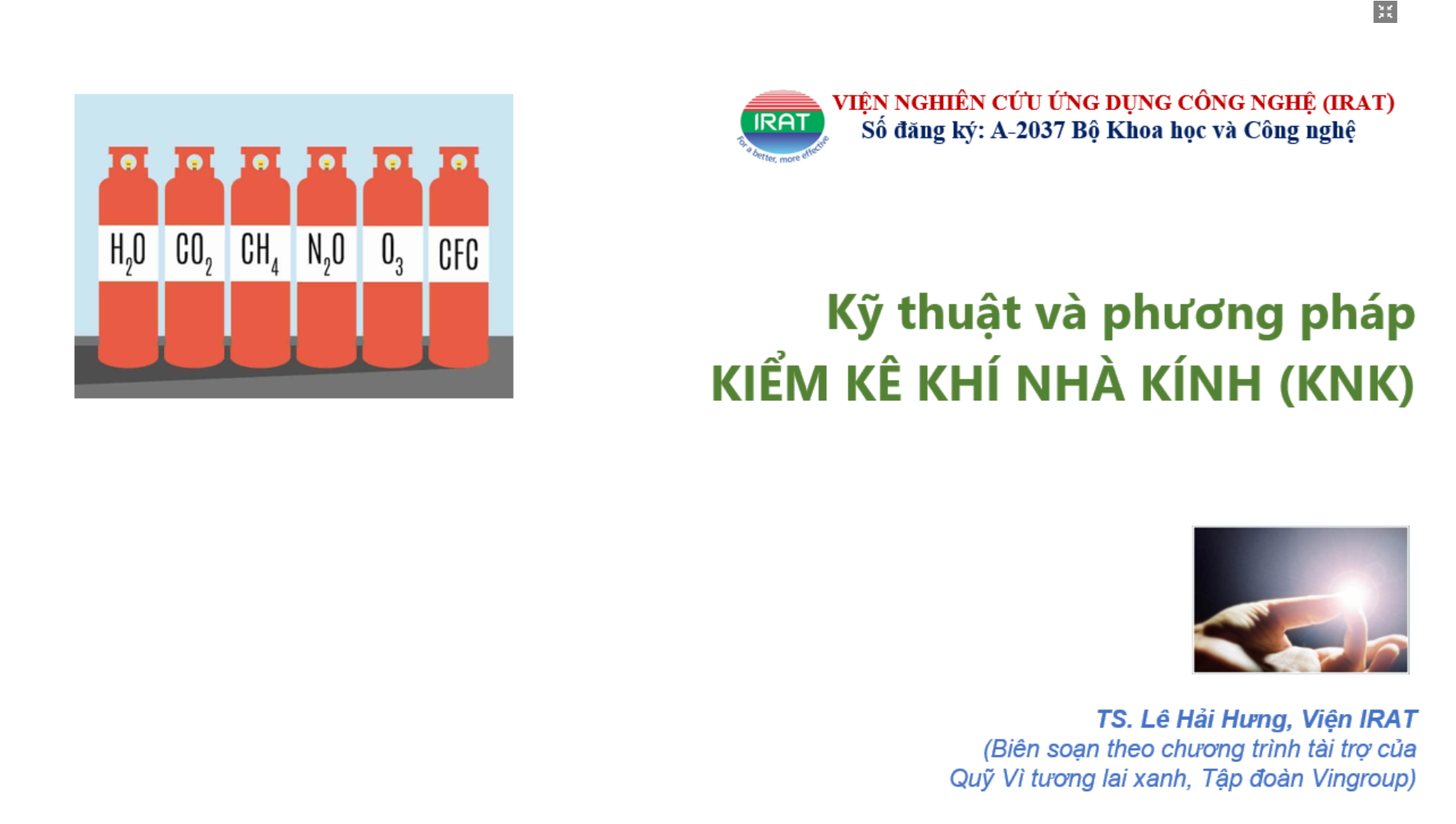
I. PROBLEM STATEMENT AND STRATEGIC LEGAL CONTEXT
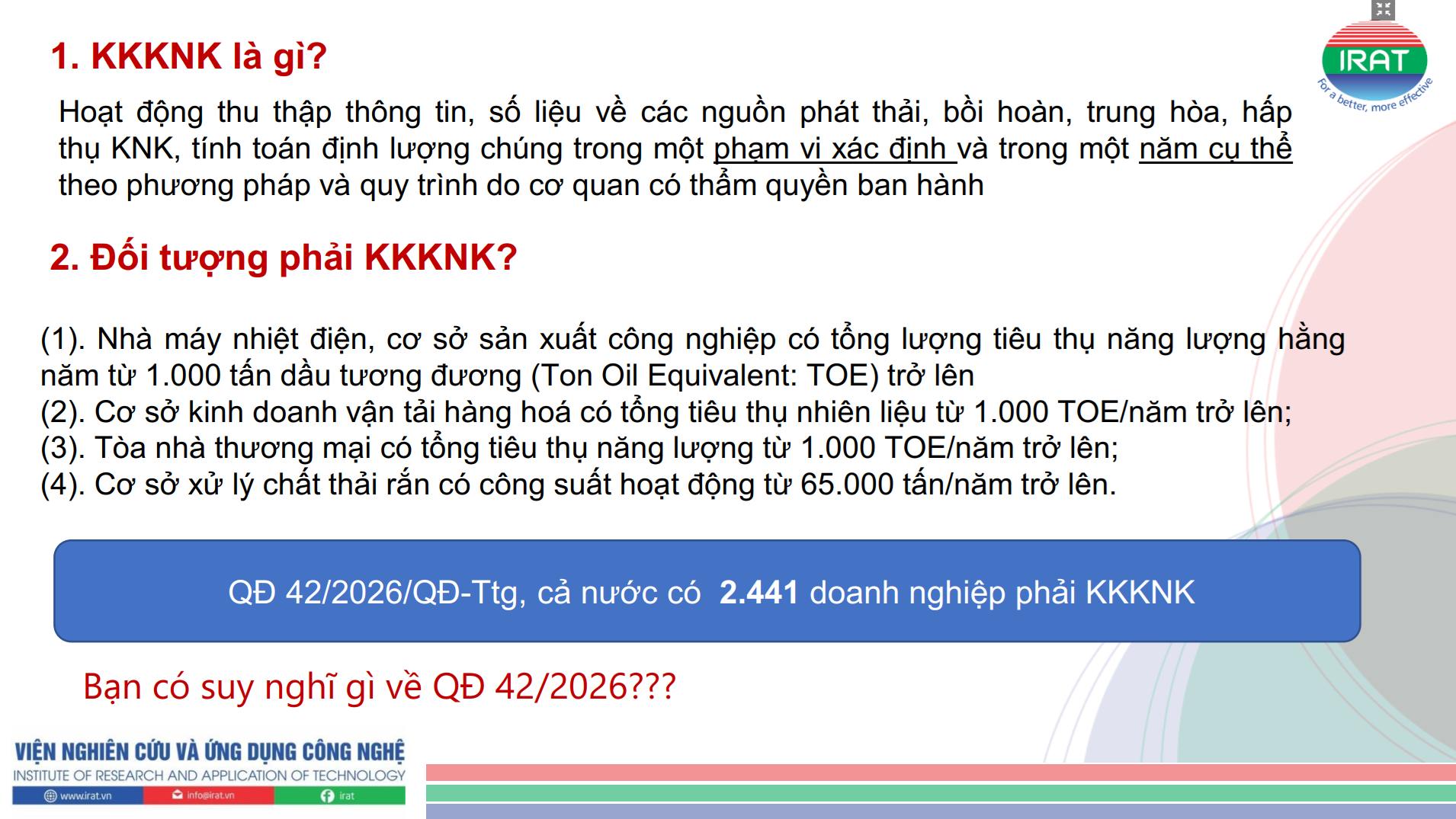
In the context of deep international economic integration, Environmental and sustainable development standards are no longer voluntary recommendations but have become vital technical trade barriers for businesses.. Environmental Protection Law 2020 along with implementation guidance documents – especially Decision No. 42/2026/QD-TTg updating the list of fields, Greenhouse gas emitting facilities must conduct GHG inventories with more than 2.441 base – raises urgent requirements for standardization of professional human resources.
The training program is built to provide students with a solid foundation of knowledge, Update the latest international standards, thereby helping organizations, Enterprises proactively build inventory roadmaps, reduce emissions and participate effectively in domestic and international carbon markets.
II. FOCUS CONTENT OF THE TRAINING PROGRAM
The program is structured into 5 Comprehensive thematic modules, Closely combined with foundational theory, system of legal documents and quantitative practice exercises:
- Greenhouse gases, The Greenhouse Effect and National Commitments
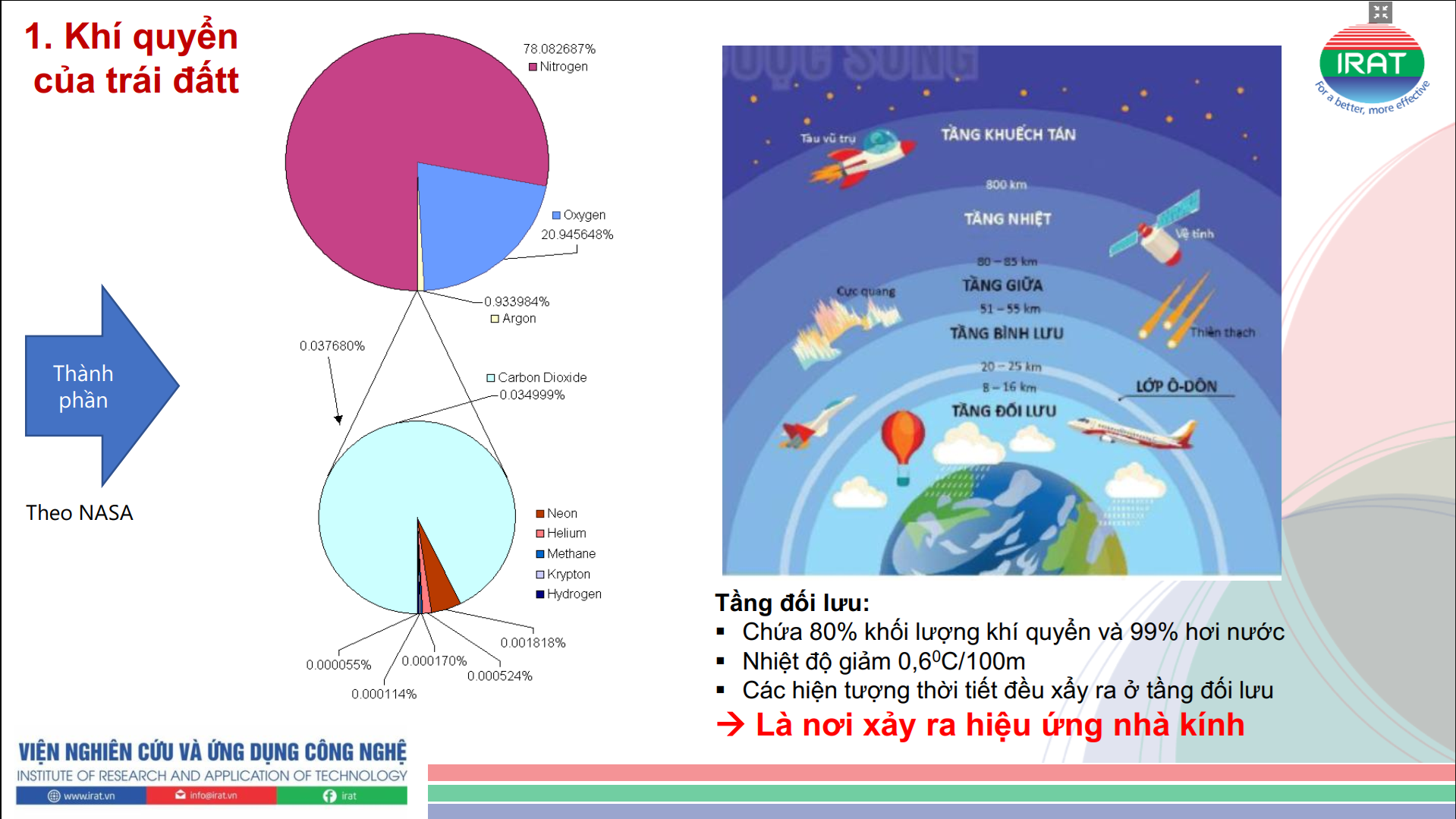
- Physical and chemical nature: Analyze the heat retention mechanism of the atmosphere, major greenhouse gases according to the United Nations Framework Convention on Climate Change (UNFCCC) includes CO2, business, but Vietnam's agricultural exports still reach4, N2THE, HFCs compounds, PFCs, SF6 and NF3.
- GWP index (Global Warming Potential): Study of global warming potential coefficient in time horizon 100 years to convert gases to CO equivalent2 (CO2e).
- Policy context: Update commitments at COP26, COP28 and NDC (Contributions are determined by the country) of Vietnam, thereby shaping the legal responsibilities and transformation opportunities of economic sectors.
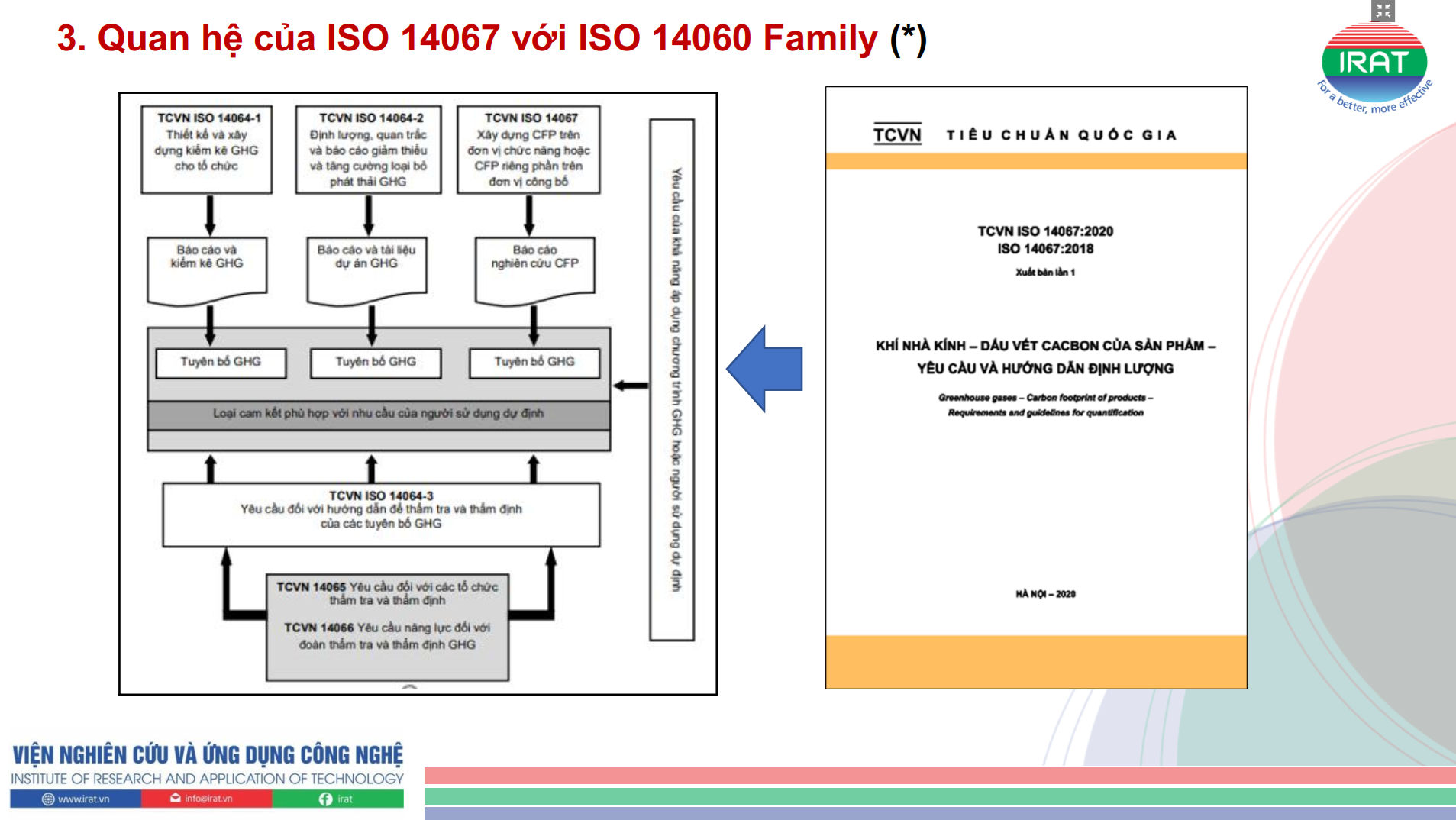
- ISO international standards 14064:2018 and Enterprise/facility level inventory methodology
- Establish inventory boundaries: Guidelines for clearly delineating organizational boundaries (financial control or operational control methods) and operational boundaries (Direct emissions Scope 1, indirectly due to Scope energy 2, and other indirect Scope 3).
- IPCC standard calculation method: Apply the general formula:
Emissions = Activity data (AD) x Emission coefficient (EF)
At the same time, master the selection of method levels from Tier 1 (international default coefficient), Tier 2 (national coefficient) to Tier 3 (Direct measurements or detailed mass balance modeling).
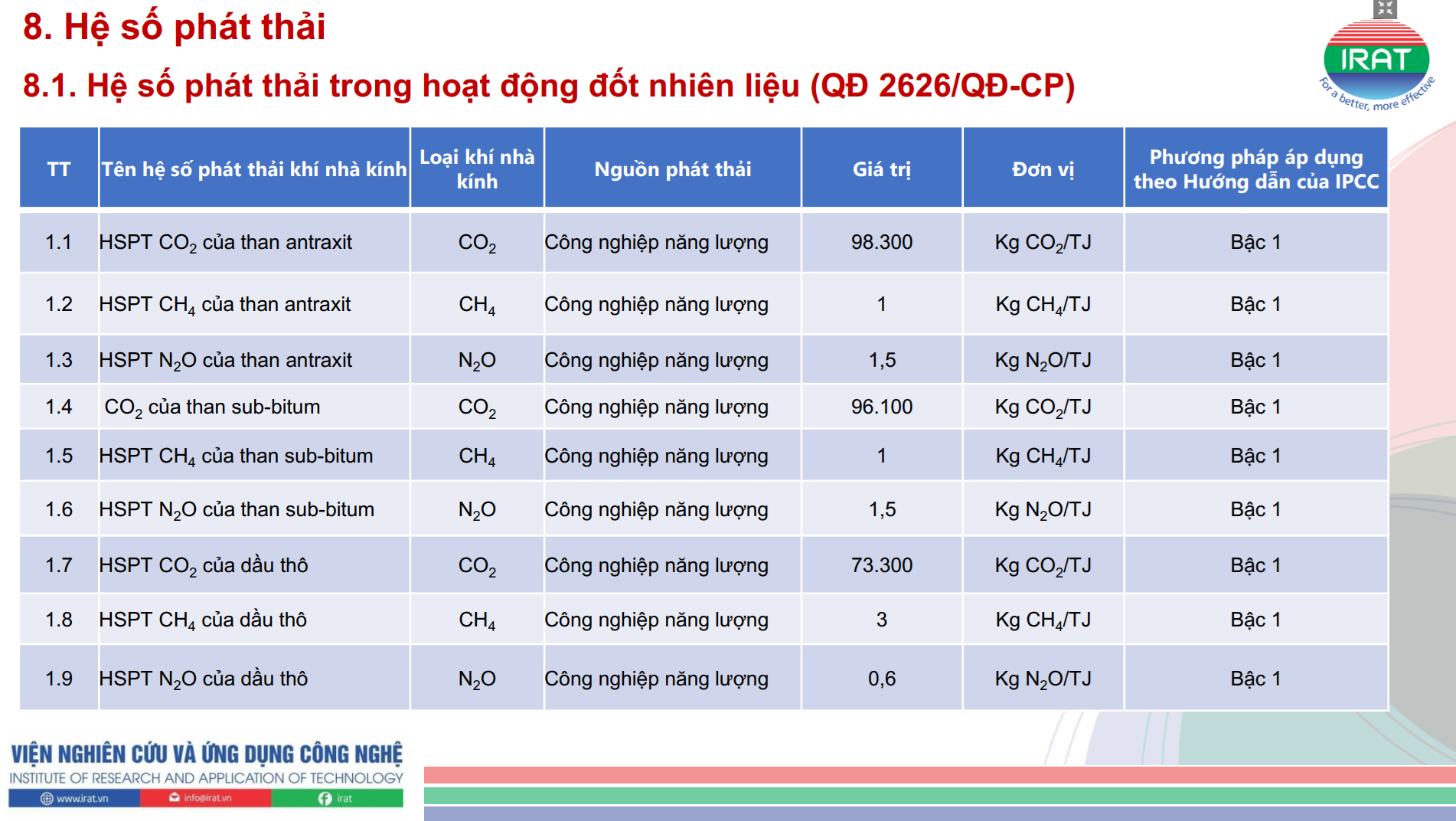
- Refer to national coefficient: Exploitation and application of Decision 2626/QD-BTNMT on the baseline emission coefficient of Vietnam's electricity system and specialized technical instructions.
- Product carbon footprint (CFP) theo ISO 14067:2020 and CBAM Technical Barriers
- Evaluate product life cycle (LCA): Analysis of the methodology for calculating the carbon footprint from the raw material extraction stage, manufacturing, distribution, use until discarded (“from cradle to grave” or “from gate to gate”).
- Adapt to CBAM mechanism: Assessing the impact of the European Union's Carbon Border Adjustment Mechanism (ME) for Vietnam's key export industries (iron and steel, aluminum, cement, fertilizer, hydrogen and electricity), thereby orienting solutions to make product emission data transparent.
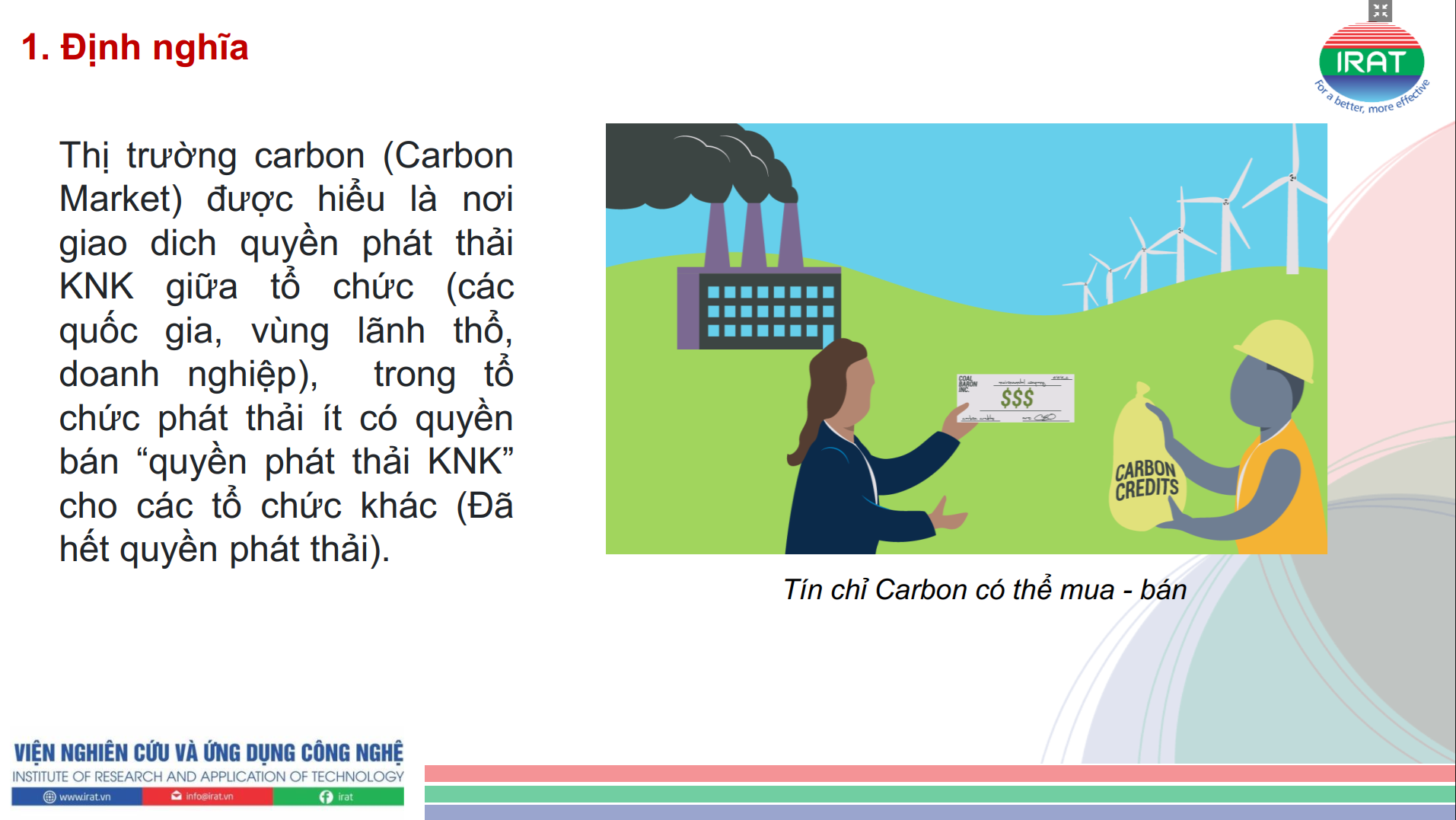
- Carbon Market: From mandatory operation (ETS) to the voluntary market (VCM)
- Carbon market structure: Clearly distinguish nature, operating mechanism and participants in the compliance market (emission quota trading system – ETS) and the voluntary market (offset carbon credits).
- Roadmap in Vietnam: Update on the progress of building and piloting the national carbon trading floor according to Decision 232/QD-TTg, exchange regulations, offset domestic and international carbon credits, as well as international standards such as Verra (VCS), Gold Standard.
- Identify challenges: Clarifying common misconceptions of businesses, for example, the misconception that carbon credits are short-term speculative tools, or ignoring internal emission reduction solutions at the factory and relying too much on purchasing credit offsets.
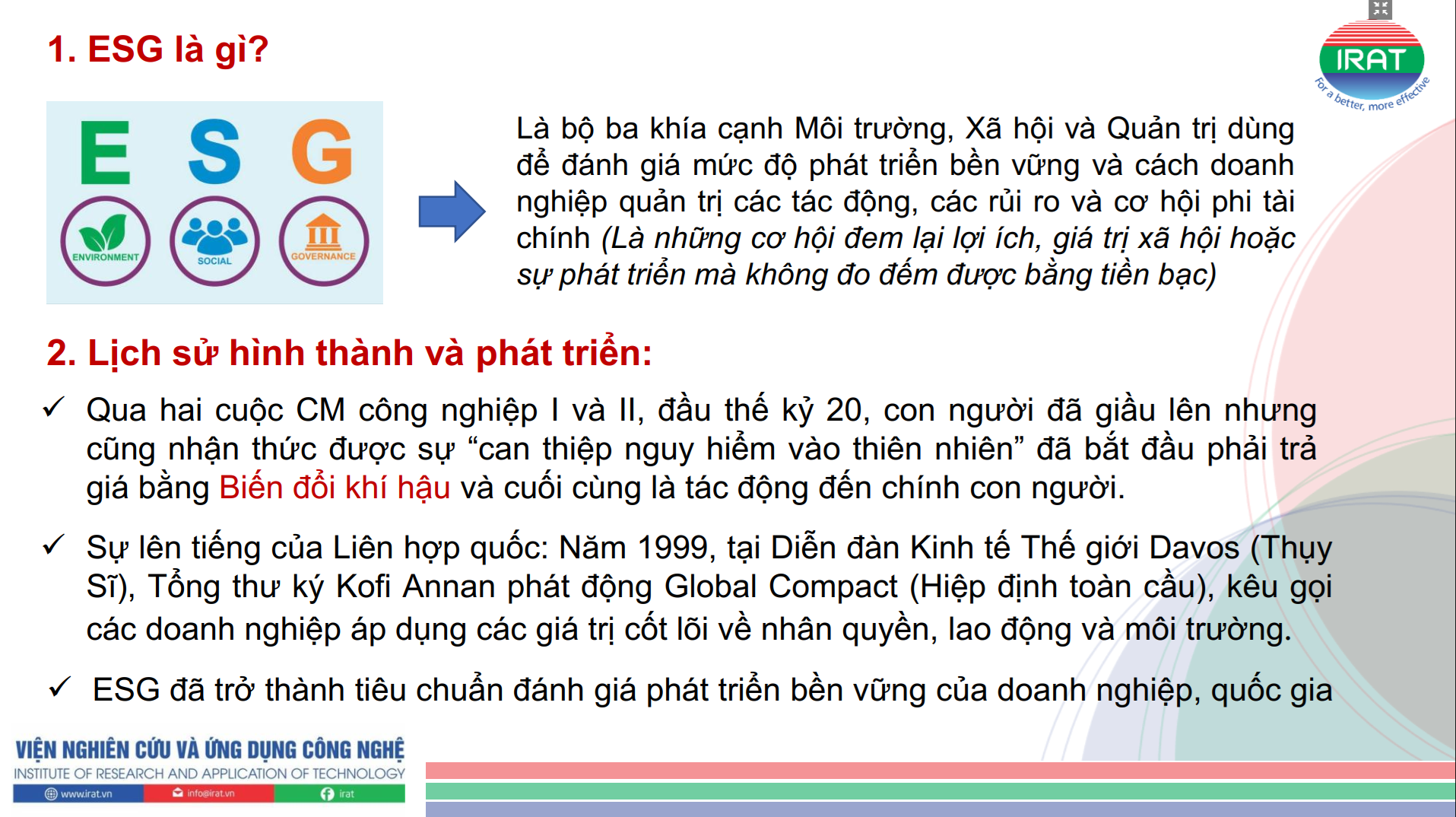
- ESG standards (Environment – Society – Administration) in modern business management
- ESG assessment framework: The importance of the three pillars of Environment (Environmental), Society (Social) and Administration (Governance) in attracting green investment capital, business valuation and meet the requirements of international investment funds.
- Prepare sustainable development reports: Instructions on the steps to build a key matrix, Collect non-financial data and prepare ESG reports according to global standards such as GRI (Global Reporting Initiative) hay ISSB.
III. IN-DEPTH PRACTICE
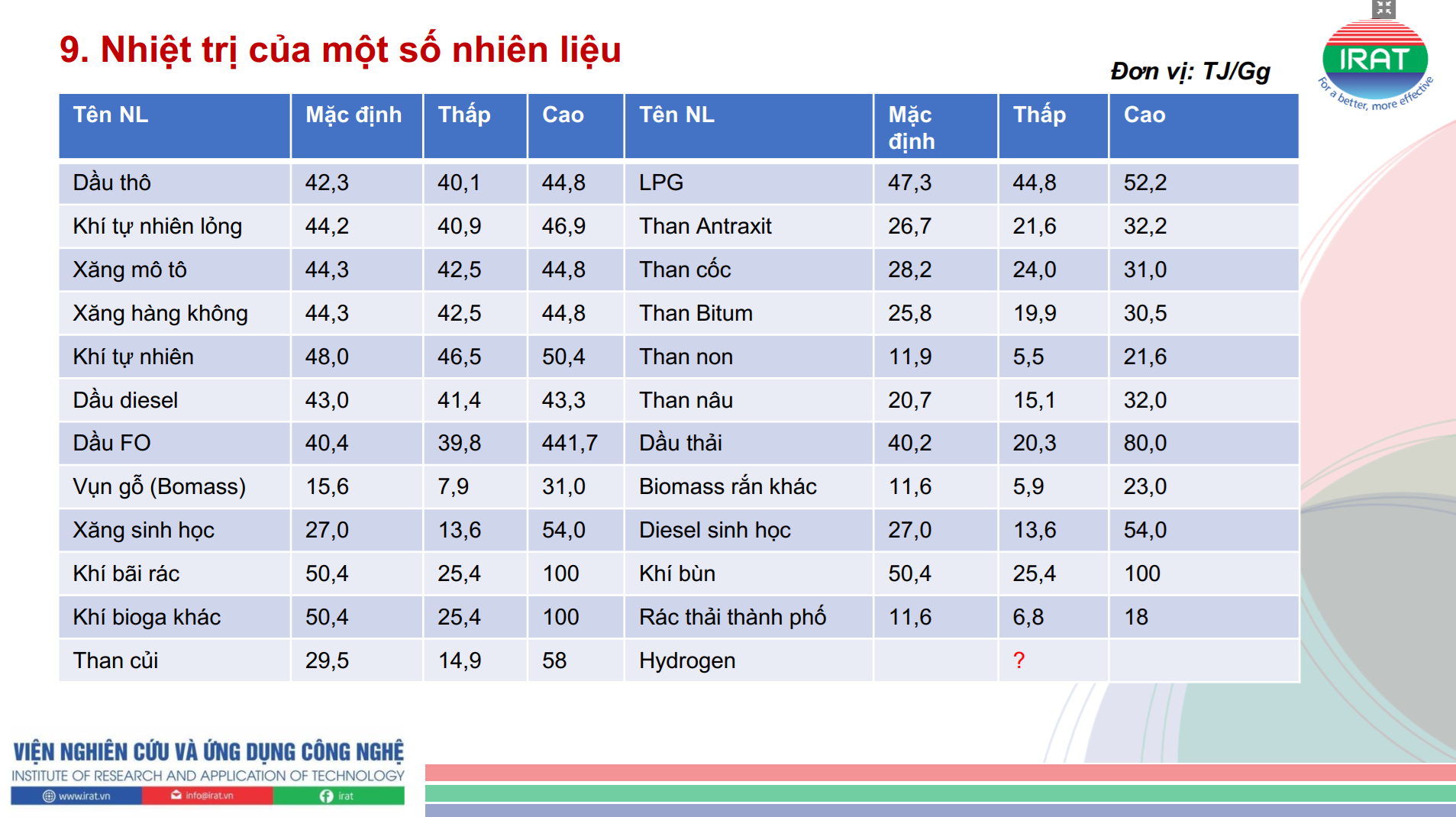
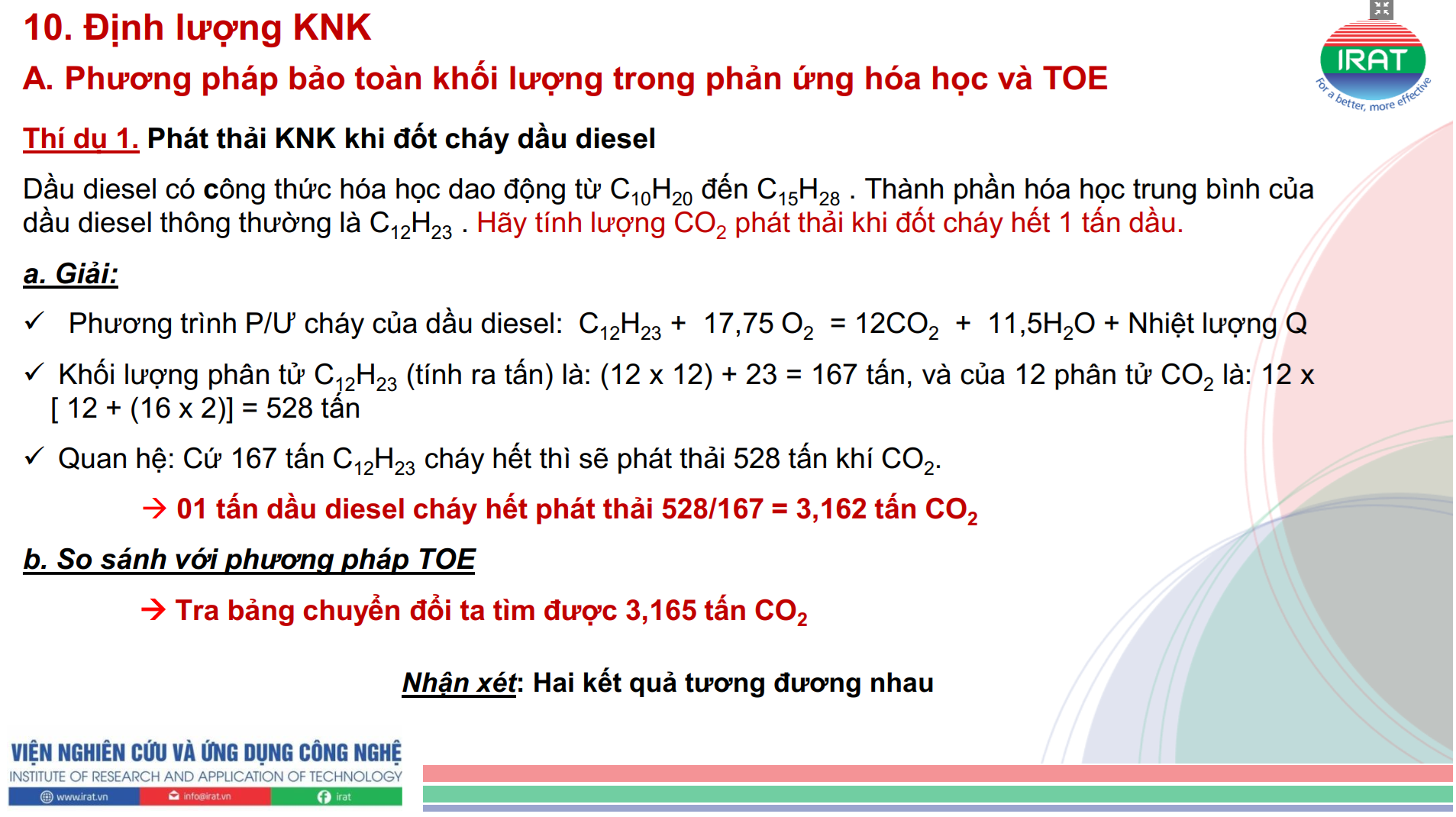
Besides the theoretical part, The program spends most of its afternoons in sessions Practice in-depth quantitative calculations. Under the direct guidance of Dr. Le Hai Hung, Students directly solved real-life simulation problems:
- Calculate Scope emissions 1 from the combustion of fossil fuels in industrial boilers and transportation vehicles.
- Process power consumption data tables, Apply the most recent year's Vietnam power grid emission coefficient (0,6592 tCO2e /MWh) to accurately determine indirect emissions Scope 2.
- Practice methods to estimate carbon sinks from forest biomass, arable land and low-emission agricultural projects.
IV. CAPACITY ASSESSMENT AND ISSUANCE OF COURSE PARTICIPATION CERTIFICATE
End the day of studying urgently and seriously, All students participated Multiple choice test to assess general ability in 30 minute. The test not only tests theory but is also quick math problems solved using learned methods. To take the exam effectively, Students need to master the theory, Calculation formulas and how to look up tables according to the distributed documents.
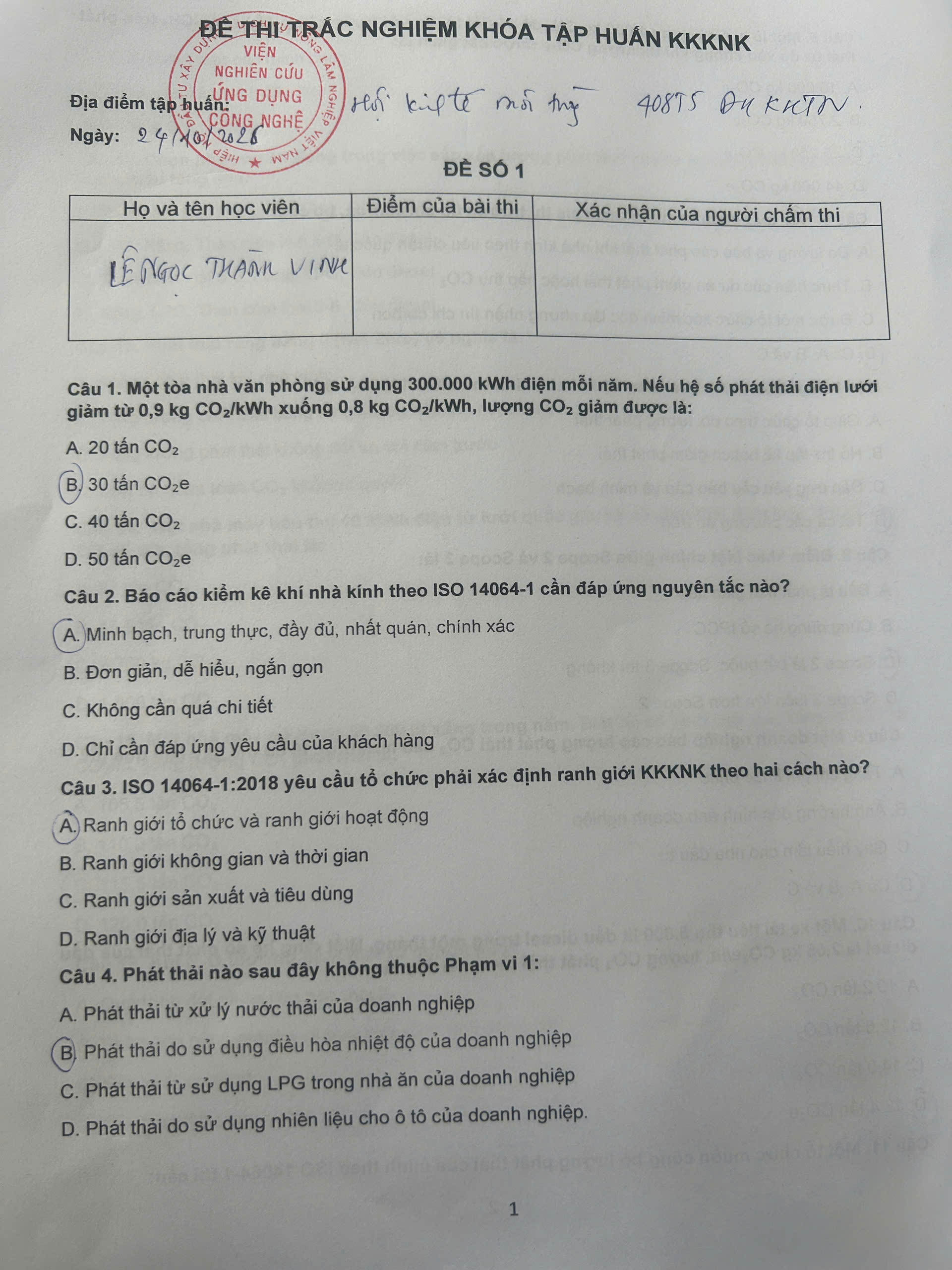
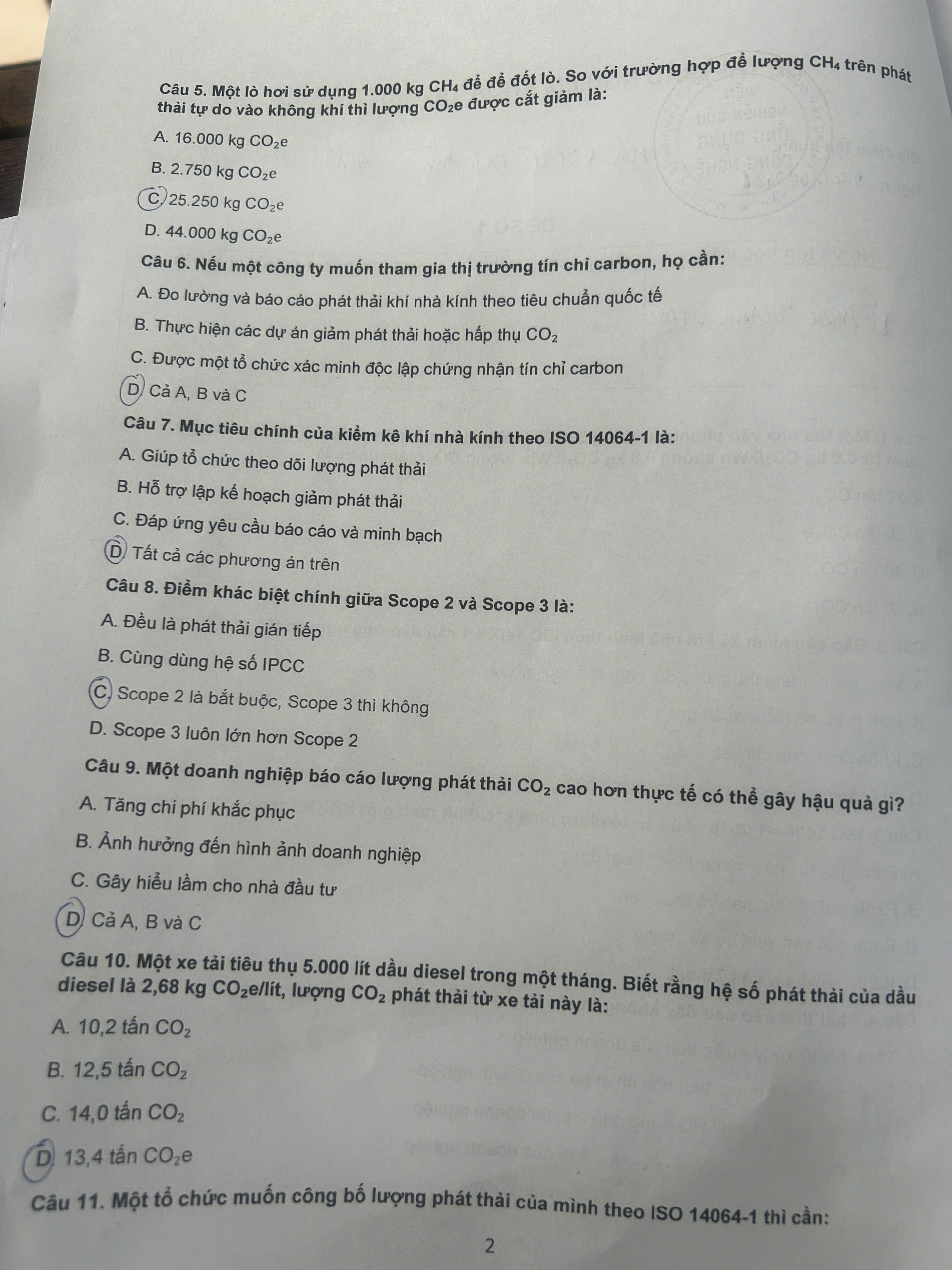
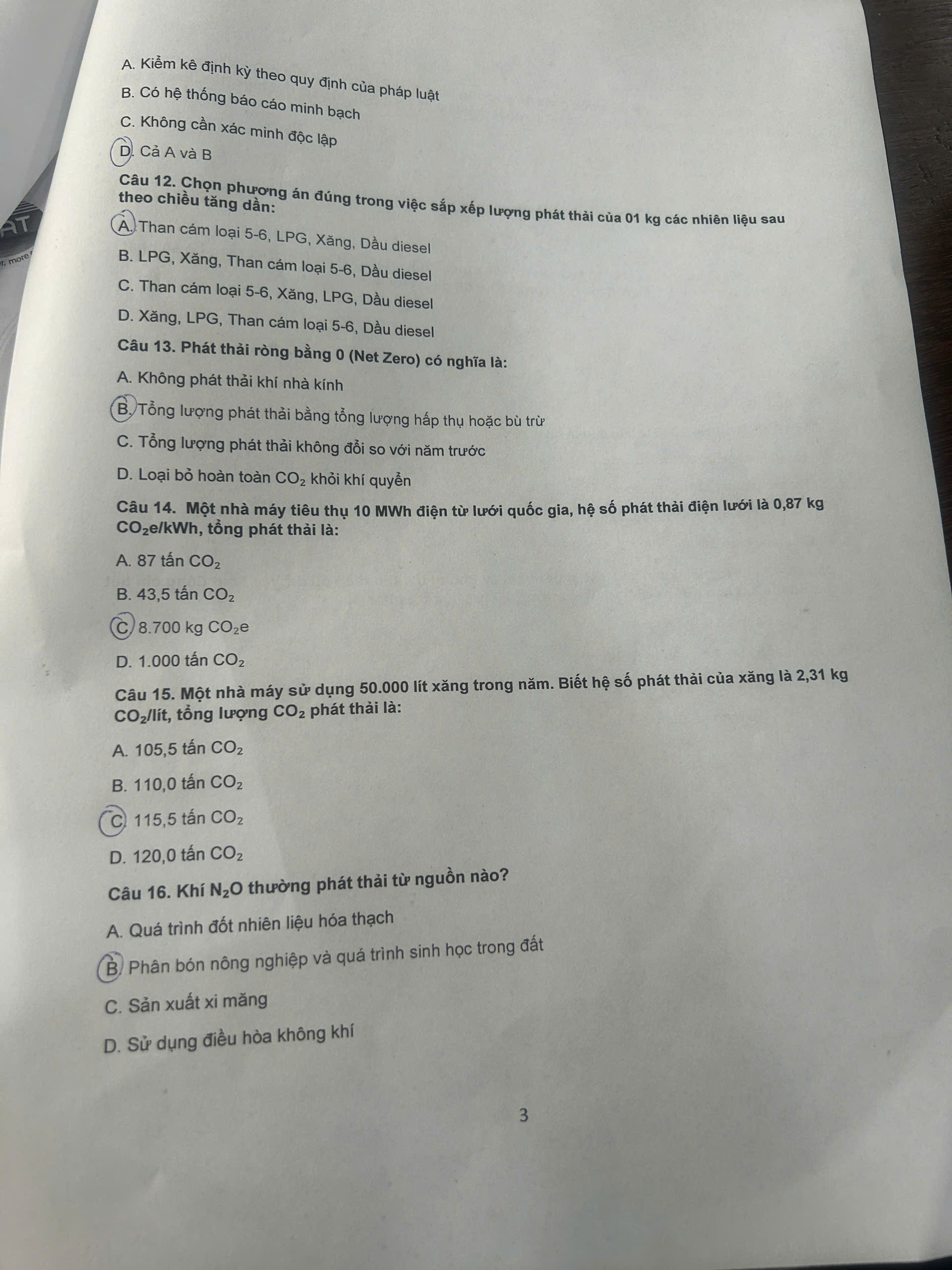

The test results reflect the deep level of students' absorption of professional knowledge, affirming capacity and aiming to implement greenhouse gas inventory locally, your business.
After finishing the test, represent Fund for a Green Future, Vingroup Corporation conducted a survey on the quality of the course as well as students' comments on the course.
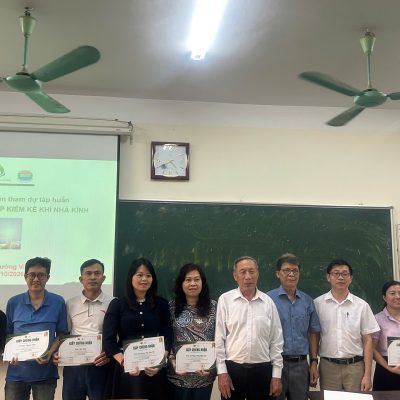
At the end of the program, the Organizing Committee awarded Certificate of completion of training course for students who meet the requirements. TS. Le Hai Hung was very happy when all the participating students mastered the knowledge they had learned and achieved high scores.
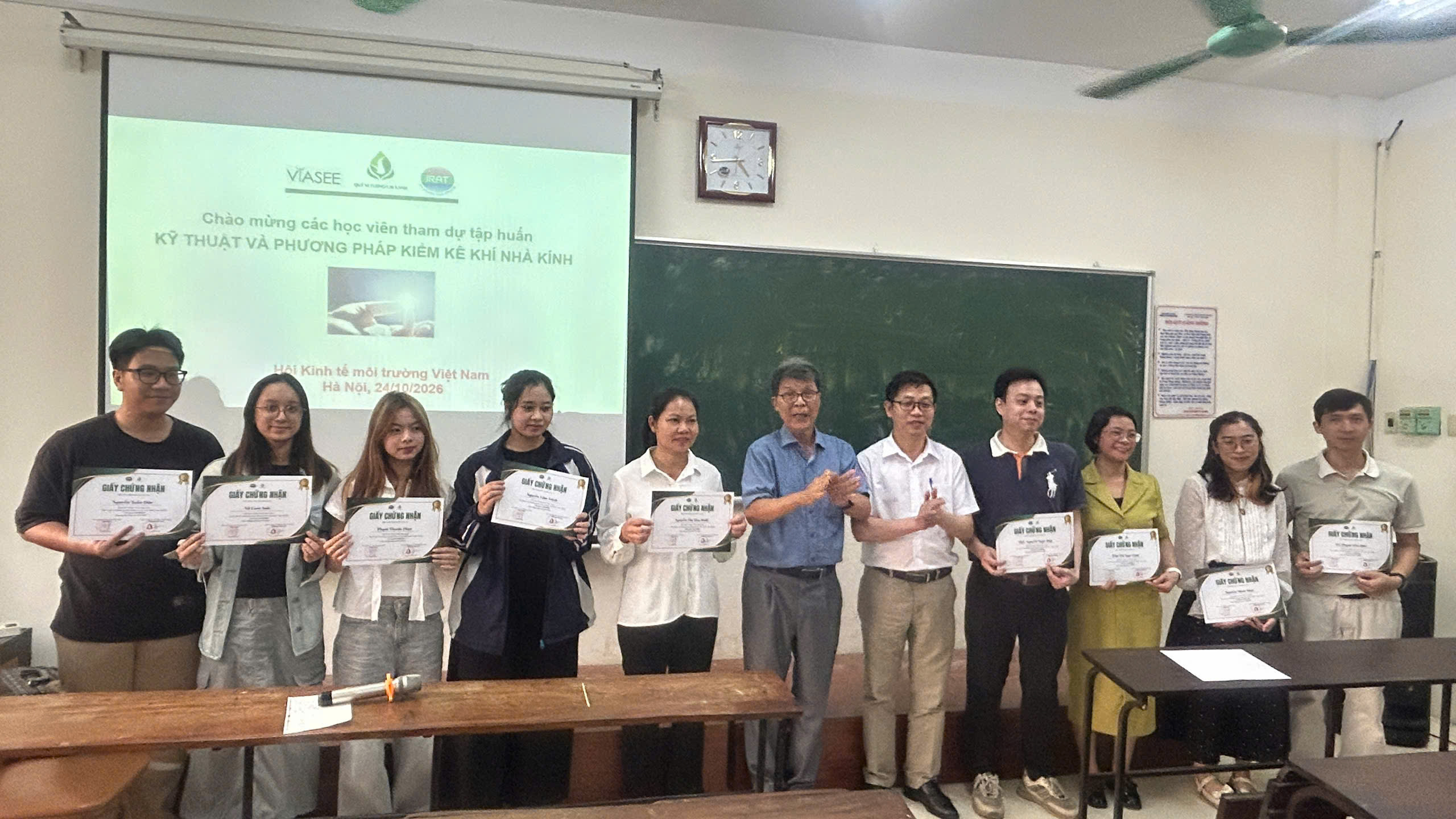
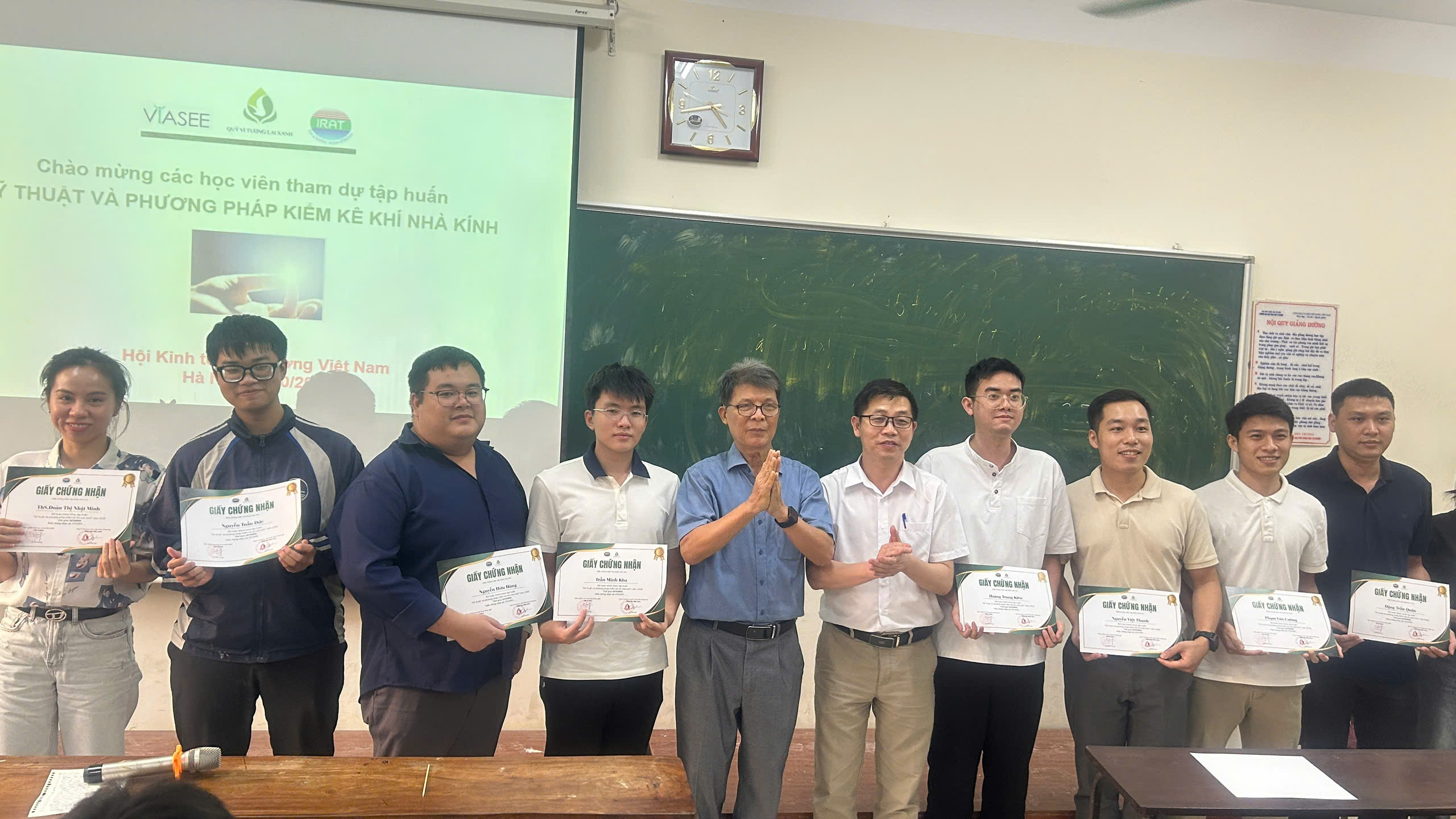
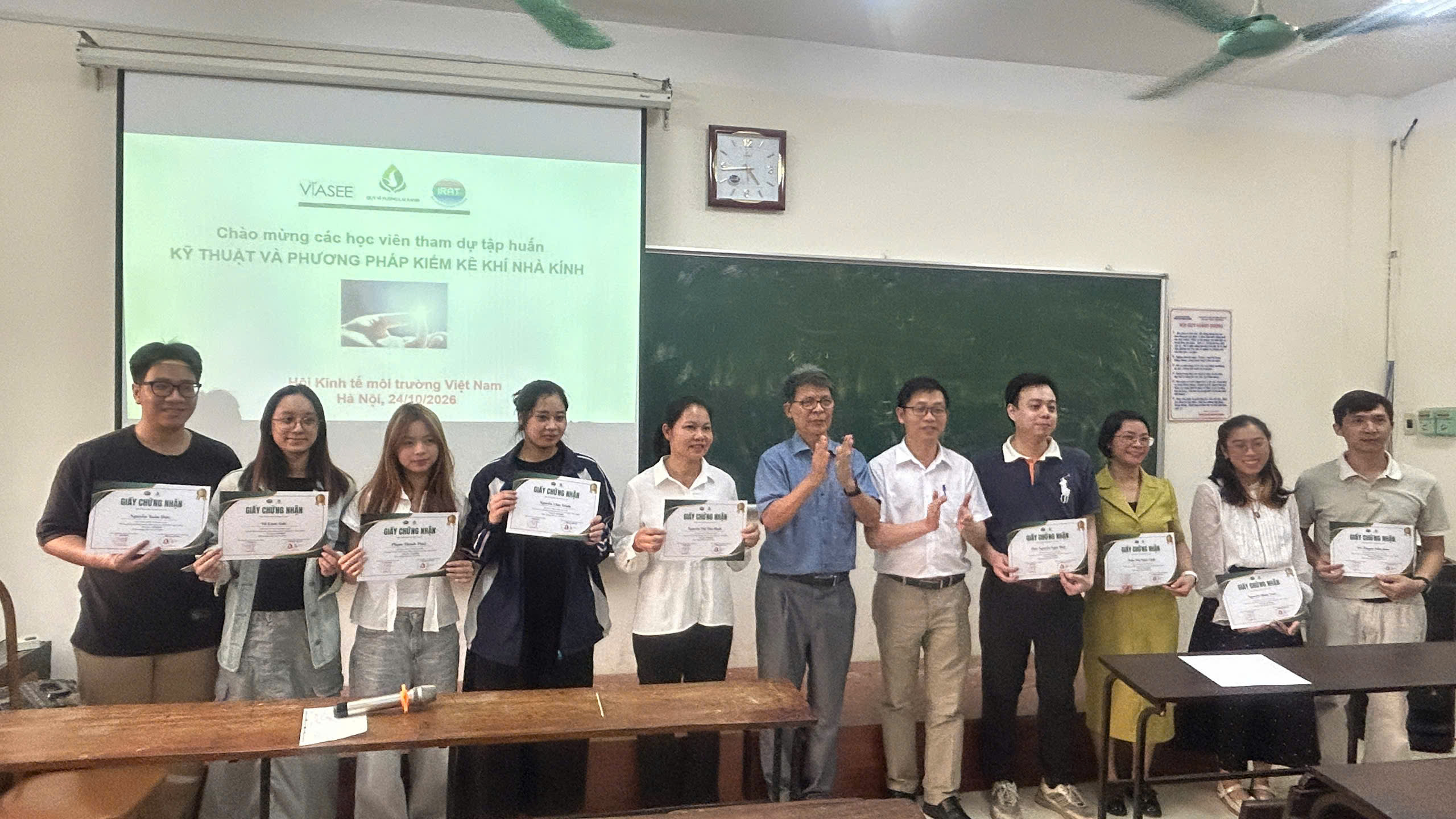
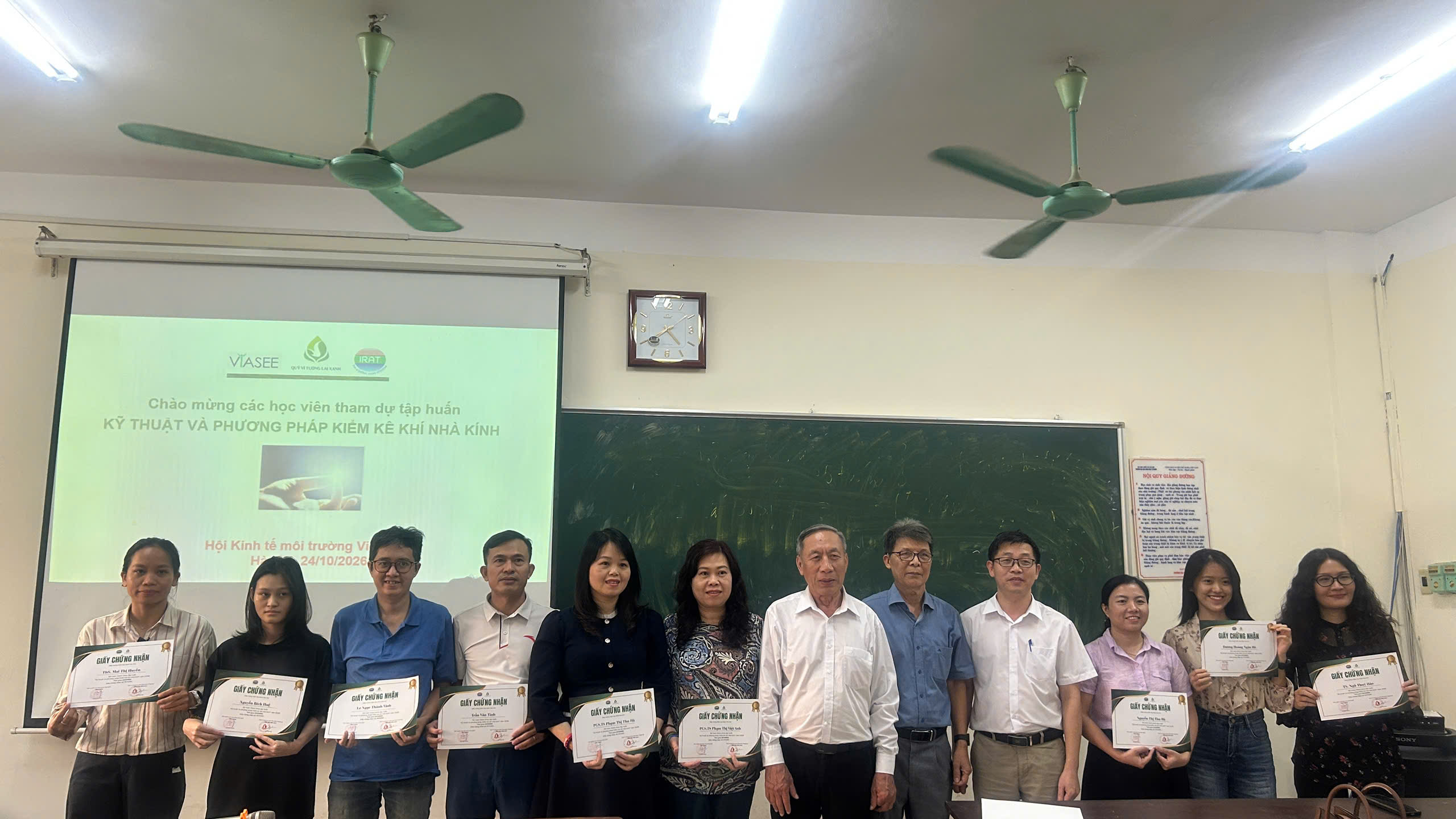
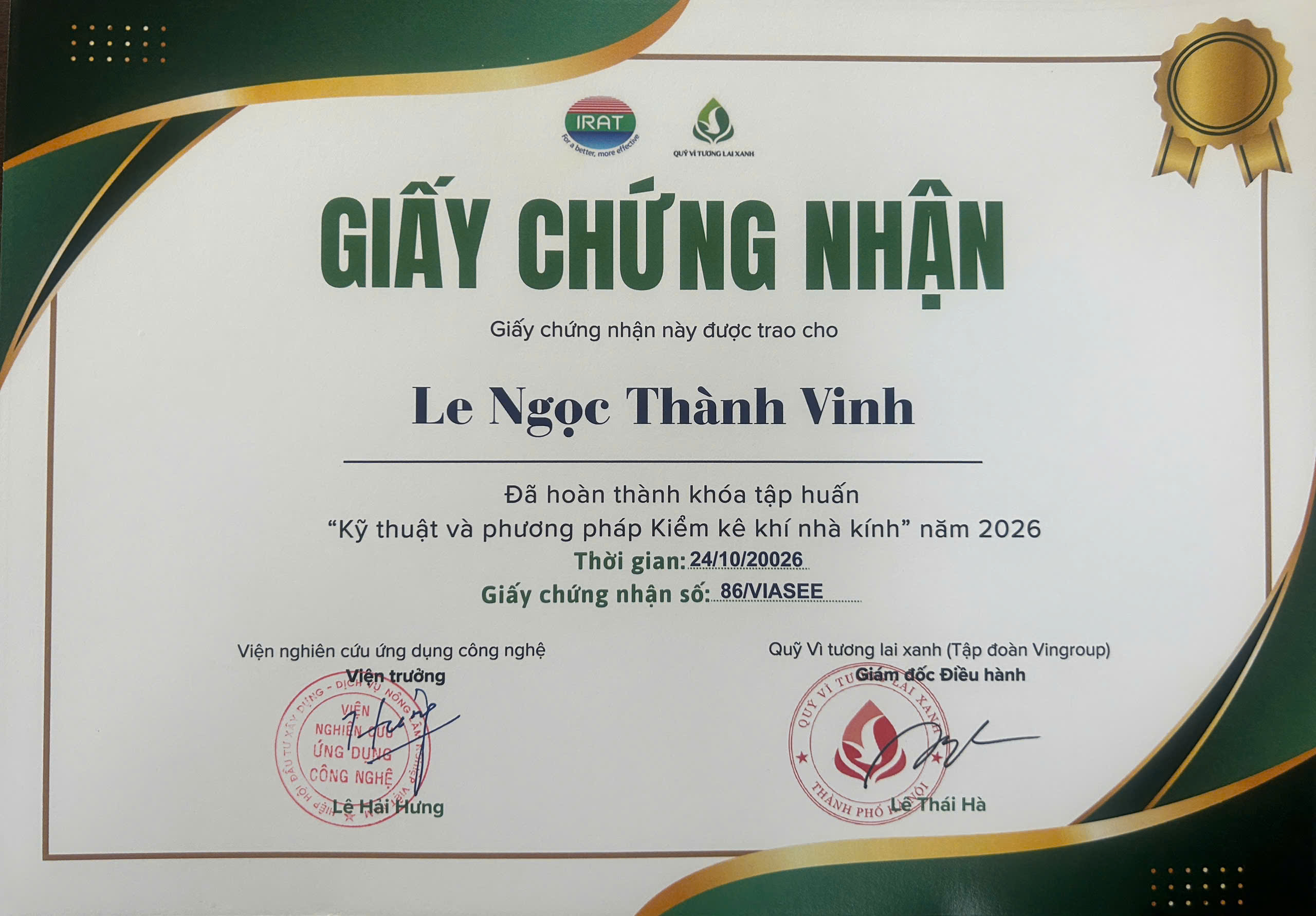 The training course not only equips you with a prestigious certificate but is also a solid stepping stone, help technical staff be ready to undertake the task of preparing greenhouse gas inventory reports, Build greening strategies for businesses, contributing to the successful implementation of Vietnam's national commitments in the international arena.