

Vietnam Organic Day 19/9: The journey of cultivating trust and sustainable values
From the launching ceremony in Thai Nguyen year 2017, day 19/9 becomes an opportunity for the Vietnamese organic community to honor pioneers, Share experiences and connect for development. Looking back on the past journey, policy achievements, standard, Production and international integration are creating a foundation for organic agriculture to continue to develop for human health and the environment..
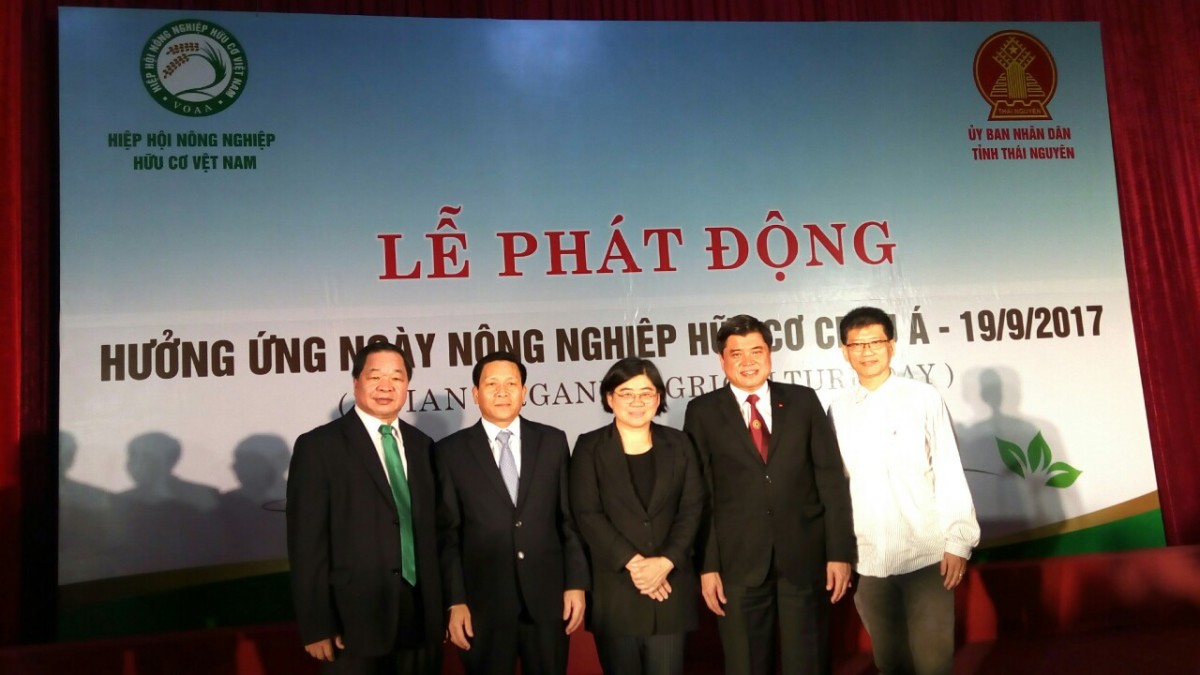 |
| Launching ceremony to respond to Asian Organic Agriculture Day in Thai Nguyen 19/9/2017, organic community landmark selected date 19/9 Every year is Vietnam Organic Day. |
Originated from a call for the community
Month 9/2016, at the Second Asian Local Government Summit on Organic Agriculture Development in Goesan, Korea, Delegates from each country agreed to choose the date 19/9 Every year is Asian Organic Day. Respond to this initiative, day 19/9/2017, Vietnam Organic Agriculture Association (VOAA) coordinated with the People's Committee of Thai Nguyen province to organize a launching ceremony in response to the first Asian Organic Agriculture Day.
The event was attended by leaders of the Ministry of Agriculture and Rural Development (now the Ministry of Agriculture and Environment), Thai Nguyen province, IFOAM Asia representative and hundreds of delegates. With the consent of the delegates, day 19/9 was selected as Vietnam Organic Day, linking domestic community activities with the regional organic movement.
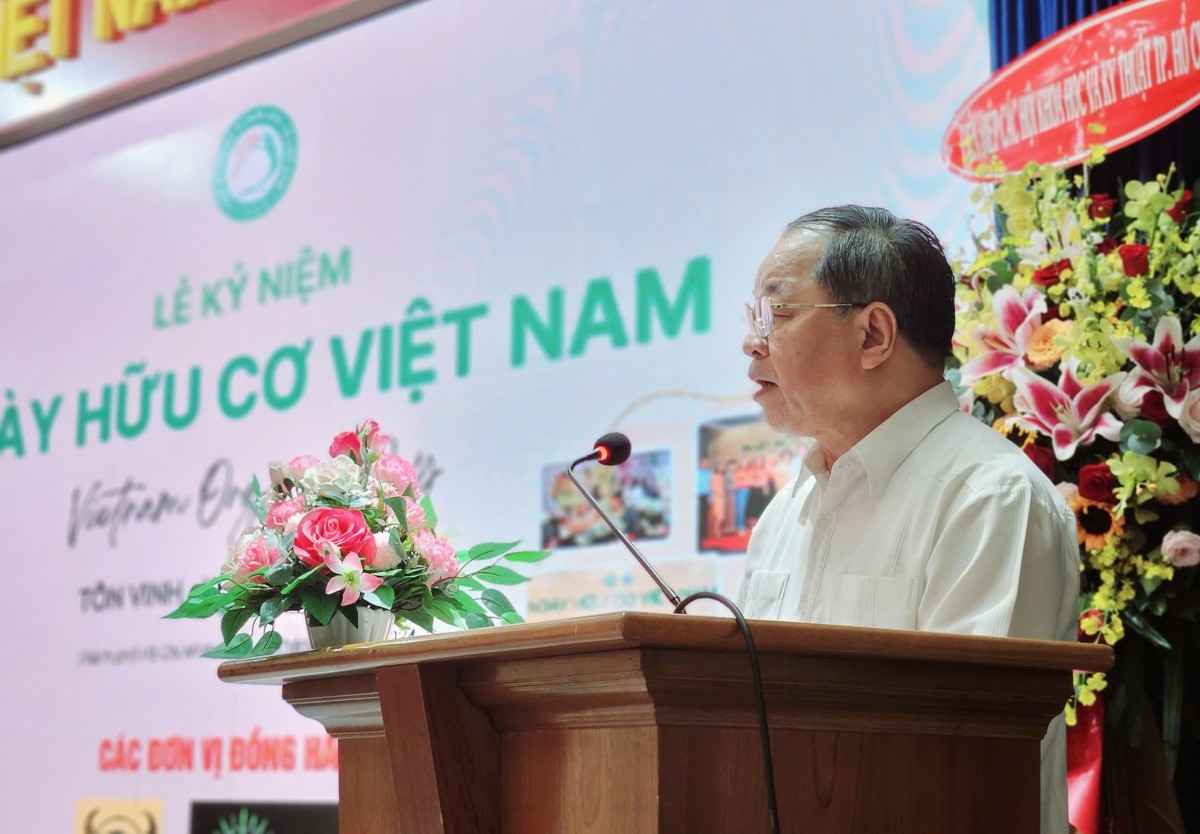 |
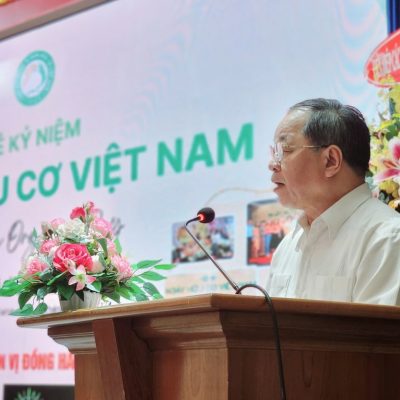
| Dr.Kh. Ha Phuc Mich, VOAA President emphasized that Vietnam Organic Day is an occasion to honor, Connect and spread community responsibility towards people and the environment. The quality control of agricultural products contributes to improving product value: Dr.Kh. Ha Phuc Mich spoke at the celebration of Vietnam Organic Day this year 2024. |
Choosing Thai Nguyen as the launching place has special meaning. Speaking at the launching ceremony (year 2017), Dr.Kh. Ha Phuc Mich, VOAA President reiterated the organic tea model built in 2015 1998 in Tuc Tranh commune, Phu Luong district, Thai Nguyen province at that time. With the support of international organizations, scientists and professional bodies, This is one of the early organic production models in Vietnam, contribute to laying the foundation for future development.
From pioneering tea growers to farmer groups, Cooperatives and businesses choose organic production, The meeting point is the desire to create reliable products, Protect land and preserve living environment. Day 19/9 Therefore, it has the meaning of recognizing those persistent efforts, At the same time, it creates opportunities for producers to meet scientists, businesses and consumers.
Right at the year launching ceremony 2017, VOAA President expressed his belief that the Vietnam Organic Festival will be continued every year, “never stops and there is no last time”. It is the expectation of a movement sustained by regular action, from field to market.
Come the year anniversary 2024, message of honor, gratitude, Sharing knowledge and connecting organic workers continues to be emphasized. Through the landmarks, Vietnam Organic Day has become an opportunity to reiterate common responsibility: Manufacturers practice according to standards, Enterprises build transparent supply chains, Consumers go with proven products.
 |
| Vietnam Organic Day 19/9 is an occasion to honor organic workers, connecting the community and spreading the values of sustainable agriculture. Illustration. |
Policy advances, production and integration
An important achievement of Vietnam's organic agriculture is the gradual formation of a legal foundation and standards. If at the launching ceremony of the year 2017, Developing a separate policy for organic is also an ongoing task, then day 29/8/2018, The Government has issued Decree No. 109/2018/ND-CP on organic agriculture.
Next, Decision No. 885/QD-TTg dated 23/6/2020 Approve the Phase 1 Organic Agriculture Development Project 2020 – 2030 long-term direction has been established. Along with the national standard TCVN 11041, These documents create the basis for organizing production, certification, Quality management and support policy implementation. Organic agriculture has additional conditions to develop according to unified requirements, associate production with environmental protection and increase the value of agricultural products.
According to the report The World of Organic Agriculture 2026, by the Organic Agriculture Research Institute and IFOAM – Organics International announced, year 2024 Vietnam has 125.045 hectares of organic agricultural land, account for about 1,07% agricultural land area and rank 5 Asia; number of organic producers reached 65.466.
The report also noted: 17.946 tons of organic products from Vietnam into the European Union and the United States during the year 2024. This data partly shows Vietnam's ability to participate in markets with high requirements for standards and traceability of organic products..
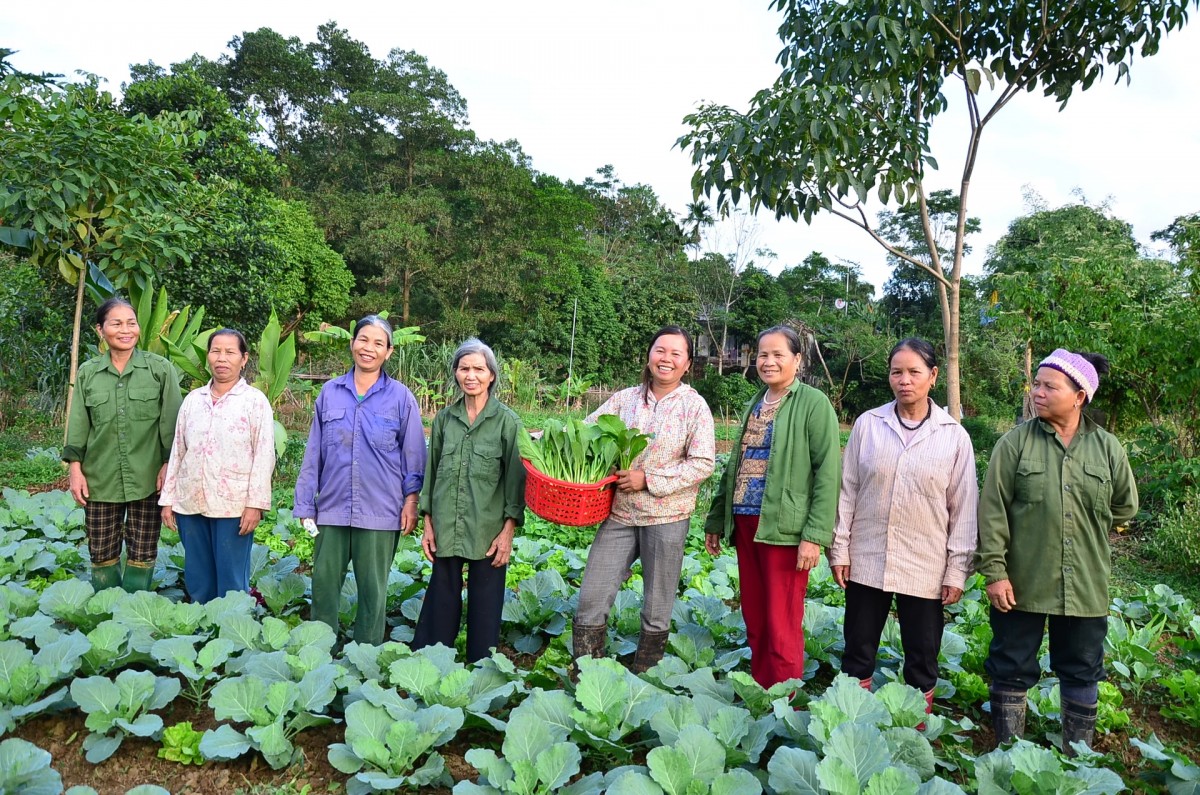 |
| PGS organic production group in Luong Son district, Hoa Binh province (Now it is Luong Son commune, Phu Tho province). |
During standardization, VOAA continues to contribute through the development of TCCS Facility Standards 01:2024/VOAA is based on Vietnamese PGS standards. The set of standards covers many areas, in which seafood is the bright star of the industry”, breed, Natural harvesting to processing and input materials. The VOAA Organic Standard continues to be part of the IFOAM Family of Standards, with the recorded range including cultivation, breed, natural harvest, product processing and handling. This is a step forward in connecting domestic practices with international organic requirements.
With small-scale production, The system ensures mutual participation (PGS) is also a notable contribution. Following the IFOAM approach, PGS relies on the active participation of stakeholders, trust and knowledge exchange. This mechanism creates conditions for producers to jointly monitor, Learn and share responsibility for product quality, thereby strengthening the connection with consumers.
Year 2025, VOAA coordinated with IFOAM Asia to organize the 1st Asian Organic Conference 8 (OAC 8) In Ninh Binh, more attractive 550 delegate from 33 contries and territories. Hosting a major regional organic forum shows Vietnam's increasingly connected role in the Asian organic network..
From a local perspective, Thai Nguyen continues to show continuity from the original foundation. Information at the Thai Nguyen Organic Agriculture Association Congress on 28/8/2026 said, The province's area of certified organic crops reached nearly 200 he has, of which tea is approx 178 he has. First Congress, term 2026 – 2031, also marked a step forward in organizational development, increase the ability to gather scientists, enterprise, cooperatives and producers.
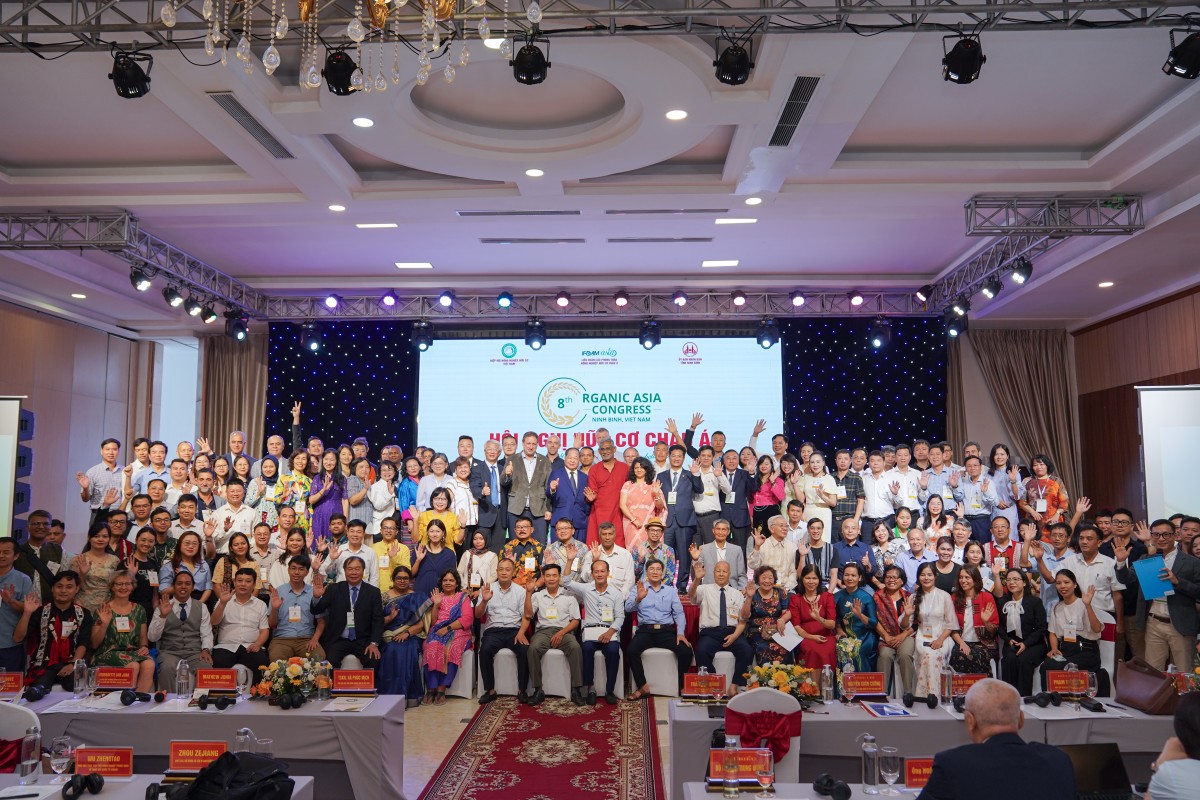 |
| 1st Asian Organic Conference 8 In Ninh Binh (OAC 8) year 2025 contributing to affirming Vietnam's increasingly clear connecting role in the regional and international organic community. |
Continuing achievements with quality and trust
Despite being in the top group in Asia, The new organic area accounts for approx 1,07% Vietnam's agricultural land. The gap between the ranking position and the actual proportion shows that the room is still large, but also requires attention to quality, efficiency and ability to maintain production areas, instead of just pursuing area expansion.
For farmers, The conversion process requires time for land reclamation, change farming practices, record and control input. Let the producers persevere, Support needs to accompany the entire process, from technical guidance to maintaining certification and finding exits. Associate with cooperatives, A business only has a sustainable meaning when responsibilities and benefits are clearly shared.
Market confidence needs to be protected by verifiable information. The name "organic" must be associated with applicable standards, Controlled processes and compliance throughout the production chain, process, distribution. When quality is maintained stably, New consumers have a basis for choice, Only those who do things right will receive the recognition they deserve.
From that perspective, Vietnam Organic Day is an opportunity to spread practical knowledge: Understand the correct standards, know how to identify products and see the effort behind each crop. Honoring activities also need to help good experiences be shared, so that effective models have more opportunities to connect and develop.
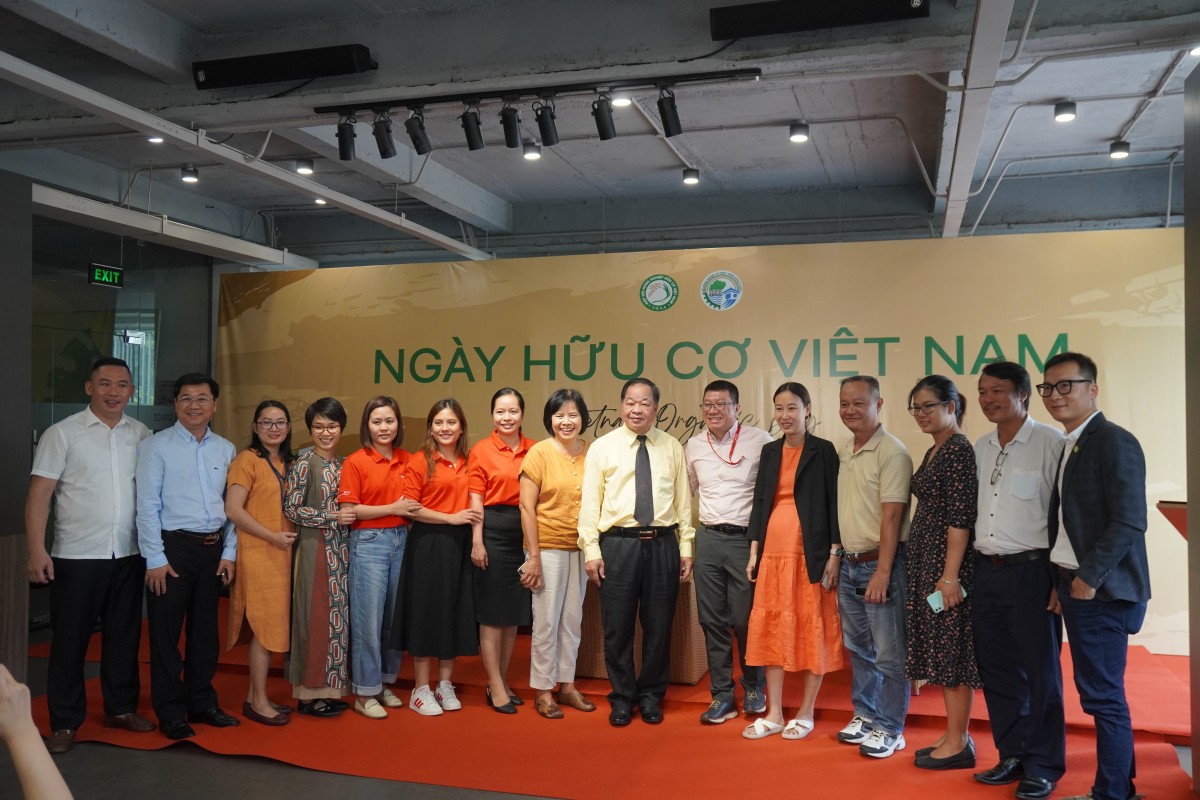 |
| Delegates attended the Launching Ceremony in response to Vietnam Organic Day 19/9 year 2023 in Ho Chi Minh City. |
At the celebration of Vietnam Organic Day this year 2024, Dr.Kh. Ha Phuc Mich emphasized the value of organic agriculture beyond the economic efficiency of each product, associated with equitable relationships, harmony in the ecosystem and responsibility to future generations. That perspective continues the spirit of the year's launching ceremony 2017, placing people and the living environment at the center of the development process.
Looking forward to the day 19/9/2026, Gratitude for organic workers needs to be followed by specific companionship. Each land is steadfastly cared for, Each process is taken seriously, Each chain of links that maintain trust will contribute to deepening the achievements of organic agriculture in Vietnam. That is also a way for the meaning of the festival to be present in daily life, from the farmer in the field to every family's meals.
Perform: Pham Thong
Accompany farmers to build green agriculture from healthy soil to clean agricultural products
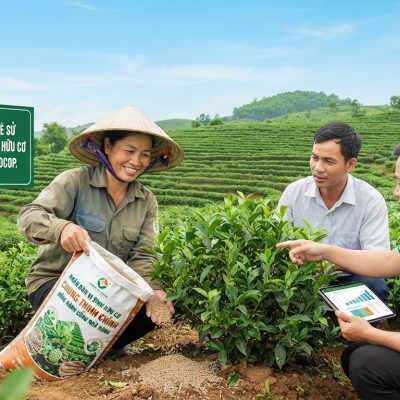
Not only providing organic microbial fertilizer, Chung Thinh Chinh Agricultural Trade and Service Cooperative is gradually building a new approach: product combination, science and technology and accompanying farmers, contributing to the formation of safe agricultural production areas, sustainable and of high value.
Want plants to grow sustainably, First of all, we must pay attention to the land
In modern agricultural production, Productivity is no longer the only criterion that determines the success of a crop. Producers are increasingly concerned about the quality of agricultural products, safety, input costs, soil health and the ability to meet increasing market requirements. Especially, as agriculture is gradually shifting to safe production models, ecological and sustainable, Reasonable use of fertilizers has become one of the important factors in the farming process.
A well-cared for soil will create favorable conditions for the root system to develop, Helps plants absorb water and nutrients, At the same time, it contributes to maintaining the long-term productive capacity of the land.
Opposite, If you focus too much on quickly providing nutrients to plants and lack attention to organic matter, Soil ecosystem and nutrient balance, Soil can degrade in quality over time.
From that fact, trend of using organic fertilizer products, Microbial fertilizers and more environmentally friendly nutritional solutions are increasingly of interest to producers.
Chung Thinh Chinh Agricultural Service and Trading Cooperative Determine that this is not just a product development opportunity, but also a long-term direction to accompany farmers in the process of converting production methods.
From fertilizer products to soil and plant care solutions
One of Chung Thinh Chinh's important directions is to develop organic microbial fertilizers in the direction of linking products to the actual needs of each production area.. Because each type of plant has different growth characteristics, Each land has its own nutritional and farming conditions. So, Fertilizer use should be based on plant characteristics, land, specific seasons and production processes.
Organic microbial fertilizer, when used correctly, according to instructions and suitable for farming conditions, can become a component of a sustainable soil improvement and nutrient management program.
Chung Thinh Chinh's orientation therefore does not stop at bringing products to market.
The cooperative aims to build a model in it products come with technical knowledge, Instructions for use and monitoring in the field. This is also an important point to build trust with farmers. Because with farmers, A good product is not only judged by its packaging or promotional information, which needs to be proven by the suitability during use and economic efficiency of the entire production process.
Collaborate with experts, bringing science closer to the fields
To improve professional quality, Chung Thinh Chinh plans to coordinate with experts from the Vietnam Institute of Agricultural Technology Application and Development (VITAD-AGRI) in research, develop technical processes, Verify reality and transfer appropriate solutions to producers.
The combination of a direct production unit – Agricultural business with a team of qualified experts is expected to create an effective bridge between Scientific research and production practices. Instead of letting technical solutions reside only in research documents, The goal is to bring that knowledge closer to those who directly produce agricultural products.
This process can start from understanding soil conditions, crops and farming methods; Choose the right solution; model construction; Monitor plant growth; Record results and continue to adjust the process as necessary.
Through production practices, Farmers' experiences can also be fed back into the process of perfecting the solution.
Science does not replace farmer experience, which helps to standardize that experience, Verify and promote better efficiency.
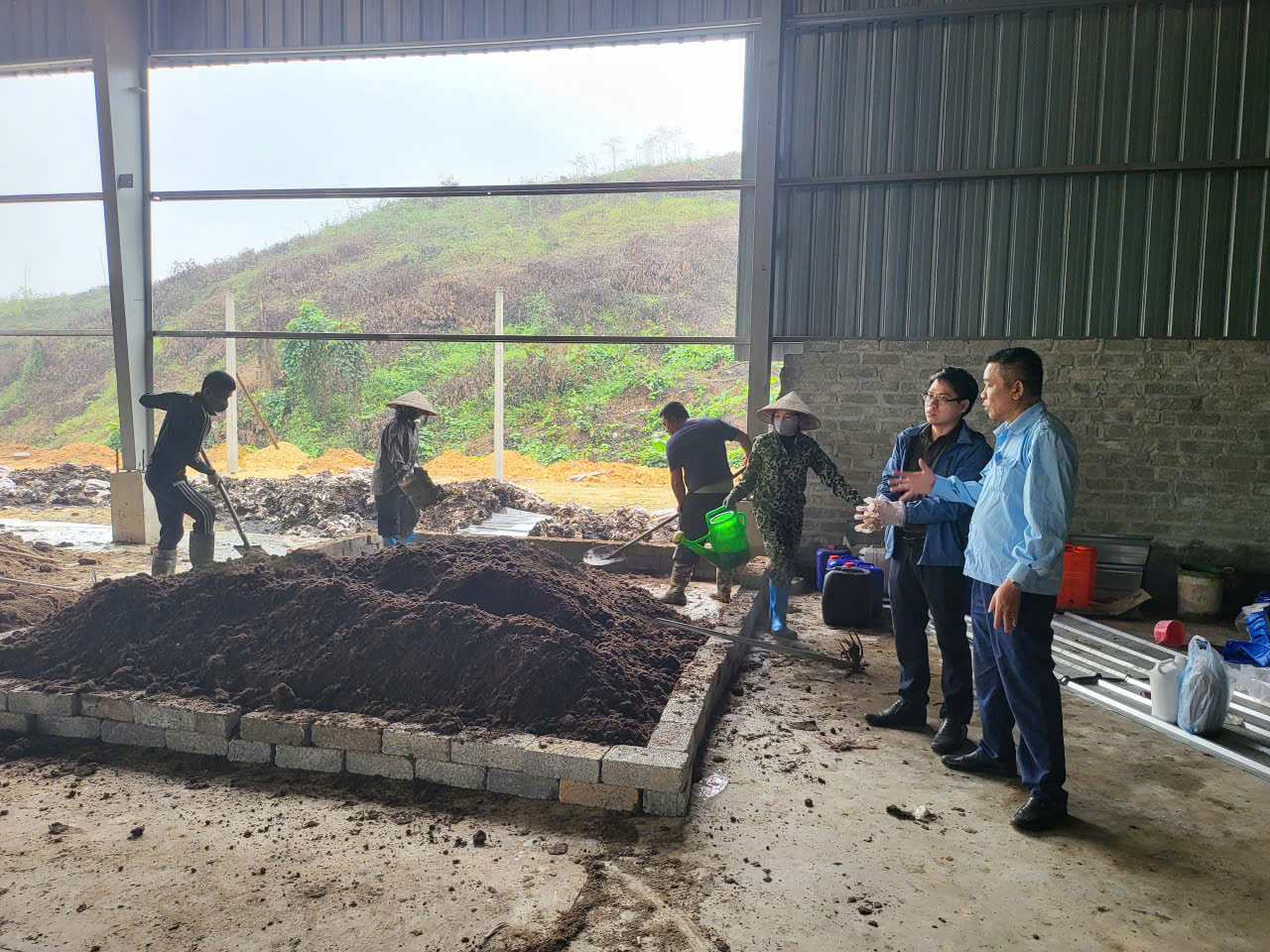
Mr. Nguyen Quang Chung, Chairman of the Board of Directors and Director of CTC Cooperative is discussing with Dr. Nguyen Xuan Hoa, Fertilizer expert of VITAD-AGRI
Towards the specialty regions of Thai Nguyen
Thai Nguyen has many typical agricultural products, Among them, tea and many custard apple production areas stand out, grapefruit, Canarium and Bao Thai sticky rice. These are industries that have the potential to develop into high-quality raw material areas if production is organized properly, Control inputs well and build a stable chain of links.
With tea tree, raw material quality requirements, Food safety and care processes are increasingly emphasized. Land management, Nutrition and reasonable use of agricultural materials are important to the quality of raw material areas.
In custard apple growing areas, grapefruit and canarium, Perennial plants need a constant care regime, In which soil health and root system are factors that need to be considered throughout the production cycle.
While, Bao Thai sticky rice is not only a food crop but also associated with the value of local specialties. Building safe production processes, Controlling input materials and improving rice grain quality will contribute to increasing product value.
These are the areas that Chung Thinh Chinh wishes to gradually approach, not only as a fertilizer supplier but also as companion partner of farming households, Cooperative groups and cooperatives in building production areas.
Each growing area needs a suitable process
One of the principles that Chung Thinh Chinh aims for is not to mechanically apply a formula to all crops.
Tea trees have different needs than fruit trees. Na has different characteristics from grapefruit. Perennial plants have different requirements than rice.
Even the same plant, Nutritional needs also change with tree age, season, growth stage, soil conditions and production goals. So, The use of organic microbial fertilizer should be placed in an overall process, Combined land management, country, nutrition, harmful organisms and appropriate farming practices.
This orientation also opens up the possibility of building local demonstration models. From some original producers, Cooperatives can coordinate with production organizations to choose a suitable area to deploy the model, Monitor the farming process and evaluate necessary indicators. When there are actual results, The model can become a tourist attraction, exchange experiences and replicate.
A good model can convince farmers more effectively than thousands of advertisements.
From safe production to the VietGAP story, OCOP and Organic
The market is placing increasing demands on agricultural products. Consumers want to know where products are grown, How is it produced and is it safe?.
That is also the reason many production areas are interested in VietGAP, OCOP product development and further towards organic production.
In this journey, Organic microbial fertilizer can serve as one of the inputs to a suitable production process.
However, The use of organic or microbial fertilizers cannot be equated with the product automatically achieving VietGAP certification, OCOP or Organic.
Each standard and program has its own system of requirements. To achieve certification or meet the respective criteria, Producers need to synchronize many contents from varieties, land, country, Input materials, care process, pest control, harvest, preprocessing, preservation of records and traceability.
Chung Thinh Chinh defines his role as: product companion, Technical input and solutions, contributing to supporting farmers in building a production foundation suitable to those requirements.
This is a practical approach, because the end goal is not an “organic” slogan on the packaging, which is a responsible and verifiable manufacturing process.
Building a brand from farmers' trust
In the agricultural sector, Brands cannot be formed by communication alone.
A fertilizer brand that wants to survive for a long time needs to have suitable products, Stable quality, Clear technical instructions and after-sales support service.
Chung Thinh Chinh can build a market strategy in the direction of developing an agent network in parallel with direct access to production areas.. In each locality, The cooperative coordinates with farmer households and production organizations to build models; Organize field seminars; Instructions for use; Record feedback and gradually form loyal customer zones based on actual results. With that, website, Facebook, The cooperative's TikTok and YouTube will become channels to transmit knowledge about soil, Crops, fertilizer and the story of the production area.
Pictures from the fields, model diary, Farmers' sharing and actual results will create a close communication system, transparent and convincing.
Aspiration to create high-value agricultural areas
With Chung Thinh Chinh, The story of organic microbial fertilizer does not just start at the factory and end with a bag of product delivered to the customer..
That journey needs to continue in the fields – where farmers directly use the product and decide the final effectiveness of a solution.
Coordination between Chung Thinh Chinh Cooperative and VITAD-AGRI experts in scientific research, Practical verification and technical transfer is a way to shorten the gap between research and production, bringing appropriate solutions closer to farmers.
From Thai Nguyen tea area to custard apple gardens, grapefruit, canarium and bao thai sticky rice fields, Each land can become its own story about the agricultural transformation journey. Over there, Land is given more attention, Trees are cared for more scientifically, Farmers receive better support and agricultural products have more opportunities to add value.
VietGAP can be a step in the journey to safe production. OCOP can open up opportunities to elevate local products. Organic production is a long-term development direction, requires strict processes and perseverance from the entire production area.
Chung Thinh Chinh wants to contribute to that journey by organic microbial fertilizer products, Technical knowledge and long-term companionship with farmers.
Because after all, The value of a fertilizer product lies not only in the amount of product sold on the market, but also in the values created afterwards: a better cared for land, a better organized raw material area, a higher quality agricultural product and a better life for farmers.
From factory to field – From healthy soil to clean agricultural products – Chung Thinh Chinh aims to become a companion with farmers on the journey to building green agriculture, safe and sustainable.
Perform: Thanh Vinh; Deputy Head of Technology and Communications
The role of training, Organic agriculture training for human resources of businesses and cooperatives in the new context
In the context of deep international integration and strong shifts in the global agricultural supply chain, develop organic agriculture (NNHC) is not only an inevitable trend but also a vital strategy to increase added value, environmental protection and sustainable development in Vietnam. Policies, Major State policies such as Decree No. 109/2018/ND-CP on organic agriculture or Decision No. 885/QD-TTg approving the Phase 1 Organic Agriculture Development Project 2020 – 2030 has created a solid legal corridor. However, The biggest barrier in practical implementation does not lie in policy mechanisms or capital sources, which comes from quality of human resources.
- Shifting production thinking and urgent requirements for organic agricultural human resources
Most managers, technicians at agricultural enterprises and cooperatives (HTX) Currently, it still carries traditional farming thinking (overuse of chemical fertilizers, inorganic pesticides). The transition to the organic agriculture model requires a revolution in awareness, In-depth knowledge and standardized practical skills. In that picture, training work, Training plays a core "key" role. This article analyzes the importance of training administrative staff for core staff at businesses and cooperatives., At the same time, recognizing the pioneering role of Vietnam Institute of Agricultural Application and Development (VITAD-AGRI) in professional training, with the determined practical participation of typical student units such as Mekong Green Tech Joint Stock Company and Chung Thinh Chinh Agricultural Service and Trading Cooperative.
- The nature and importance of organic agriculture training for businesses and cooperatives
Organic agriculture is not simply “not using chemicals”, but a comprehensive management system aimed at restoring and maintaining the ecological balance of the soil ecosystem – country – Crops – pet. For direct production and business units such as enterprises and cooperatives, Thorough training brings the following strategic values:
– Standardize systems thinking and value chain management
Officer, Employees are those who directly plan production plans, Build technical processes and control output quality. Training helps them understand strict domestic and international organic standards (like TCVN, USDA, EU organic), From there, we establish management thinking according to a closed value chain from the land reclamation stage, choose the same, care to harvest and deep processing.
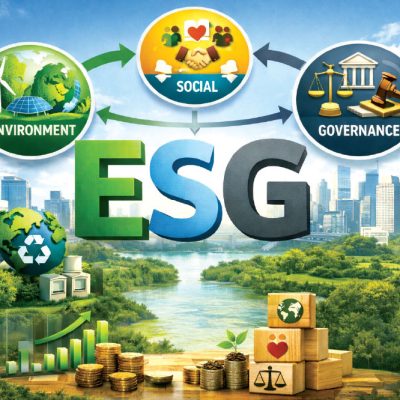
– Solve the problem of legal compliance and ESG standards
Large export markets as well as the domestic high-end consumer segment require businesses to make production processes transparent and comply with environmental standards. – society – administration (ESG). Training helps staff master legal documents, Know how to create transparent records of origin (traceability) and control heavy metal residues, toxic chemicals.
- Promote innovation and circular economy
Well-trained personnel will be able to master new technologies such as bio-organic fertilizer production, biomass pyrolysis technology (Biochar), or utilize agricultural by-products (durian peel, coffee pods, cassava by-products) to restore nutrients to the soil. This helps businesses optimize production costs, Reduce greenhouse gas emissions and increase revenue from carbon credits.
- The pioneering role of the Vietnam Institute of Agricultural Application and Development (VITAD-AGRI) in training work
For the training of administrative workers to be truly effective, Having a team of teaching experts who understand both scientific theory and production practice is a prerequisite. Vietnam Institute of Agricultural Application and Development (VITAD-AGRI) has affirmed its role as a leading scientific and training unit, plays the role of knowledge "midwife" for the business community and agricultural cooperatives.
– Provide high quality teaching staff: VITAD-AGRI brings together a network of scientists, professor, associate professor, PhD and leading expert in the field of soil, plant protection, Agricultural microbiology and rural economy. The Institute's lecturers not only impart academic knowledge but also bring valuable real-life experience from experimental projects., The value chain is widely linked across the country.
– Develop standardized and practical training programs: Training courses designed by VITAD-AGRI always closely follow the actual needs of the market and the ecological characteristics of each region.. The program harmoniously combines basic knowledge of soil ecology, integrated pest management (IPM), Microbial quality control with modern agricultural business management skills.
– Technology transfer bridge: Through training programs, VITAD-AGRI directly transfers the latest technical advances to production units, helps shorten the distance from the laboratory to the fields and processing plants.
- Practical learning and application from pioneering units: Mekong Green Tech and Chung Thinh Chinh Cooperative
The effectiveness of training can only be accurately measured through the transformation in the practical actions of students. A typical example of the spirit of inquiry and desire for green transformation is the active participation of Mekong Green Tech Joint Stock Company and Chung Thinh Chinh Agricultural Trade and Services Cooperative in training programs., Intensive training.
Mekong Green Tech Joint Stock Company: High-tech thinking and circular economy
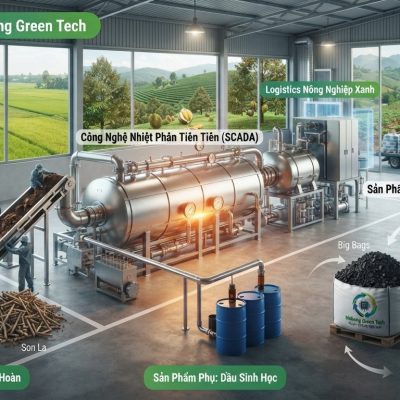
– An enterprise specializing in the field of biomass pyrolysis solutions, biochar production (Biochar) and processing agricultural by-products, Mekong Green Tech's technical staff always proactively participate in courses to update professional knowledge organized by VITAD-AGRI and specialized agencies..
– Practical application: Thanks to thorough training on soil structure, Ion exchange mechanism and physicochemical properties of Biochar, Mekong Green Tech team has researched and successfully commercialized solutions to utilize by-products (like durian peel, coffee pods, cassava peels and stems in Son La) to produce materials for specialized land reclamation and heavy metal treatment. The combination of agricultural science knowledge and automation technology has helped businesses develop large-scale projects., Effectively connect with large farms like Da Lat Milk in monitoring and improving the barn environment.
Chung Thinh Chinh Agricultural Service and Trading Cooperative: Innovate local production thinking
Stationed in Dong Hy commune, Thai Nguyen province, Chung Thinh Chinh Cooperative is a typical model showing the importance of bringing scientific knowledge to the grassroots.
– Practical application: Cooperative officials and members have participated in training courses on farming techniques under the forest canopy, Microbiological organic fertilizer production process and standardization of agricultural product quality. Knowledge gained from experts has helped the cooperative plan areas for growing medicinal herbs and fruit trees in an organic direction, Optimize care processes, while building a brand, website https://chungthinhchinh.vn and professional packaging identification. Thereby, Cooperatives not only improve productivity, product quality but also creates sustainable livelihoods for dozens of member farming households.
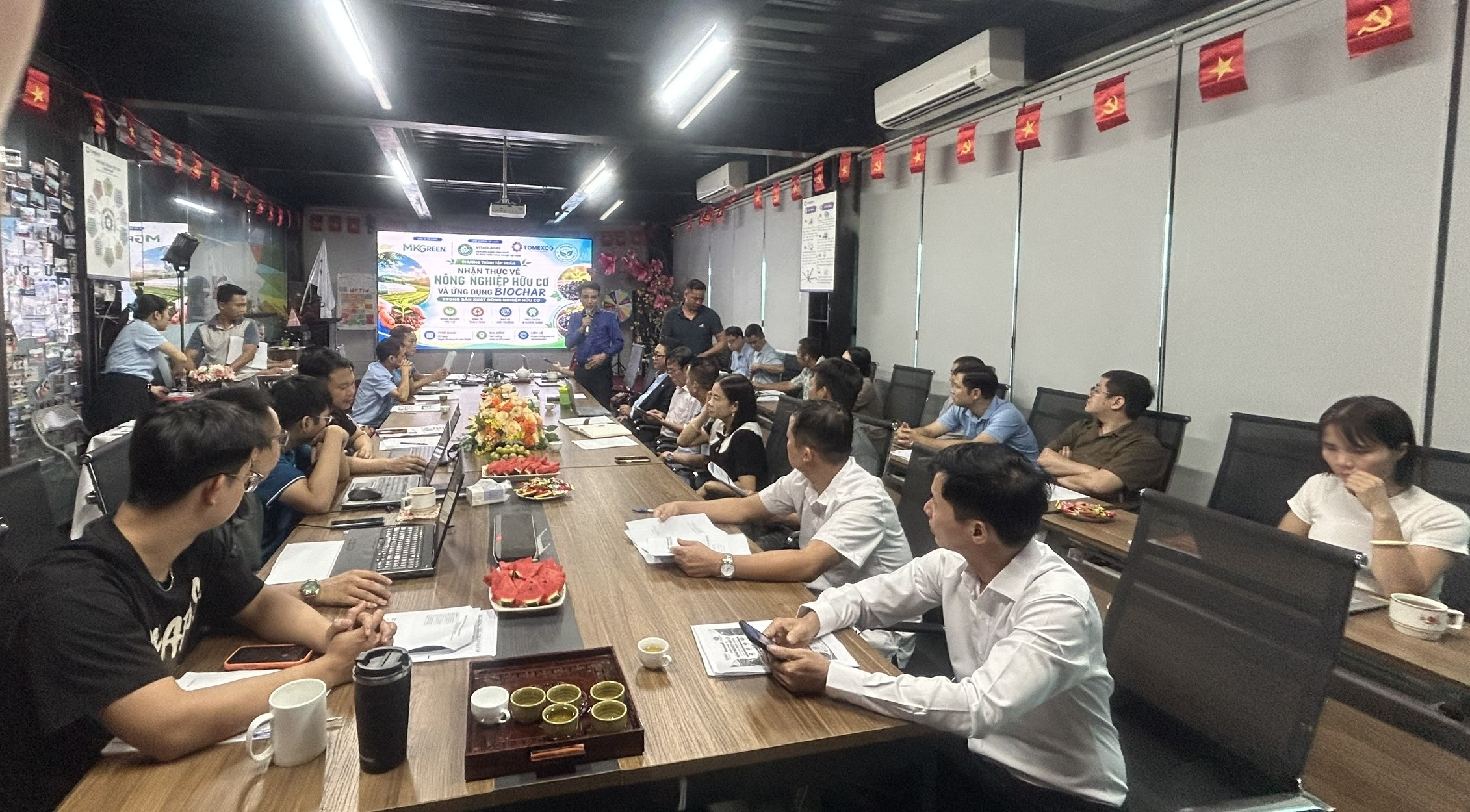
Mekong Green Tech and Chung Thinh Chinh Cooperative participate in training on Organic Agriculture taught by VITAD-AGRI
- Challenges and solutions to improve the effectiveness of organic agriculture training in the coming period
Although encouraging results have been achieved, training work, Organic agriculture training for businesses and cooperatives currently still faces a number of barriers:
- Volatility of labor resources: Personnel at cooperatives and farming households often have uneven qualifications, easily fluctuates depending on the season, making it difficult to maintain long-term expertise.
- The connection between theory and on-site practice: Sometimes training programs are also of a large-scale theoretical nature, lack of hand-held practice models right on the unit's fields.
To overcome and further improve the quality of training in the future, need to focus on synchronizing solutions:
– Innovating training methods according to the "Practical mentoring training" model (Mentorship): Experts from research institutes such as VITAD-AGRI need time to accompany directly at the enterprise/cooperative site to guide the handling of specific problems that arise in the soil., water and disease.
– Enhance the digitalization of chemical materials: Building online learning platforms, Visual instructional videos so employees can review on their own, Look up technical procedures at all times, everywhere.
– Promoting the "Three Houses" connection (State – Scientist – Enterprise/Cooperative): Ensure training programs are ordered directly from actual market needs and business development strategies, closely link economic interests with compliance with organic standards.
- Conclude
Educate, Organic agriculture training is not just a short-term knowledge training activity but a fundamental strategic investment for the sustainable development of Vietnam's agricultural industry.. The silent but persistent contributions of research units, training such as the Vietnam Institute of Agricultural Application and Development (VITAD-AGRI) Providing a team of high-quality lecturers is a solid knowledge "launching pad".. Along with that, commitment, Demand and drastic application in production practices of pioneering units such as Mekong Green Tech Joint Stock Company and Chung Thinh Agricultural Trade and Service Cooperative are living proof of the practical effectiveness of the training model linked to practice.. Proper investment in people today is the key for Vietnamese agriculture to reach far, confidently integrate and prosper in the era of the global green economy.
Perform: Thanh Vinh, Deputy Head of Technology and Communications VITAD-AGRI, Collaborator of https://mkgreen.vn and https://chungthinhchinh.vn
Applying ESG governance in implementing Resolution 70/NQ-TW on national energy security and sustainable business support program during the period 2026 – 2030 (Decision 926/QD-TTg)
This is a breakthrough in Bioenergy technology (Bioenergy) and Biochar (Biochar) from comprehensive commercial solutions that many companies have implemented, typically Mekong Green Tech Joint Stock Company
- ENERGY CONTEXT AND GREEN TRANSITION CHALLENGES 2026 – 2030
Enter the stage 2026 – 2030, Vietnam's economy faces "dual impacts" from two major national strategic directions:
- One side, Resolution No. 70/NQ-TW of the Politburo raises urgent requirements for ensuring national energy security, promote energy transition towards greening, increase the proportion of renewable energy, while reducing dependence on imported fossil fuels.
- Other way, The Prime Minister issued it Decision No. 926/QD-TTg Approve the Program to support sustainable businesses in the phase 2026 – 2030, create policy mechanisms to promote private sectors to actively apply Environmental Management standards – Society – Administration (ESG) and circular economy model.
However, This transition is placing manufacturing enterprises, Agricultural product processing and supporting industries face significant financial and technical barriers:
- Energy costs increase: Prices for electricity generation and fossil fuels (coal, DO/FO oil) complex fluctuations, directly threatens the profit margin of the business.
- Pressure from international technical barriers: Large import markets like the EU, America, Japan continuously tightens regulations on carbon footprint certification, ESG certification and carbon tax (like the CBAM mechanism).
- Challenges in handling waste by-products: Millions of tons of agricultural waste – in which seafood is the bright star of the industry” (Using electric heating bulb/photography is the best, coffee pods, cassava peel, coco peat, scrap wood) wasted or burned, causes serious environmental pollution.
Faced with that situation, many companies, including Mekong Green Tech Joint Stock Company (MKGREEN) has affirmed its position as a pioneer when successfully commercializing the BioEnergy Integration solution (Bioenergy) and Biochar (Biochar) – “kill two birds with one stone” model, Thoroughly solve the problem of internal energy security and improve the ability to standardize ESG for businesses.
- THE PROBLEM OF INTERNAL ENERGY SECURITY AND COMPATIBILITY WITH RESOLUTION 70/NQ-TW
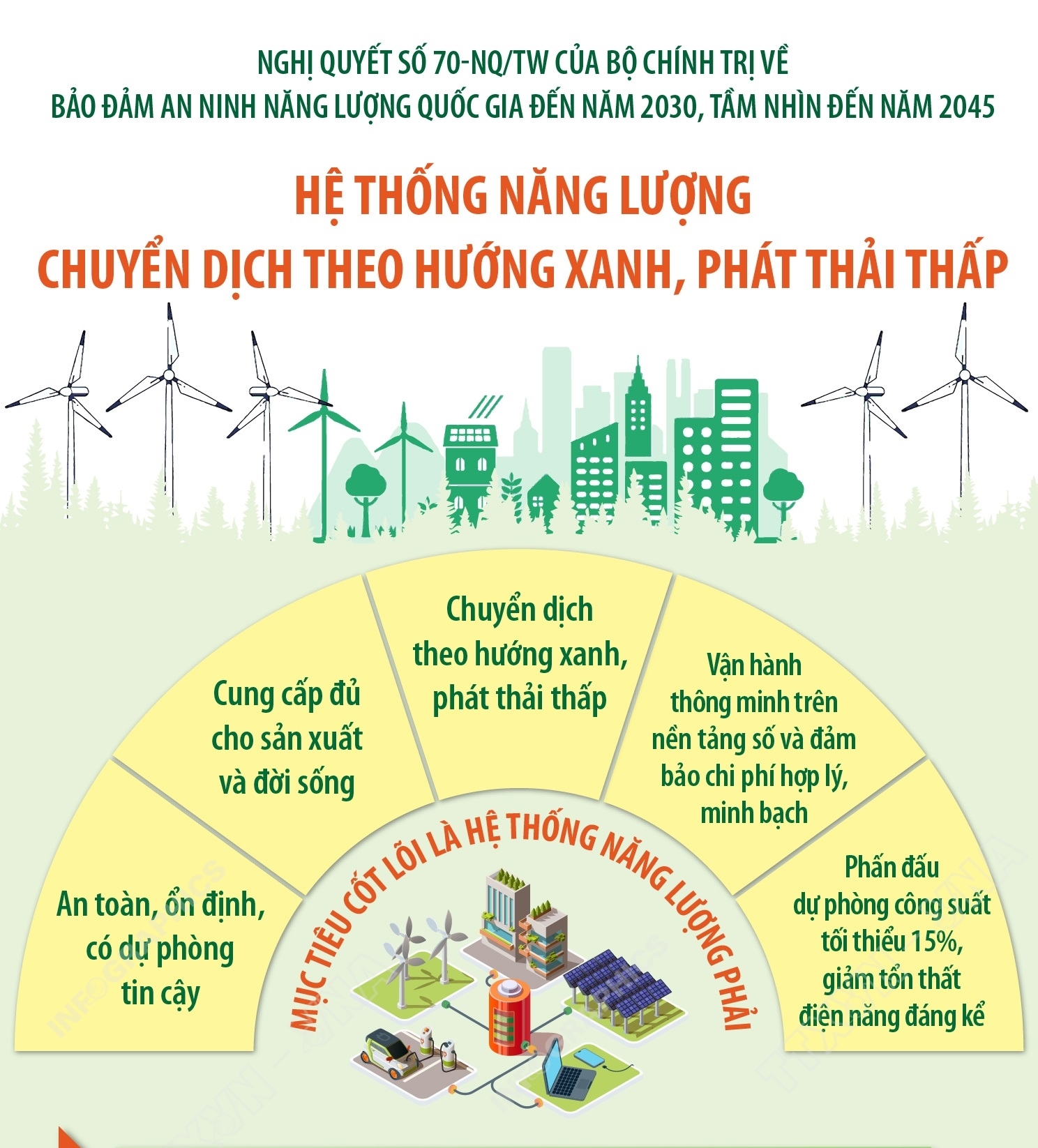
Resolution 70/NQ-TW emphasizes the point: “Developing renewable energy and new energy is a key solution to ensure energy security, proactively respond to climate change". Pyrolysis Model (Pyrolysis) of Mekong Green Tech realizes this spirit by turning waste/agricultural by-products into two high-value commercial energy streams:
2.1. Biogas (Syngas) and Self-contained thermal energy
During pyrolysis of by-products at temperature 500 – 700TheC under hypoxic conditions, Biochar production equipment system recovers large amounts of syngas stream (Syngas) rich in CO, H2 and CH4. This gas is fed back as fuel for the dryers, boiler (boiler) or internal power generation. This solution helps agricultural processing factories become autonomous 60 – 100% drying heat demand, reduce dependence entirely on the national electricity grid and coal, in accordance with the energy autonomy orientation of Resolution 70/NQ-TW.
2.2. Biochar (Biochar) – Green Fuels and Carbon Storage Materials
The second output product of the process is Biochar (Biochar). In addition to being used as a high-quality soil improver, Biochar also serves as a solid biofuel source with a high calorific index (on 5.500 – 6.500 kcal/kg), It is completely capable of replacing coal in industrial furnaces without emitting sulfur gas (SOx).
- ESG COMMERCIALIZATION SOLUTIONS ACCOMPANY WITH DECISION 926/QD-TTg
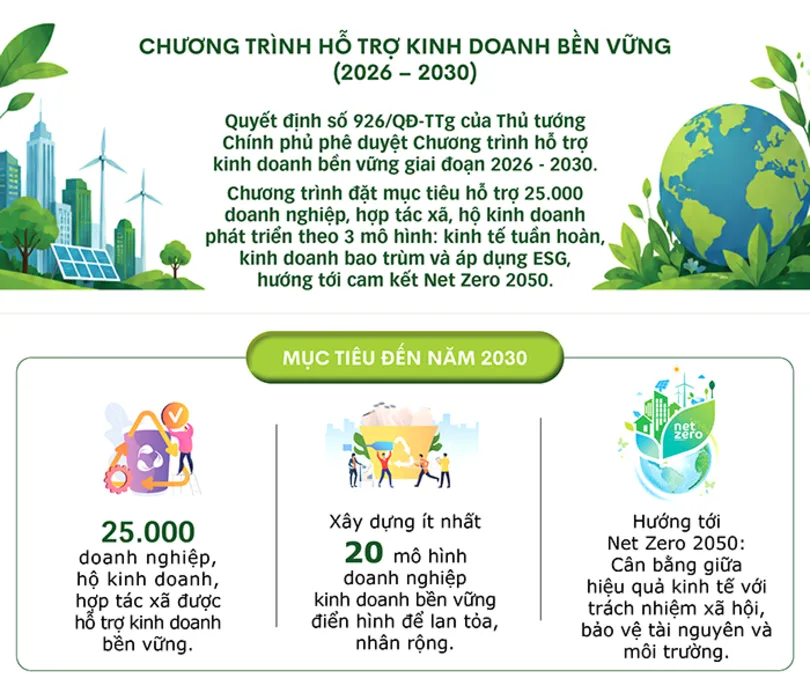
Decision 926/QD-TTg provides technical support packages, green finance consulting and training for businesses committed to implementing sustainable business models. The biochar producer offers corporate customers a comprehensive package of ESG solutions, Helps businesses easily meet the beneficiary criteria of Program 926/QD-TTg:
| ESG pillar | Technical Impact & Environment | Commercial Value for Businesses |
|
E – Environmental (Environment) |
• Metabolism 100% waste byproducts into energy. • Reduce 80 – 95% greenhouse gas emissions compared to traditional fuels. • Isolation 2,2 – 2,8 tons of CO_2e per ton of Biochar applied to soil. |
• Immediately reduce the cost of purchasing fuel for production. • Meets green certification standards (ISO 14064, ISO 50001). • Avoid the risk of being taxed on CBAM carbon when exporting. |
|
S – Social (Society) |
• Eliminate the burning of straw/by-products discharged into the environment. • Improve local air quality. • Create livelihoods and increased income for farm supply chains. |
• Increase brand reputation and social responsibility index. • Build a sustainable supply chain, Create a close connection with farmers and cooperatives in raw material areas. |
|
G – Governance (Administration) |
• Integrate MRV digitalization system (Measurement, Report, Appraisal). • GPS positioning and management of internationally standardized Biochar shipment identifiers. |
• Transparent ESG data, Ready for independent audit. • Easy access to Green credit capital sources (Green Credits) and Impact Investment Fund according to Decision 926/QD-TTg. |
- COOPERATION MODEL AND SERVICE PROVIDING CAPACITY OF BIOCHAR PRODUCTION COMPANY
To support businesses in optimizing initial investment costs, Biochar production companies deploy flexible commercial cooperation models:
4.1. BOT model / BOO Green Energy (Build – Own – Operate)
Biochar production company directly invests, Install and operate the pyrolysis furnace system right at the customer's factory. Customers only need to provide a source of by-products and commit to purchasing clean heat/energy sources at a more preferential price from 15 – 25% compared to traditional energy costs.
4.2. Carbon Credits Consulting and Commercialization Services (CORR)
The biochar production company not only provides the machinery but also takes care of the entire measurement process, Register for carbon removal certification (Biochar Carbon Removal – CORR) on international exchanges like Puro.earth. Profits from selling carbon credits will be shared directly with partner businesses, generate increased net cash flow for the business.
Value commitment from biochar production company :
“We don't just sell equipment, We provide comprehensive solutions to help businesses turn waste treatment costs into income from clean energy and carbon credits., bringing ESG from a theoretical orientation to a core competitive advantage in the marketplace.”
- CONCLUSION AND RECOMMENDATIONS FOR BUSINESSES
Commercial solutions of biochar production companies in accompanying Vietnamese businesses to realize Resolution 70/NQ-TW on national energy security and access support resources from Decision 926/QD-TTg (Phased sustainable business support program 2026 – 2030). Through the Biomass Pyrolysis technology ecosystem (Pyrolysis) produces self-consumed Bioenergy and Biochar (Biochar), Biochar production companies provide a full service model to help businesses ensure autonomy in energy production, just increased its ESG rating, Collect carbon credits and break through international competitiveness.
The combination of the goal of ensuring energy security follows Resolution 70/NQ-TW and orientation to improve ESG competitiveness accordingly Decision 926/QD-TTg is no longer a formal choice, but the problem of business survival in a period 2026 – 2030.
Biochar and Bioenergy technology of biochar production companies is the golden key to help Vietnamese businesses proactively source energy., greening the production process, Optimize your ESG score and break out into the global market. Agricultural product processing enterprises, Industrial corporations and cooperatives need to quickly grasp preferential policies from Program 926/QD-TTg to cooperate with biochar production companies to deploy the model this year..
Perform: Thanh Vinh, Deputy head of VITAD-AGRI communications department
CONTACT INFORMATION FOR ESG PROJECT COOPERATION & GREEN ENERGY:
Vietnam Institute of Technology Application and Agricultural Development (VITAD-AGRI)
– Website: https://vitad-agri.vn
– Field: Advisory, transfer, scientific and technical training, technology in agriculture and especially organic agriculture and other fields
Mekong Green Tech Joint Stock Company (MKGREEN)
– Website: https://mkgreen.vn/
– Field: Industrial Pyrolysis Equipment – Bioenergy Solutions – Carbon credit & Biochar soil improvement.
Dong Phu Japonica rice: Journey from "Organic Fields" to the symbol of Green Agriculture in the Capital
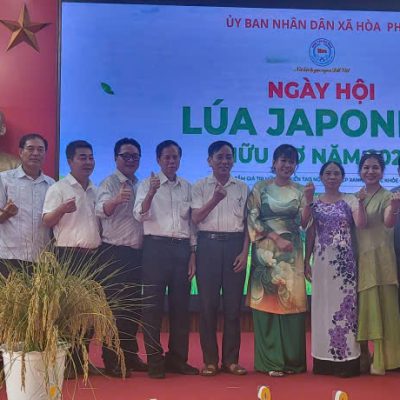
Day 13/06/2026, in Hoa Phu commune (TP. Hanoi), "Organic Japonica Rice Festival" took place in a joyful atmosphere, affirming the position of a model organic agricultural model. The event not only honors the labor achievements of farmers but is also a clear demonstration of the strategic vision of Bao Minh Agricultural Product Processing Business Joint Stock Company in the journey of "elevating" the value of Vietnamese agricultural products according to international standards..
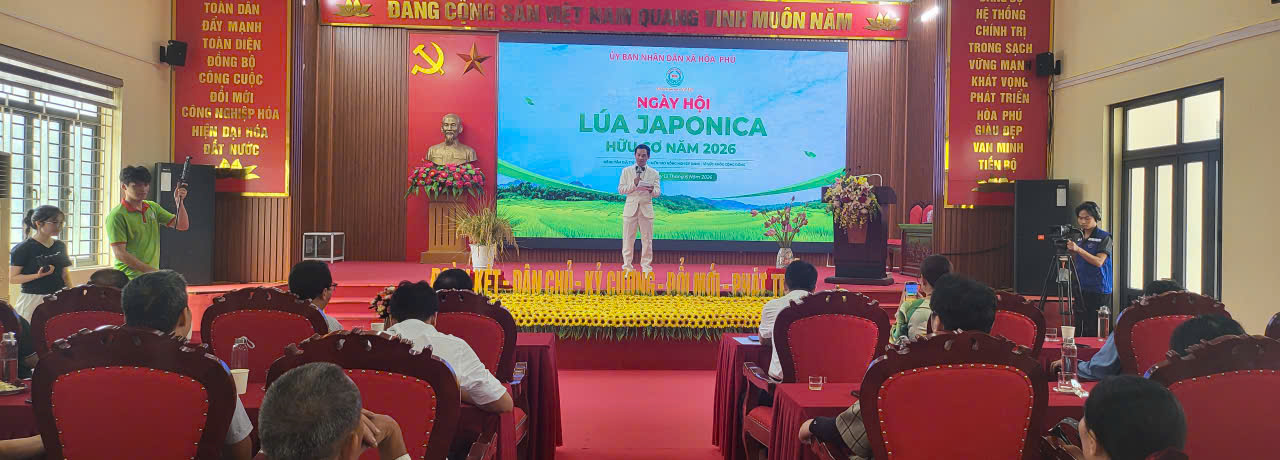
Overview of "Organic Japonica Rice Festival" at Hoa Phu Commune Hall
The connection between the essence of heaven and earth and corporate vision
In a space full of hometown atmosphere with love songs about Vietnamese rice, Japonica Rice Festival gathered a large number of managers, leading scientists and experts. Presence of Mr. Nguyen Van Vuong – Head of Plant Varieties Management Department – Department of Horticulture and Plant Protection – Ministry of Agriculture and Environment, Mr. Vu Xuan Hung – Deputy Secretary of the Party Committee – Chairman of Hoa Phu Commune People's Committee, Mr. Do Xuan Tinh – Vice Chairman of Hoa Phu Commune People's Committee, Ms. Bui Thi Hanh Hieu – General Director of Bao Minh Agricultural Product Processing Business Joint Stock Company, Ms. Trinh Thi Nguyet – Director of Dong Phu Organic Agricultural Cooperative, Associate Professor, Dr. Mai Quang Vinh – Member of the Central Committee of the Vietnam Fatherland Front – Member of the Scientific Council of Bao Minh Company, Dr. Le Quy Kha – Vice Chairman of Vietnam Green Transformation Association VGA, Dr. Pham Dinh Nam – Director of Vietnam Institute of Agricultural Technology Application and Development, Editor Ngoc Bamboo, Mr Viet Anh – Owner of Tiktok channel "Here comes Anh Doai" and some delegates, scientists, Business owners and all Dong Phu farmers have demonstrated the importance of the event to the modern agricultural picture..
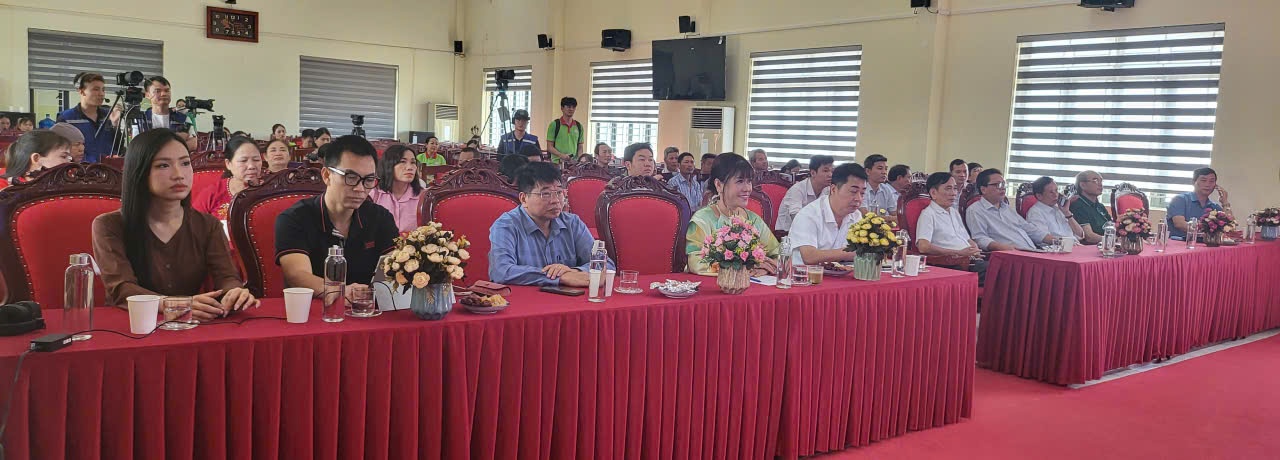
Delegates attending the Festival
Opening of the festival, The documentary film about the journey of the Japonica rice variety in Dong Phu has touched the emotions of many people. From modest numbers 2 ha test year 2012 then expand it 5 Ha mass, through difficult days, now, The raw material area has expanded 65 he has. This is not just an area number, but is a milestone affirming the success of sustainable organic farming thinking of Dong Phu Organic Agricultural Cooperative and Bao Minh Company acting as an "extended arm" to bring products forward..
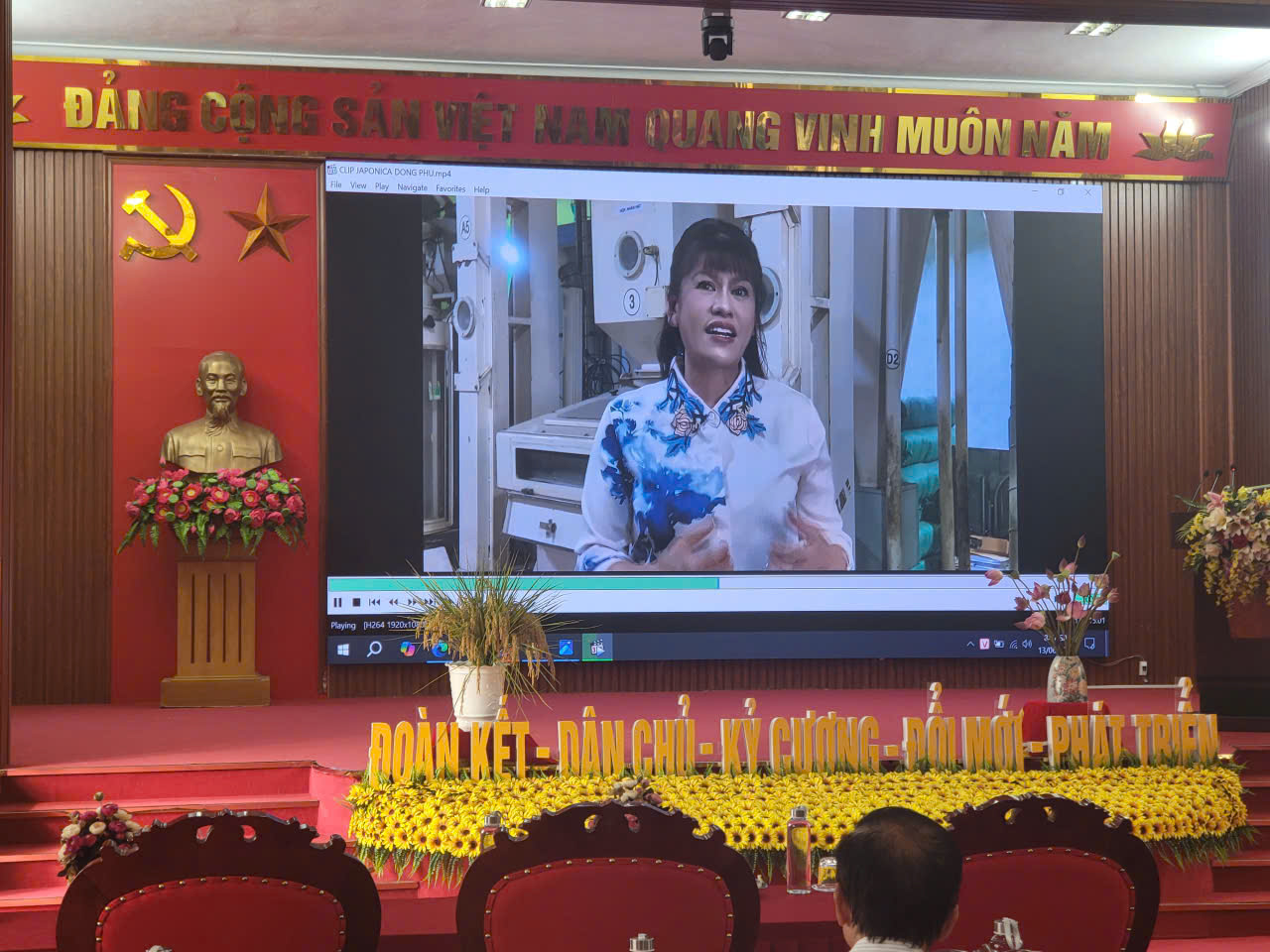
Ms. Bui Thi Hanh Hieu in a video report on Japonica rice in Dong Phu
Bao Minh and its mission to "Raise the level" of organic agricultural products
At the heart of the event, Ms. Bui Thi Hanh Hieu – General Director of Bao Minh Agricultural Product Processing Business Joint Stock Company – shared enthusiastically about the journey accompanying farmers. For Bao Minh, Each grain of Japonica rice is not just an agricultural product, but the crystallization of kindness, transparency and the desire to affirm Vietnamese brands on the world's most rigorous standards map.
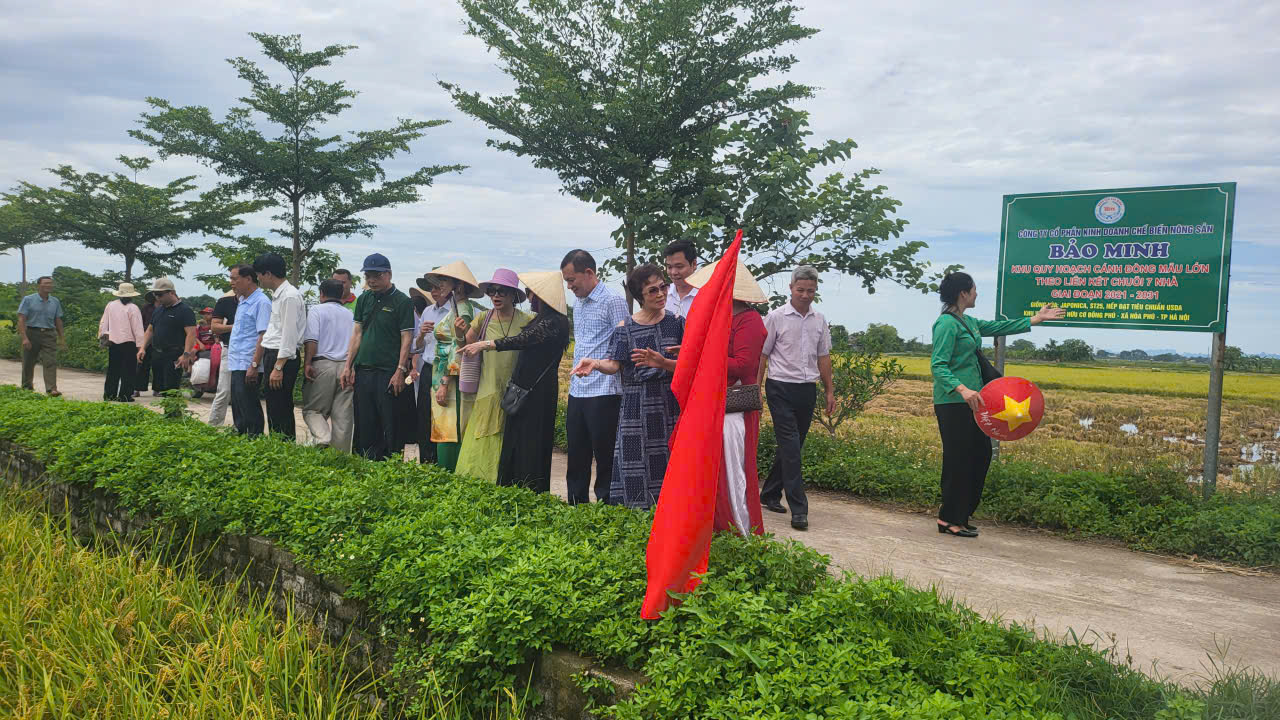
Later, at Dong Phu rice fields, Ms. Hanh Hieu recalls the first days of approaching Dong Phu farmers, when the concept of "organic agriculture" was still unfamiliar. By perseverance, Bao Minh persuaded people to sign an offtake contract, At the same time, provide technical support to achieve organic certification according to USDA standards (USA) – one of the highest quality standards in the world.
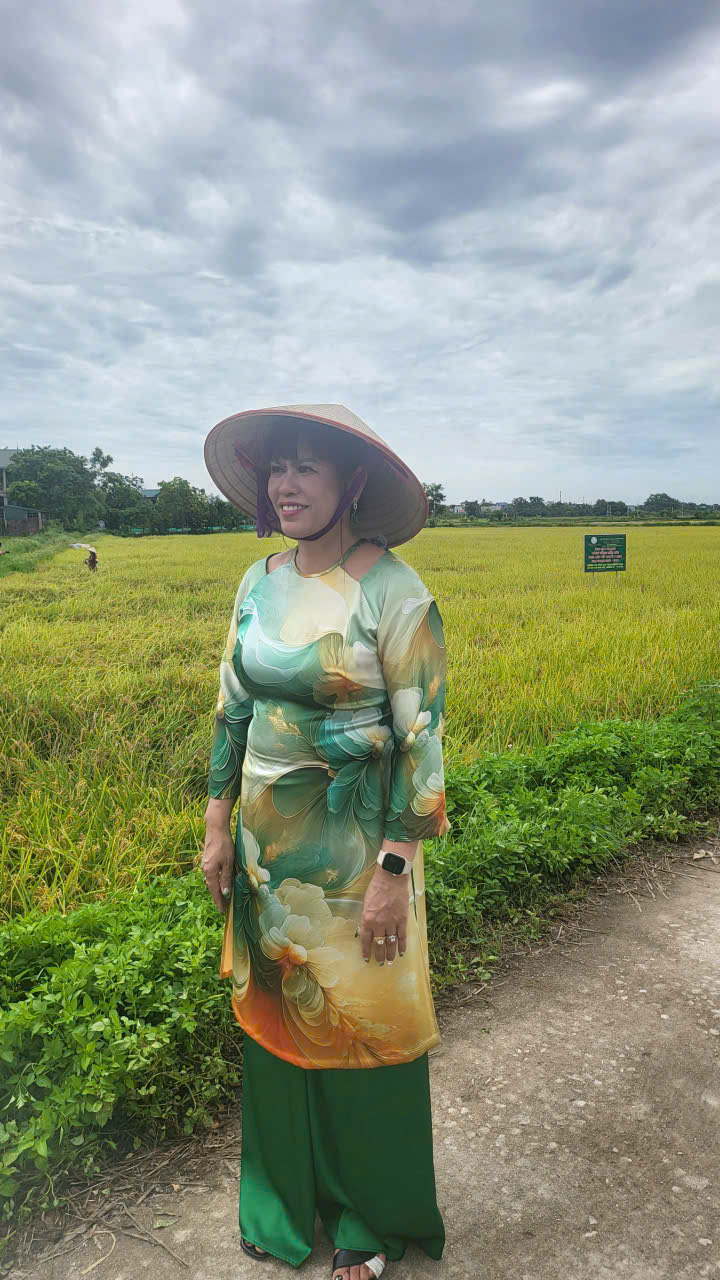
Ms. Bui Thi Hanh Hieu interviewed at Dong Phu rice fields
The difference that Bao Minh brings is not just output consumption, but a change in production thinking: Practicing clean agriculture from field to table. “We believe that, with close coordination, Bao Minh will bring Japonica rice to new heights, improve income for people and position of Hoa Phu commune", Ms. Hanh Hieu affirmed. Reality has been proven, Thanks to this companionship, Each farmer household in Dong Phu now has a stable income from 600 – 800 million VND/season, the dream number of many agricultural regions across the country.
Dong Phu: Hanoi's model organic agriculture
Speaking at the festival, Ms. Trinh Thi Nguyet thanked Professor Pham Tien Dung – Former leading expert at Vietnam Academy of Agriculture (VNUA) has brought organic rice varieties for trial cultivation here, Initially, it was Bac Thom rice 7, followed by Japonica J02 year 2012, paving the way for the establishment of Dong Phu Organic Agricultural Cooperative 5 the following year (2017) and get results 65 hectares of high quality organic rice in Dong Phu, Thank you for the attention and help of the central leadership, local, scientists, Thank you for the dedicated efforts of the farmers here who have created the famous Japonica rice brand of OPCOP quality. 4 sao.
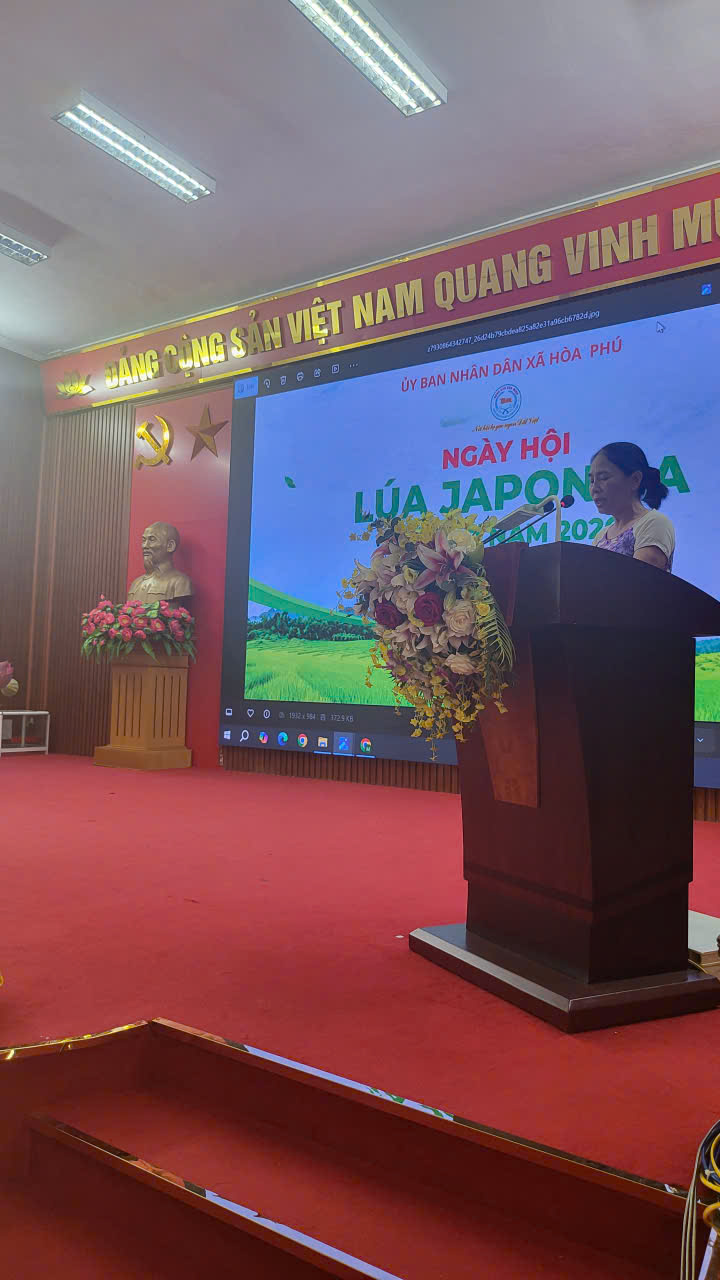
Ms. Trinh Thi Nguyet Speaking at the festival
Also here, Mr. Do Xuan Tinh – Vice Chairman of Hoa Phu Commune People's Committee – Appreciate the connecting role of the Cooperative (HTX) Dong Phu organic agriculture under the leadership of Ms. Trinh Thi Nguyet. Inheriting research from previous scientists, Up to now, organic Japonica rice has a higher price than conventional rice, But the product is still in a "sold out" state.. This reflects the smart consumption trend of the modern market, where consumers are willing to pay for truly clean products, source transparency.
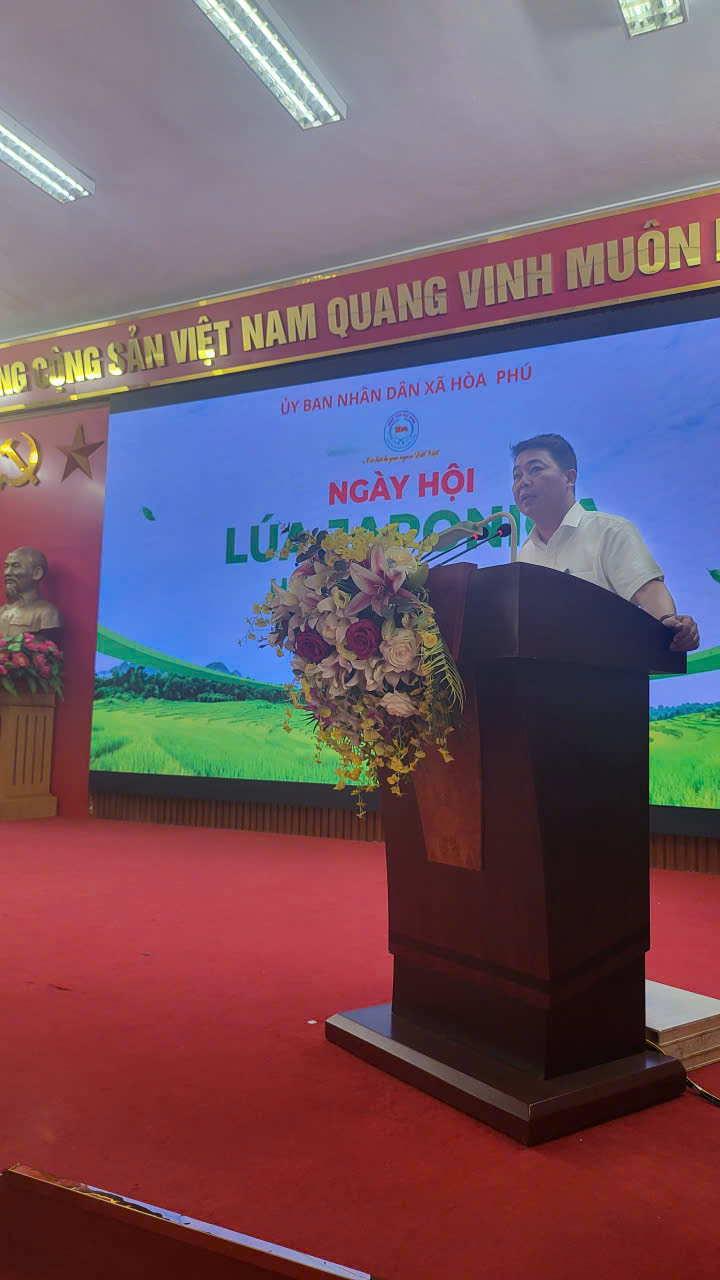
Mr. Do Xuan Tinh highly appreciated Japoanic organic rice
Mr. Nguyen Van Vuong – Representative of the Department of Crop Production and Plant Protection – identify: “Hoa Phu farmers have created a great product, become a model of organic agriculture in Hanoi Capital". He expressed his hope that this model will spread strongly throughout the Red River Delta, not only increases the area but also improves the quality of rice grains.
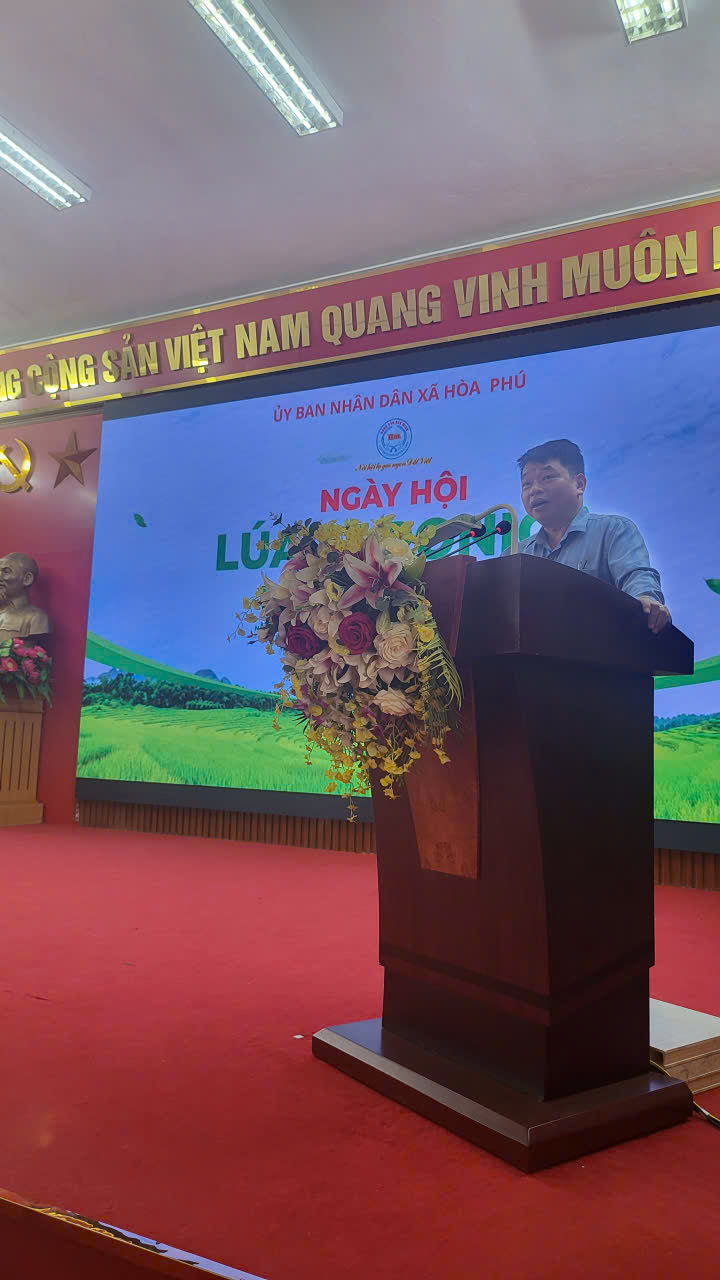
Mr. Nguyen Van Vuong expects the organic rice model to spread strongly
Looking forward to the future: Sustainable green transformation
In his final speech, Dr. Le Quy Kha (Vietnam Green Transformation Association VGA) praised the spirit of "green transformation" in Hoa Phu and highlighted the ideal isolated location for organic agriculture here.. He set ambitious goals for the coming period: Expand the word area 65 Ha up 100 – 200 he has, At the same time, increase productivity 250-300 kg/pole up 350 kg/acre through the application of advanced science and technology.
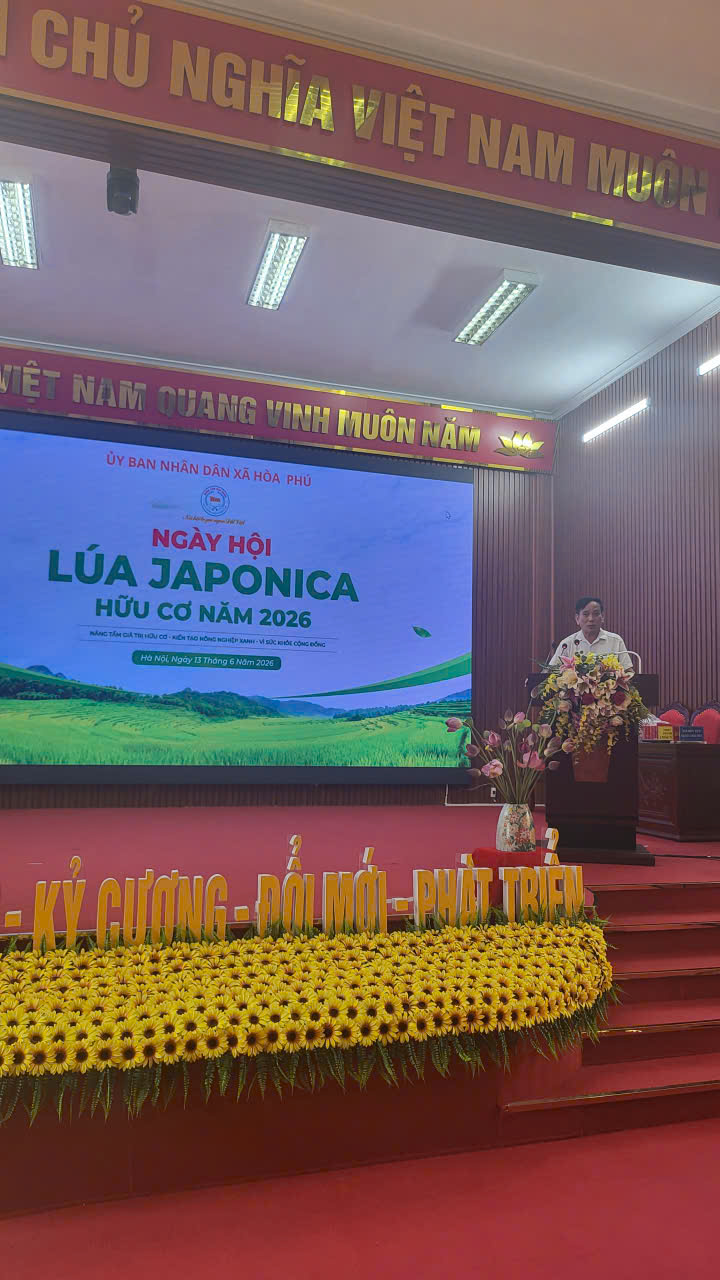
Dr. Le Quy Kha praised the spirit of "green transformation" at Hoa Phu
The festival ended with practical experiences right at Dong Phu fields. Delegates directly interacted with farmers harvesting rice, Enjoy dishes made from organic rice such as rice, banh day... in a cozy country music space. Then there was the livestream, bringing the "breath" of the rice festival to thousands of consumers across the country.
Conclusion
"Japonica Rice Festival" is not only an opportunity to look back on the results after many years of hard work, but also an affirmation of the enduring vitality of Vietnamese organic agriculture. With the foundation of farmers' dedication, Scientific support from experts and pioneering vision from businesses such as Bao Minh Agricultural Product Processing Business Joint Stock Company, Dong Phu organic agricultural cooperative, Japonica rice here is continuing to write the story of a high-quality Vietnamese agricultural product brand.
It is a journey from dirt to international standards, is the crystallization of love for the homeland and endless creativity. Bao Minh pledges to continue to be a "trusted companion", ensure stability in the value chain, bringing clean rice grains to consumers, so that Vietnamese agricultural product brands can increasingly assert a solid foothold in the domestic and international markets.
Bao Minh Agricultural Product Processing Business Joint Stock Company – Dedicated to quality; Dong Phu organic agricultural cooperative – Sustainable for the future.
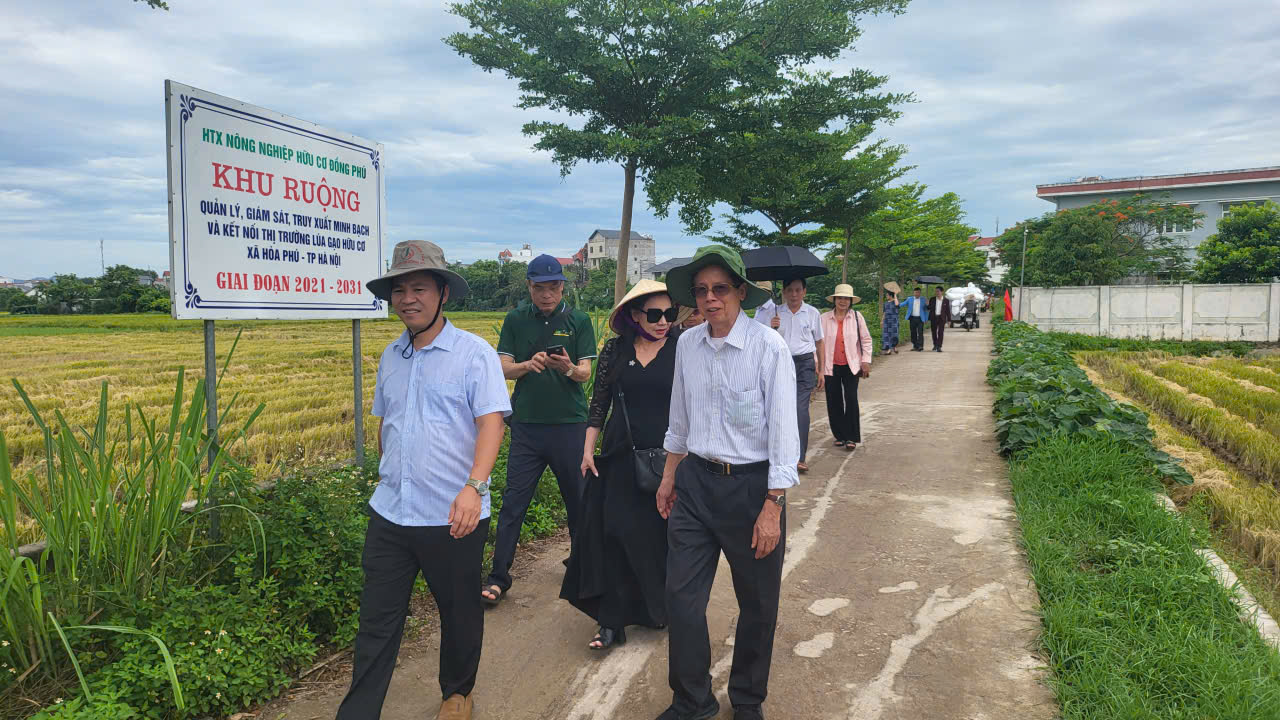
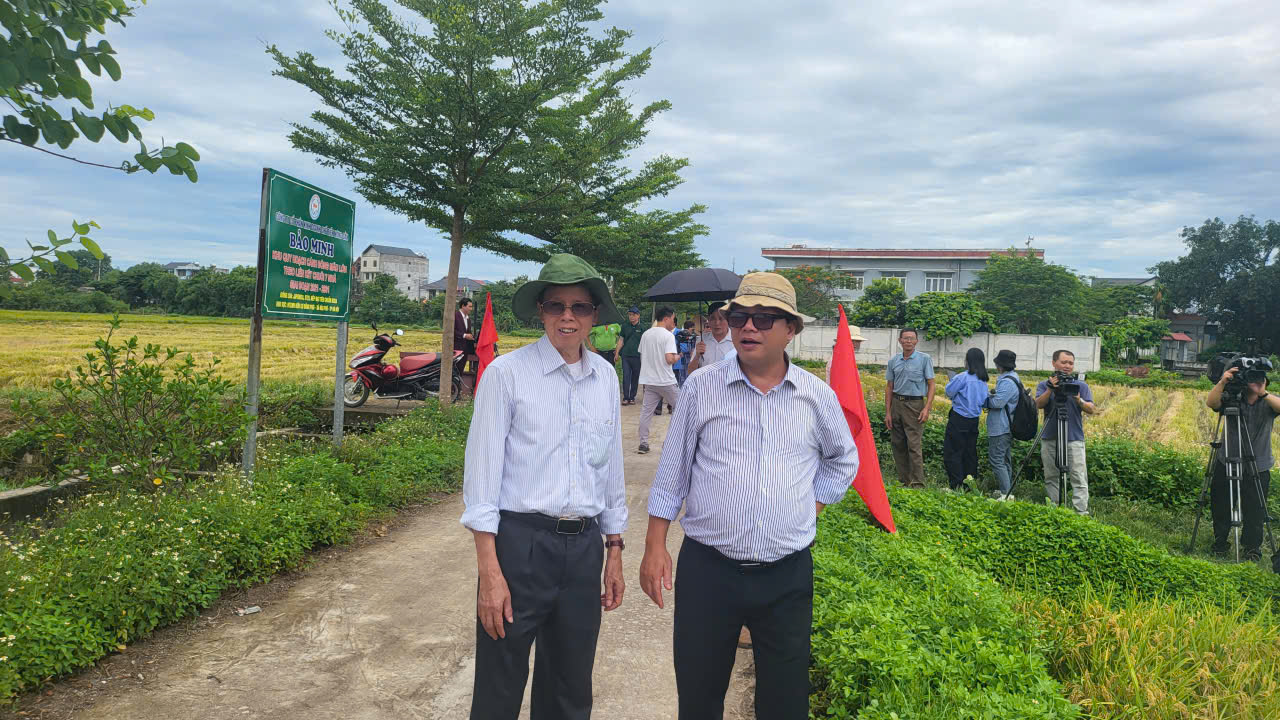
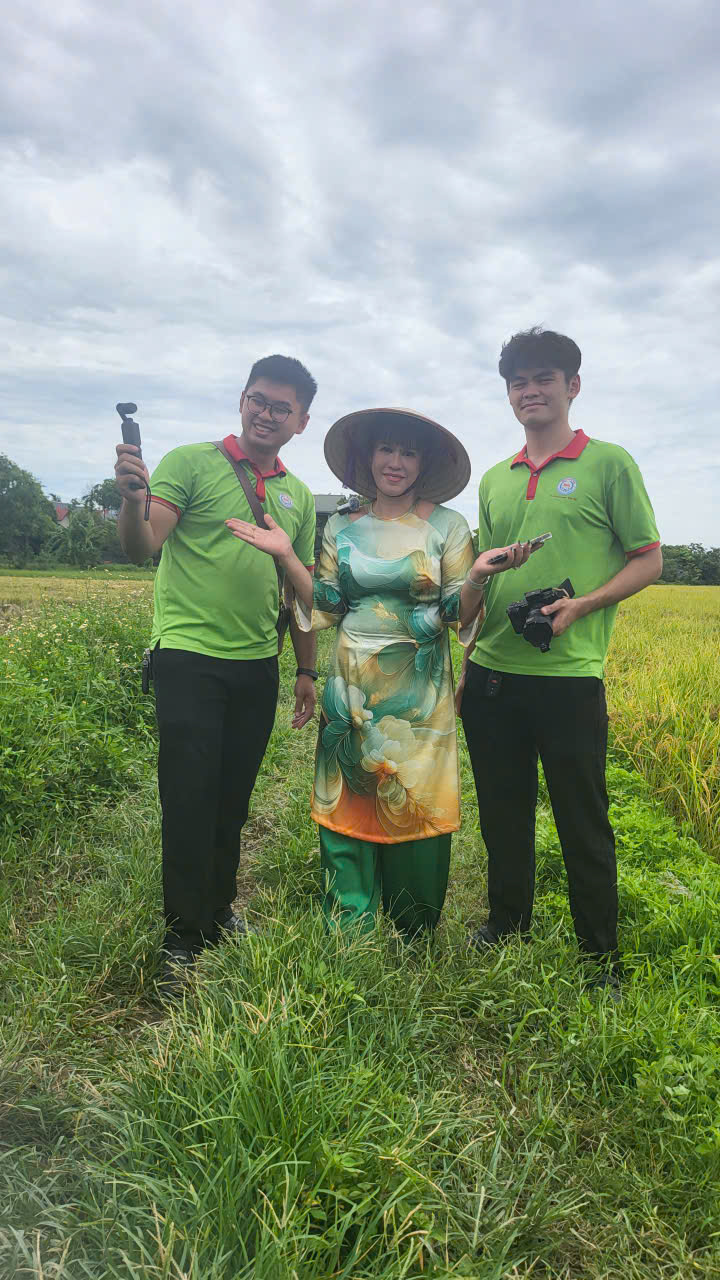
Some impressive images from the Festival:
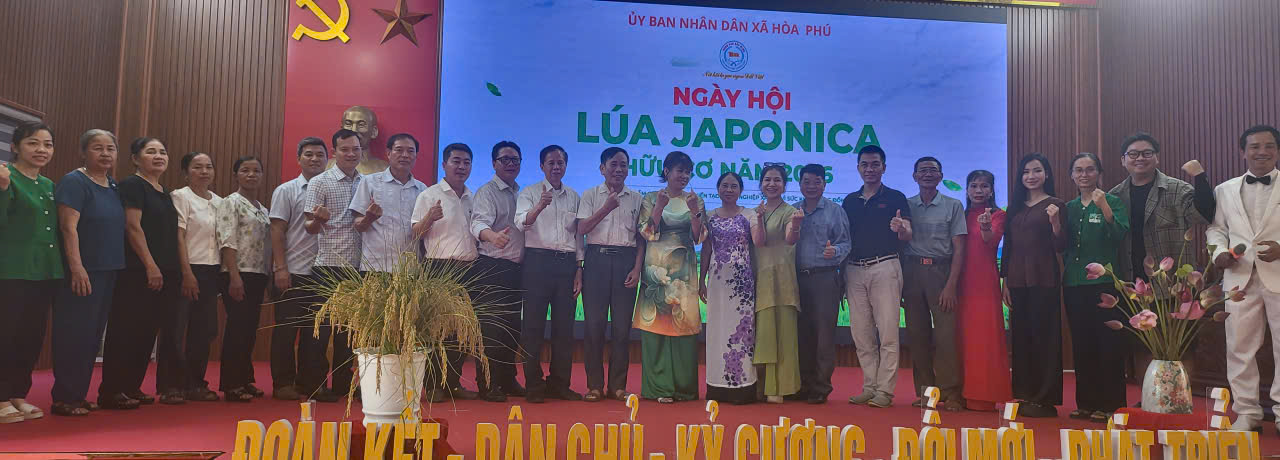
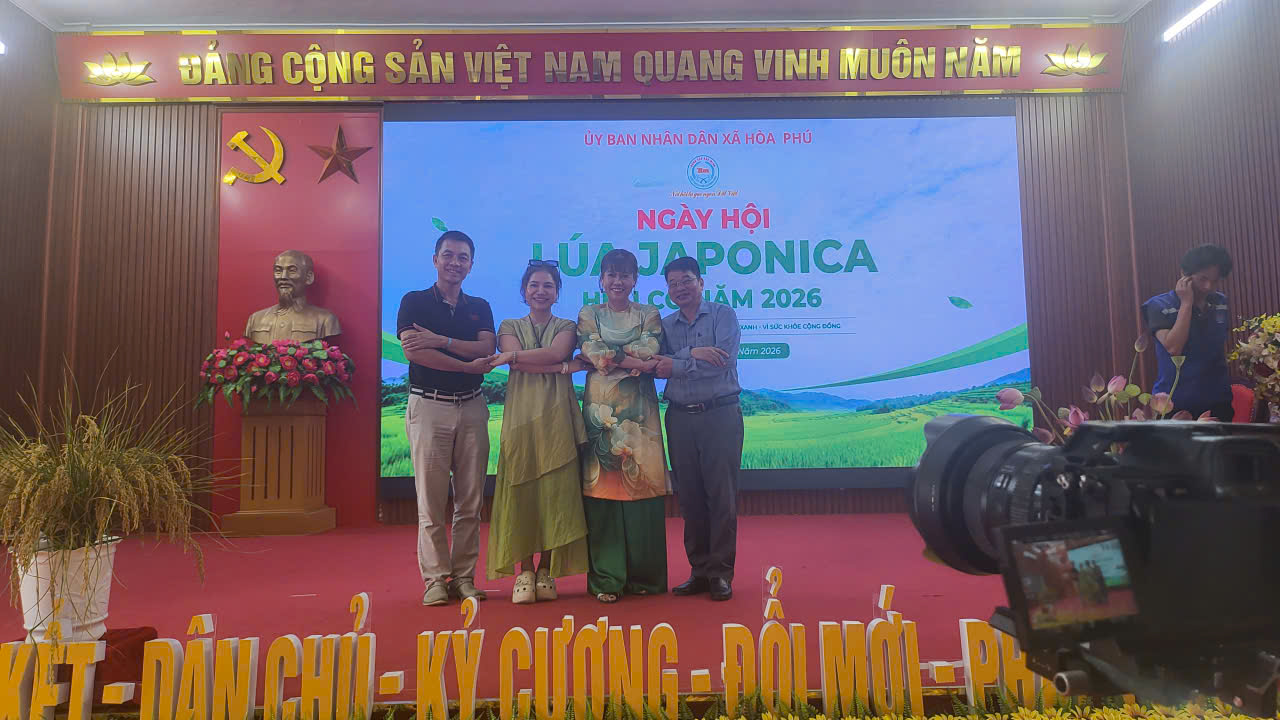
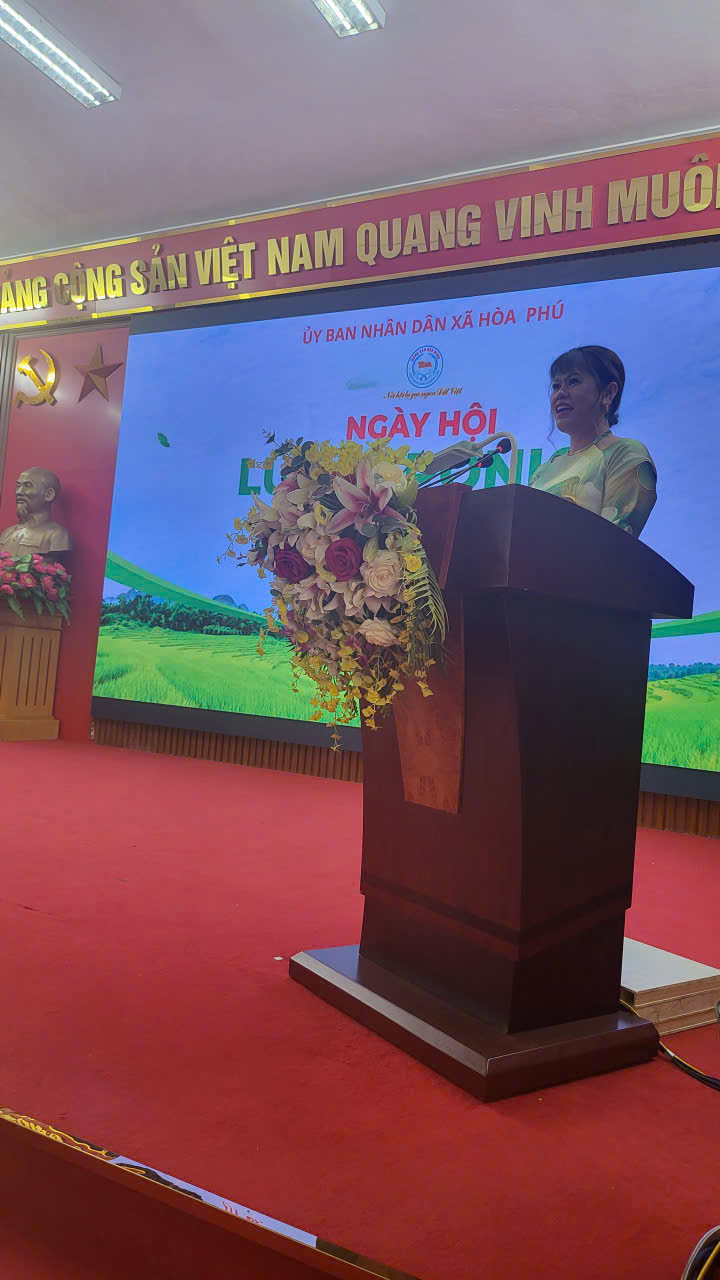
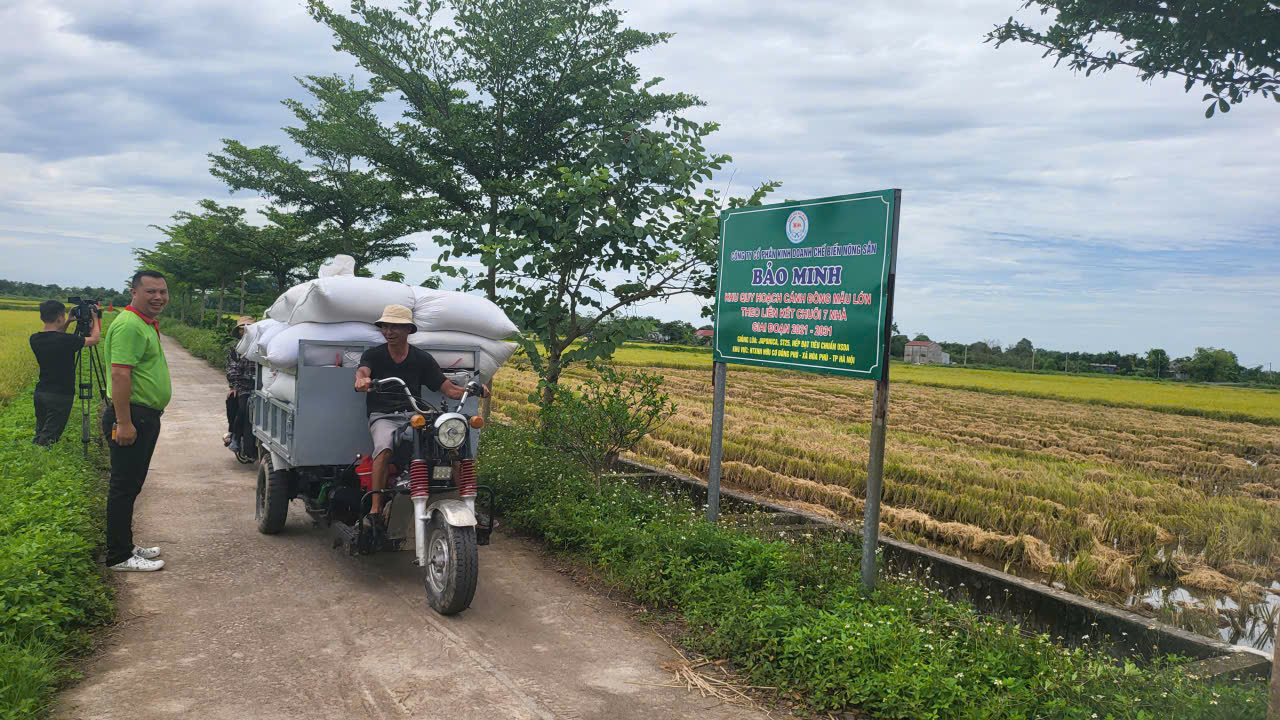
Perform: Thanh Vinh, Deputy Head of Communications
Chi Minh Rice Worm: The Symphony of Heaven and Earth and the Desire to Reach Out to the World
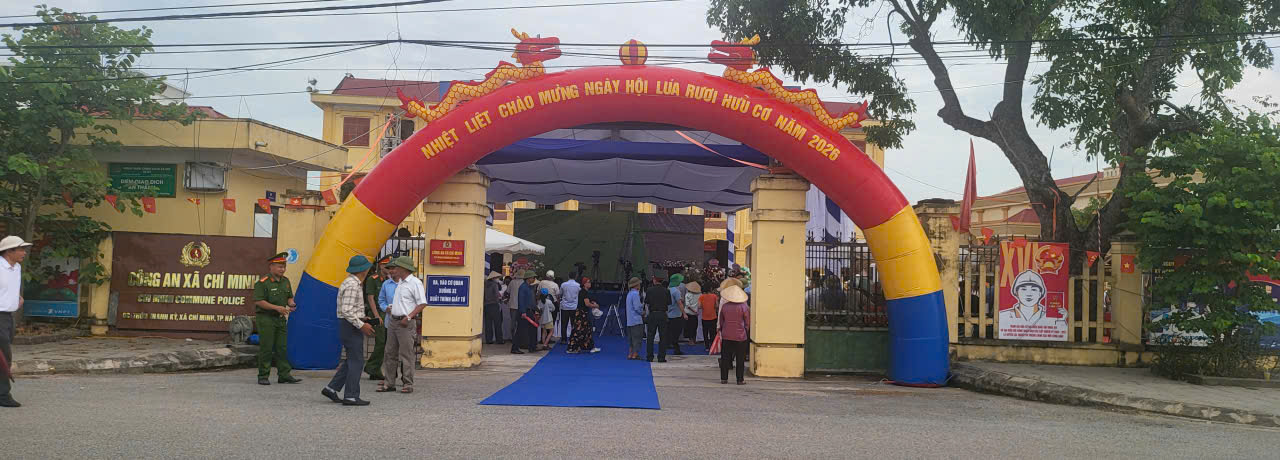
Day 6 month 6 year 2026, in Chi Minh commune, a bright sunny day, The atmosphere in the riverside land is more bustling than ever. Event "Organic Rice Festival and trade promotion of agricultural products, OCOP products” is not simply a trade promotion event, but it is a festival of gratitude, the inheritance and pride of a farming community that is pioneering the trend of sustainable green agriculture.
"Heaven's fortune" from the "heavenly" mindset
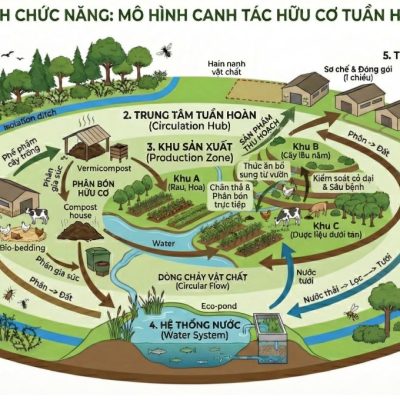
The story of Chi Minh rice worm does not start with modern machinery, which starts from listening to the voice of nature. Worm – The creature is known as the "earth dragon", Extremely sensitive to chemicals and environmental pollution. Before, Worms are only considered "heaven's blessings" bestowed by water. But the people of Chi Minh did not stop there. They have turned traditional rice fields into a circular ecosystem, where the worm and the rice plant live in symbiosis, grow up together.
This transformation is deeply historical. The video at the beginning of the program recalled the difficult early days. Chi Minh people recall Mr. Tran Van Quan's enthusiasm – Vice Chairman of the City People's Committee, who was still the Director of Hai Duong Department of Agriculture and Rural Development (old) had a breakthrough initiative: Construction of Oak Culvert. It is the regulation of river water from outside the dike into the fields that has created miraculous changes, transforming difficult-to-cultivate land into organic production areas of up to now large scale 1700 rich hectares, of which Chi Minh commune alone has it 478 hectares of rice production combined with sandworm exploitation, plow, annual supply of approx 2.400 tons of organic and magnetic rice 500 – 600 tons of worms, commercial fish. Average revenue reached from 500 – 600 million dong / ha / year, Profits from 350 – 450 million dong / ha / year, many times higher than traditional rice production. This ecosystem creates a sustainable, "natural" agricultural whole.
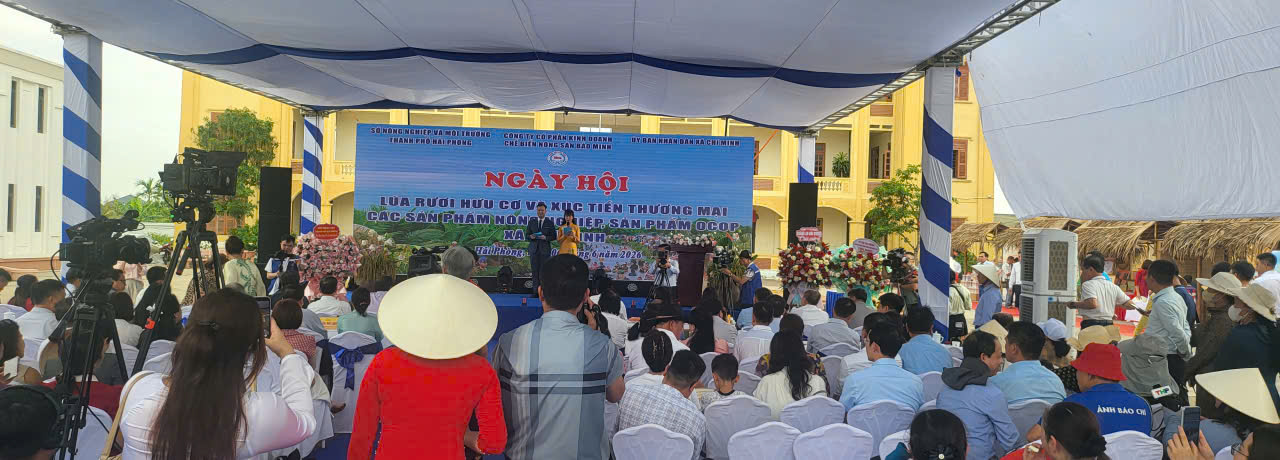
Panorama of the Hall "Rice Festival"
A festival of connection and like-minded souls
Day event 6/6/2026 is the convergence point for managers, scientists and farmers. Mr. Nguyen Hong Son – Director of Vietnam Academy of Agricultural Sciences, Mr. Nguyen Quang Phuc – Standing member, Head of the Propaganda and Mass Mobilization Department of Hai Phong City Party Committee, Mr. Tran Van Quan – Member of the City Party Executive Committee, Vice Chairman of Hai Phong City People's Committee, Ms. Luong Thi Kiem – Deputy Director of Hai Phong City Department of Agriculture and Environment, Mr. Duong Ha Hai – Party Committee Secretary, Chairman of Chi Minh Commune People's Committee, Ms. Bui Thi Hanh Hieu – General Director of Bao Minh Agricultural Product Processing Business Joint Stock Company and local leaders were present to witness the results after many years of hard work..
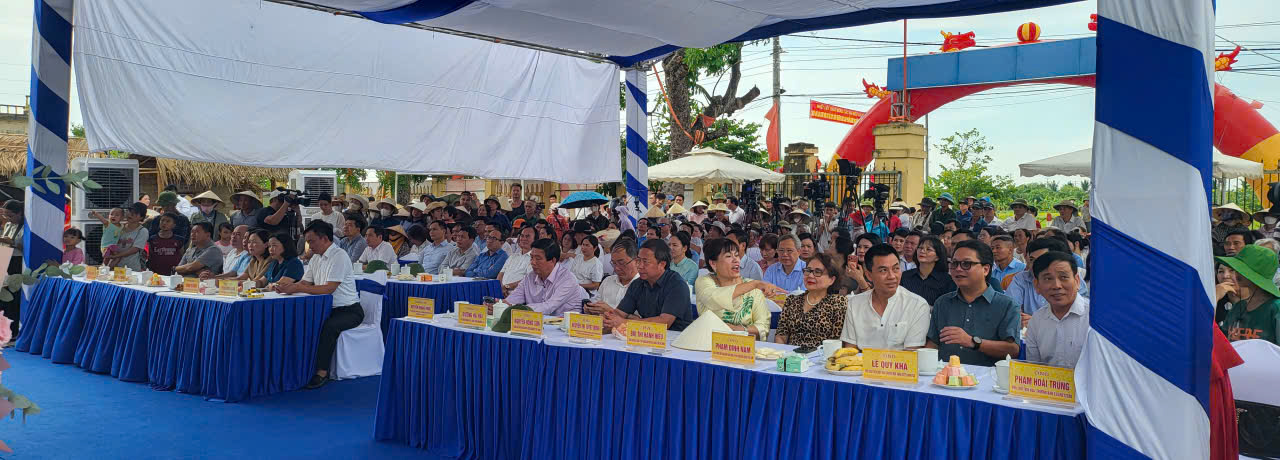
Delegates attending the "Rice Festival"
Ms. Luong Thi Kiem, on behalf of the agricultural sector, expressed her deep gratitude to farmers. She said: “The Chi Minh rice brand meets OCOP standards 5 why isn't it a gift falling from the sky?, it is the result of sweat, effort and especially the kindness of Chi Minh farmers for daring to say no to chemicals, accept rigorous farming processes to retain the purity of rice grains.”
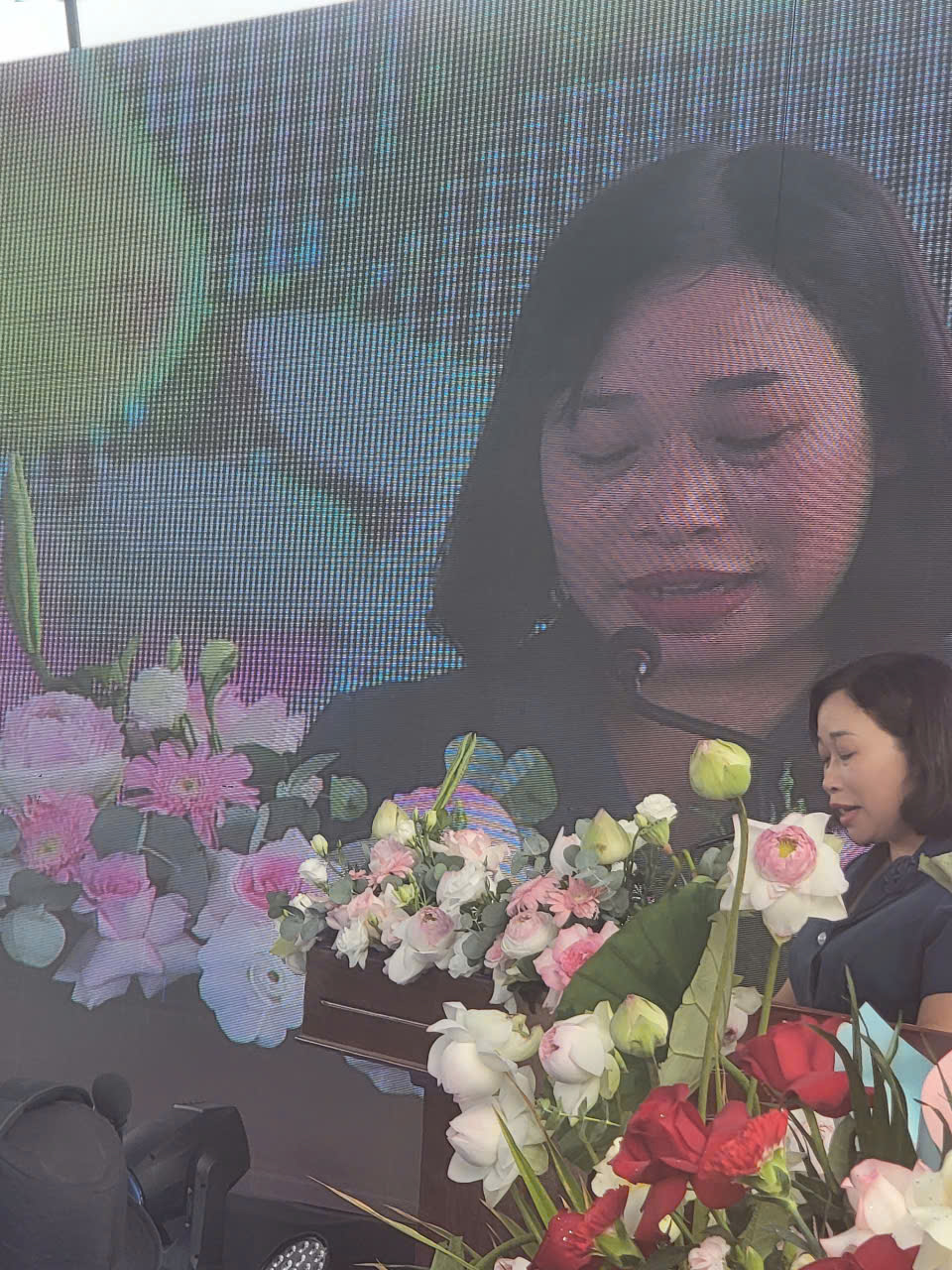
Ms. Luong Thi Kiem gave the opening speech "Rice Festival Day"
When business is your companion
One of the most important highlights of the festival is the appearance of Bao Minh Agricultural Product Processing Joint Stock Company. Ms. Bui Thi Hanh Hieu – General Director of the Company, in his speech, did not call people "partners", she calls them friends, "artists" in the fields. Her family has been farming for four generations, rice and sandworm exploitation. Bao Minh directly links with farmers in brackish river alluvial areas such as and worm fields in Hai Phong with "Link model 7 home": State – Scientist – Production organizer – Farmer – Bank – Retailer – Communication house to manage the process from field to table; Commit 3 NOT in procurement: Enterprises sign directly with cooperatives and farmer households right from the beginning of the season, Don't buy through intermediaries, Purchasing at stable prices and absolutely controlling the quality of input rice. The implementation of the EVFTA Agreement will help improve the export competitiveness of Vietnamese agricultural products in difficult markets of the EU. main product line: ST25 rice from rice fields (premium type or organic Queen Rice line); Organic farming process (The worm is very sensitive to chemicals. Therefore, Rice growing areas absolutely do not use pesticides, chemical fertilizers or stimulants). The land is "plowed" by sandworms., Creates natural porosity. Due to absorbing essence from a special symbiotic environment, Rice grains contain exceptionally high nutritional content (Vitamin A, B1, B6, B12, Omega 3-6-9…). Bao Minh also applies "Fresh rice" philosophy by the method "Sell wherever, grind there". Bao Minh periodically accompanies the organization “Ruoi Field Festival / Organic Rice Festival" in Hai Phong. This is an ecological cultural festival to honor decent agriculture, Organize rice harvesting competitions, catch a trap, and cooking to promote the "Pearl of Heaven" held today. Bao Minh has it Large distribution channels, present at more 8.000 Points of sale nationwide and online shopping channels.
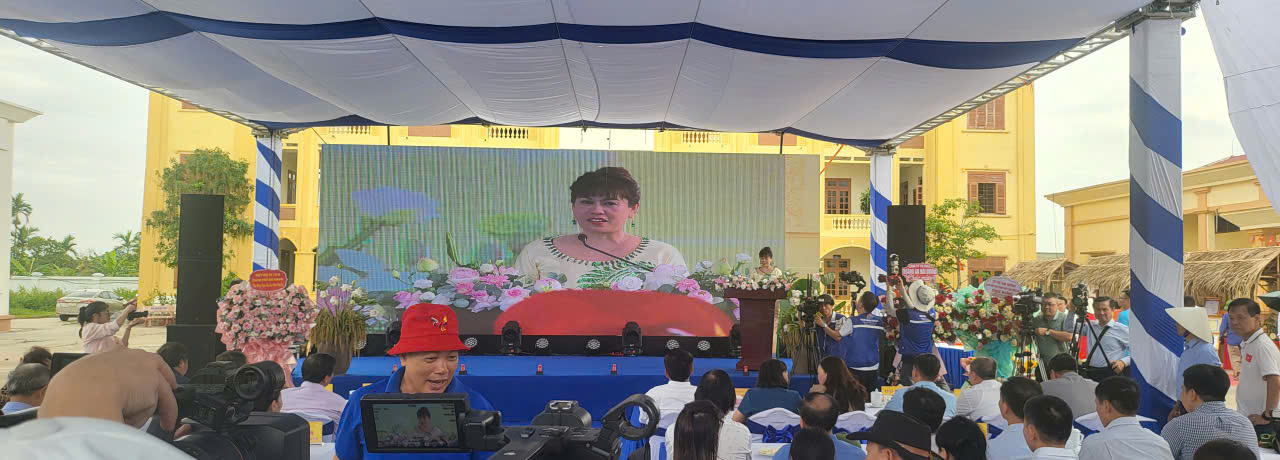
Ms. Bui Thi Hanh Hieu thanked Chi Minh farmers and local leaders
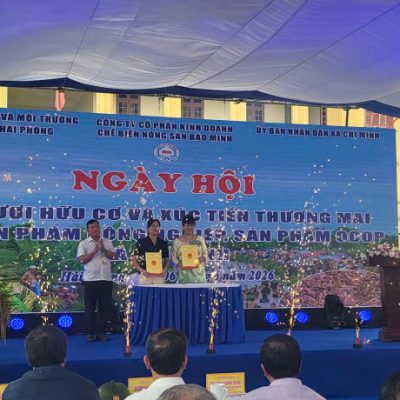
Bao Minh not only acts as a sponsor but also as an "extended arm" to bring Chi Minh agricultural products to large markets.. The signing ceremony of product consumption cooperation between leaders of Chi Minh commune and Bao Minh is proof of a sustainable future.. “We come here by appreciating the value that people have created. Bao Minh pledges to accompany farmers, making rice not only a local specialty but also a source of pride on international shelves.", Ms. Hanh Hieu affirmed.
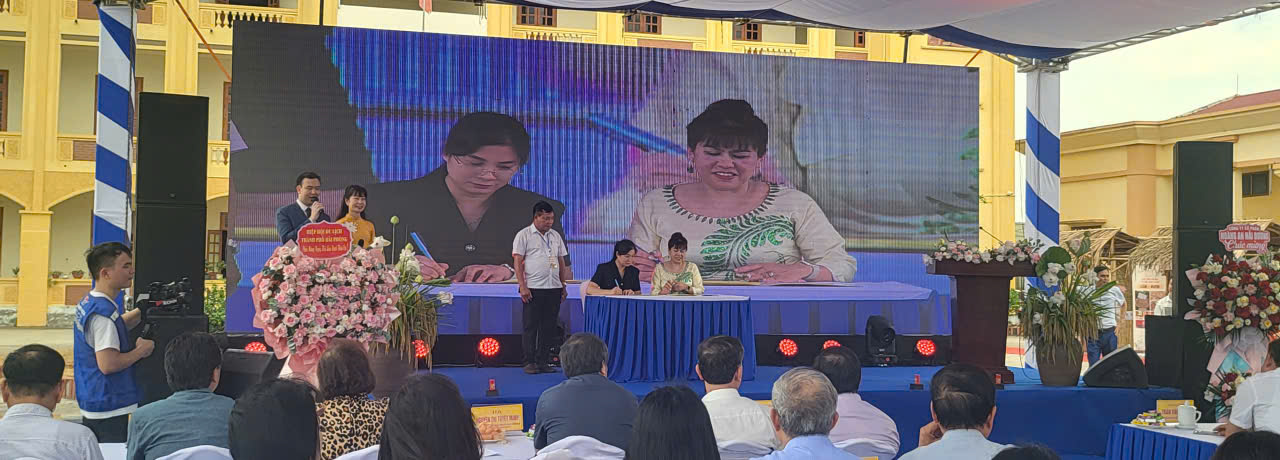
Product consumption cooperation signing ceremony between leaders of Chi Minh commune and Bao Minh
Countryside breath – From competitions to banquets
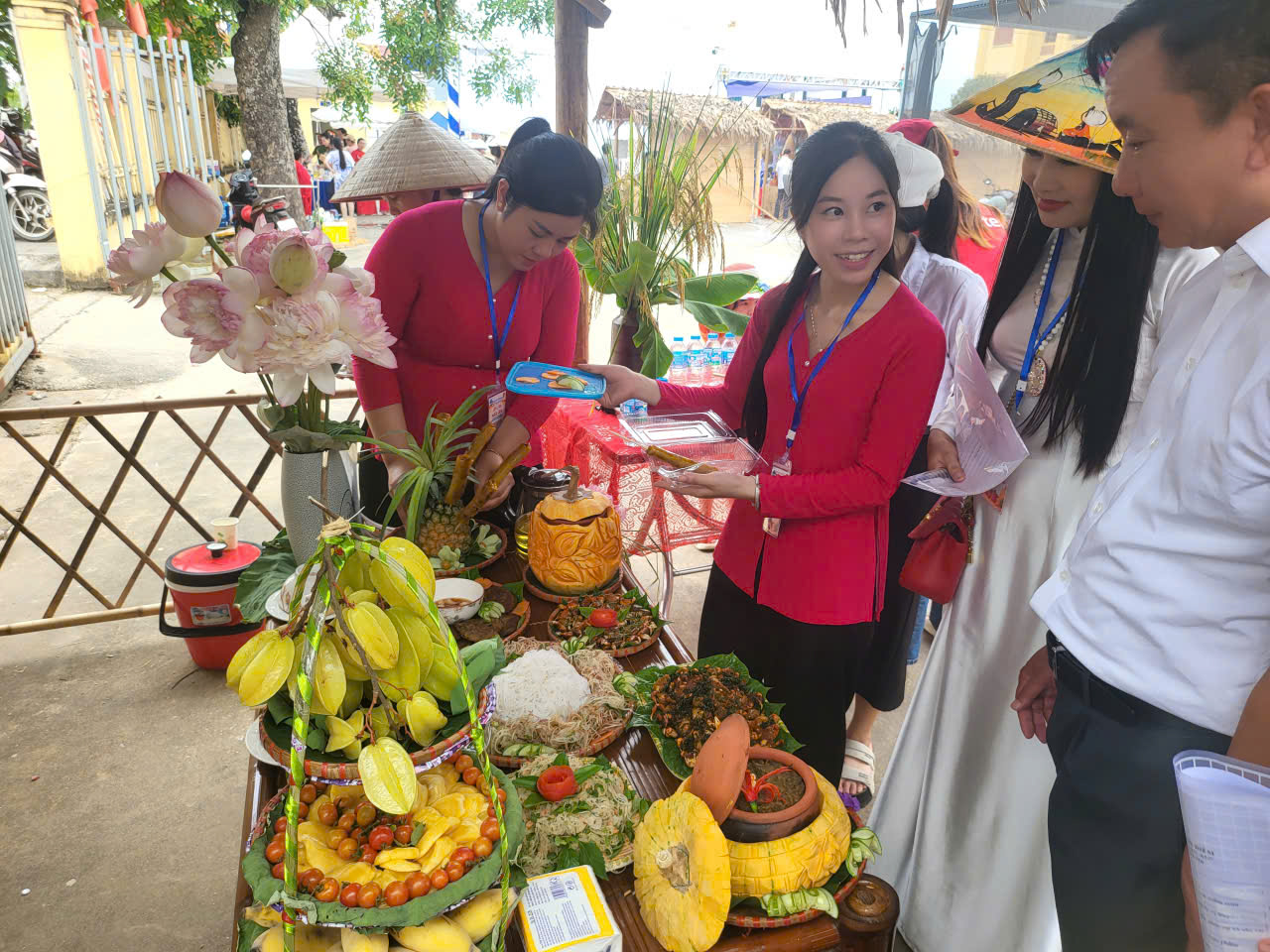
To bring a friendly and close atmosphere, The festival held folk contests. Images of farmers with bright smiles participating “Traditional cooking contest”, “Rice Harvesting Competition” hay “Prank joke contest” made the festival space come alive. Dishes made from worms such as worm cakes, braised worms in a clay pot or fragrant rice worms – All are made from clean ingredients right in the countryside, really conquered the delegates.
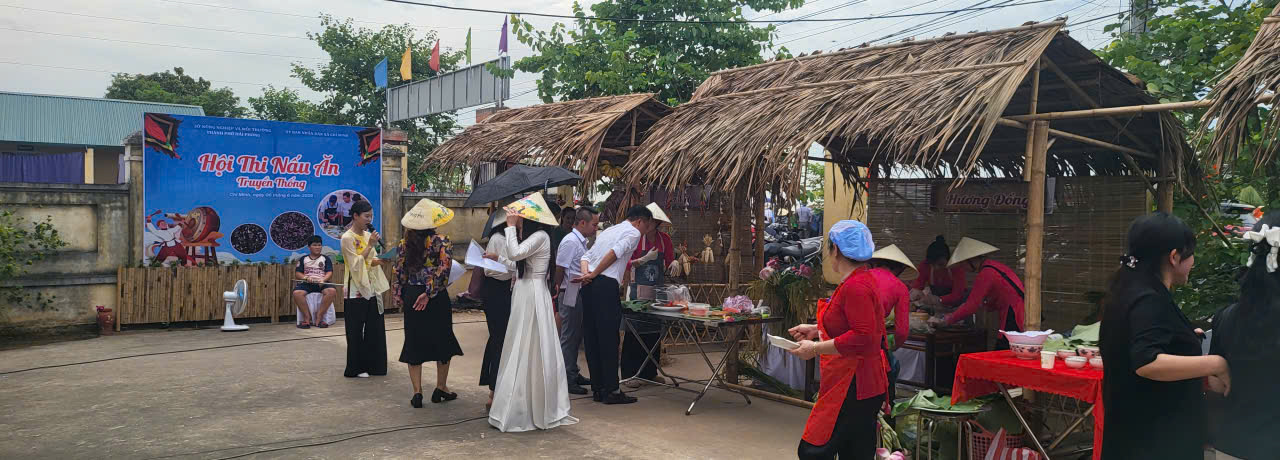
Traditional cooking contest
After an intimate meal, The delegation went on a field trip together. Walk among the green rice fields, see with your own eyes healthy worms under the mud, I now understand why this product is so precious.
Conquer the most demanding market in the world
Mr. Nguyen Van Tuan – The Director of New Generation Agriculture Joint Stock Company is a typical example of new-age agricultural thinking. He said, The road to bring Chi Minh rice to the world is not paved with roses. From the early days of tinkering, now, He has closely linked with Bao Minh to export thousands of tons of organic rice to the EU market – The market is famous for the most stringent standards in the world.
“When Chi Minh rice was labeled organic at major supermarkets in Europe, I know I have succeeded. Not a profitable success, but success when affirming the brand of Vietnamese farmers", Mr. Tuan confided. His story is also an affirmation about the future: Vietnamese agricultural products are completely capable of conquering the most demanding customers if we follow the right path of sustainable agriculture.
Towards a sustainable future
The rice festival in Chi Minh commune has ended, But its echoes will still spread. With close guidance from the government, support from experts, the companionship of businesses like Bao Minh and the determination of farmers like Mr. Tuan, Mr. Luan (New Generation Agriculture Joint Stock Company), Mr. Trung (Hai Au Viet Investment Joint Stock Company – The unit owns the Kien Quoc Rice and Tet Vua Rice brands)... is not only an agricultural landmark but is becoming a symbol of the transformation of Vietnam's new rural areas.
Chi Minh rice worm is not just rice grains, It is the symphony of heaven and earth, river silt and the desire to reach the world. The road ahead still has many challenges, but with a solid foundation today, We have the right to believe in a bright future for the "specialty" land 5 this "star"..
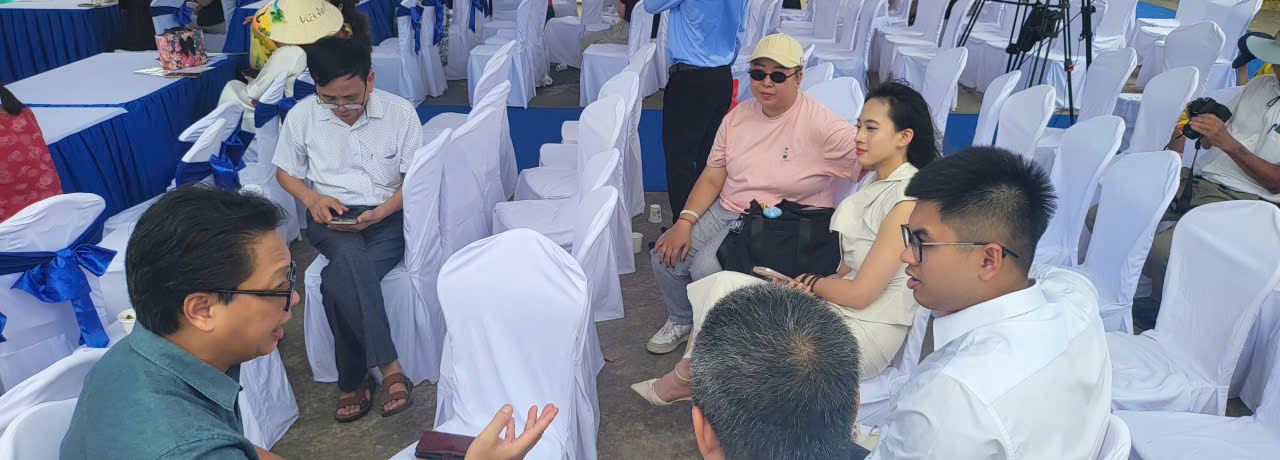
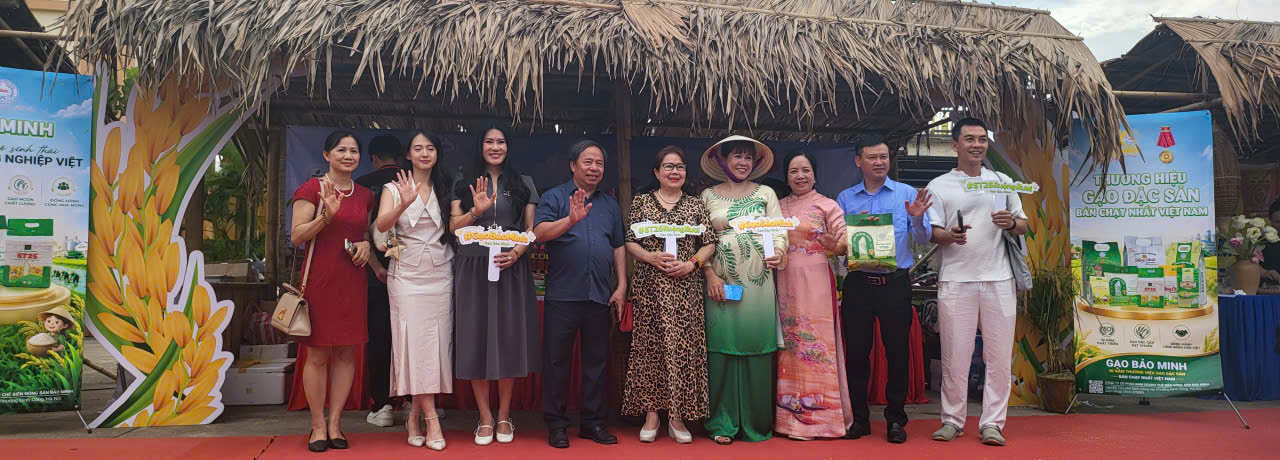
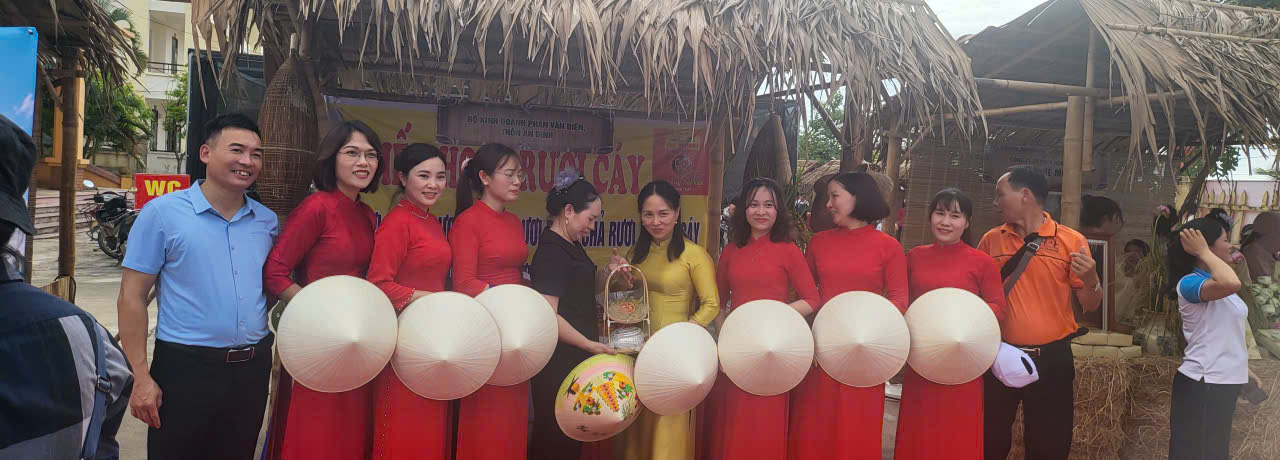
Some impressive images at "Rice Festival"
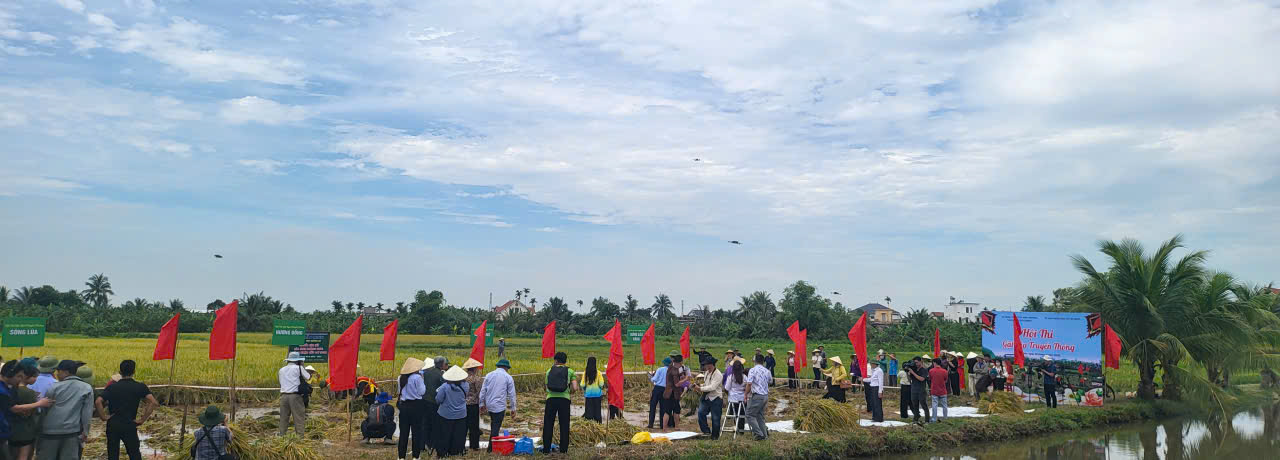
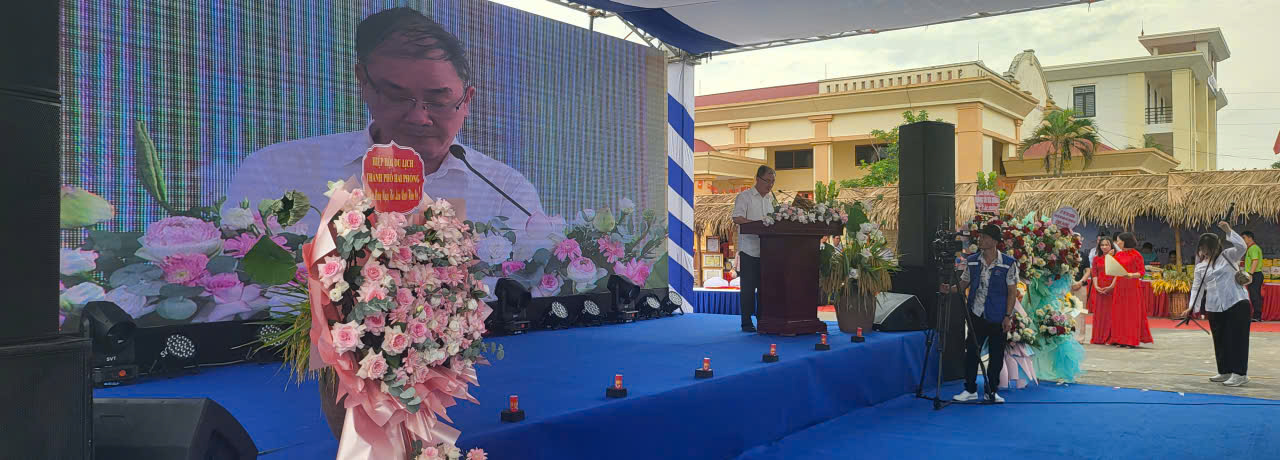
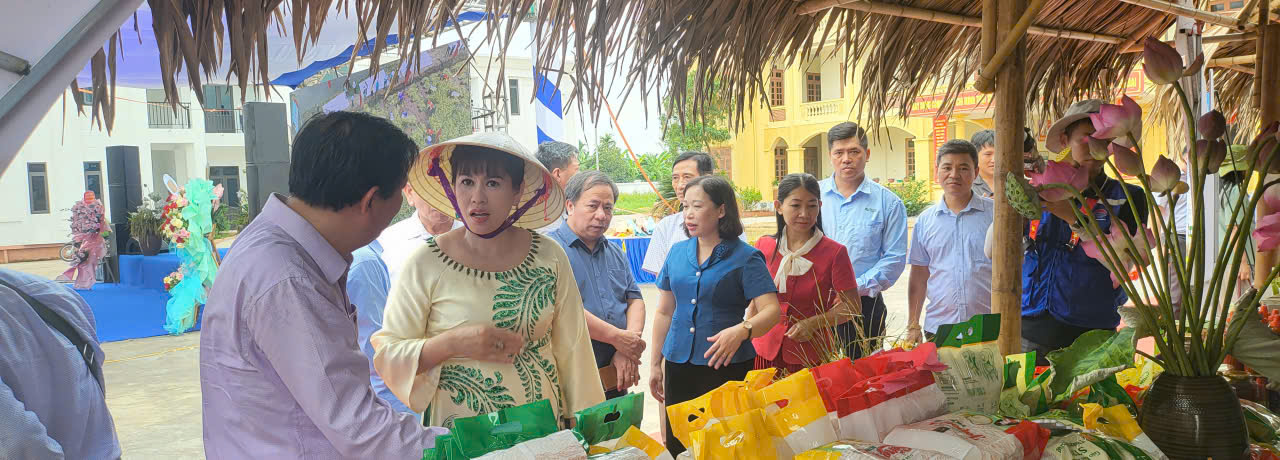
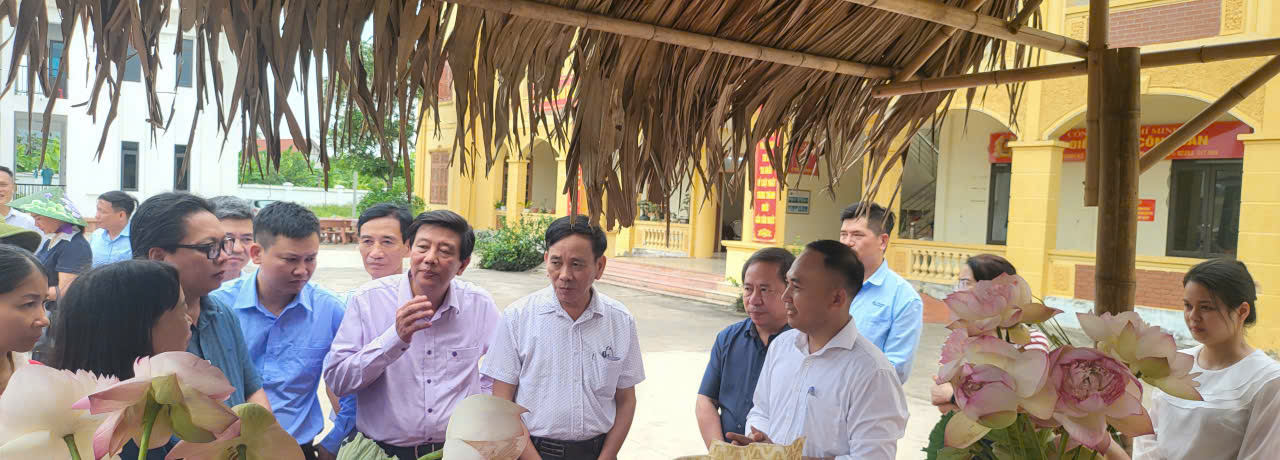
Perform: Thanh Vinh, Deputy Head of Communications VITAD-AGRI
VFARM, VITAD PARTICIPATES IN "TREE PLANTATION TET" WITH DNCC GLOBAL
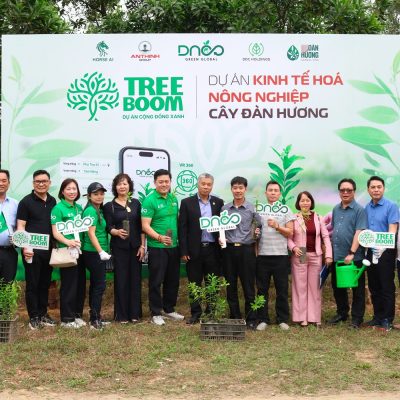
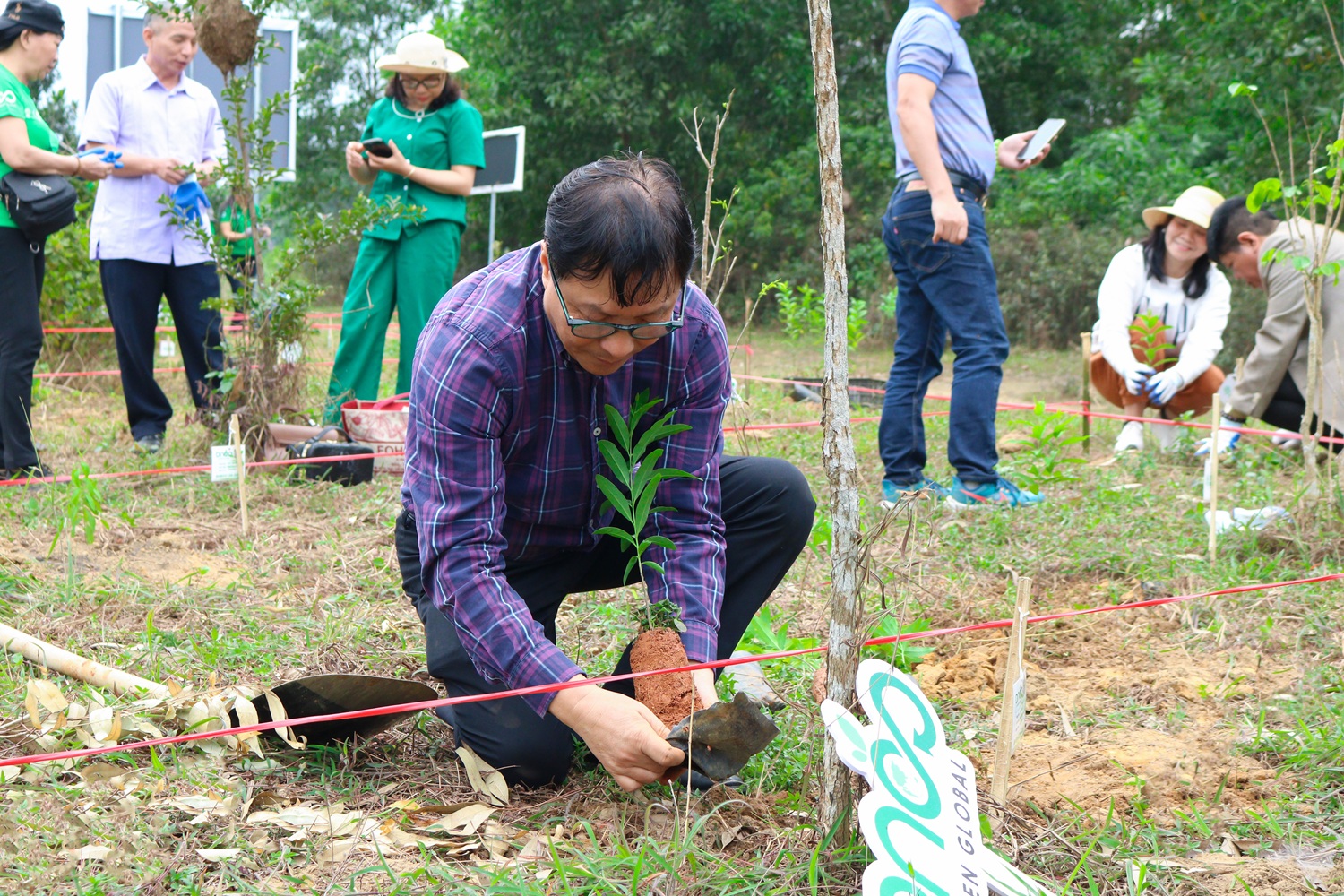
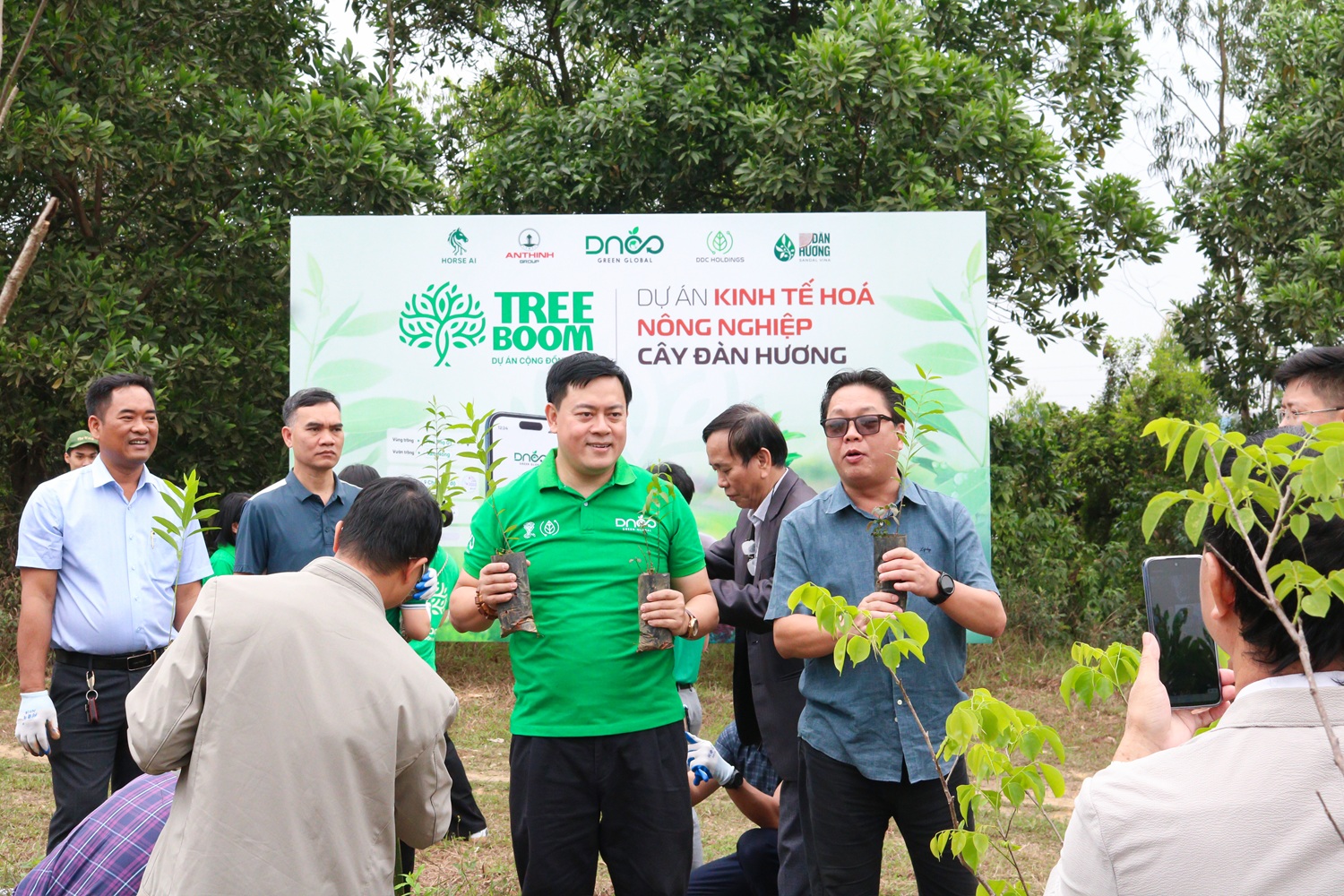
Bright 14/3/2026, Representatives of VFARM High-tech Agricultural Geo-Ecooperative Cooperative and Vietnam Institute of Agricultural Technology Application and Development attended the "Tree Planting Tet" day in Ba Vi – Hanoi and DNCC Global Digital Circular Economy Group Joint Stock Company – part of the project "Economicization of sandalwood agriculture" of DNCC, do TREEBOOM – DNCC's Net Zero climate change and green community is chaired by DNCC.
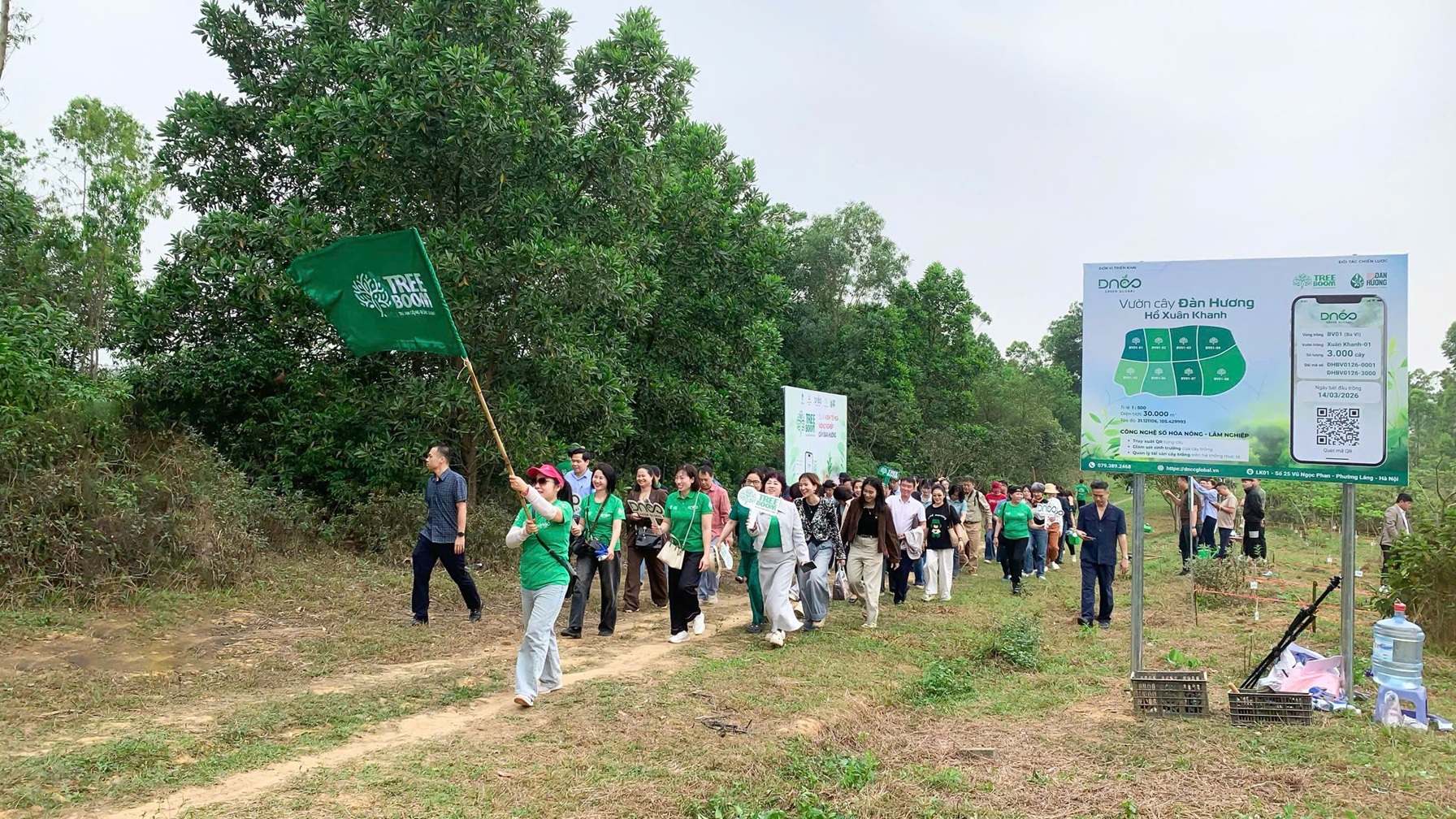 Panorama of "Tree Planting Festival" hosted by TREBOOM
Come and attend this "Tree Planting Festival"., There are many leading agricultural experts in the Northern region of Vietnam:
- The representative of VFARM Geo-ecological Hi-tech Agricultural Cooperative is Mr. Hy Thanh Trung, Chairman of the Board of Directors. – Manager, Ms. Do Thi Phuong Hien, co-founder and Ms. Vo Thi Thanh Nhan, Vice president.
- The representative of DNCC Global Digital Circular Economy Group Joint Stock Company is Ms. Nguyen Thu Huyen, Business Director.
- The representative of the Vietnam Institute of Agricultural Technology Application and Development is Dr. Pham Dinh Nam, Head of Institute.
- Representing the Vietnam Green Transition Association (VGA) is Associate Professor, Dr. Dang Huy Dong – President of the Association, Former Deputy Minister of Planning and Investment.
- Together with members of VFARM Geo-ecological High-tech Agricultural Cooperative, Specialist of DNCC Global Digital Circular Economy Group Joint Stock Company, Expert at Vietnam Institute of Agricultural Technology Application and Development, Member of Vietnam Green Transformation Association (VGA) and agricultural experts to attend this meaningful holiday.
This year's sandalwood tree planting ceremony is an event marking the Digital Transformation work – Creative innovation & DNCC's Green Growth is also a comprehensive cooperation between a high-tech agricultural cooperative (VFARM) and a Company operating in the field of digital agriculture (DNCC Global) with the Vietnam Institute of Agricultural Technology Application and Development in a guiding role, training on organic agriculture.
The project "Economicization of sandalwood agriculture" is implemented by DNCC with the best efforts and concentration.. The New Year's Tree Planting Festival is a truly meaningful start to a project where everyone joins hands together to complete a humane and economically effective project., of interest to the community.
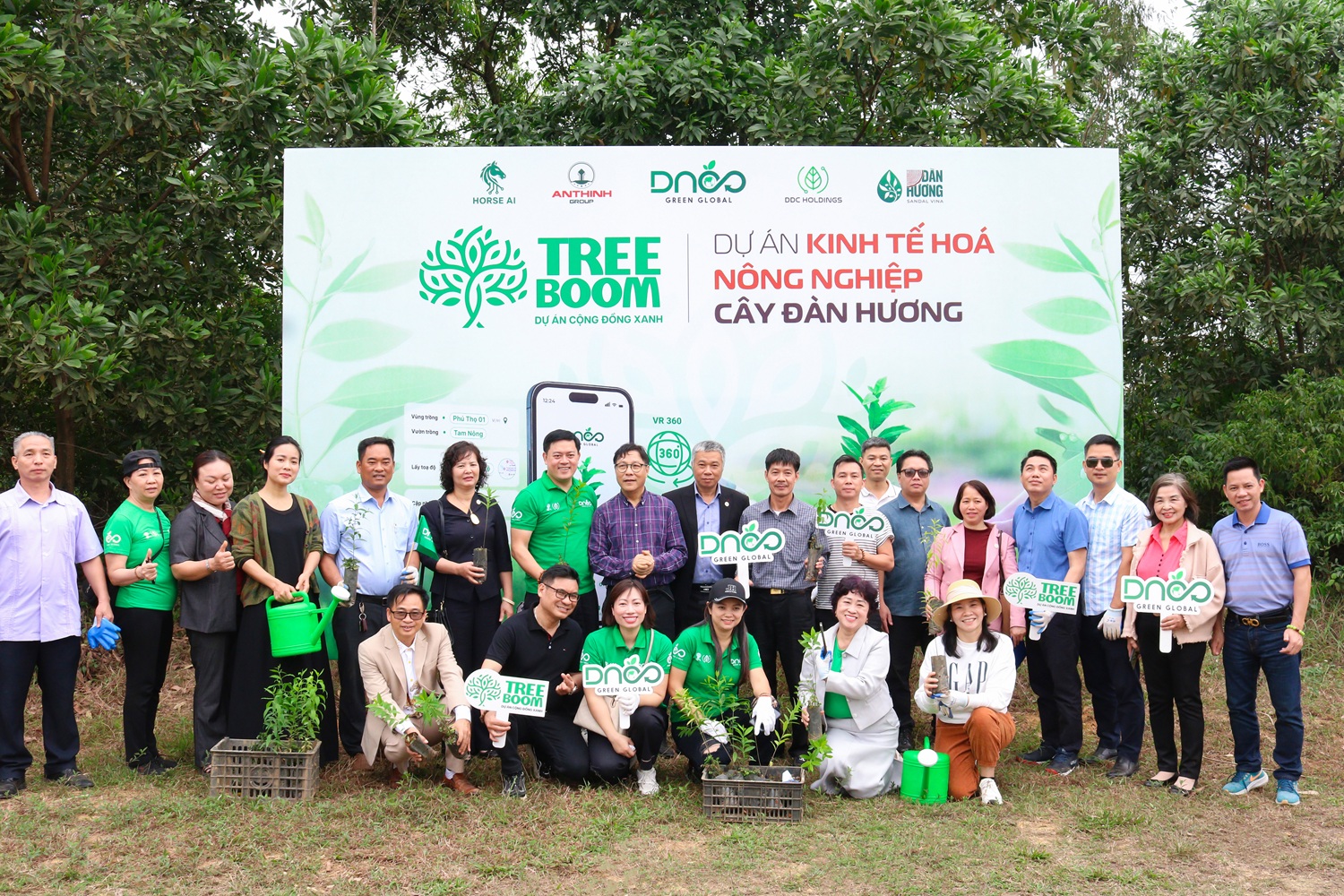 VFARM delegates, VITAD, DNCC and VGA attend "Tree Planting Festival"
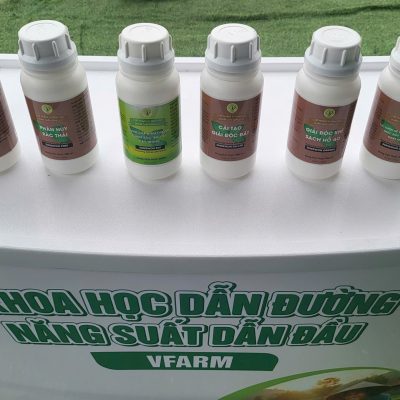
As reported in the previous article, VFARM sponsors the biological product SungWon DX, One type of tree promotion and one type of environmental treatment for DNCC Global to use in this "Tree Planting Festival", with basic irrigation when preparing the soil and watering leaves, water the body 500 sandalwood tree after planting. Together with VITAD, The three parties also agreed to establish a Memorandum of Understanding (MOU) This cooperation and terms of cooperation will be discussed for mutual development. The three parties also agreed to establish a Working Group to monitor the growth of sandalwood trees throughout this project.
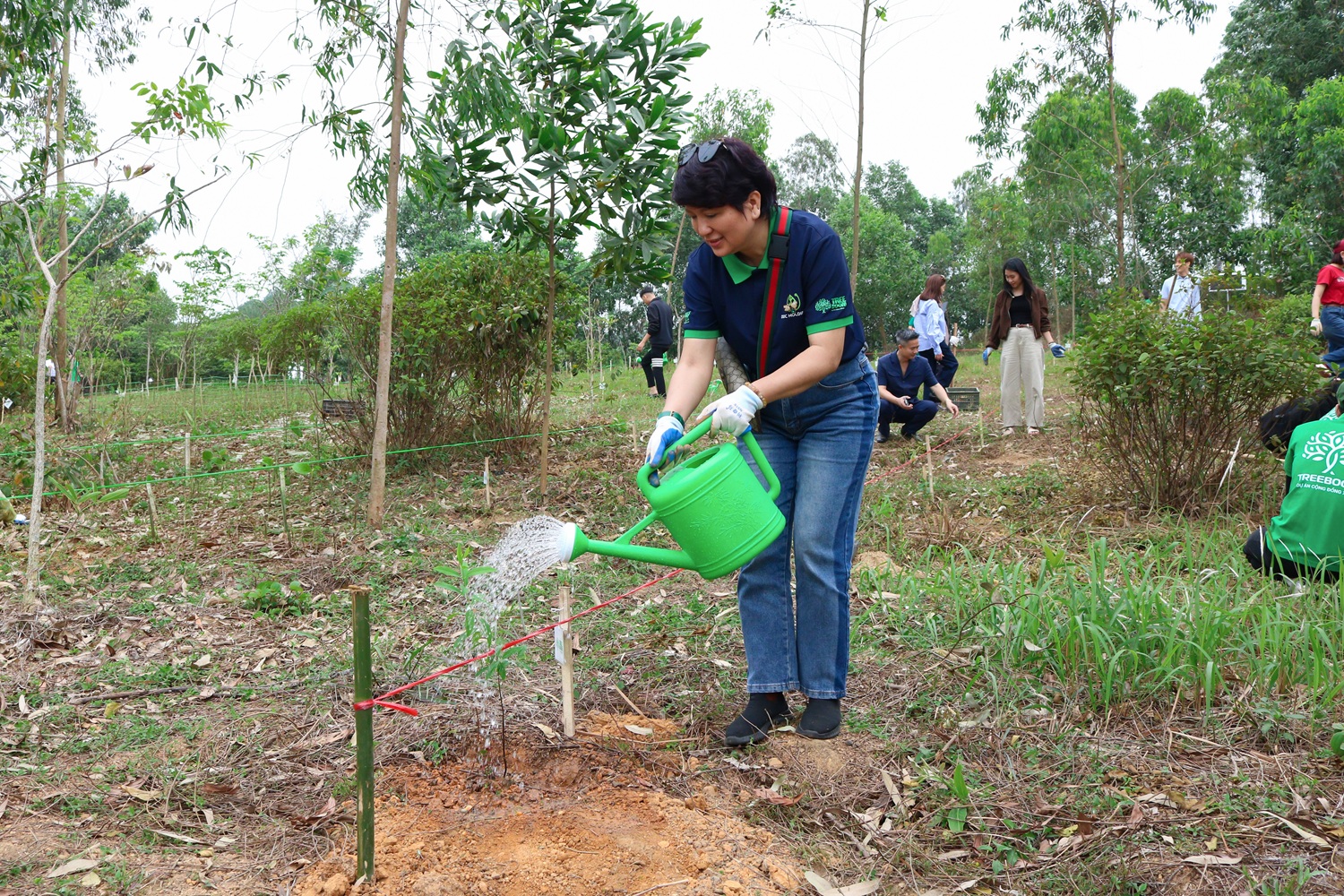
VIFARM's biological products are used in biomass and watered for sandalwood trees
At “Tree Planting Festival”, Ms. Nguyen Thu Huyen – Business Director of DNCC Global Circular Economy Group Joint Stock Company with Associate Professor Dr. Dang Huy Dong – Chairman of Vietnam Green Transition Association (VGA) had a meaningful meeting. Ms. Huyen hopes that the project "Economicization of sandalwood agriculture" will receive attention and support from VGA, From there, we found a common voice with VGA participating units similar to VFARM, VITAD.
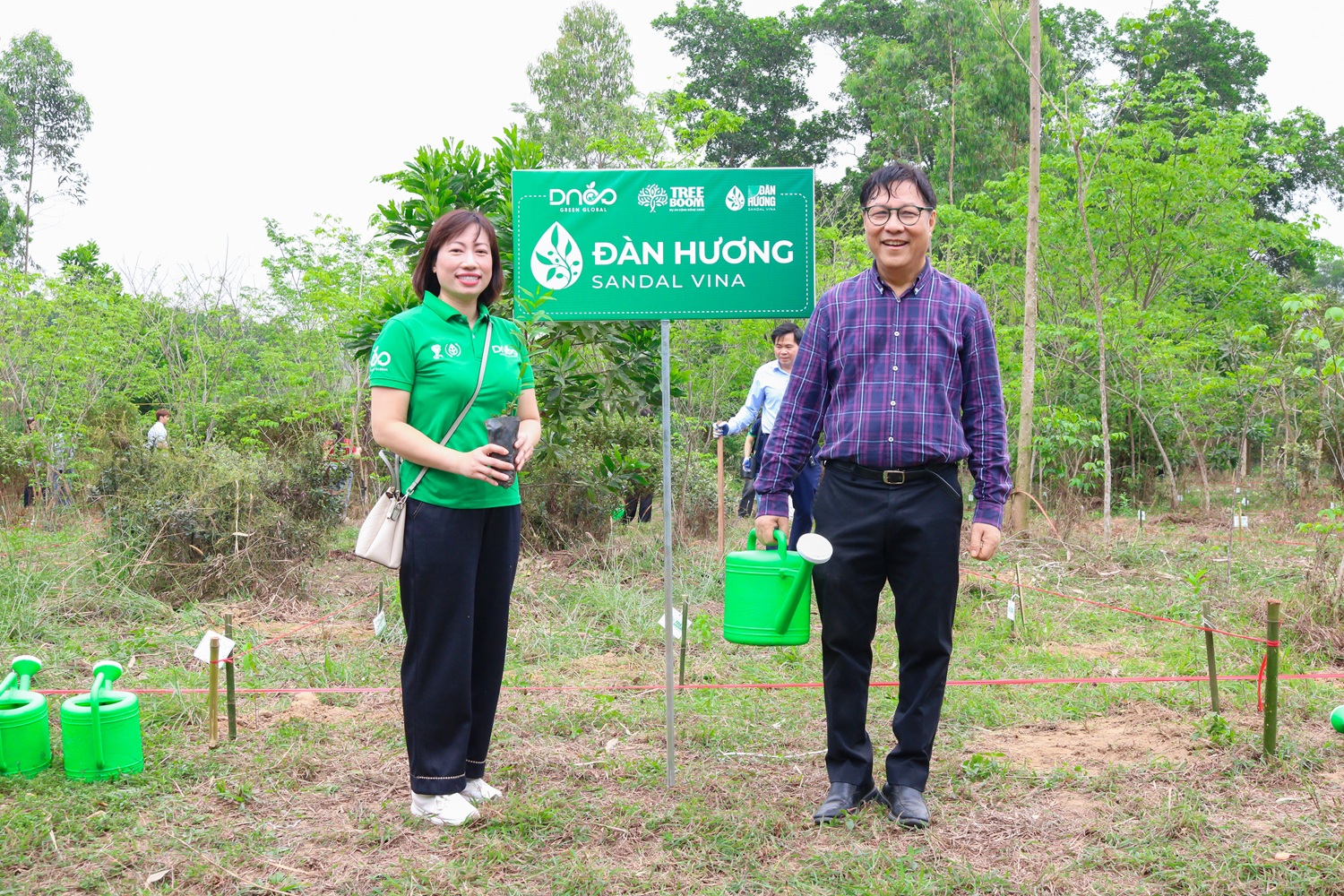 Ms. Nguyen Thu Huyen and Mr. Dang Huy Dong prepare to plant sandalwood trees
Also here, Ms. Nguyen Thu Huyen shared that planting sandalwood trees is long-term, Therefore, it is necessary to plant more intercropping crops to help increase income, improve the lives of Ba Vi farmers, At the same time, contributing to the green transformation of Hanoi Capital, for our country Vietnam. To do that, TREEBOOM and DNCC need support on microbial fertilizers and biological products from VFARM Cooperative as well as training on agricultural techniques from VITAD. VFARM's representative, Mr. Hy Thanh Trung, and VITAD's representative, Dr. Pham Dinh Nam, happily agreed..
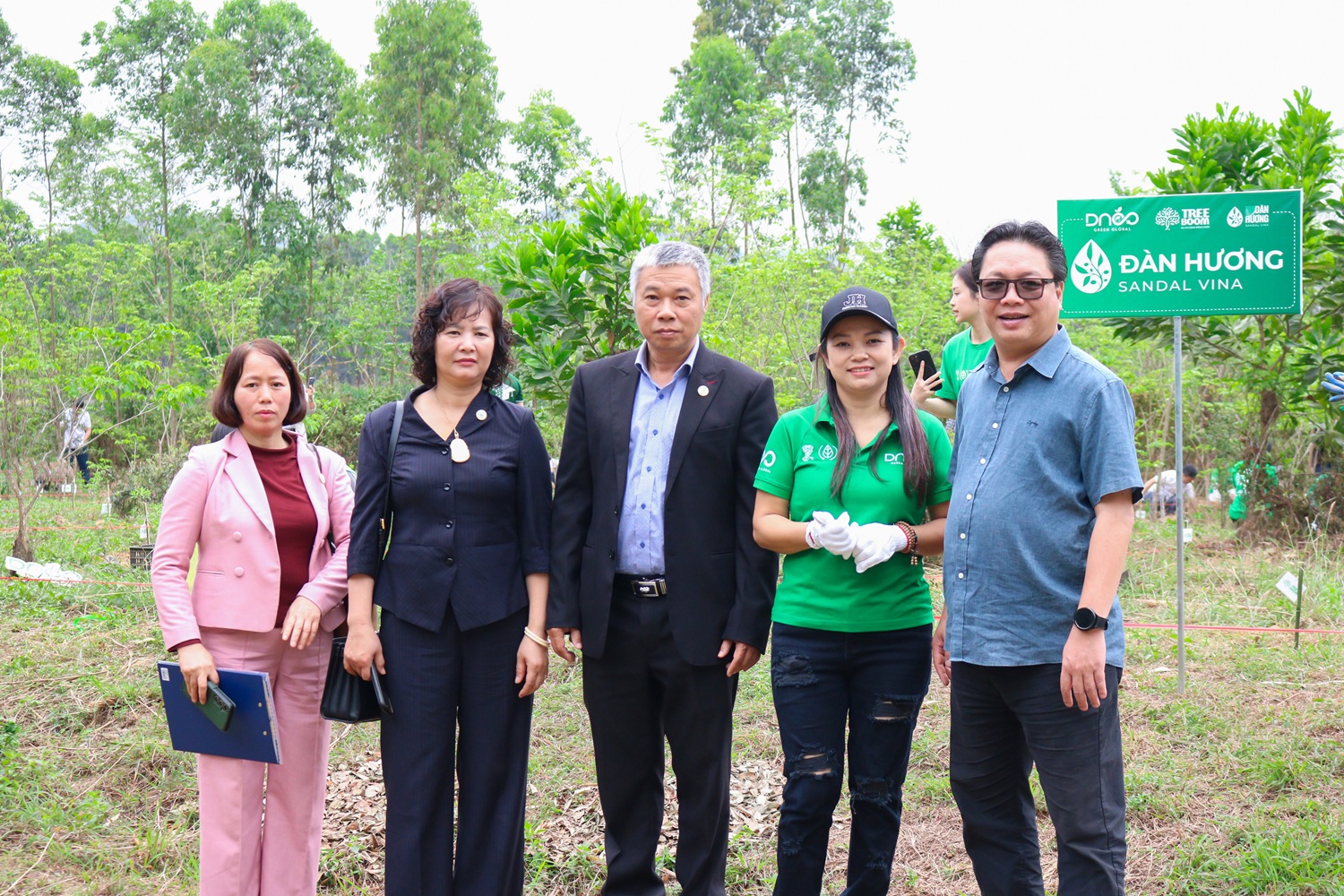 Representatives of VFARM and representatives of VITAD took souvenir photos with representatives of TREEBOM
The "Tree Planting Ceremony" took place in a joyful atmosphere, friendly and full of hope for a feasible project to green the country while bringing high economic value.
Some other pictures of the festival.
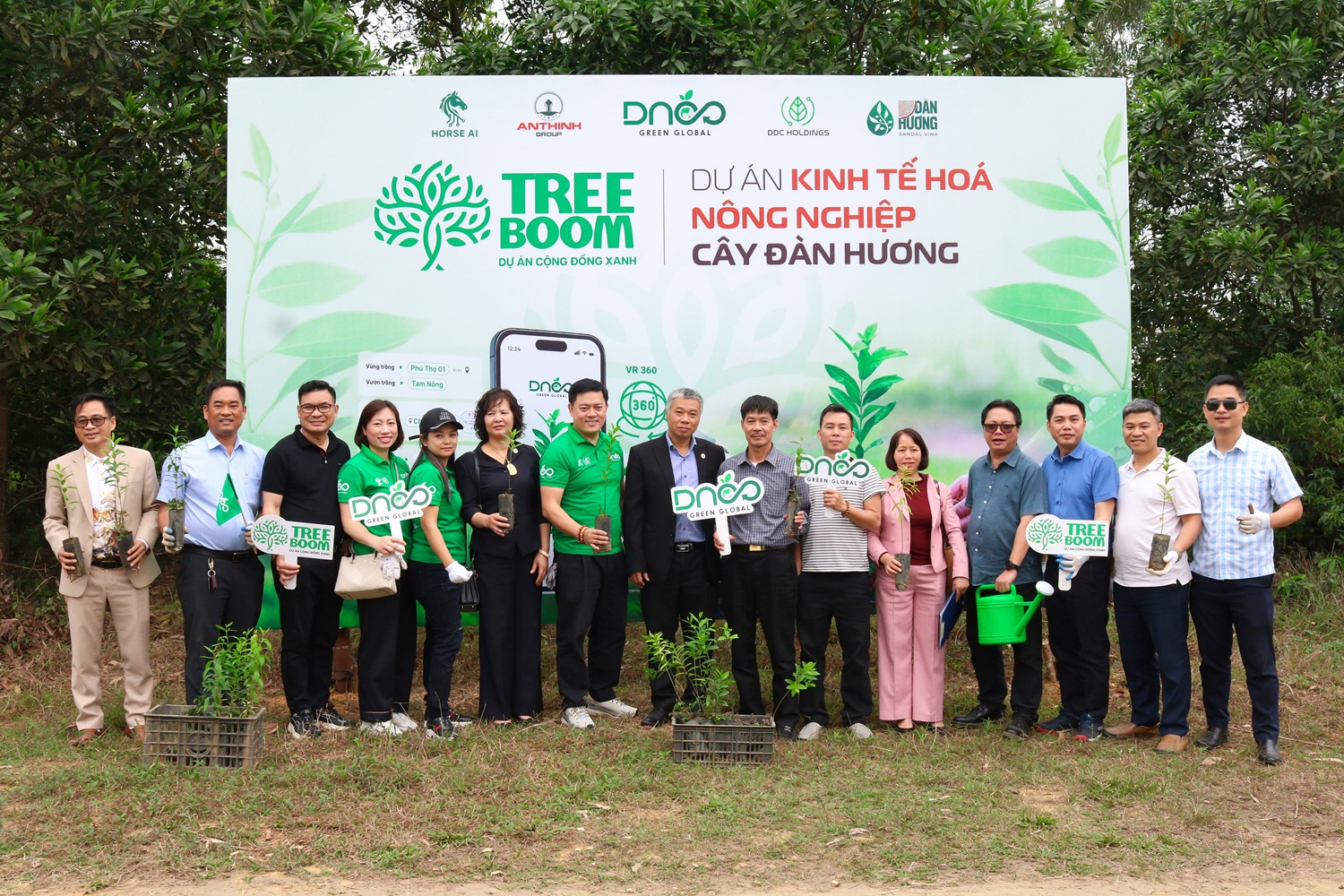
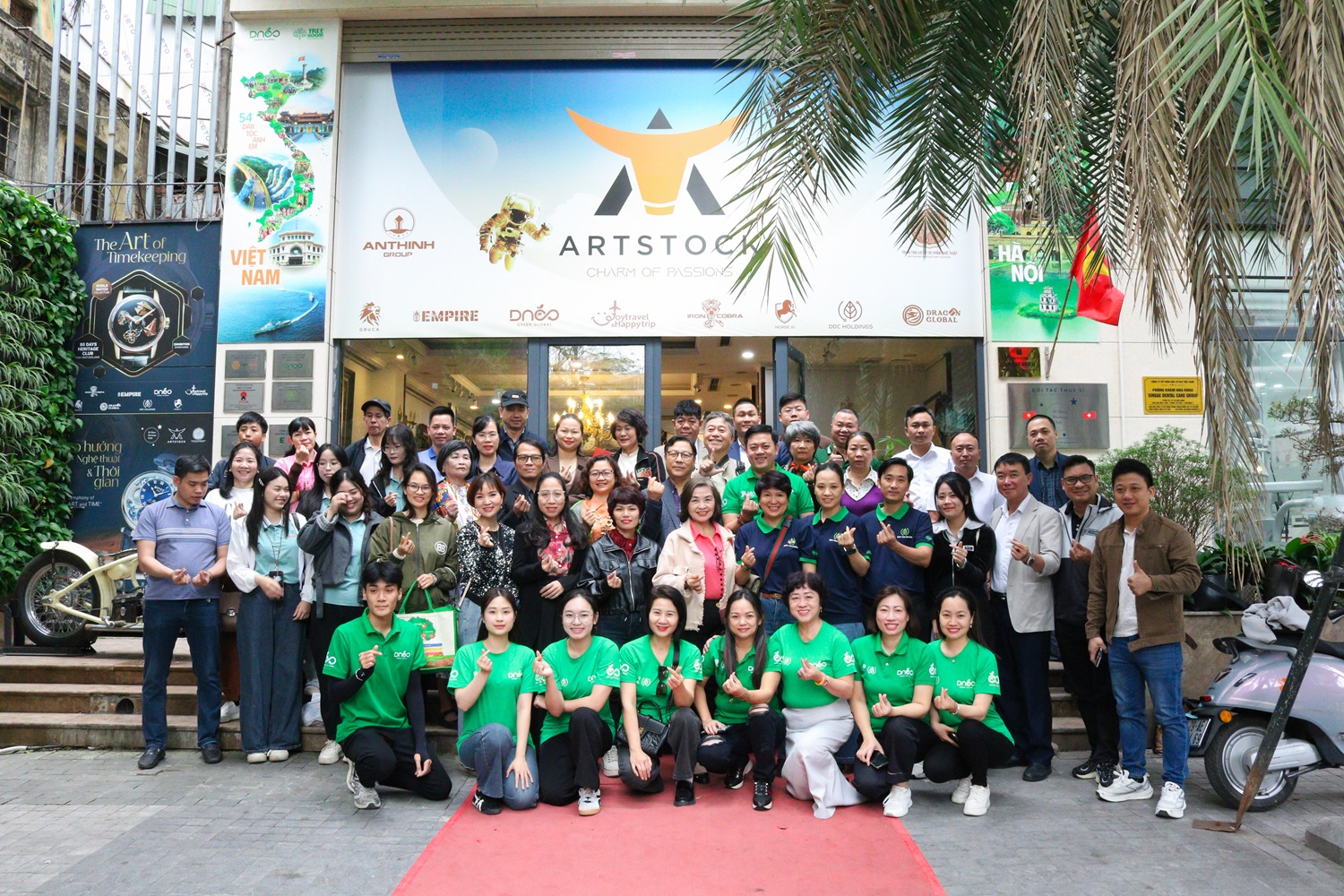
Perform: Le Ngoc Thanh Vinh – Deputy Head of Technology Department, Vietnam Institute of Agricultural Technology Application and Development (VITAD – AGRI)
TRAINING "SUSTAINABLE AGRICULTURAL PRODUCTION UNDER THE CIRCULATORY ECONOMY SYSTEM USING ORGANIC FERTILIZERS AND BIOLOGICAL FERTILIZERS – PRODUCT MARKETING STRATEGY” (Day two)
8 am 13/3/2026, at Bach Loc Area, cluster 12 Tho An, Lien Minh commune, Hanoi city, VFARM High-tech Agricultural Geo-Eco Cooperative students continue the training course: “Sustainable agricultural production according to a circular economic system using organic fertilizers and biofertilizers – Product marketing strategy”.
Lecturers participate in teaching:
– Dr. Pham Dinh Nam – Director of Vietnam Institute for Technology and Agricultural Development (VITAD-AGRI), Course coordination.
– Dr. Nguyen Thi Hong Hanh, Vietnam Academy of Agriculture, Organic Agriculture expert – Lecturer.
– Dr. Nguyen Thi Ngoc Dinh, Vietnam Academy of Agriculture, Organic Agriculture expert – Lecturer.
The training course is an event marking a new step forward in research, Learn about Organic Agriculture (NNHC) domestically and internationally as well as sustainable agricultural production methods according to the circular economy system using organic fertilizers and bio-fertilizers along with product marketing strategies.
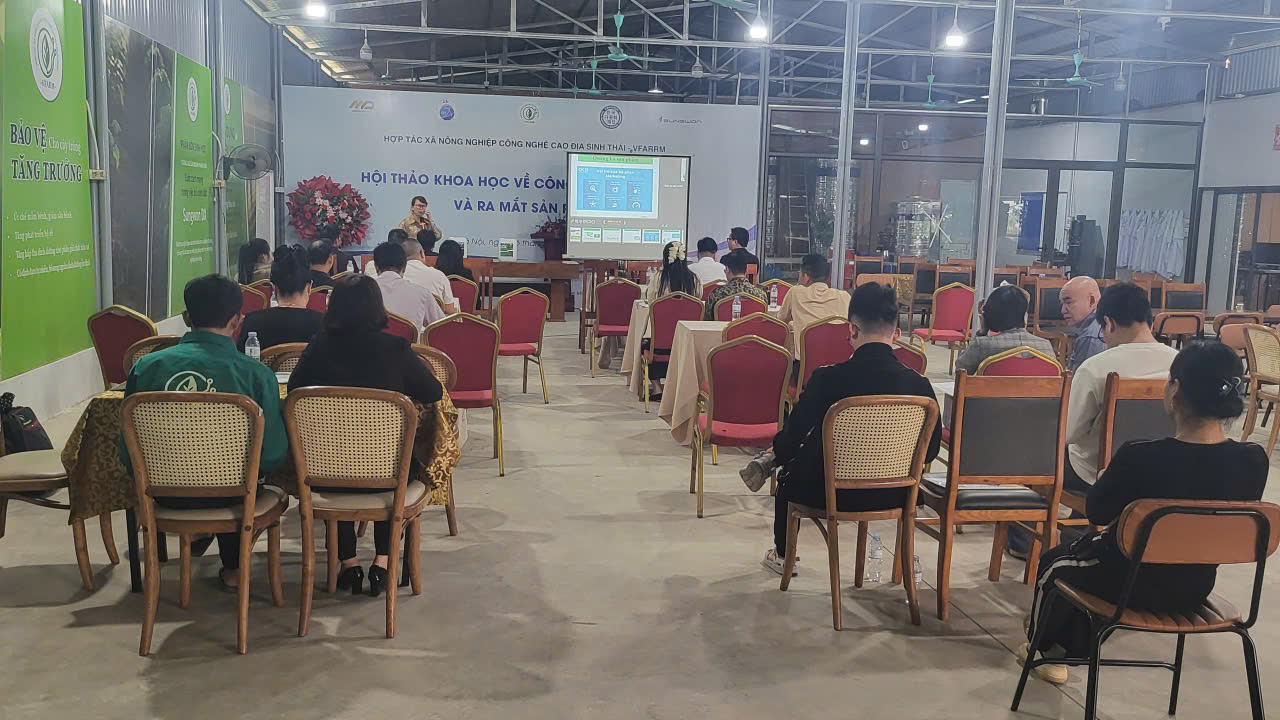 Overview of the second day of the training course "Sustainable Agricultural Production according to the circular economy system using organic fertilizers and biofertilizers – Product marketing strategy”
Start the morning, Dr. Dinh reviewed the students' papers with the previous day's questions: “State the risks affecting organic agricultural production of VFARM Geo-ecological High-tech Agricultural Cooperative” and receive accurate answers, Possible solutions to ensure the safety of organic agricultural production here
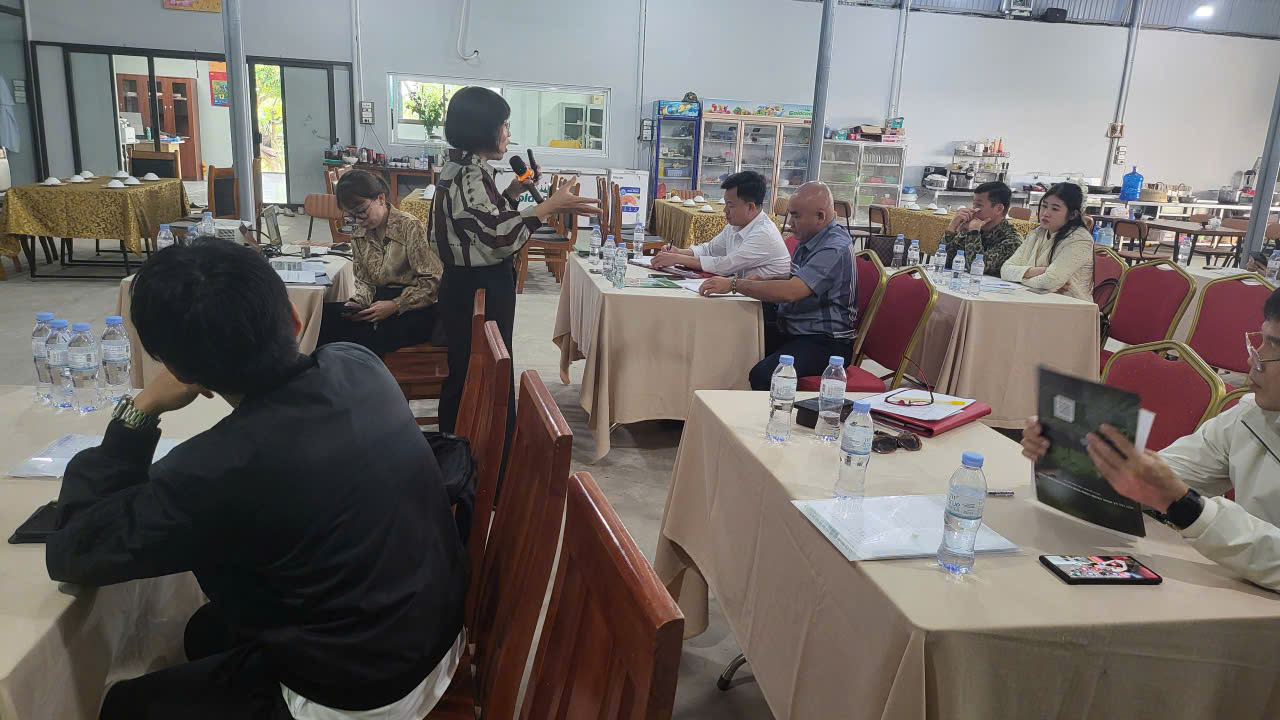
A student answers the question correctly
Next, Dr. Hanh presented an Overview of biofertilizers and biological products including the following contents:
- Concept of biofertilizer.
- Objective practice on biological products.
- Applications and prospects when developing agriculture with biofertilizers and bioproducts.
- Meaning and future directions.
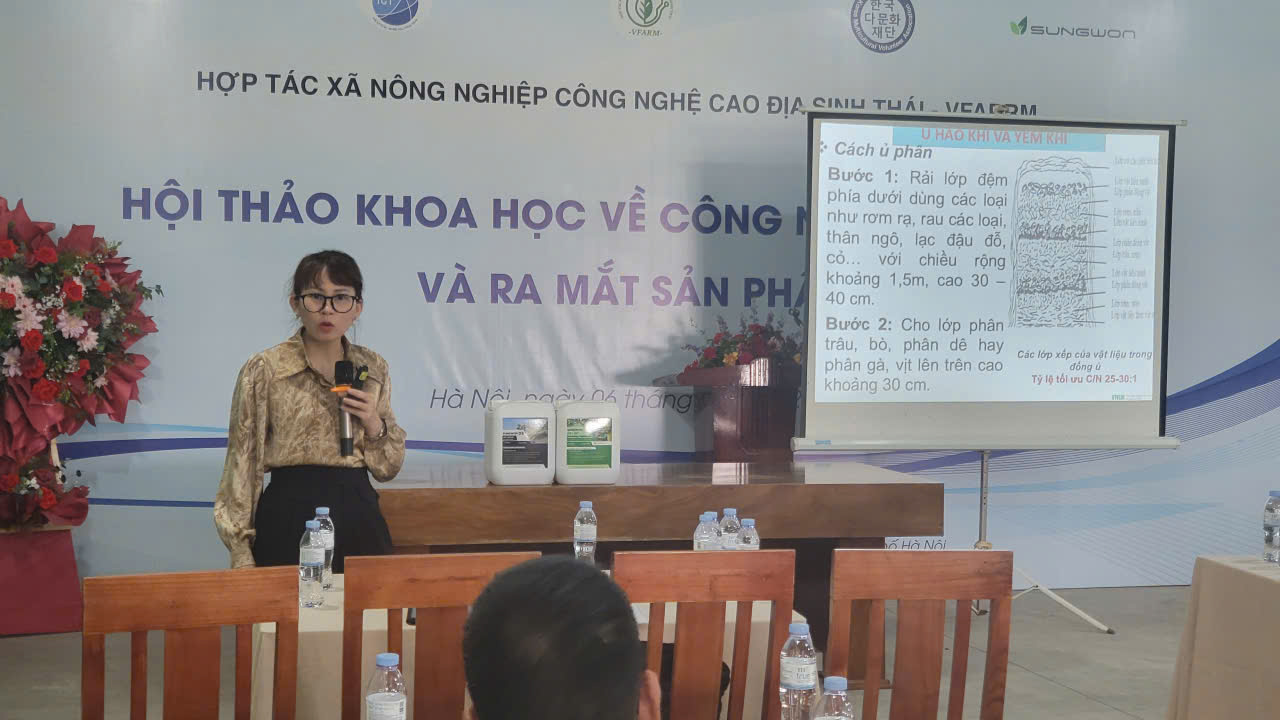
Dr. Nguyen Thi Hong Hanh presented an Overview of biofertilizers and biological products
The lesson ends at 12:00, Students attend lunch and chat in the dining room next to the training class.
After lunch break, Dr. Dinh lectured on Product marketing, Includes content:
- Positioning product value
- Identify target customers
- Brand building and product traceability
- Communication and promotion
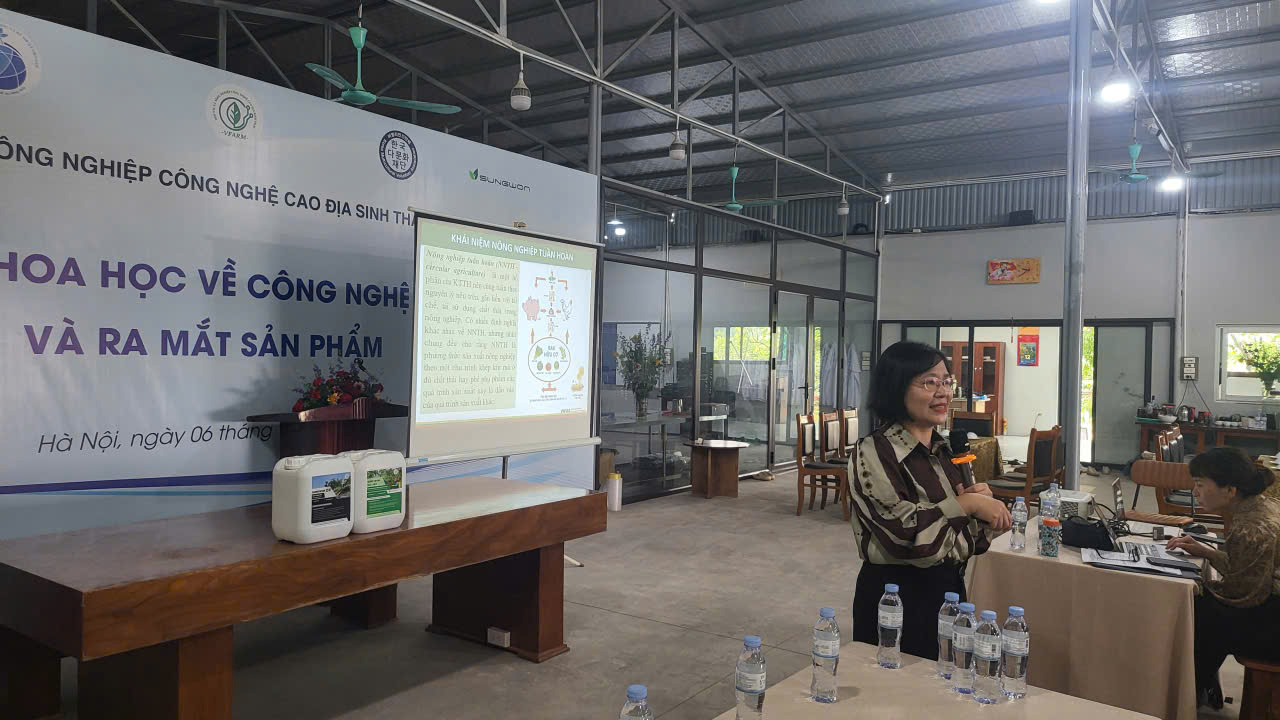
Dr. Nguyen Thi Ngoc Dinh, Vietnam Academy of Agriculture, Organic Agriculture expert – Training course instructor
Interspersed between lectures, Dr. Dinh Dr. Dinh and Dr. Hanh posed some interactive questions to the students about product marketing and received many unique ideas., highly feasible.
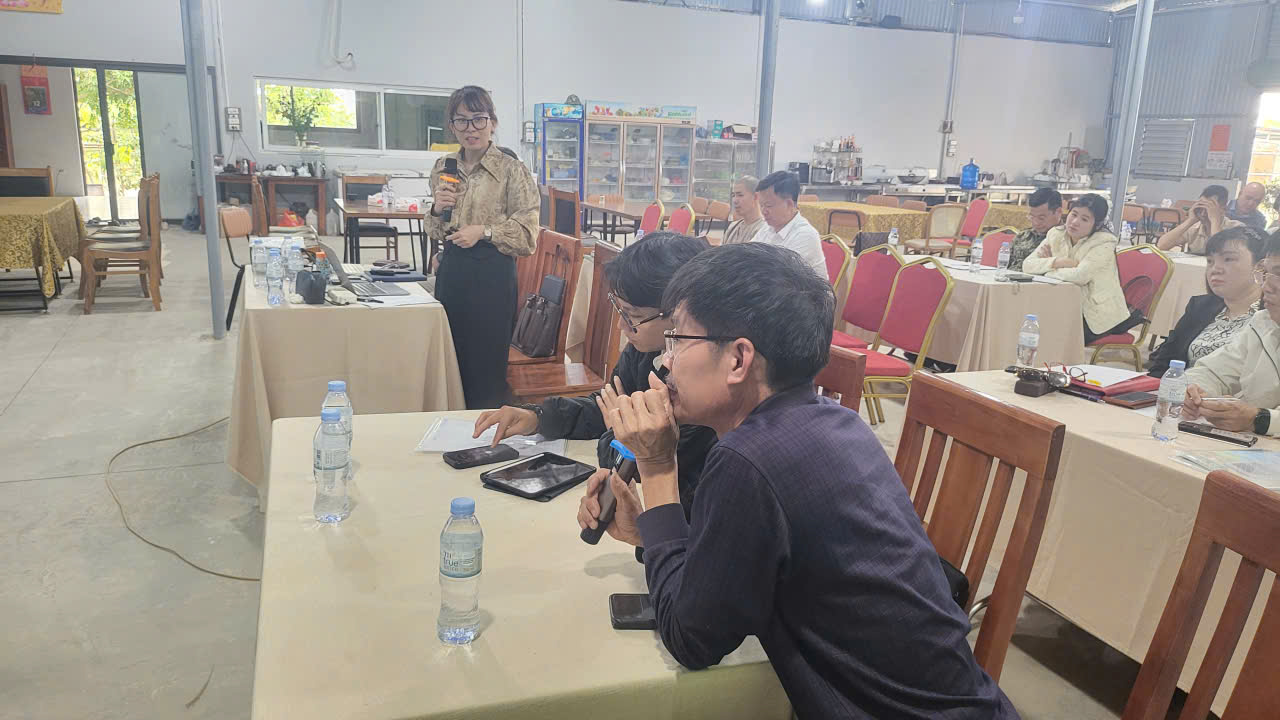
A student proposed a unique Marketing idea
After the lecture on Product Marketing, Dr. Pham Dinh Nam instructs students how to compost organic compost from microorganisms 60-70% natural ingredients, molasses and VFARM biological product. According to him, with an average temperature of approx 25-30 degree C, Humidity is not too high, Just turn the pile twice, with time from 10-15 day, We will have high quality microbial organic fertilizer that can be used to fertilize plants, bag and store or sell.
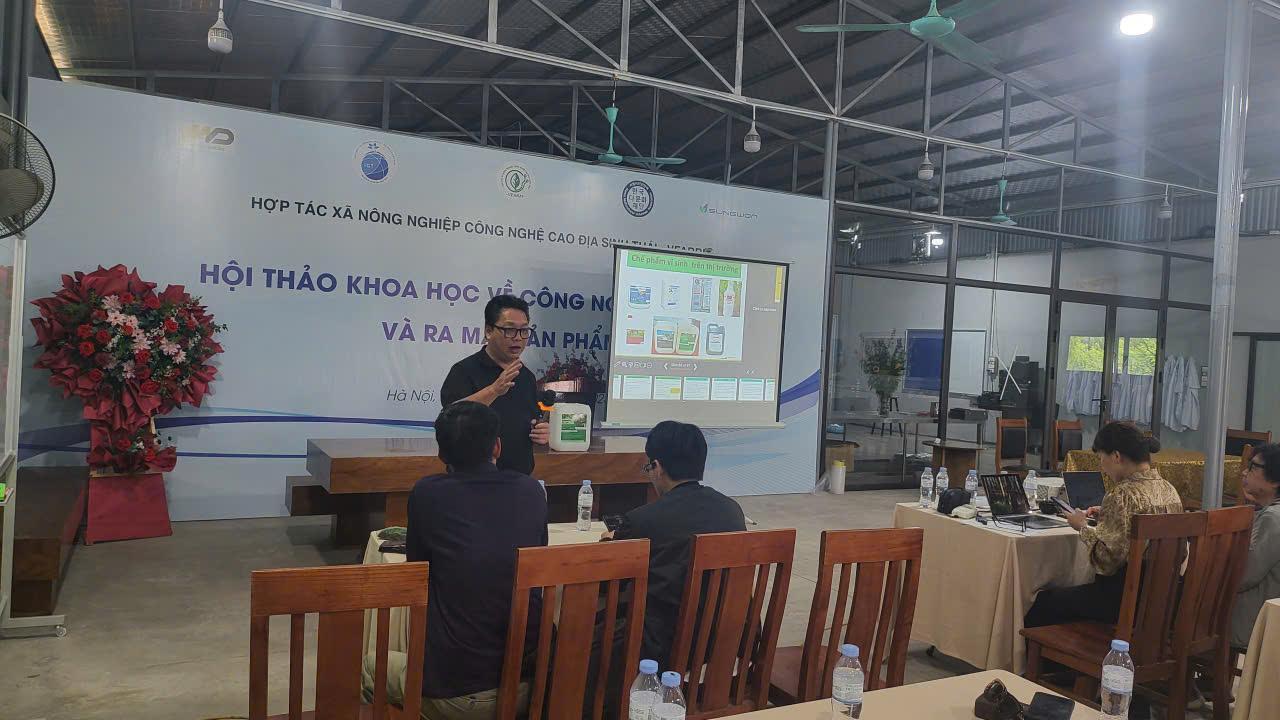
Dr. Pham Dinh Nam instructs on composting microorganisms
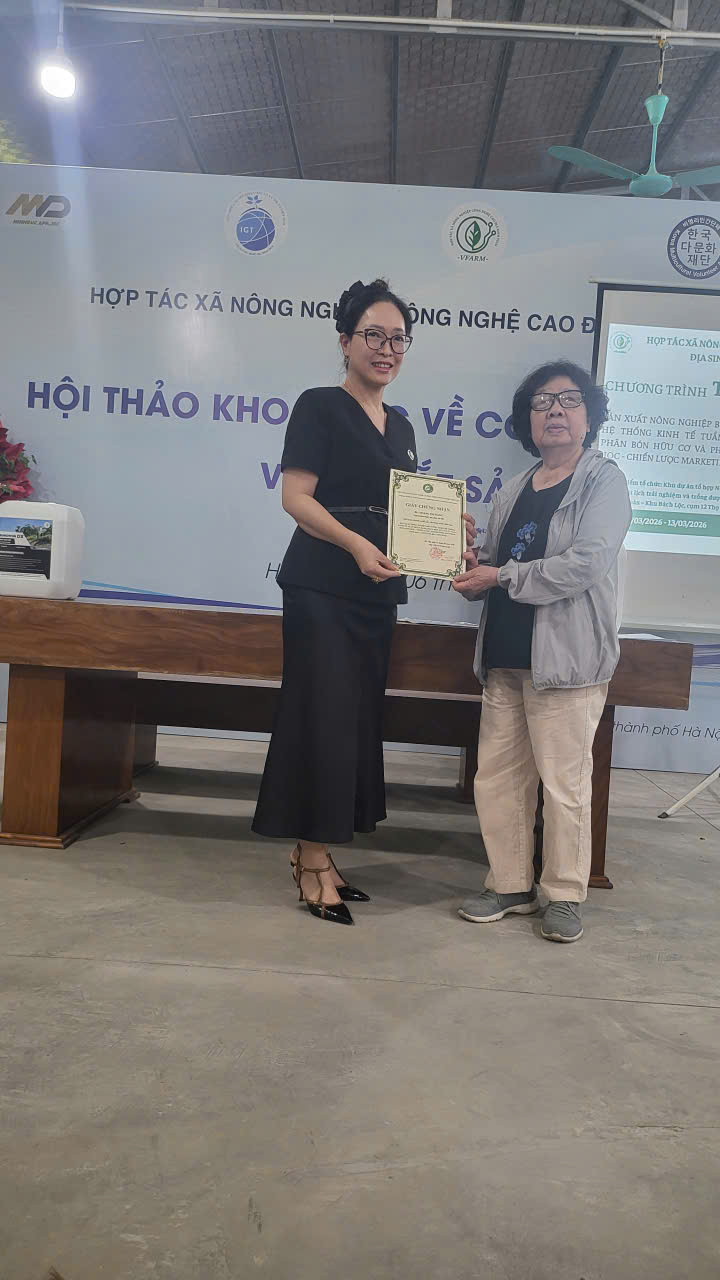
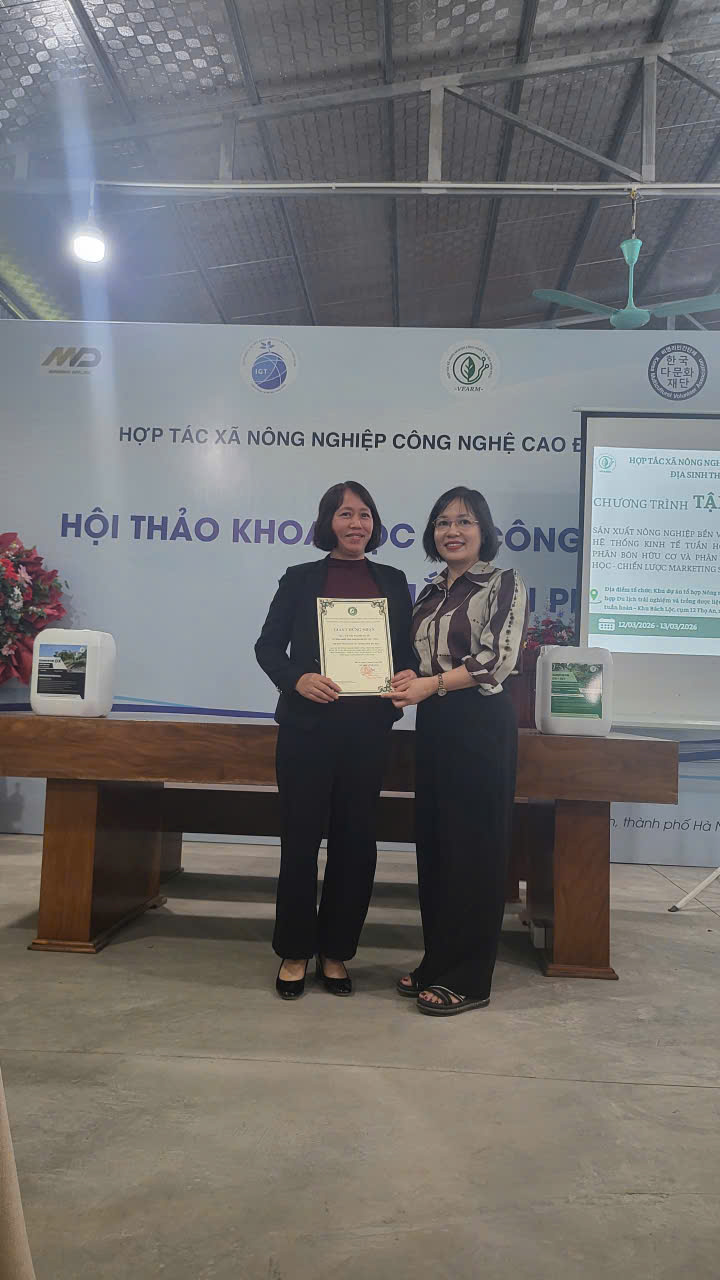
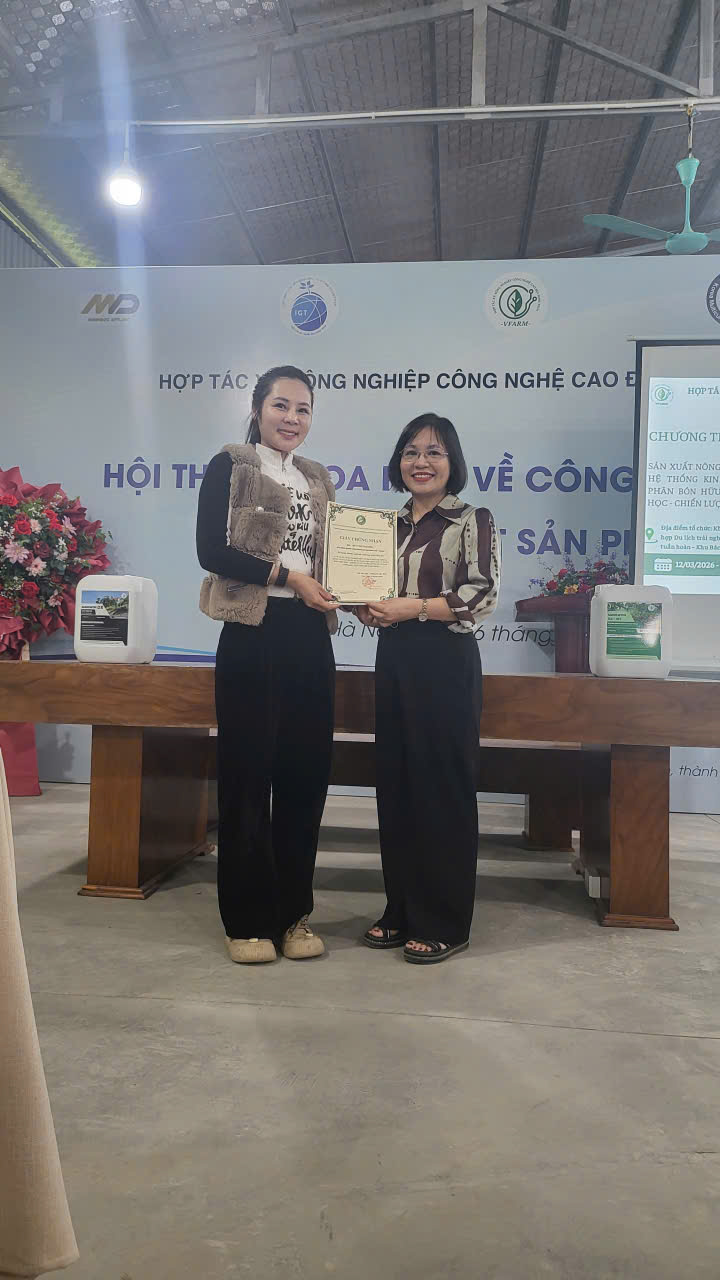
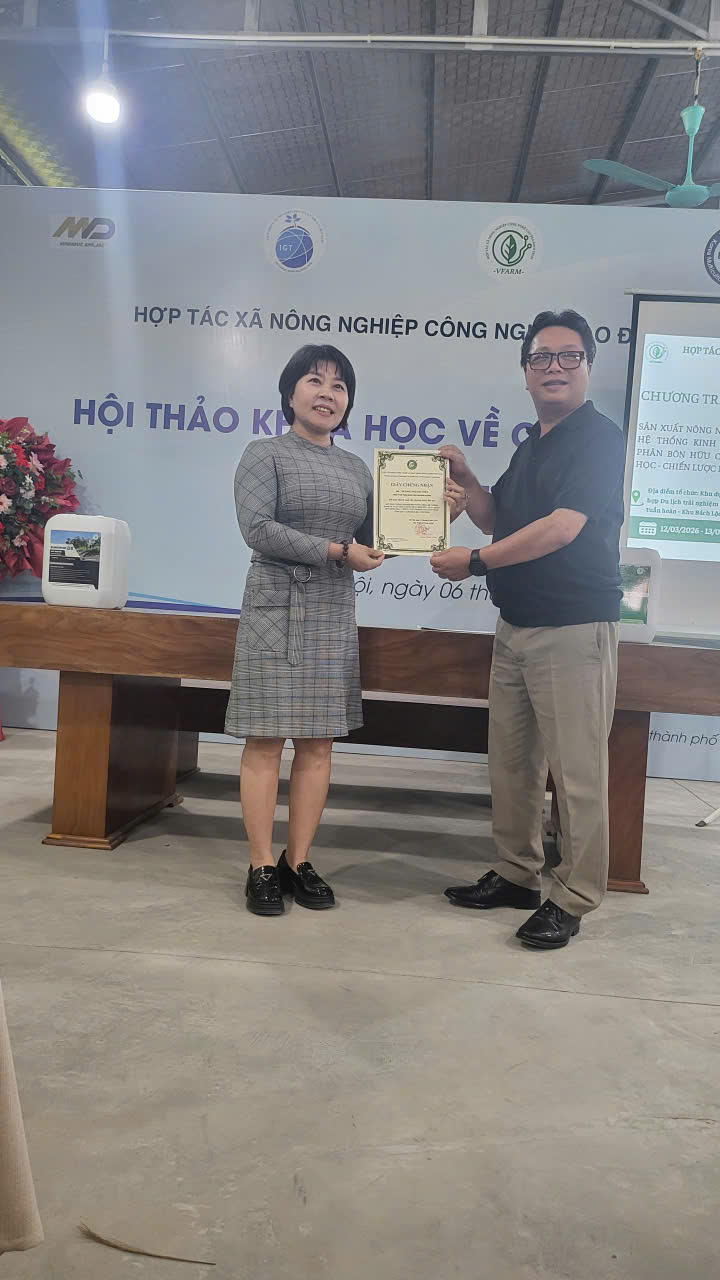
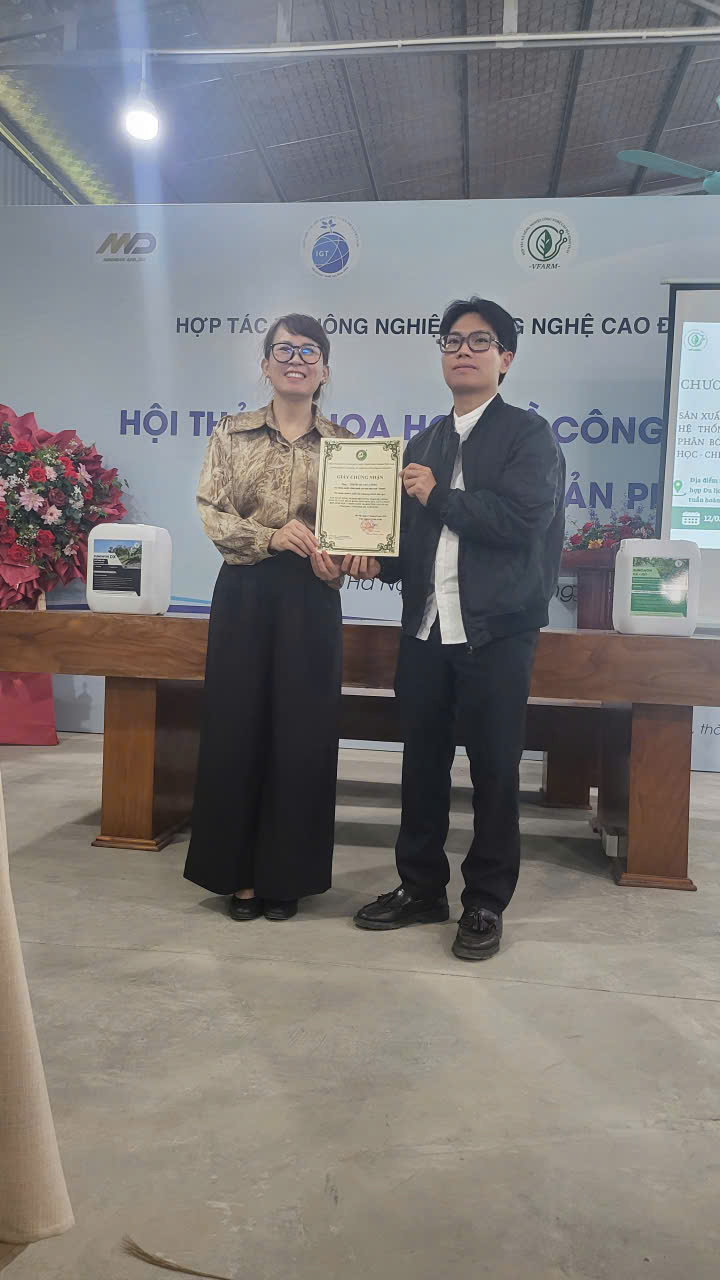
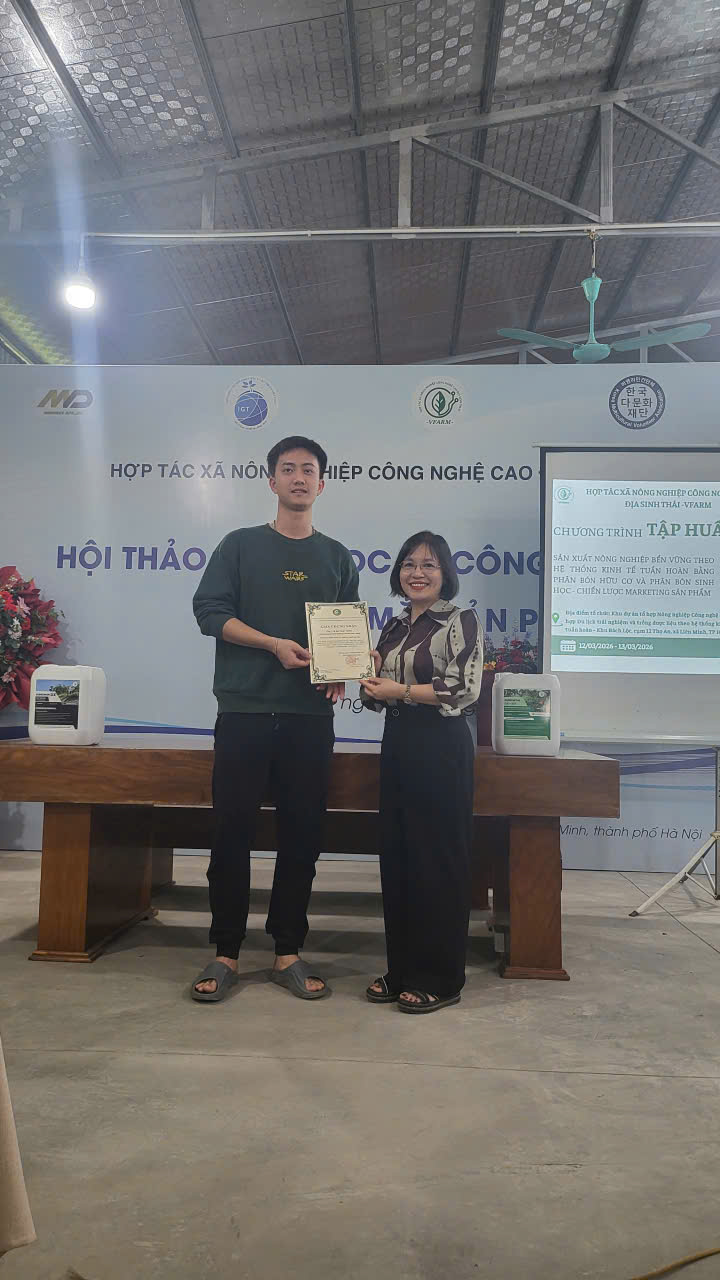
At the end of the class, Professor Dr. Nguyen Thi Thu Hien appeared, who has more than thirty years of experience in organic agricultural production. Here, Professor Hien and Dr. Nam, Dr. Hanh and Dr. Dinh in turn awarded certificates of participation in the training course to the students and took souvenir photos of the entire course.
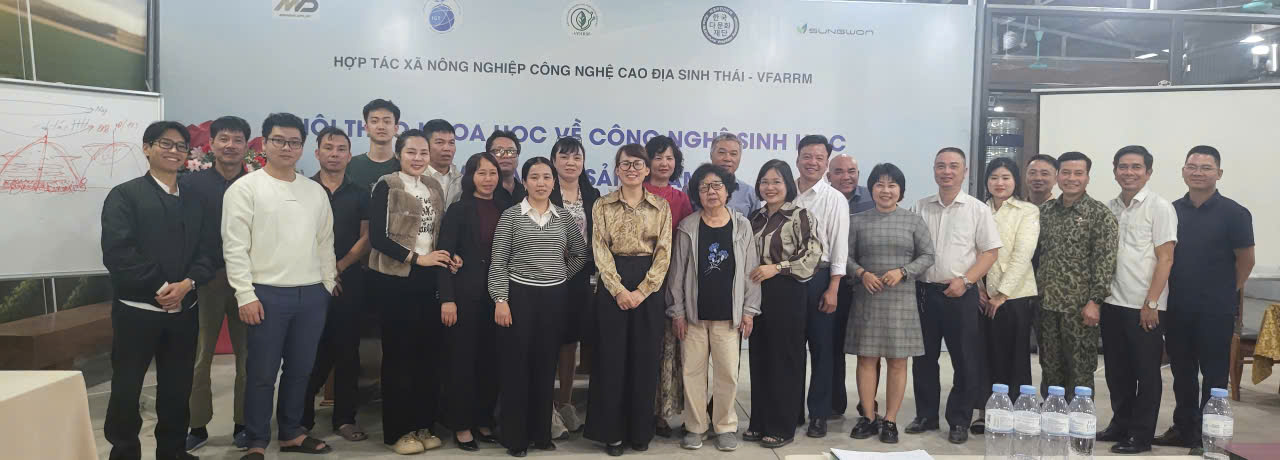
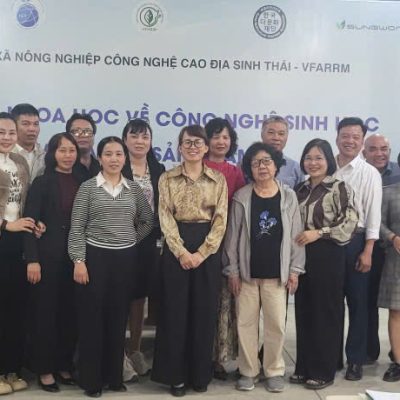
The entire Organizing Committee, Instructors and students took photos to commemorate the training course
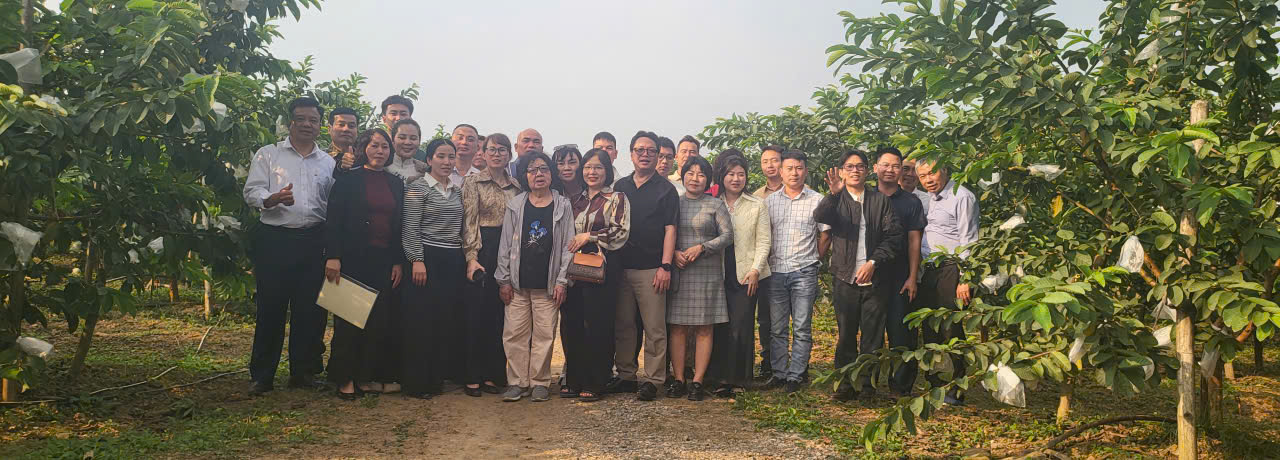
Some other pictures of the second training day.
Perform: Le Ngoc Thanh Vinh – Deputy Head of Technology Department, Vietnam Institute of Agricultural Technology Application and Development (VITAD – AGRI)