

4 April, 2026
OVERVIEW OF DECREE 109/2018/ND-CP AND IMPLICATIONS FOR AGRICULTURAL COOPERATIVES IN THE APPLICATION OF BIOLOGICAL PRODUCTS
Summary (Abstract)
Decree 109/2018/ND-CP is an important legal framework regulating production activities., certification and trade of organic agricultural products in Vietnam. The decree sets out strict principles on farming, input control, traceability and certification, At the same time, provide support policies to promote sustainable organic agricultural development. This article summarizes the core contents of the Decree and analyzes the requirements, Opportunities as well as practical notes for agricultural cooperatives in the application of biological products.
- Introduce
Organic agriculture is becoming an inevitable trend in the context of climate change, Environmental pollution and increased demand for safe consumption. In Viet Nam, Decree 109/2018/ND-CP This is the first legal document comprehensively regulating this field, from production to consumption.
For agricultural cooperatives, especially high-tech farming models and biological circulation, Understanding and complying with the Decree is a prerequisite for participating in the domestic and international organic market.
- Main content of Decree 109/2018/ND-CP
2.1. Scope
The Decree regulates::
- Manufacturing, process, trading organic agricultural products;
- Certifications, labeling and traceability;
- Policies to support the development of organic agriculture.
Applies to fields: crop, breed, Seafood, forestry and organic processed products.
2.2. Principles of organic production
Core principles include:
- Do not use synthetic chemicals, chemical plant protection drugs, inorganic fertilizer, growth stimulant;
- Do not use genetically modified organisms (GMO);
- Protect natural ecosystems, biodiversity and soil fertility;
- Apply farming methods cyclic, biological and sustainable.
2.3. Input requirements
- For use only permitted inputs in organic production, include:
- Organic fertilizers, biological fertilizer;
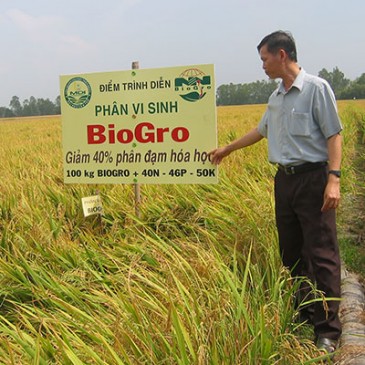
- Bioproducts, beneficial microorganisms;
- Biological plant protection drugs (of natural origin).
- Source, The composition and manufacturing process of the materials must be controlled and clearly announced.
2.4. Certification and labeling
- Products must be organic designated certification body assessment and certification.
- Applicable:
- Vietnamese standards (TCVN)
- Or equivalent international standards (EU Organic, USDA Organic…)
- Products that meet standards are allowed to be installed logo “Vietnam Organic”.
- Must have traceability system.
2.5. Internal control system (ICS)
For cooperatives or farmer groups:
- Must build internal control system (Internal Control System – ICS);
- Monitor the entire production process of each member;
- Record complete and transparent production logs.
2.6. State support policy
The Decree stipulates many support mechanisms:
- 100% First-time organic certification costs;
- 100% land survey costs, country, environment;
- Support training, training, Technical transfer;
- Support building organic production models;
- Support market development and trade promotion.
- The role of biological products in organic agriculture
Biological products are central element Substitute for chemicals in organic systems. Include:
- Nitrogen fixing microorganisms, phosphorus dissolution;
- Antagonistic fungi, bacteria control disease;
- Biological enzymes, fermentation products;
- Soil improvement products, environmental treatment.
Role:
- Improve soil fertility;
- Increase plant resistance;
- Reduce long-term input costs;
- Fits the model Zero Waste – biological circulation.
- Important notes for Cooperatives when using biological products
4.1. Legally
- Probiotics must:
- Have clear origin,
- Licensed for circulation in Vietnam (declaration of conformity or registration).
- Do not use preparations with ingredients prohibited in organic production.
4.2. Technically
- Must be used correctly:
- Microbial strains,
- Concentration,
- Application process (land, over there, country).
- Do not mix arbitrarily with chemicals (will lose its microbiological effect).
4.3. About internal management (ICS)
- Cooperatives need:
- Lap standard process (SOP) for each product type;
- Record detailed usage logs;
- Periodically check each member household.
4.4. About economics
- Regular biological products:
- Higher initial cost,
- But the long-term effect is better (Reduce pesticide costs, land reclamation).
- Needs construction demonstration model to convince farmers.
4.5. About market linkage
- Only if certified organic:
- New products have high added value;
- New access to export markets.
- Cooperatives need to be affiliated with:
- Consumption businesses,
- Certification unit,
- Reputable product supplier.
- Discuss
Decree 109/2018/ND-CP created The legal corridor is complete but also very strict.
The biggest challenge for cooperatives is::
- Certification cost,
- Internal management capacity,
- Farmers' awareness.
However, with the support of the State and green consumption trends, This is a great opportunity to:
- Transforming production models,
- Increase product value,
- Aiming for export.
- Conclude
Decree 109/2018/ND-CP is an important foundation for organic agriculture development in Vietnam. Đối với HTX nông nghiệp, compliance with input regulations, Certification and internal control system are mandatory conditions.
Application biological products not only a technical requirement but also a sustainable development strategy, Help cooperatives improve competitiveness in the modern agricultural value chain.
Document link: https://datafiles.chinhphu.vn/cpp/files/vbpq/2018/08/109-2018-nd-cp.signed.pdf
Perform: Thanh Vinh
Deputy Head of Technology Department, Vietnam Institute of Technology Application and Agricultural Development
Post Views:
497