



25 August, 2026
Collect, Store materials properly, Quality assurance, does not pollute the environment
In the process of completing and putting the Microbiological Organic Fertilizer Factory into operation, collection work, Classifying and storing raw materials is identified as one of the important steps, has a direct impact on product quality, production efficiency and environmental protection. The organization of scientific gathering areas, Humidity control, Limit dust dispersion, Leachate and odors are being focused on towards a safe production process, stable and sustainable.
- Control raw materials from input stage
The microbial organic fertilizer factory is invested in the direction of taking advantage of organic raw materials, creating products for agricultural production and contributing to improving the value of by-product sources. Along with investing in machinery systems, equipment and production lines, Management of input materials plays a particularly important role.
To ensure the production process is stable, Raw materials need to be inspected before being put into the production line, Classify and collect in appropriate areas. Collection not only ensures enough raw materials for production but also helps control quality, Limit impurities and reduce the risk of environmental problems.
According to the requirements of the production process, Materials are received in groups, Check condition before putting into storage or processing area. Unsuitable materials need to be classified separately, Avoid mixing with qualified ingredients.
This is an important step because the quality of input materials directly affects the mixing process, process and create microbial organic fertilizer products. When raw materials are controlled from the beginning, The chain will operate more stably, while reducing the risk of having to reprocess or generate unnecessary waste.
- Organize scientific storage area
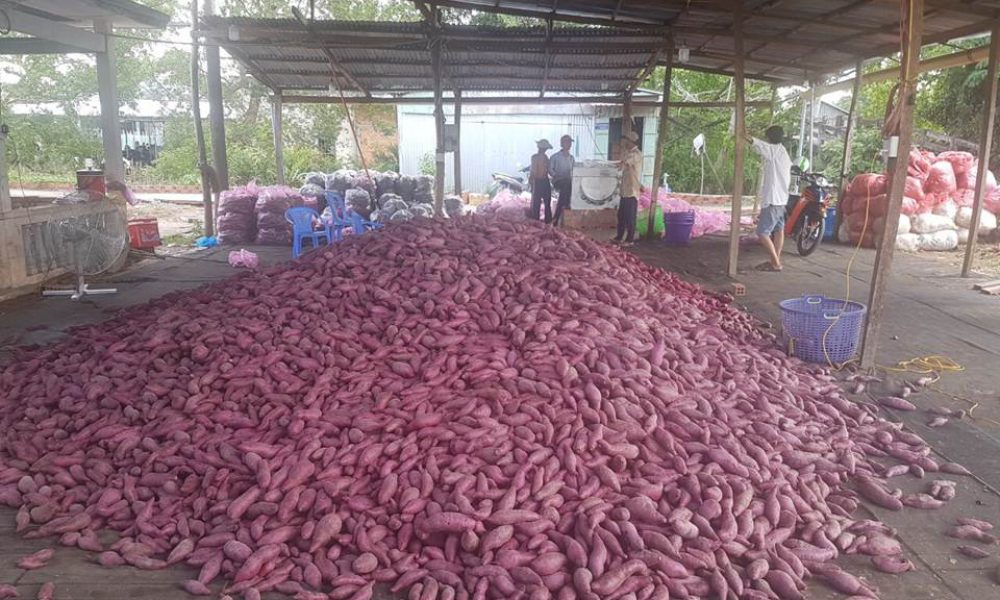
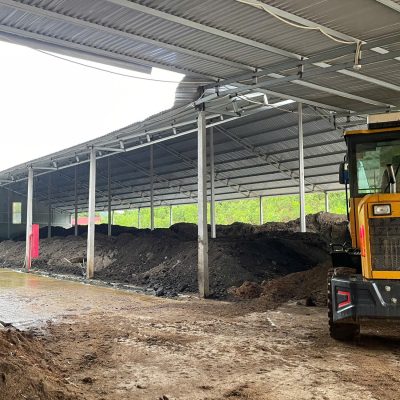
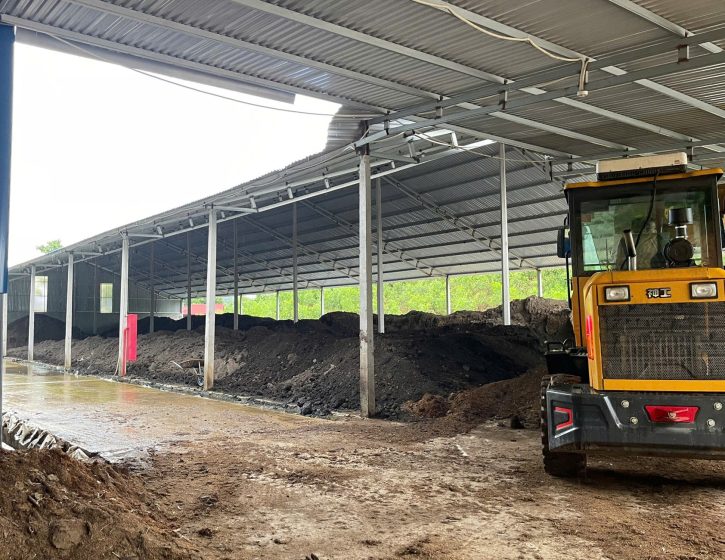
Through actual images at the factory area, factory areas can be seen, Yards and raw material storage areas are being organized to synchronously serve production activities. The factories have a large area, concrete background, roof and internal road system, create favorable conditions for reception, Transporting and gathering raw materials.
For organic ingredients, Storage requires special attention to humidity, the possibility of odor generation and the risk of creating leachate. So, Materials should be gathered in a covered area, solid background, Limit direct contact with rainwater and have appropriate collection plans.
Dividing storage areas according to each type of material also makes management more convenient. New raw materials received, Raw materials awaiting processing and raw materials that have been processed should be clearly identified. This organization helps limit confusion, At the same time, it creates favorable conditions for the process of inventorying and supplying raw materials to the line.
An important principle in archiving is Do not let materials obstruct the path, transportation route or machine operation area. Proper spacing between piles of raw materials and equipment not only serves production but also facilitates inspection, Clean and troubleshoot when necessary.
- Limit the impact of weather and humidity
Organic raw materials are often significantly affected by weather conditions. If left outdoors for long periods of time, Raw materials can be affected by rain, sunlight and environmental humidity, leads to changes in properties and makes processing difficult.
Therefore, The storage area needs to be appropriately covered, At the same time, ensure the warehouse floor has good drainage. During the rainy season, roof inspection, wall, The foundation and drainage system need to be done regularly to limit rainwater from entering the material storage area.
In case the material has high moisture content, There needs to be a suitable control and treatment plan before putting it into the production line. Wet materials should not be allowed to accumulate for too long in one location without management measures, because this can cause odors, affects the quality of raw materials and creates conditions for uncontrolled decomposition processes.
Humidity control is therefore not only a quality requirement but also a part of environmental protection.
- Collect and classify right at the source
One of the important solutions to reduce the amount of waste generated in the factory is to collect and classify right at the source..
During the process of receiving raw materials, Unsuitable components should be separated. Impurities such as soil and stone, inorganic materials, Damaged packaging or materials that do not belong to the group of production materials should be collected in groups to have appropriate treatment plans..
Sorting at source helps avoid waste types being mixed with organic materials. This is also the basis for increasing the ability to utilize valuable material sources, At the same time, it reduces the amount of waste that must be processed.
In the production area, Workers need to be clearly instructed on the location of each type of raw material and waste. Containers, The gathering area or collection location should have appropriate identification signs to limit confusion.
With that, Cleaning of reception and storage areas should be performed periodically. Materials spilled on the floor must be collected promptly, Avoid allowing it to accumulate for a long time, causing unsanitary conditions, generates odors or affects the movement of the vehicle, machines.
- Odor control, dust and ooze
For a factory that uses organic raw materials, Odor and dust control are inseparable from materials management.
When shipping, Pour or scoop ingredients, especially raw materials with high dry matter content, dust may arise. So, need to organize reasonable operations, Limit the dumping of materials from high heights and perform regular cleaning in areas likely to accumulate dust.
Under necessary conditions, The factory can apply appropriate technical measures to limit dust dispersion, At the same time, equip labor protection equipment for people directly working.
For materials with high moisture, The risk of leachate generation also needs to be controlled. The floor of the storage area should be properly designed and maintained so that water does not spill over into the surrounding area. Generated water must be collected and treated according to regulations, Absolutely limit direct discharge into the environment.
Besides that, Controlling storage time is also important. Raw materials need to be rotated properly, Avoid lingering for too long. The first-in, first-use approach can be applied to improve management efficiency and limit the risk of raw materials changing during storage..
- Ensure safety during transportation
Photos at the factory show motor vehicles and transportation equipment used to serve the gathering process, raw material handling. Therefore, Internal traffic organization needs to be carried out scientifically.
The area for vehicles transporting raw materials needs to be clearly demarcated from the area for workers. When the excavator, forklift or motor vehicle operation, Workers need to comply with regulations on safe distance and instructions from the person in charge.
After collection, raw materials need to be transported along appropriate routes, Avoid going through unnecessary areas. This way of organization reduces shipping time, while limiting materials falling on internal roads.
Especially, in areas with chains, conveyors and mechanical equipment, Putting raw materials into production must be done according to the correct process. Do not arbitrarily put ingredients into the equipment when the machine is not in a ready state or without the person in charge checking..
- Associate raw material management with environmental protection
Proper management of raw materials not only helps the factory maintain a stable supply but also brings clear environmental benefits..
When the raw materials are fully collected, properly classified and stored under appropriate conditions, The amount of material loss will be reduced. At the same time, risk of odor generation, dust, Leachate and secondary waste are also better controlled.
This is also a factor that contributes to building the image of a green and responsible agricultural production facility. Utilizing organic materials to produce fertilizer can create a meaningful cycle for the agricultural industry: raw materials are collected, processed and transformed into products for soil and crops.
However, for this model to be effective, The entire process must be managed synchronously, from receiving raw materials, storage, preprocessing, production to packaging and preservation of finished products.
- Raise worker awareness
Besides facilities and equipment, The human factor plays a decisive role in maintaining the process of collecting and storing materials.
Workers need to be instructed on how to identify each group of materials, collection method, gathering location, Hygiene requirements and safety regulations when operating vehicles, device.
Seemingly simple operations like not letting materials block the path, Collect spilled materials immediately, Seal or shield materials appropriately, Checking the area after each shift... if done regularly will create an effective management process.
The factory also needs to maintain regular inspections to detect problems related to the warehouse floor early, canopy, drainage system, staging areas and transportation equipment. Abnormalities need to be handled promptly, avoid causing major incidents.
- Towards a clean and sustainable production process
Investing in completing a micro-organic fertilizer factory does not just stop at installing machinery and putting the production line into operation.. An efficiently operating factory needs a material management system, Production and environment are organized synchronously.
Inside, Collecting and storing raw materials properly is an important link. This is the foundation for maintaining input quality, ensure stable operation of the line and limit unwanted impacts on the environment.
With factory system, The gathering area and equipment are gradually being completed, Building a methodical raw material management process will contribute to improving the factory's operational efficiency in the next period..
The goal is to form a closed process, in which raw materials are received in a controlled manner, classify, Store properly under the right conditions, put into production as planned and waste is collected, appropriate handling. Thereby, The factory not only creates microbial organic fertilizer products to serve agricultural production but also contributes to the goal of effectively using organic resources., reduce waste and promote environmentally friendly production methods.
Collection, Proper storage of raw materials is therefore not simply a requirement in factory operations, but also an important solution to ensure product quality, Labor safety and environmental responsibility. When each step is strictly controlled, from input materials to production process, The microbial organic fertilizer factory will have an additional foundation for stable operation, effective and sustainable development.
One of the micro-organic fertilizer factories has done this job well and those who are interested can learn.:
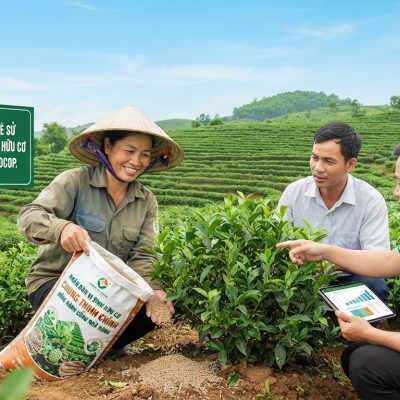
Cooperative (HTX) Chung Thinh Chinh Agricultural Trade and Services
– Website: https://chungthinhchinh.com/
– Field: Production of liquid and solid microbial organic fertilizers, biological products….
Post Views:
166