







16 May, 2019

Preserving cut lilies after harvest
Preserving cut lilies after harvest
Hoa Ly (Lily sp.) is one of the most valuable cut flowers in the world. However, Published studies related to post-harvest treatment technology for cut lilies are quite rare.
The reason is that the diversity within each breed group is very large and the newly created breeds are constantly increasing...

The research presented below is by Dr. Bill Miller – Cornell University, America. Theo TS. Bill Miller, Main issues related to post-harvest quality of lilies, including 3 problem:
1- Yellowing of leaves and stems
2- Flower buds are withered, do not bloom
3- Young buds bloom poorly, deformed flowers
There is also an issue related to the quality of lilies during storage, This is the phenomenon of flower bud necrosis (There are brown streaks along the bud).
1. Yellowing of leaves on the stem (Leaf Yellowing, Chlorosis)
– Reason:
+ Breed differences.
+ Refrigeration increases the degree of leaf yellowing, the longer the storage time, The yellowing of leaves and stems increases.
+ Storage temperature (depends a lot on the breed).
+ Pre-harvest nutrition: Low nitrogen content increases the degree of yellowing of leaves and stems.
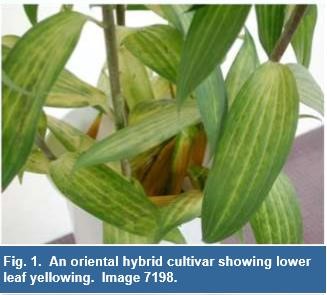
Figure 1: Oriental hybrids have yellow leaves.
– How to fix it: Use preparations containing GA4 + 7.
According to previous studies, GA4+7 has the effect of limiting leaf yellowing during cold storage, Helps maintain green leaves on plants throughout the consumption period, Especially for some varieties of cut glasses that have been refrigerated before being sold to consumers. In addition, GA4+7 also significantly increases flower durability.
2. The phenomenon of young buds withering, do not bloom (Flower Bud Blast)
Some buds, especially the smallest buds, will not bloom when placed in a vase (Figure 2). This problem is more common with Asiatic and LA hybrids than with Oriental or OT hybrids. In some cases, The buds do not completely shrink and still open, but they open very poorly and at a much earlier stage than normal (Figure 3). Another common symptom of Ethylene damage in lilies (Cut branches and plant in pots) is “stamen” (Pollen protrudes from unopened buds) (Figure 4).
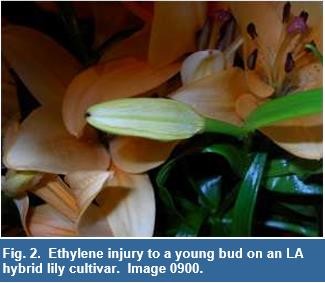
Figure 2: Ethylene damage in young buds on LA hybrid lily cultivar
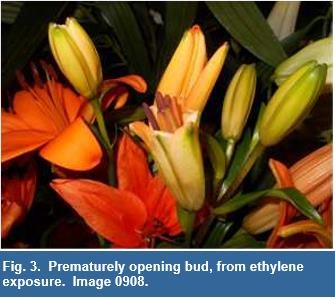
Figure 3: Young buds bloom early (ripe and pressed) due to exposure to Ethylene.
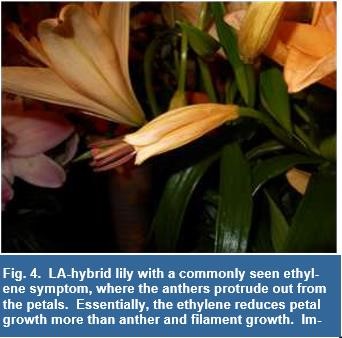
Figure 4: Flower buds do not bloom, Anthers protrude beyond the petals. This is a fairly common phenomenon of Ethylene damage in LA hybrids. Basically, Ethylene reduces petal growth more than anther and filament growth.
– Causes of young buds not blooming or blooming early:
+ Pre-harvest conditions (warmer temperatures and lower light conditions).
+ Breed differences.
+ Direct contact with Ethylene before or during transportation.
+ Store in cold storage longer after harvest.
Many studies on the effects of Ethylene on lilies show that young buds are very sensitive to Ethylene (with symptoms as described above), while the buds are larger and the flowers are less responsive to Ethylene.
– How to fix it: Use Ethylene inhibitors such as 1-MCP (EthylBloc hoặc Ethylene Buster) to maintain the viability of younger buds on stored stems for longer periods of time.
1-MCP generally has little effect on large buds or flower buds that are about to bloom, but there are exceptions (For example, like Trebbiano). In the picture 7, when growing ‘Trebbiano lily plants’ exposure to Ethylene over time 3 day, in concentration 2,5 ppm, You will see that the young buds quickly wither or fall off early, while plants pretreated with 1-MCP had flowers that bloomed normally and stayed fresh longer (Figure 7).
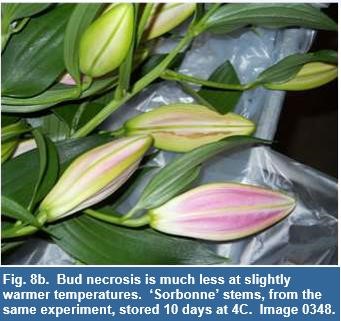
Figure 7. Ethylene Injury and Prevention by 1-MCP. Left: Trebbiano, be handled with 2,5 ppm Ethylene trong 3 the day when the bud begins to swell. Right: Trebbiano was treated with 1-MCP gas overnight before Ethylene treatment
3. Necrosis of flower buds (Bud Necrosis)
This is a disorder reported to occur during cold storage of lilies, especially often encountered on Oriental hybrid breeds. On lily buds, brown stripes will appear along the petals, thereby seriously reducing the quality of commercial lilies.

Figure 8a. Flower buds are necrotic, caused and appear during post-harvest cold storage. ‘Sorbonne flower branch’ Stored at 1oC in 10 day.

Figure 8b. Flower bud necrosis is much less at higher storage temperatures. ‘Sorbonne flower stems’ from the same experiment, preserved 10 day at 4oC.

Figure 8c. Flower buds do not become necrotic when stored at 7oC. ‘Sorbonne’, preservation 10 day.
– Reason: Through the above experiment, it is shown, Necrotic flower buds are caused by cold storage of lilies at too low temperatures or cold storage of lilies at lower temperatures immediately after harvesting lilies in a high-temperature greenhouse..
– How to fix it: It is quite complicated because for each different group of lily varieties, it is necessary to find the appropriate cold storage temperature. Normally, the Oriental hybrid breed group needs higher cold storage temperatures than the Asiatic and LA hybrid breed groups.
It is necessary to "cold" lily branches immediately after harvest before storing them in cold storage, Avoid heat shock causing necrosis on flower buds.
TS. Bill Miller also conducted previous experiments on the lily variety 'Mona Lisa' and showed that: The "cooling" of flower branches at a temperature of 7-9oC inside 24-48 hours before being put into cold storage at 4oC is beneficial and significantly reduces the level of necrosis on buds compared to plants immediately put into storage at colder temperatures.. (The article was published in VNHS Magazine no 302 T11/2018)
Source: hoisvcvn.org.vn